Casa Lucia: Buenos Aires seen through the Mihanovich building
On Arroyo, the hotel brings Fernanda Schuch’s interiors and Argentine artists into a historic vertical landmark. Its strongest identity comes from the relationship between the building and the city.
A hotel can belong to a city without reproducing its monuments indoors. Casa Lucia works with a more direct inheritance: the Mihanovich building, a vertical landmark on Arroyo in Buenos Aires.
The project’s 2024 opening brought a new interior programme into an existing architectural presence. Today, the property is presented as Casa Lucia Meliá Collection. The address remains Arroyo 841, rather than an abstract promise of proximity to everything in the capital.
A building that already has a scale
The tall structure establishes the project’s first condition. A hotel inside it has to reconcile a city-facing exterior with rooms intended to feel inhabited. It cannot be understood solely through a lobby photograph.
Fernanda Schuch’s interior work brings a contemporary layer to that setting. Wood, marble and stone establish a material continuity, while the historic building supplies a different kind of continuity: the recognisable outline that remains part of the street.
The distinction is important. A period-looking interior can imitate age without possessing it. Here, new furnishings occupy a building whose history is already external to the decoration.
Argentine makers inside the room
Cristián Mohaded’s lighting and Cristina Codern’s mural bring local artistic authorship into the project. The hotel’s current account also identifies photographs by Ricardo Piñero.
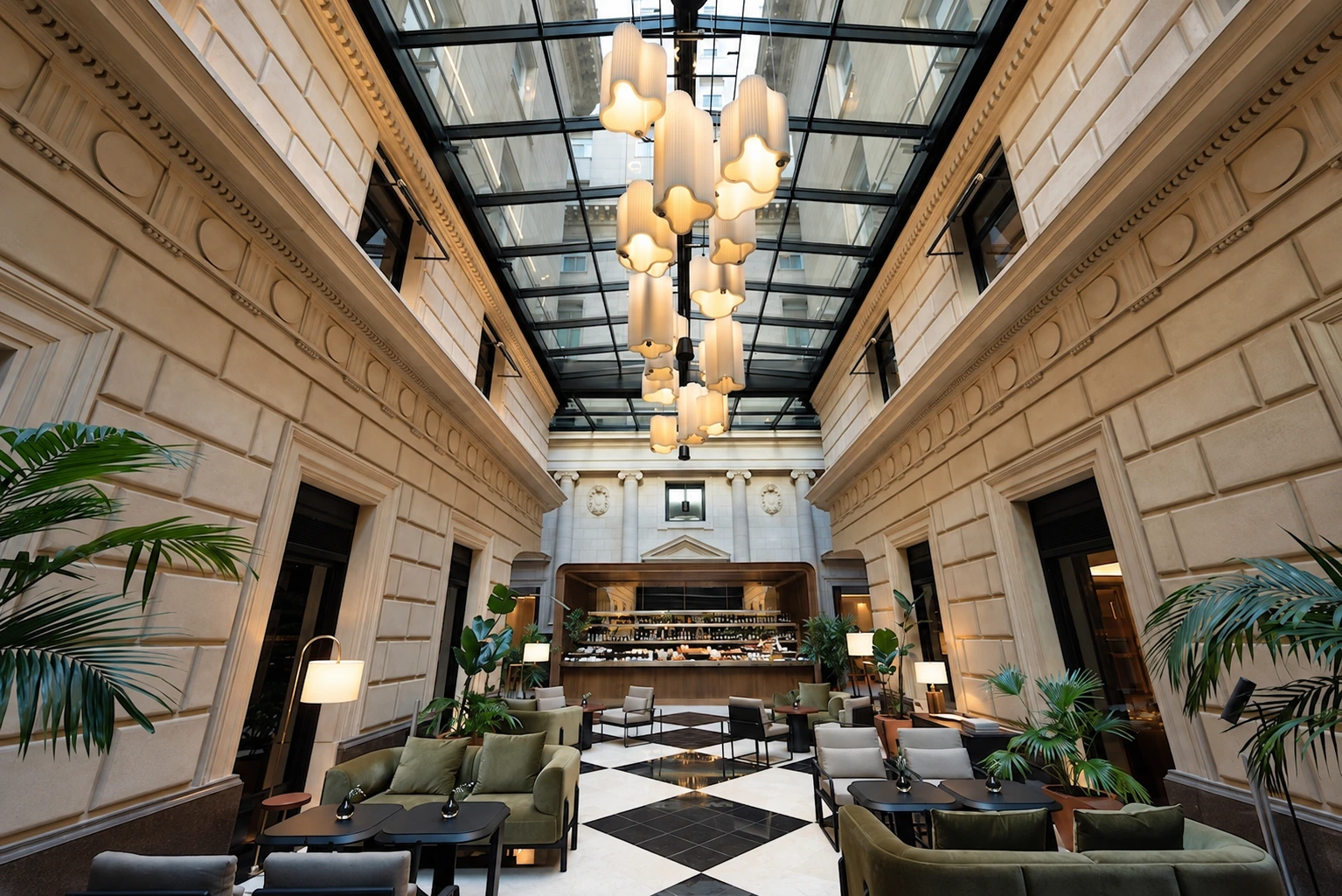
These are named contributions, not a generic reference to national character. Mohaded’s suspended forms, in particular, give the entrance another scale beneath the architecture around them. The image is closer to a cloud held inside a room than to an ornament attached to its ceiling.
Authorship matters because it makes the hotel’s connection to Buenos Aires inspectable. The relationship is expressed by works and people, rather than by an interchangeable list of adjectives.
The city outside the glass
Large windows are part of the rooms’ proposition. Some suites were conceived with terraces and outdoor living elements. Those features should be understood as category-specific, not as a description of every room.
A view is also a form of orientation. It can establish where the traveller is within a city before the first walk begins. In a high building, the relationship between a room’s position and its outlook deserves more attention than a room total.
For that reason, the useful questions concern the exact category, floor, outlook and outdoor space. A hotel name alone cannot resolve them.
Dining without detaching from the address
Cantina, the hotel’s restaurant, centres its current description on local dishes and regional wines. Le Club Bacan forms another part of the property’s social programme. Neither needs to be presented as a definitive survey of Argentine food.
The more convincing relationship is between the visitor’s base and the surrounding city. A meal in the building can begin that relationship; it should not replace Buenos Aires with a self-contained itinerary.
A lobby under a lighter sky
The opening account placed Cristina Codern’s mural beside suspended lighting by Cristián Mohaded. One works across a surface; the other occupies the air beneath the ceiling. Their proximity gives the entrance both an image and a volume, rather than relying on a single statement object.
The Mihanovich building supplies the outer frame. Inside it, the new works need not pretend to share the age of the architecture. Buenos Aires is present through the building’s inheritance and the artists working within it, with neither layer made to disappear.
Casa Lucia’s value as an international story lies in that balance. The building remains legible, the interior has identifiable makers, and the city is still outside the window. A new hotel chapter does not require an invented history.
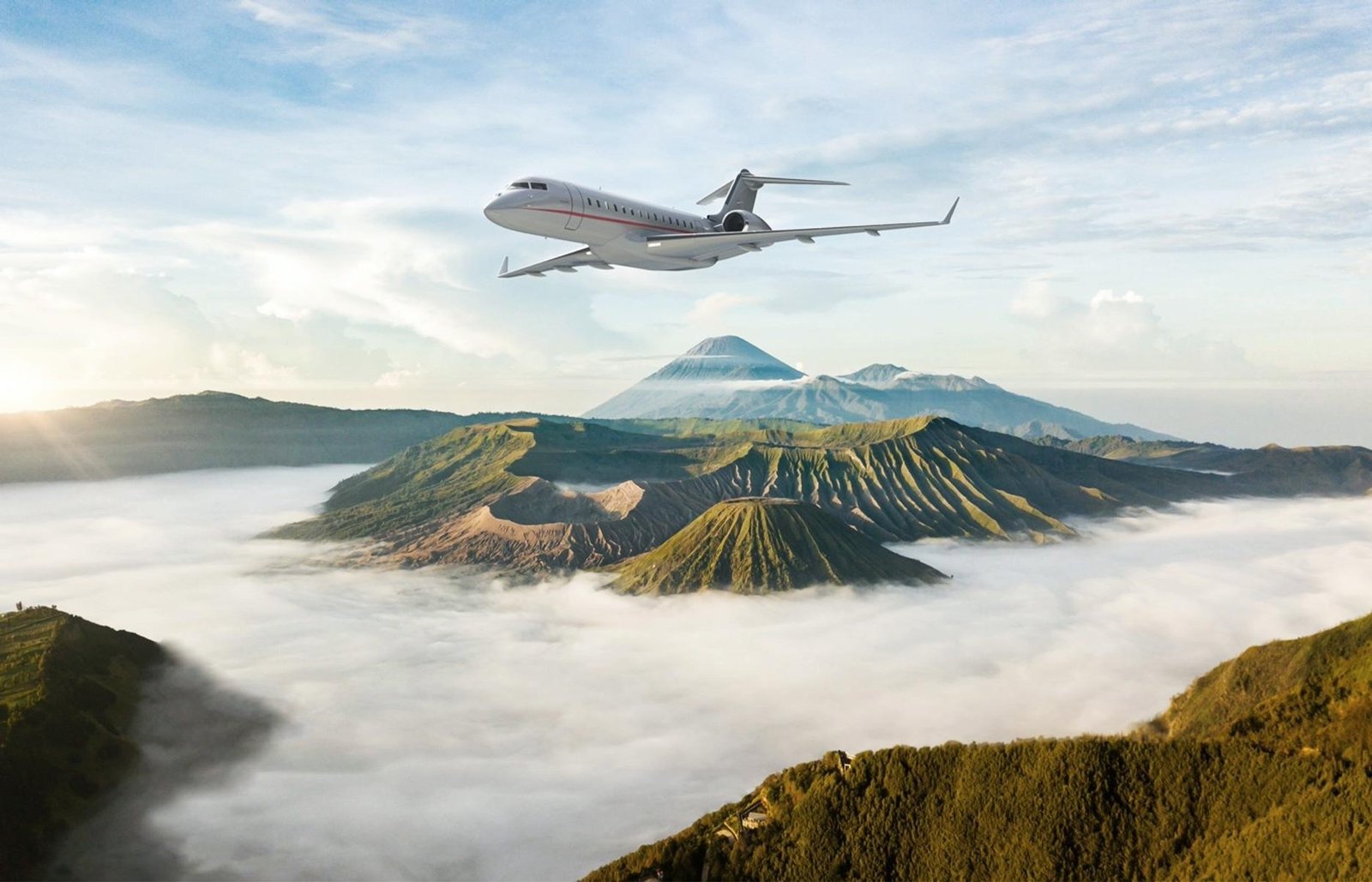
Four Seasons, Aman, Maybourne, Belmond and Mandarin Oriental now sell the journey as part of the stay, from helicopter transfers into London to 23-day circumnavigations at $238,000 a head. Who flies, why, and what is really being bought.
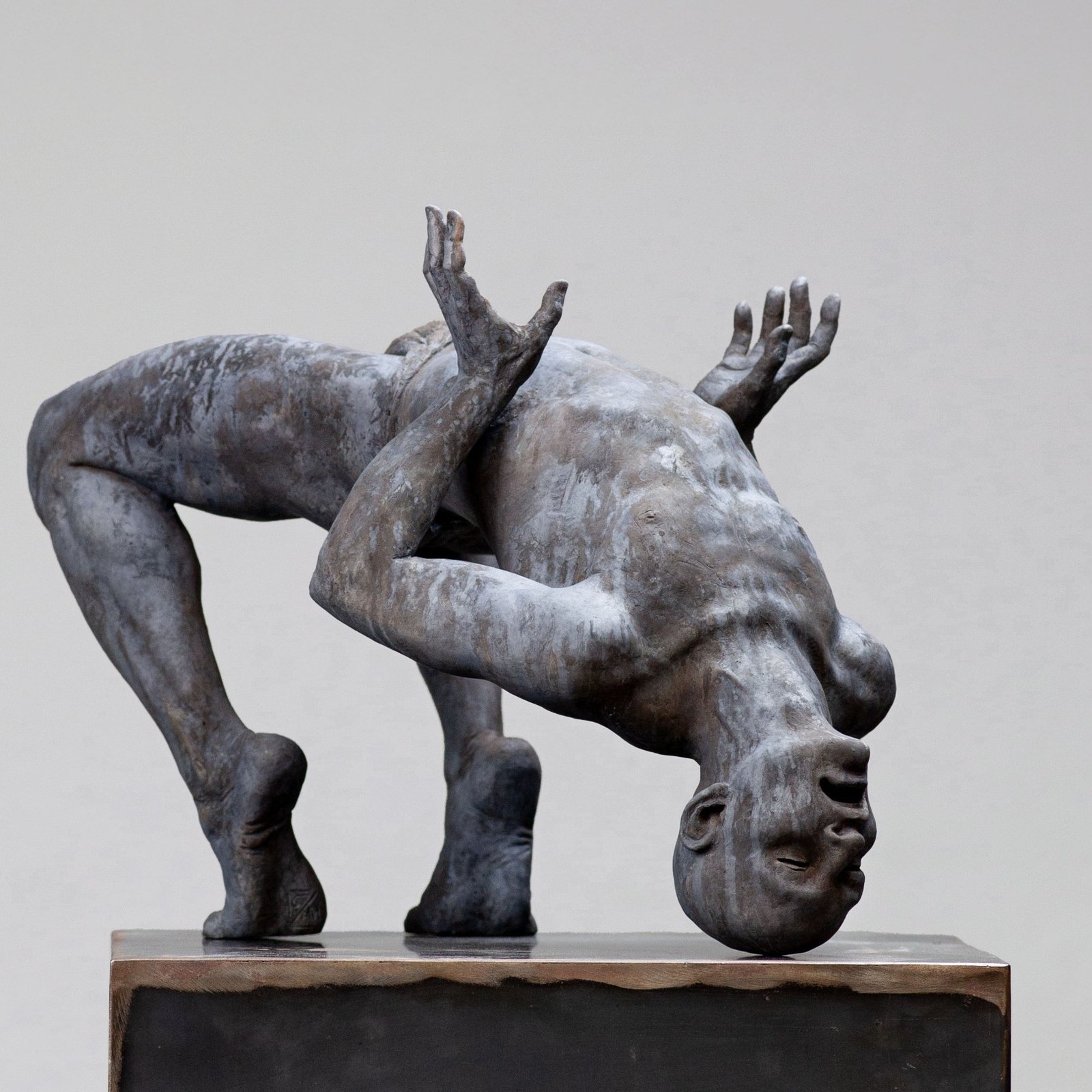
Airlifted by helicopter to the summits, monumental bronzes by Coderch & Malavia turn Courchevel's slopes into an open-air gallery, with Arman back in 1850.
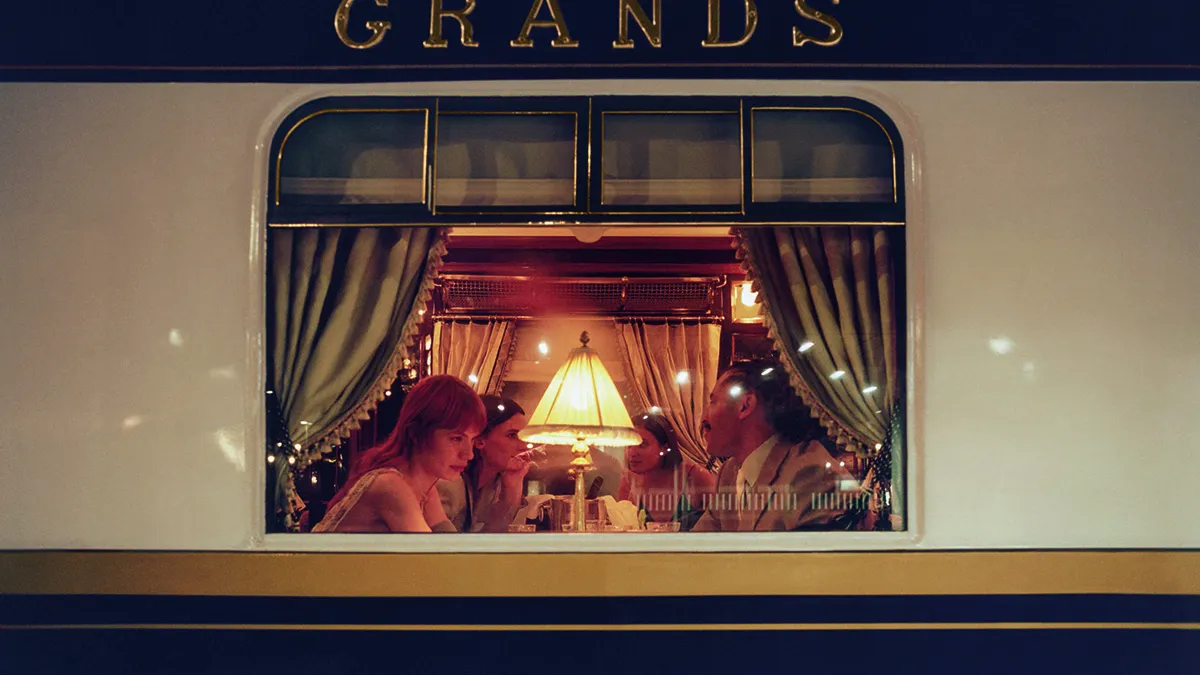
Fifty years after two sleeping cars were sold at Monte-Carlo's old station, Belmond brings the train back to the Principality: one night from Paris, a morning along the Riviera and an arrival inside the rock, from 10 May 2027.
From St Andrews and Royal County Down to Cabot Saint Lucia, Hirono and Tara Iti, eleven courses that justify the journey, with how to get a tee time and where to sleep afterwards.