From Robert Kraft to Ryan Reynolds, a stake in a professional team has become the most coveted currency of access and visibility among the rich and famous.
The most coveted possession among the very rich is no longer a house, a yacht or a painting. It is a team.
Consider a flag football game in Los Angeles in March. At BMO Stadium, in Exposition Park, the Fanatics Flag Football Classic brought Tom Brady back onto the field, with Kevin Hart hosting and a crowd in the stands that included Justin Bieber. Confetti fell, trophies were raised, and the broadcast went out on Fox Sports and Tubi. Moving between the suites and the cameras with the ease of a man at home was Robert Kraft, owner of the New England Patriots.
Kraft drew attention not through eccentricity but through belonging. In a half-zip polo and mirrored sunglasses, he looked like an unusually athletic Father Christmas. That was the point: he was part of the machinery that has turned ownership of a professional team into the most sought-after currency among the rich and influential.
THE BEST SEAT IS THE ONE YOU OWN. IMAGE: PRESS
When access becomes an asset
An invitation to a fashion show is charming. A private jet is close to a commodity: private flights worldwide reached almost 3.9 million in 2025, 34 per cent more than in 2019, according to WingX. A pass to the 50-yard line at a Patriots game is a different conversation.
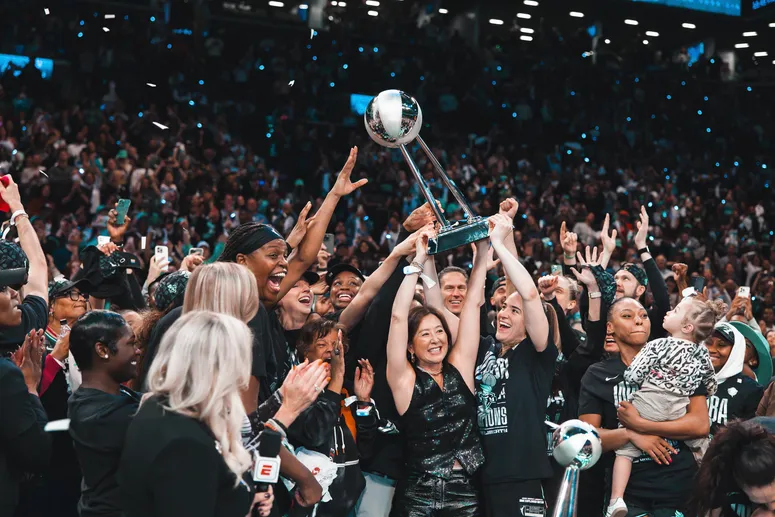
For decades, American franchises belonged to the same dynasties: the Tisches at the Giants, the Rooneys at the Steelers, the Fords at the Lions, the Johnsons at the Jets. The landscape has changed. Karlie Kloss is among the investors in the WNBA’s New York Liberty, a roster of backers that also includes Olivia Walton and Robin Roberts. Natalie Portman co-founded Angel City FC, whose list of investors reads like a Hollywood cast: Eva Longoria, America Ferrera, Jennifer Garner.
Ryan Reynolds and Rob McElhenney bought Wrexham AFC in 2021 for around two million pounds; the Welsh club is now valued in the hundreds of millions and has its own documentary series. LeBron James turned a small stake in Liverpool, acquired in 2011, into a partnership in Fenway Sports Group. David Beckham is a co-owner of Inter Miami CF.
Ownership as plot
Fiction has absorbed the theme. In Ted Lasso, Hannah Waddingham plays Rebecca Welton, a newly divorced owner seeking redemption through her football club. In Running Point, Kate Hudson inherits a basketball team and must negotiate with her own family. In Ballers, Dwayne Johnson’s character spends seasons circling the money and the ownership of the NFL.
Behind the plots lies a change in the rules. Major League Baseball loosened its restrictions on institutional investment in 2019. In 2021 the NBA, under Adam Silver, opened the door to private equity funds taking minority stakes. In 2024 the NFL, under Roger Goodell, did the same. The result is a new owning class: fewer cigars and committee rooms, more syndicates and group chats.
Why everyone wants a seat
The phenomenon has roots in the culture that followed the pandemic. When the world reopened, people did not simply want to go out. They wanted to be seen going out. And there is no stage quite like an owner’s suite during the finals.
Sport offers something artificial intelligence cannot yet replicate: the unpredictable, the physical, the live. Music can be generated. Films can be synthesised. Influence can be engineered. Sport happens in real time and cannot be reproduced. Whoever controls it does not merely own a team. They own a moment.
The modern salon has a pitch
The owner’s suite has become a contemporary salon, where money, fame, media and politics meet in real time with the cameras rolling. In Los Angeles, Michael Rubin, founder of Fanatics, and the producer Michael D. Ratner, a co-founder of Hailey Bieber’s Rhode, shaped the guest list and the spectacle, deciding who sat where.
Women’s sport amplifies the trend. Caitlin Clark of the Indiana Fever, first pick in the 2024 WNBA draft, saw her salary rise from about $78,000 to roughly $530,000 in 2026 under the league’s new collective bargaining agreement, which also introduced an EPIC clause (Exceptional Performance on Initial Contract) that can carry young stars to maximum contracts sooner. Angel City has redefined the ownership model: backed by celebrities, rooted in its community. What looked like a niche has become mainstream.
Who won that afternoon in Los Angeles? It hardly matters. The point was never the score. It was who sat in the suite, who was photographed, who controlled the story of the moment. Owning a team, now, is not about sport. It is about owning access, visibility and power, live.
Mike White's fourth season unfolds during the Cannes Film Festival, between a castle in Saint-Tropez and the Croisette. The subject this time is fame, and the series is due on screen in 2027.
Derek Ridgers' Hello, I Love You gathers kisses caught by flash on London nights in the early 1980s. Seen today, the pictures record something more fragile than romance: a night that did not need to be documented to exist.
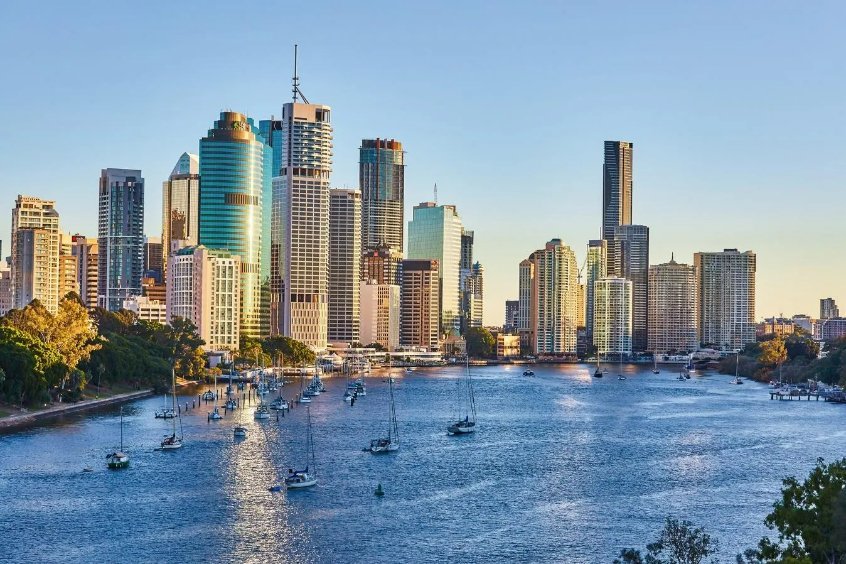
Brisbane leads a 50-city index of the best places to raise children, ahead of London and Auckland. The ranking reads less like a league table than a verdict on how cities choose to spend space, time and money.