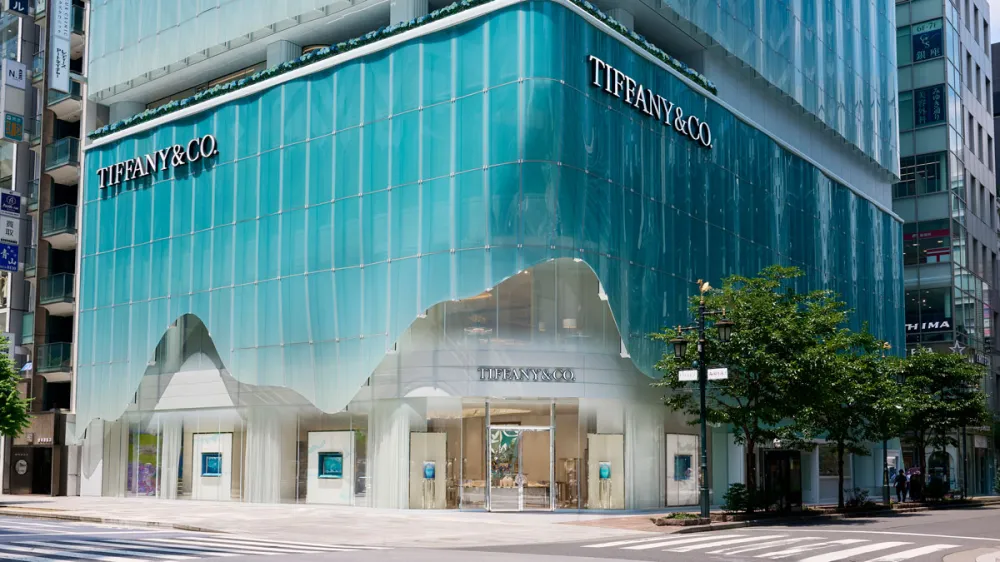
Tiffany Ginza asks the eye to move between a tall façade and a very small object. Its architectural interest lies in making that change of scale part of the visit rather than treating the building as a larger version of a jewellery box.
The flagship opened in July 2025 at 6-9-2 Ginza. Jun Aoki designed the exterior and Peter Marino the interiors, bringing two distinct architectural contributions into the same project.
Glass with a historical reference
The curved-glass façade evokes wisteria and refers to Louis Comfort Tiffany’s lamps. The botanical reference is not a literal garden placed around the store. It becomes a way to organise the building’s outer surface.
That translation carries the reference from one scale to another. A lamp’s relationship with light belongs to a room; a façade must address a street. The building retains an association with the house without simply enlarging a familiar product.
A route through art and material
Inside, Marino’s sequence extends across six floors. Michelangelo Pistoletto’s work and Oyoram Visual Composer’s moving digital fresco introduce different forms of contemporary art.
The latter draws on Tokyo’s Ninomaru Garden. Digital imagery adds another kind of surface to a building already concerned with reflection and light, placing movement beside the more fixed arrangement of jewellery and architectural materials.
Gold leaf from Kanazawa, washi installations inspired by origami and Mariko Kusumoto’s Kabuki-related work give the interior more specific Japanese references. These should be noticed as separate contributions, not gathered into a generic description of local atmosphere.
Paper, metal and moving imagery behave differently. The project’s richness comes from allowing those differences to remain legible while they share a commercial setting.
Archive and contemporary collection
Historical house pieces sit alongside current jewellery. A familiar Tiffany vocabulary remains present, but an archive can place it within a longer sequence of proportions, motifs and construction methods.
For a design reading, the useful comparison is between an object and the room that presents it. A jewellery display concentrates attention; a stair, artwork or ceiling changes its direction. The route alternates between close looking and a broader spatial encounter.
A café is another programme
The flagship also houses Japan’s first Blue Box Café, led by Natsuko Shoji. That introduces a culinary contribution, but it should not be collapsed into the shopping visit or described as automatically included.
Store and café visits have separate arrangements. Tiffany’s store guidance permits walk-ins subject to availability, with appointments for a more specific encounter.
The address is close to Ginza Station, but the reason to give it time is not merely convenience. Aoki’s façade, Marino’s sequence and the contributions of named artists and makers give the store a character that belongs to this part of Tokyo.
Tiffany Ginza · 6-9-2 Ginza, Chuo-ku, Tokyo. Consult Tiffany for store and café arrangements.
Edited by Melanie Grant for Phaidon, The Jewelry Book gathers 300 entries across two hundred years, from the great maisons to studio jewellers, and asks a better question than what a jewel is worth: what it changed.
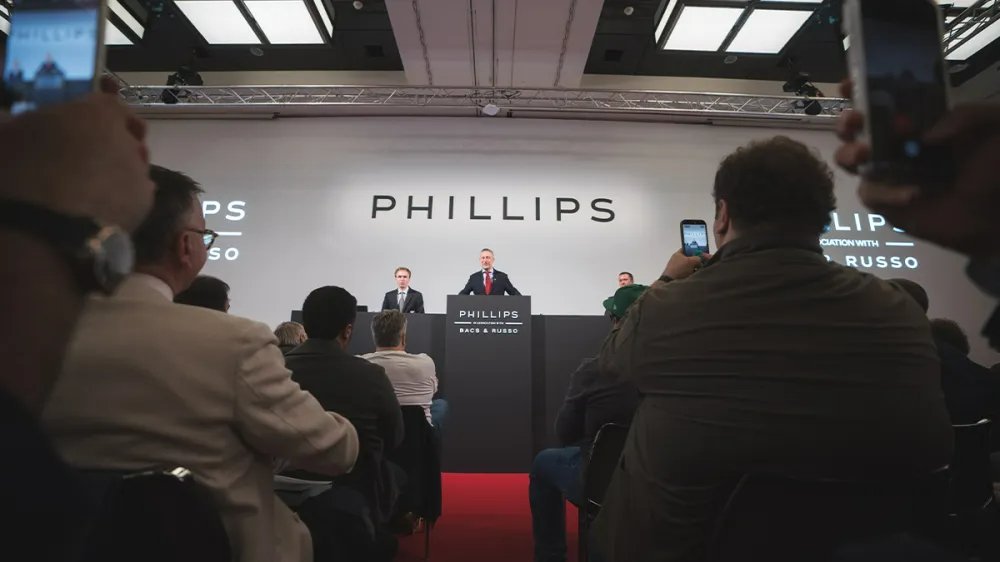
In November 2025 Phillips closed its first decade in Geneva with a white-glove sale of CHF 66.8 million, led by a 1943 steel Patek Philippe ref. 1518 at CHF 14.2 million. Six months later, the same room went higher still.
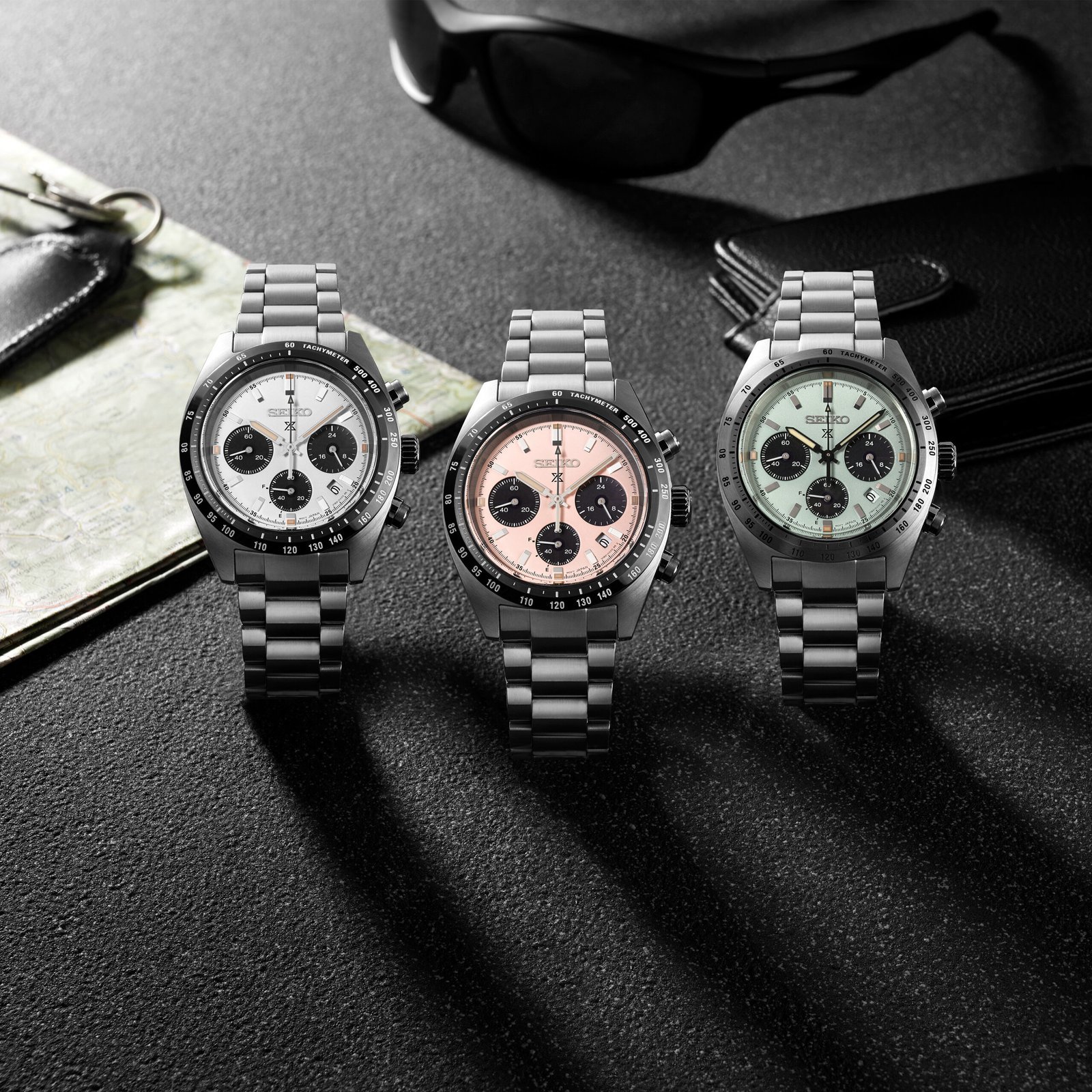
Maurice Lacroix, Frederique Constant, TAG Heuer and Tissot are returning to solar quartz, with a decade between battery changes and photovoltaic cells hidden beneath translucent dials or the crystal itself.