La Sultana Marrakech: five riads, one architectural conversation
In the Royal Kasbah, connected courtyards give Moroccan craftsmanship room to differ. Carved cedar, zellige and plaster lead from the enclosed house to the city’s rooftops.
La Sultana Marrakech is understood by moving through it. Five connected riads produce a sequence of courtyards rather than one dominant room, allowing Moroccan craft to change its register from one threshold to the next.
The hotel occupies part of the Royal Kasbah, close to the Saadian Tombs. Its twenty-eight rooms and suites maintain a contained residential scale within that larger historic setting. The medina’s World Heritage status belongs to the urban ensemble, not a separate award granted to the hotel.
Different courtyards, different surfaces
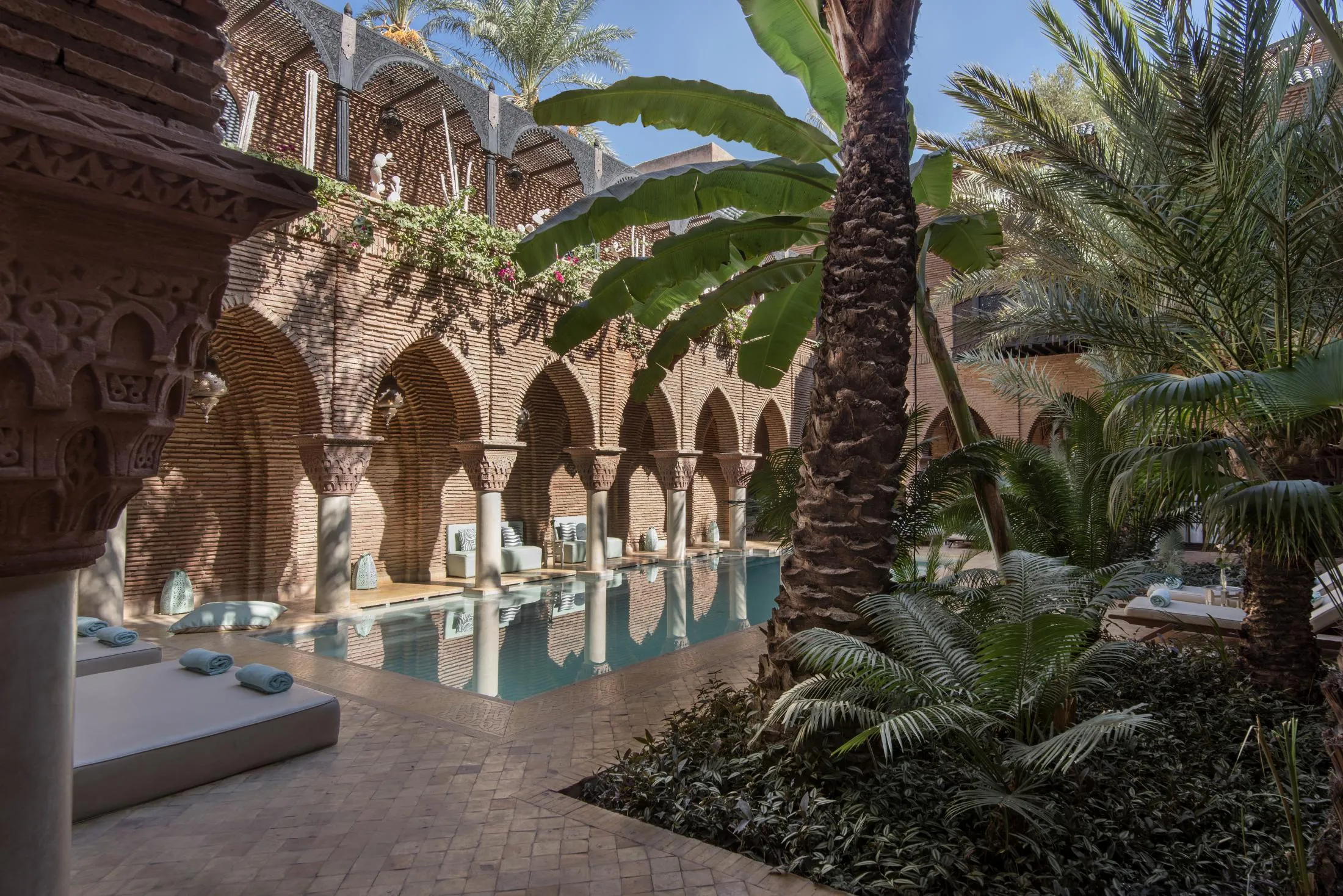
Riad Scheherazade brings pale pink plasterwork together with zellige. Saadia introduces carved cedar and deeper colours; Sabaa turns towards white stucco and marble. Brick arches and a blue pool give Almohad another material register.
Those variations matter because they make movement part of the architecture. Pattern, colour and the dimensions of an opening change from place to place. Plants and water connect the spaces without flattening their differences into a standard interior palette.
The effect is not a room made to resemble an entire country. It is a collection of particular surfaces and crafts, assembled within an existing neighbourhood.
Restoration at the scale of the hand
The hotel’s restoration programme began in 2001 in collaboration with the historic monuments authorities. Its published history describes traditional methods used by specialist craftsmen to work on wood, plaster and tile.
Vaults associated with a former granary were incorporated into the courtyard sequence. The historical account connects these spaces with the royal household’s supplies, while the upper terraces open towards the Saadian funerary complex. The building’s earlier uses give its present plan another layer of meaning.
Within the rooms, tadelakt, copperwork and carved timber carry the same attention into smaller settings. A riad’s inward-facing windows also create a particular relationship with daylight. An enclosed court is a different architectural proposition from a bedroom facing a broad street.
The roof returns the house to Marrakech
Above the courtyards, the rooftop changes the scale of the view. Roofs, minarets and the surrounding medina reconnect the enclosed interiors with the city. The contrast between an inward-facing house and an outward-looking terrace is central to the stay’s spatial character.
The dining programme gives that setting another use. La Table de La Sultana works with Moroccan and French references, while La Table du Souk turns towards Moroccan street-food traditions. Odette provides the rooftop bar and mezzé setting.
The kitchen’s published ingredient geography includes saffron from Taliouine, cumin from Alnif and argan oil from Souss. These references make Morocco more specific than a general label on a menu. The ingredient names give the menu a geographical vocabulary beyond the hotel’s courtyard.
A house with limits as well as openings
The connected historic buildings have different levels and stairs. Their inherited architecture makes individual mobility needs worth discussing directly with the property rather than assuming that every route is step-free.
A pool within the sequence of courts
Almohad’s blue pool is framed by brick arches rather than a broad seafront view. The water is encountered as an interior element of the courtyard, holding the enclosing architecture in another register. Plants interrupt the repeated openings without removing their rhythm.
The movement towards Sabaa’s white stucco and marble changes that impression again. La Sultana’s coherence comes from following those differences: brick, tile, plaster, cedar and water acquire meaning through the spaces between them, not only through the photograph of one court.
La Sultana’s identity lies in those particular conditions: a courtyard’s light, a craftsman’s surface, a terrace’s direction. The coherence comes from the conversation between the riads, not from making each one the same.
Four Seasons, Aman, Maybourne, Belmond and Mandarin Oriental now sell the journey as part of the stay, from helicopter transfers into London to 23-day circumnavigations at $238,000 a head. Who flies, why, and what is really being bought.
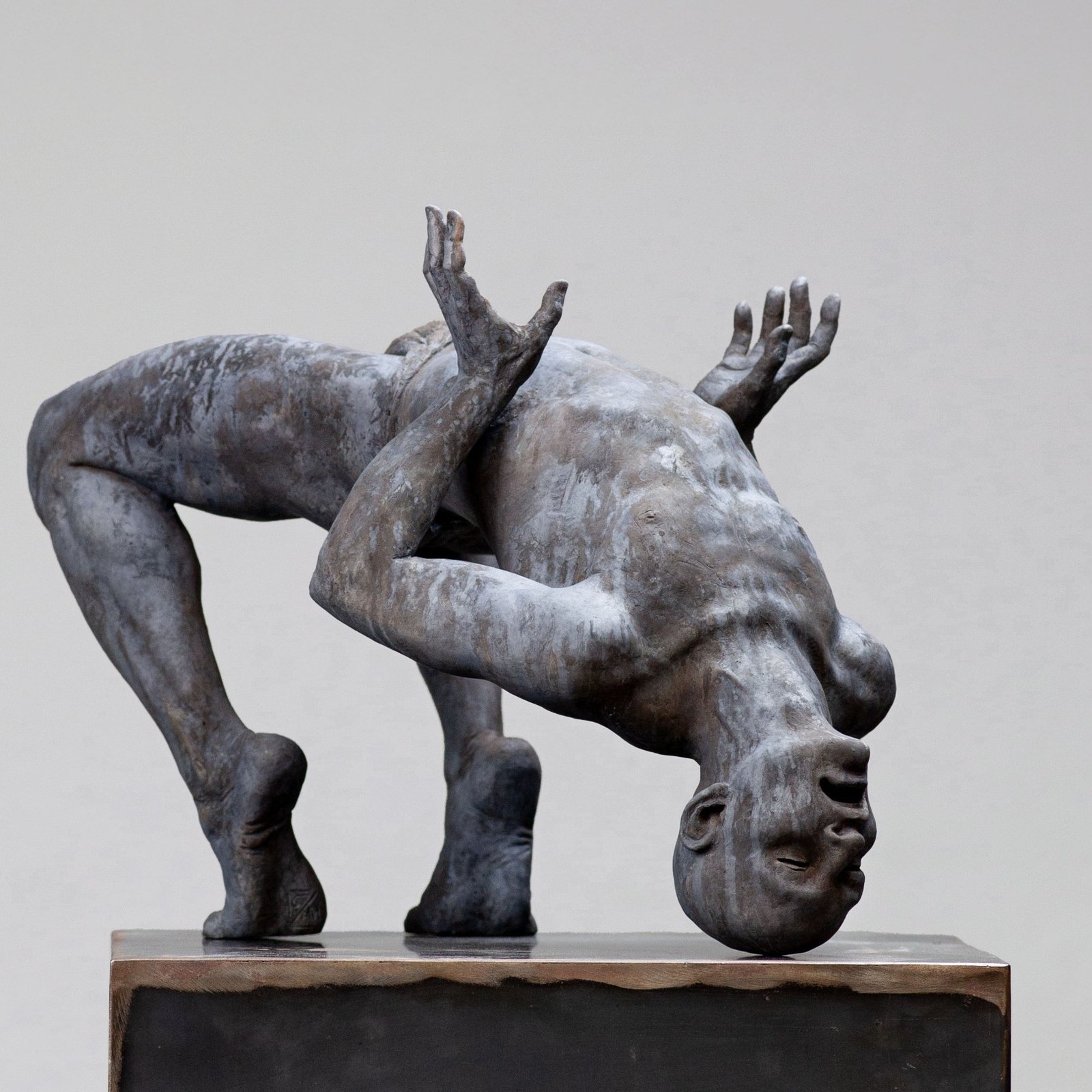
Airlifted by helicopter to the summits, monumental bronzes by Coderch & Malavia turn Courchevel's slopes into an open-air gallery, with Arman back in 1850.
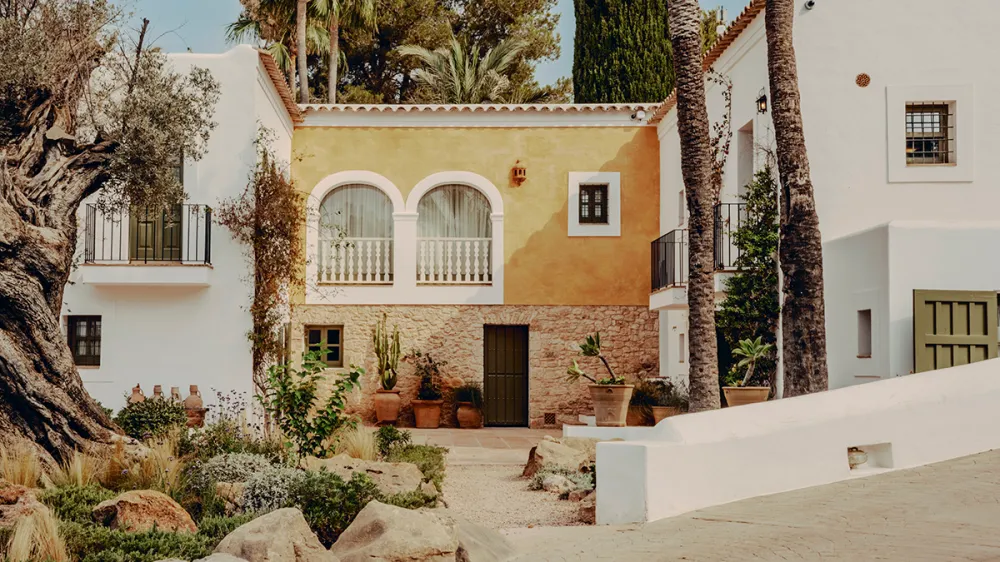
Near Santa Gertrudis, a preserved farmhouse and works by artists connected to the Balearics offer another view of Ibiza. Craft and cultivation give the members’ club its setting.