Culture / Reportage
Peter Simon: the collector’s eye moves from cloth to canvas
The Monsoon founder’s collection reaches Christie’s during Frieze Week, offering a study in colour, composition and the formation of taste.

THE CURATED EDITION.
Interview / Monaco
The Ferrari driver on Interlagos, a childhood in Monaco and the life he builds away from the cockpit.
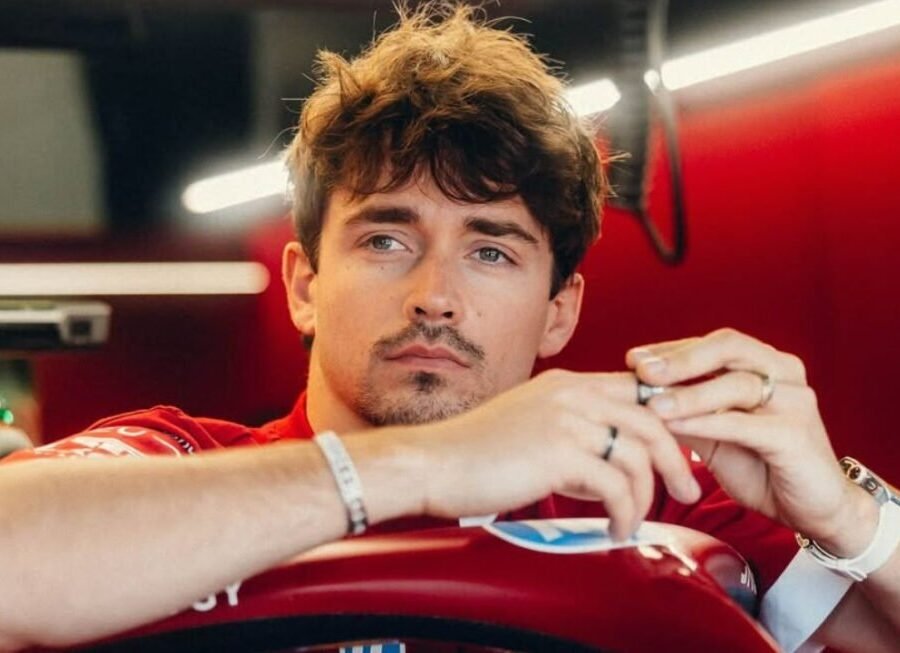
On a busy weekend in São Paulo, between warm engines, official commitments and the almost cinematic energy that comes before the Brazilian Grand Prix, we found Charles Leclerc in a rare moment of pause. Elegant, reserved and increasingly an icon who reaches beyond the cockpit, the Scuderia Ferrari driver talked to us about his time in Brazil, his relationship with Interlagos, life in Monaco and the details that shape his style on and off the track.
The result is an intimate, honest and surprisingly human conversation, revealing a Leclerc who balances speed and sensitivity, performance and aesthetics, discipline and pleasure. Even at the top of world motorsport, he is still guided by passion, purpose and a constant search for authenticity.
Charles, you have just landed in São Paulo. Do you still feel something different when you race in Brazil?
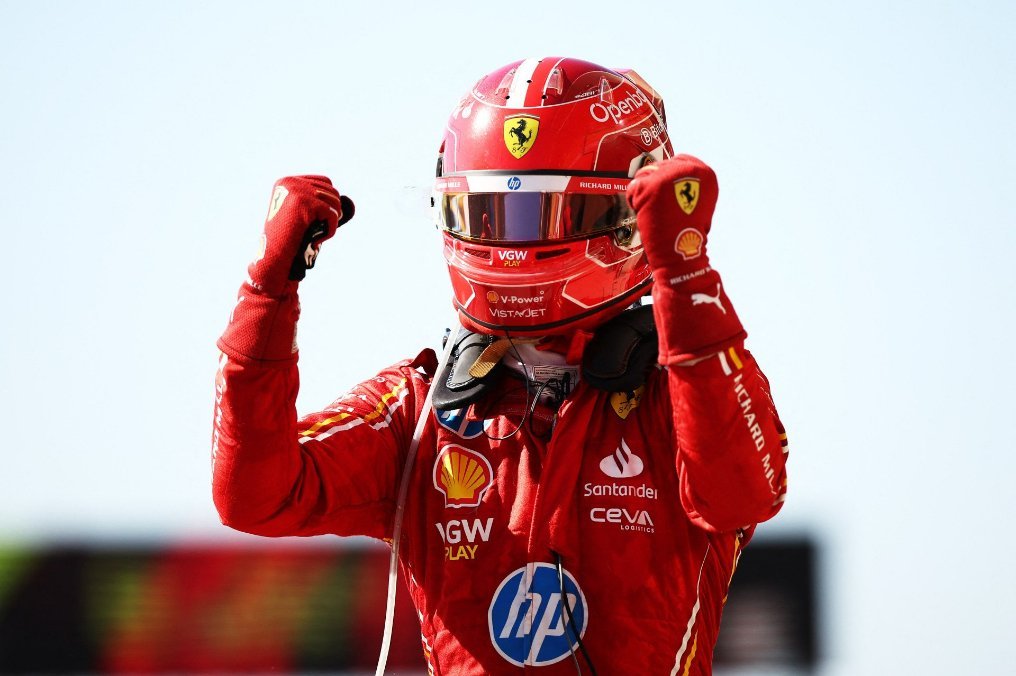
I do. Brazil has an energy all its own. At Interlagos it feels like an amphitheatre: everything is close, loud, almost electric. For someone who grew up hearing stories about Ayrton Senna, being here is never just another race on the calendar; it is always a little emotional. At the same time I try to keep my head the same as any other weekend, because if you bring too much emotion into the car, you lose focus.
What makes Interlagos a truly unique circuit for a Formula 1 driver?
Interlagos has a personality you feel from the first lap. The changes in elevation, the unpredictable weather, the short layout that allows no mistakes: it all creates an almost musical rhythm, where every corner has its own signature. And the Brazilian crowd transforms the atmosphere. You feel the vibration even inside the car, and it changes how you live the weekend. It is one of those places that remind you why we love racing.
When you land in a city like São Paulo, what is your routine in the few free hours you have?
I like to experience the city discreetly. I usually do a light workout, walk a little to get a feel for the place, and try to find a good restaurant, local cuisine or Japanese, which is one of my favourites. In São Paulo that is easy; the food scene is very strong. And if there is time, I like a simple moment at the hotel with friends or the team, without cameras.
People say you are an extremely focused driver. Away from the races, who is Charles day to day?
When I take off the race suit, I really go back to being just Charles. I like being with my family, my childhood friends and Leo, my dog. I am more reserved; I do not need to be at every event, and I prefer more intimate moments. Perhaps people expect the world of Formula 1 to be all parties and spotlights, but what recharges me is the opposite: being away from the noise, preferably near the sea.
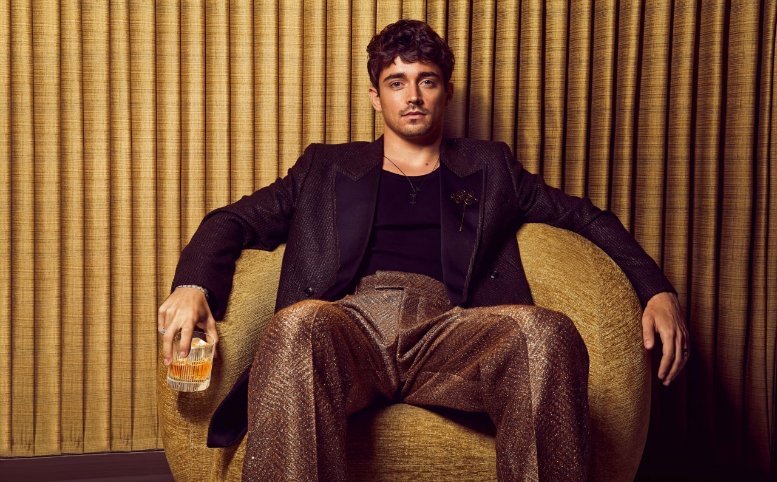
Music always comes up in your interviews. How does it fit into your lifestyle and your preparation as an athlete?
Music is how I switch off. I have played the piano since I was a child and later started playing guitar. Between races, sitting at the piano and creating something new is almost a meditation. That is how my single came about; I made it the way I usually do at home, only this time I recorded it and shared it. I do not see myself as a professional musician, but it is a space where I can be imperfect and experiment, with no pressure to perform.
Fashion has clearly become an important part of your world. What does it mean to you?
Fashion is a silent language. One side of me is very classic, looking for comfort and clean lines; another likes to play with streetwear. It depends on the mood of the day. As with a good song, you choose the tone in which you present yourself to the world. Working with houses like Armani taught me to respect the cut, the fabric, the history behind a piece. And I confess I ask Alexandra for a lot of opinions; she has a very sharp eye that inspires me to take a few more risks.
Fashion is a silent language. As with a good song, you choose the tone in which you present yourself to the world.
Charles Leclerc
If you had a free afternoon completely outside the São Paulo circuit, what would you like to do?
I think I would start with a very long lunch, maybe Japanese, or somewhere that mixes in Latin American cooking. Then I would love to get to know the city’s architecture, visit a gallery, watch how people dress on the street. São Paulo has that mix of elegance and chaos that is very photogenic for anyone who loves fashion and photography.

You were born and raised in Monaco. What is it like for a driver to live in one of the most iconic places in motorsport?
Living in Monaco is like growing up inside a myth. As a child I heard the cars go past the window, saw drivers walking in the streets, and thought it was all normal until I understood how unique it was. Monaco taught me to love motorsport before I could put it into words. And racing there today, on the same layout that marked generations, is an emotion that is hard to explain. It is my home, but it is also the centre of a world I always dreamed of being part of.
Your image is closely tied to elegance, but you are also a high-performance athlete. How do you reconcile discipline and pleasure?
The base is always discipline: training, food, sleep, all closely monitored. But I do not believe in a life where you only say no. I like good food, a glass of wine now and then, a gelato; so much so that I ended up involved in a project for lighter ice creams that I actually eat. The key is balance. If I look after myself most of the time, I can enjoy small pleasures without guilt.
Behind the scenes you are also an entrepreneur. What place do these projects have in your lifestyle?
I try to invest only in things with a direct link to my story or to what I love. Whether it is karting, where everything began, an agency to organise my schedule, or food-related products, every project has to make sense to me as a person, not only as a driver. That makes the work off the track a natural extension of my life.
You have always been very critical of yourself. How does that show up in your daily life?
I have always been very demanding of myself, perhaps too much. Early in my career I wanted everything immediately and focused far more on mistakes than on progress. Over time I learned to be more patient and to accept that growth takes time. Today I try to apply that to my whole life: if a weekend is hard, I allow it to be a bad day, not an identity. And I try to surround myself with people who tell me the truth, not what I want to hear.
When you think about the future beyond Formula 1, how do you imagine your ideal life?
I see myself still very close to motorsport, perhaps in projects that support young drivers, but I also want to give more room to my other passions. I imagine a life divided between the water and the cities I love, with time to compose, to draw, to build a fashion project with my own personality, perhaps something in sophisticated streetwear. And above all, quality time with my family, friends and the people I love. In the end, that is what makes any title worth it.
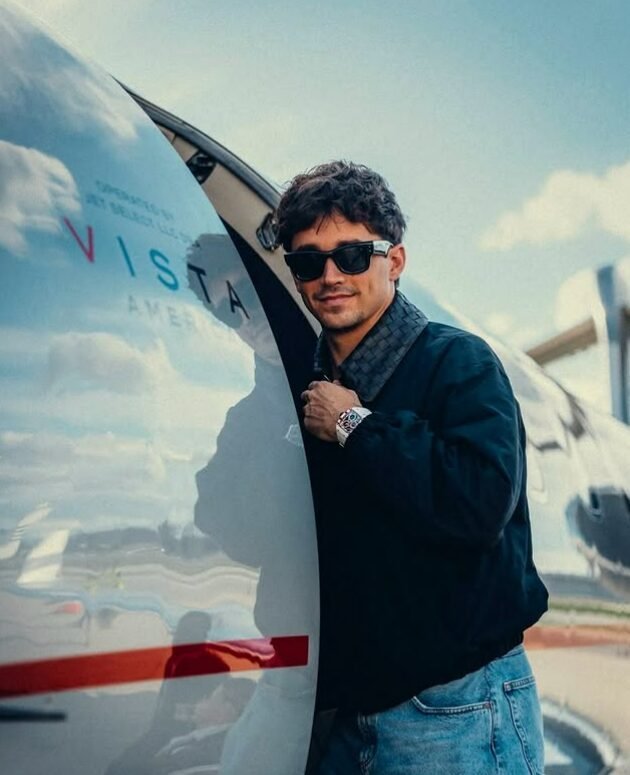
We began on a weekend of roaring engines and ended with a driver who dreams of quiet water, a piano and a long lunch. Charles Leclerc may be fastest in the car, but what he wants most is the time to slow down.
Gabriel Silveirado
CONTINUE READING
Culture / Reportage
The Monsoon founder’s collection reaches Christie’s during Frieze Week, offering a study in colour, composition and the formation of taste.
Culture / Reportage
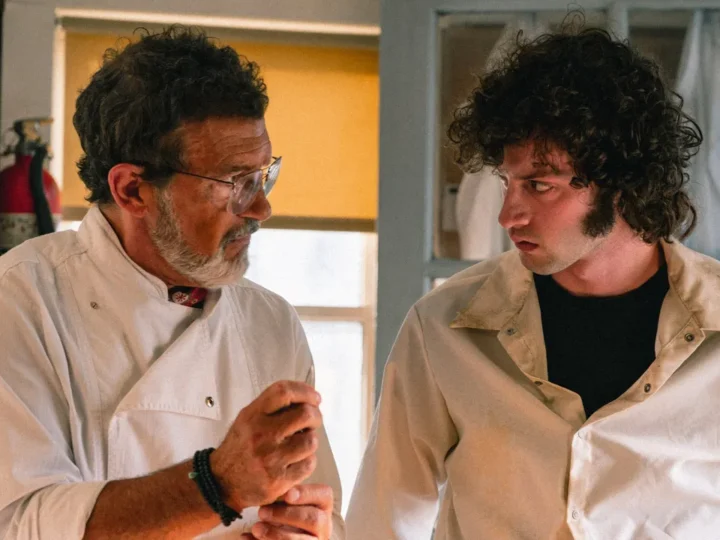
The film’s early-kitchen premise opens a wider conversation about food, apprenticeship and the difference between biography and fiction.
Culture / Reportage
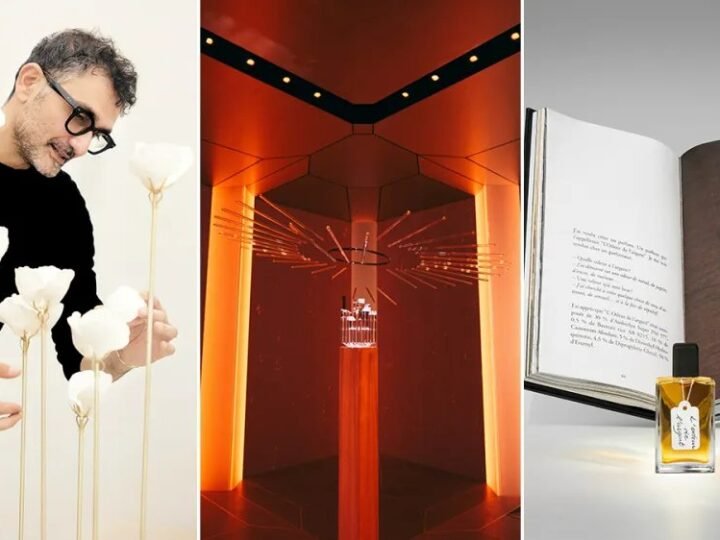
Looking back at the 2025 Palais de Tokyo exhibition, scent emerges as a material for collaboration rather than simply a product to be displayed.