After caviar, foie gras: China closes in on France
Having reshaped the caviar trade, China now produces almost as much foie gras as France, with some analysts expecting it to take the lead as soon as this year. The question is no longer volume but reputation.
A pattern is repeating itself behind the kitchen door. Having remade the global caviar market in little more than a decade, China is applying the same industrial method to another emblem of the French table. Its foie gras output is now within reach of France’s, and some analysts expect it to become the world’s largest producer this year or next.
The numbers explain the urgency in the Périgord. Industry analysts in China estimate national production last year at as much as 14,000 tonnes, roughly 30 per cent more than in 2024 and some seven times the level of a decade ago. France produced 15,044 tonnes, down 3 per cent. Between them, the two countries account for more than 80 per cent of the world’s supply.
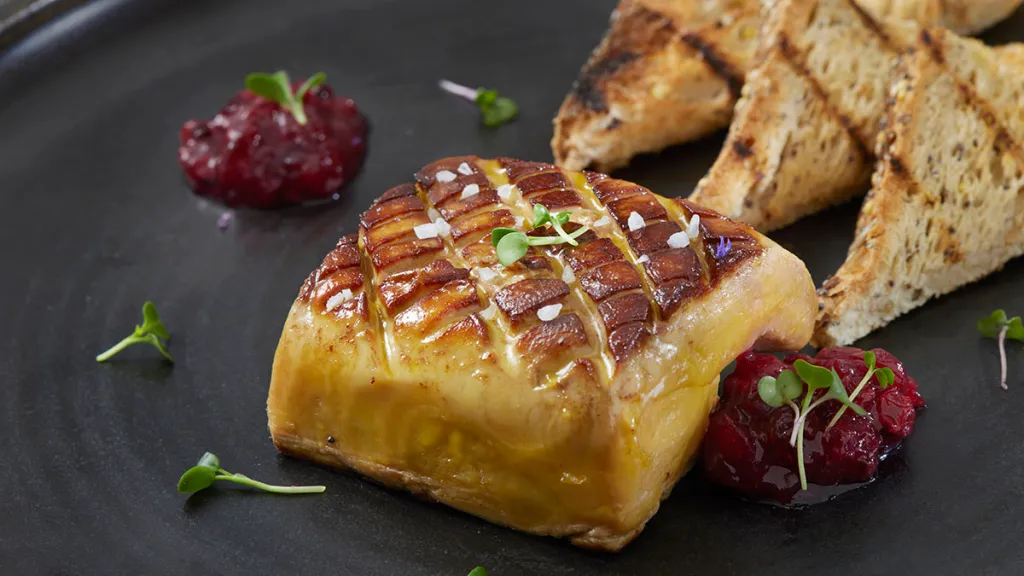
THE SAME SLICE, A DIFFERENT GEOGRAPHY. IMAGE: PRESS
The caviar method
None of this is accidental. As with sturgeon, foie gras offers high value, appeal among newly affluent consumers and the possibility of industrial scale. Chinese farms are expanding duck and goose flocks, with public subsidies covering a large share of infrastructure and vaccination costs on some sites. Jilin Zhengfang, the country’s largest producer of duck foie gras, makes around 1,500 tonnes a year. The average French producer makes about ten.
Price completes the argument. A slice in a Chinese restaurant costs between 30 and 70 yuan, against €15 to €40 in France. Less than 5 per cent of Chinese output is exported for now, but producers are working on contracts in South Korea, Japan, Southeast Asia and the Gulf, and the first cans have already reached Dubai.
France under pressure
French producers face more than Asian competition. Avian influenza outbreaks have repeatedly thinned flocks, costs keep rising, and a growing number of jurisdictions restrict or ban force-feeding. The result is an opening that China seems willing to fill with the logic it applied to caviar: scale, state support and distribution aimed at markets beyond its borders.
Provenance on the plate
For fine dining, the shift raises questions beyond geography. Chefs and sommeliers are watching how origin affects perceived quality, the story told on the menu and, eventually, the price. French foie gras carries generations of reputation and protected geographical status. The Chinese product, still building its name, has to prove that consistency and finesse can keep pace with volume.
If caviar was the rehearsal, foie gras may be the second act. Tradition and appellation, however deeply rooted in French culture, no longer guarantee exclusivity in a market increasingly willing to taste a new origin.
A Michelin star rewards a habit more than a single brilliant night. Sepia in Chicago, starred through fifteen consecutive editions and now under Kyle Cottle, and Ariete in Miami show what the inspectors are really looking for.
Milan never tried to out-Naples Naples. It made pizza in its own image instead: long fermentation, stone-milled flour, tasting menus and wine lists, from Confine, named Italy's best pizzeria in 2026, to the thin, crisp rounds of Le Specialità.
From a shoebox counter in the Haut Marais to a Japanese roastery that seems to stop the clock, the Paris cafés where coffee is treated as craft rather than habit.