Milan by the slice: a guide to the city’s best pizzerias
Milan never tried to out-Naples Naples. It made pizza in its own image instead: long fermentation, stone-milled flour, tasting menus and wine lists, from Confine, named Italy's best pizzeria in 2026, to the thin, crisp rounds of Le Specialità.
Milan learnt to speak pizza with its own accent. It never tried to beat Naples at tradition; it did what it does best, taking a classic and setting it to a contemporary tempo. The result is a scene built on technique, ingredient research and a sense of design, and, in many rooms, on a wine list that turns pizza into a complete meal.
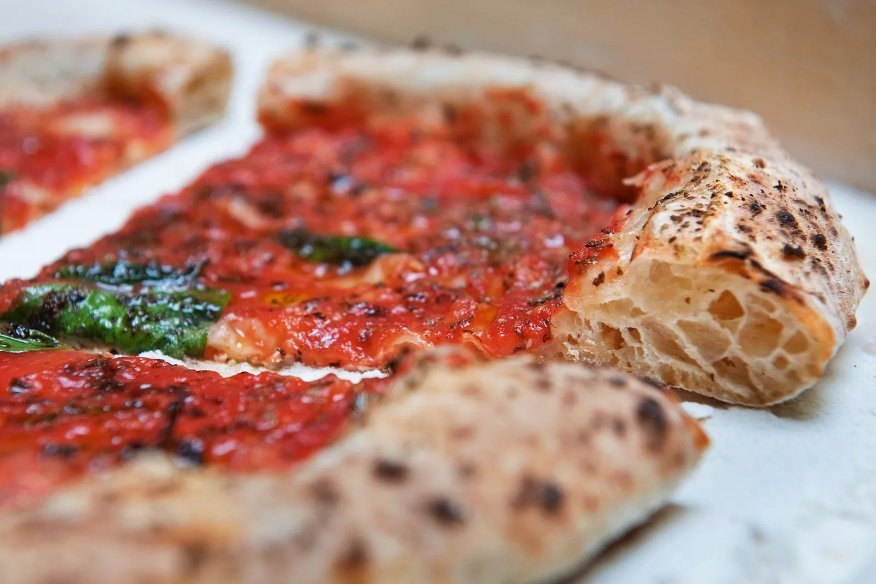
Part of the shift is a vocabulary that has escaped the bakery. Pre-ferment, biga, long fermentation, levain, hydration, stone-milled and semi-wholemeal flours, double baking. The promise varies, but its outline is constant: a lighter, more digestible dough, with the scent of bread, a well-drawn crumb and a cornicione that is not merely a crust but a texture. A city that has always lived between pragmatism and the urge to refine the everyday found in pizza a perfect field for experiment.
Pizza at the tasting table
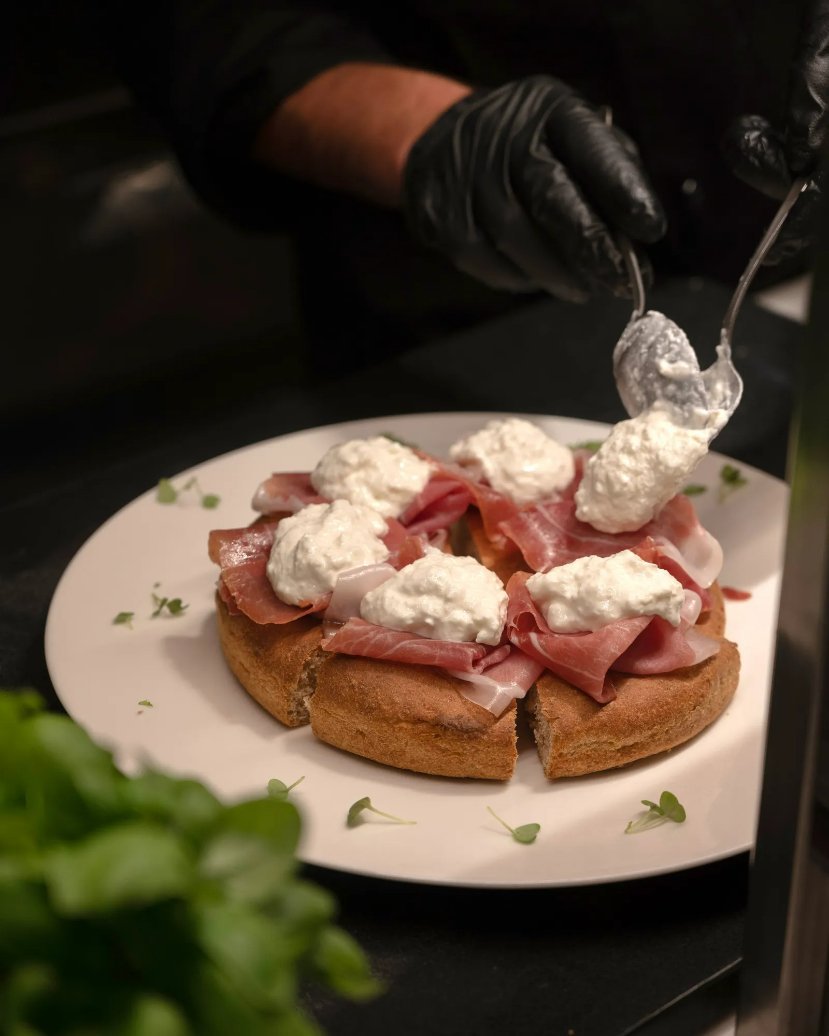
TAKE AWAY, RATHER THAN ADD. IMAGE: PRESS
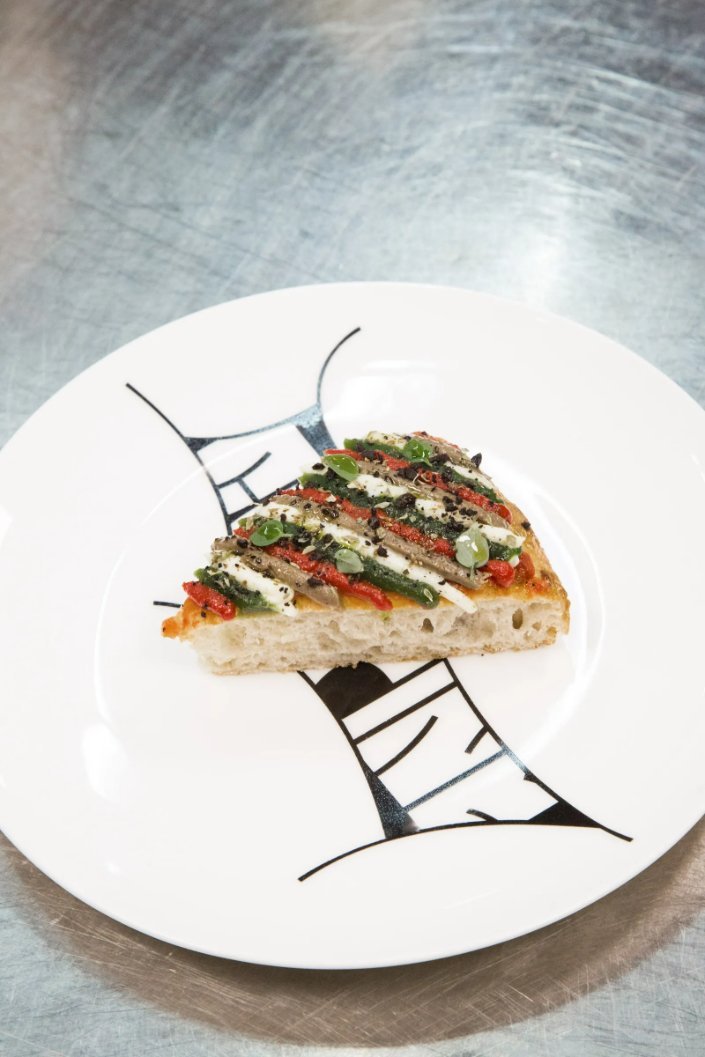
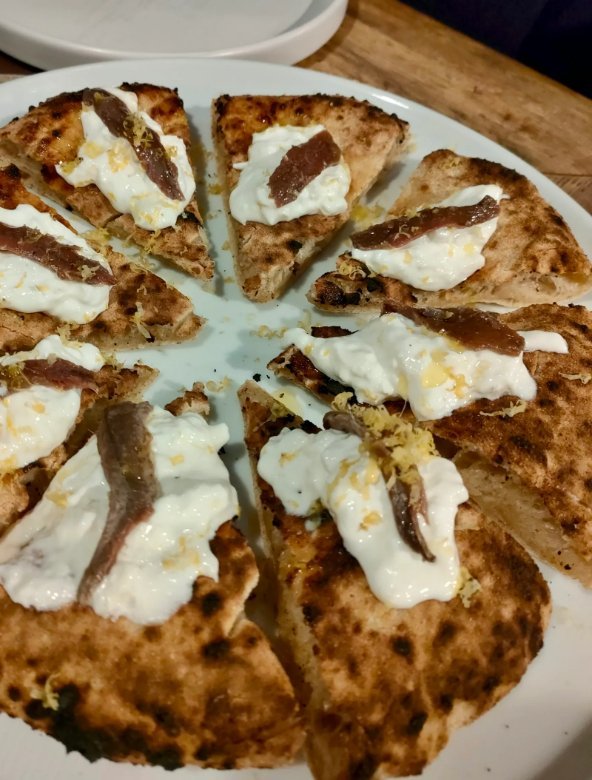
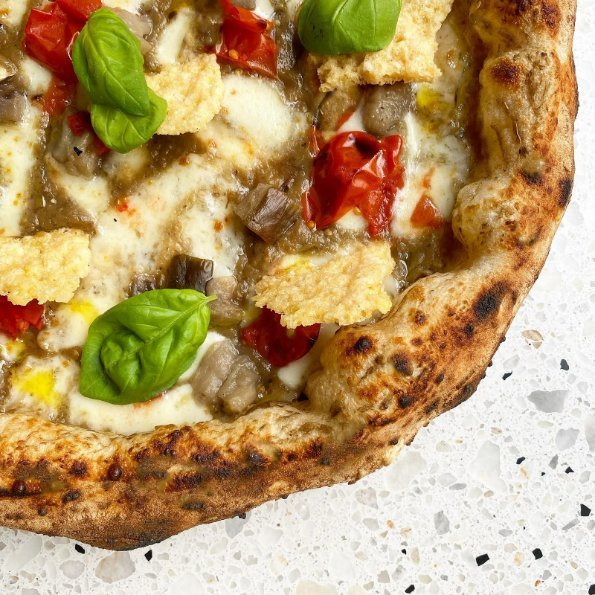
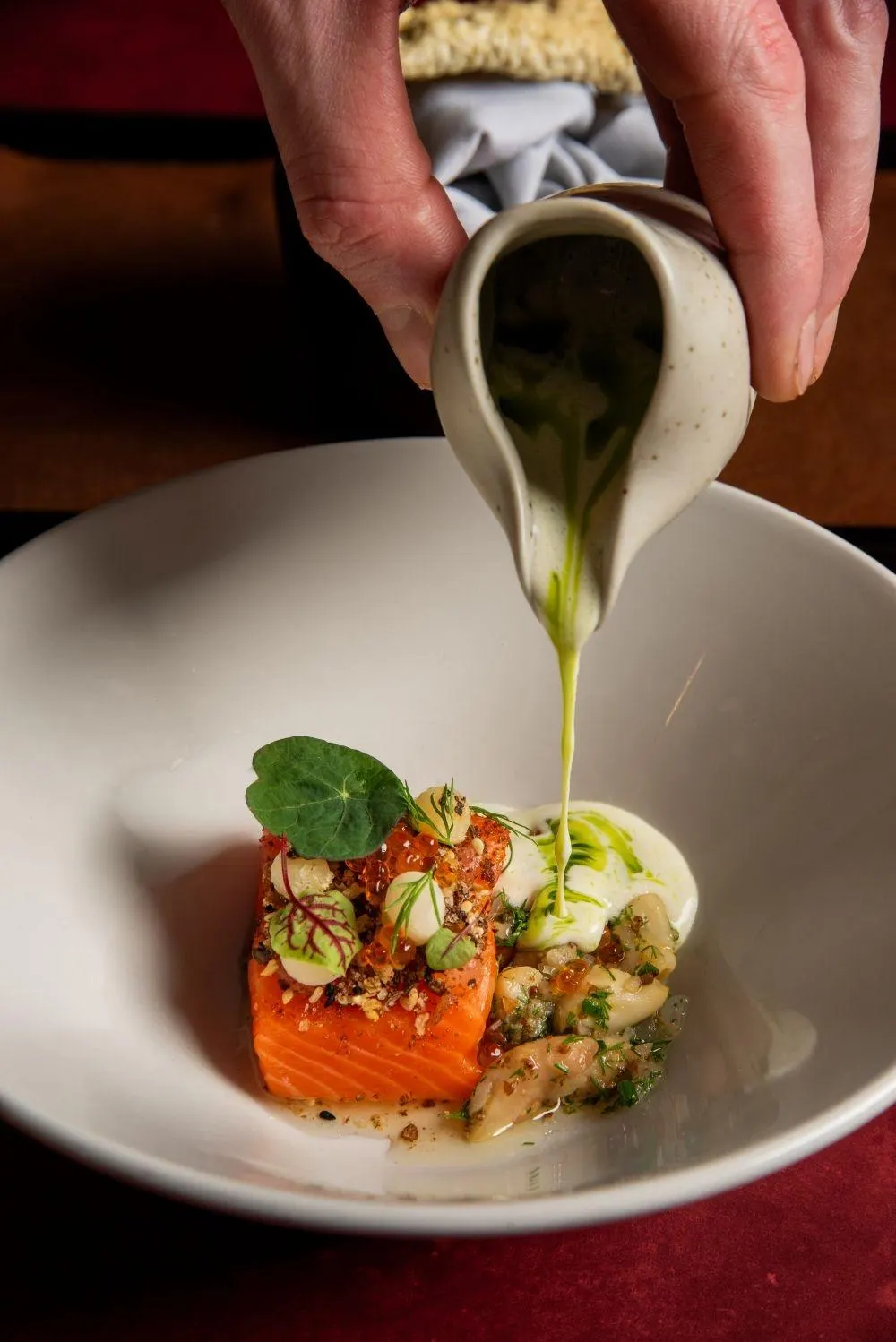
Confine, near the Carrobbio, is where pizza enters fine dining without losing itself. Francesco Capece at the oven and Mario Ventura in the cellar, both from the Salerno area, serve most guests a tasting sequence of hot slices with matched wines, under a philosophy of subtraction. Creams, smoke, acidity and salinity are composed as carefully as in an auteur menu. In July 2026, 50 Top Pizza named it the best pizzeria in Italy. The tasting menus run from around €55 to €70.
THE WORK THAT HAPPENS BEFORE THE OVEN. IMAGE: PRESS
Biga, in Isola and Moscova, shows how pre-fermentation became a style in itself. The dough is designed to be light and scioglievole, the kind of softness that melts away, and the toppings, with their seasonal creams and finishes, borrow from restaurant cooking. It is an urban pizza, ready for the camera, held up by invisible work.
Grain, territory and texture
THE CILENTO, CARRIED NORTH. IMAGE: PRESS
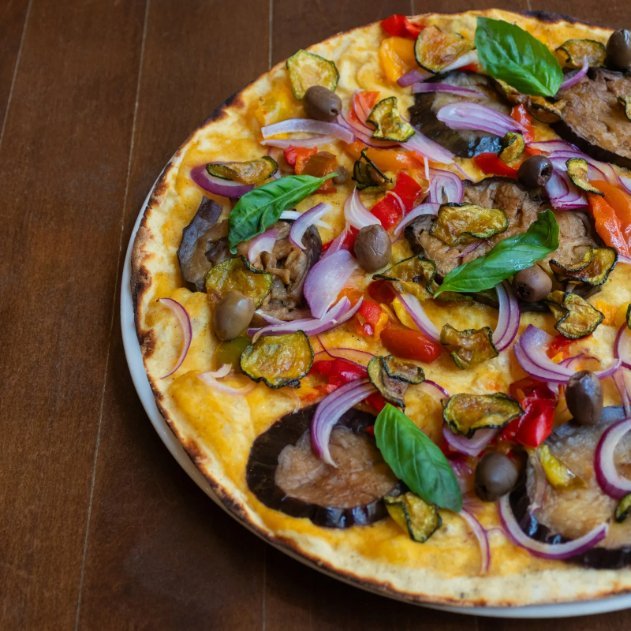
Da Zero builds its identity on territory and a short supply chain, anchored in the Cilento, south of Salerno. The pizza becomes a showcase for producers and old varieties, with long fermentations and a range that runs from revisited classics to unexpectedly good vegan versions.
A SMALL LABORATORY OF TEXTURE. IMAGE: PRESS
Savô, on via Fara, is a small laboratory of textures: stone-milled flour, high hydration and formats that change everything, from the tall, soft Nuvola to the crisp Scrocchiarella, dressed after baking. For anyone who likes to taste by comparison, it is almost an obvious choice.
COME FOR BREAD, STAY FOR PIZZA. IMAGE: PRESS
Crosta, a bakery near Porta Venezia, is the kind of place where you go in for a loaf and leave thinking about the pizza. Natural leavening, long hours of fermentation and folding give lightness without sacrificing flavour, and the communal tables make the point that sophistication can live in the product rather than the ritual.
Consistency, crunch and the classics
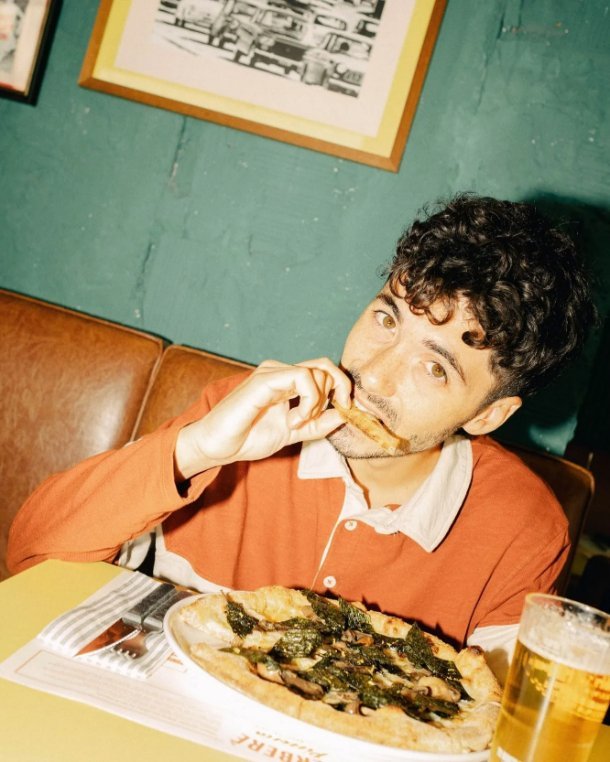
SCALE, WITHOUT SHORTCUTS. IMAGE: PRESS
Berberè, the group founded by the Aloe brothers, shows that scale and rigour can coexist: seasonal menus, research into flours and pizzas cut to share. Crocca, true to its name, bets on a thin, friable base, pre-baked and topped with anything from the classics to the season, a reminder that in Milan a great pizza need not be Neapolitan.
THIN AS A BLADE. IMAGE: PRESS
Then there are the addresses that became symbols. Giolina, with its dandyish room and a near-scientific approach to fermentation, serves an intensely fragrant, airy pizza for those who like to taste the grain; its long-time pizzaiolo Danilo Brunetti left at the start of 2026, and the house has carried on with a new team.
PERFUME OF THE GRAIN. IMAGE: PRESS
Gino Sorbillo, beside the Duomo, is the bridge between Neapolitan tradition and international fame, proof that pizza can travel without losing its simplicity.
NAPLES, TRAVELLING LIGHT. IMAGE: PRESS
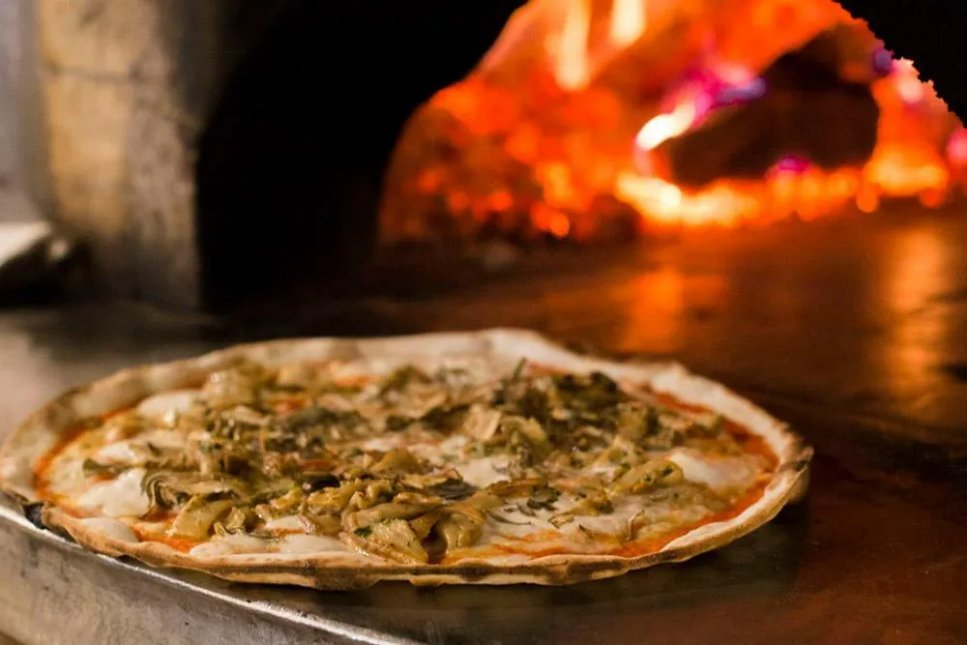
Finally, Le Specialità, on via Calvi, embodies the thin, crisp Milanese pizza of local memory, now a fashionable table, with gluten-free versions and a wine list that lifts the evening.
A MILANESE MEMORY, SERVED CRISP. IMAGE: PRESS
The best pizza in Milan is not one pizza. The city does not offer an answer; it offers a map, of doughs and fermentations, of producers and regions, of minimal rooms and unpretentious counters, of pizzas tall as clouds and thin as blades. The pleasure is in choosing the one that suits the hour, the mood and the table.
Details: Confine, via San Sisto 6. Biga, via Pollaiuolo 9 and via Alessandro Volta 20. Savô, via Gustavo Fara 10. Crosta, via Felice Bellotti 13. Le Specialità, via Pietro Calvi 29. Confine works mainly on tasting menus; booking is advised.
A Michelin star rewards a habit more than a single brilliant night. Sepia in Chicago, starred through fifteen consecutive editions and now under Kyle Cottle, and Ariete in Miami show what the inspectors are really looking for.
From a shoebox counter in the Haut Marais to a Japanese roastery that seems to stop the clock, the Paris cafés where coffee is treated as craft rather than habit.
Having reshaped the caviar trade, China now produces almost as much foie gras as France, with some analysts expecting it to take the lead as soon as this year. The question is no longer volume but reputation.