A Michelin star rewards a habit more than a single brilliant night. Sepia in Chicago, starred through fifteen consecutive editions and now under Kyle Cottle, and Ariete in Miami show what the inspectors are really looking for.
A Michelin star is not awarded for a great night. It is awarded for the same great night, repeated. That is the part most diners miss: behind one of the most coveted distinctions in contemporary cooking lies not a flash of brilliance but a quiet discipline renewed every service, plate by plate.
The star belongs to the kitchen
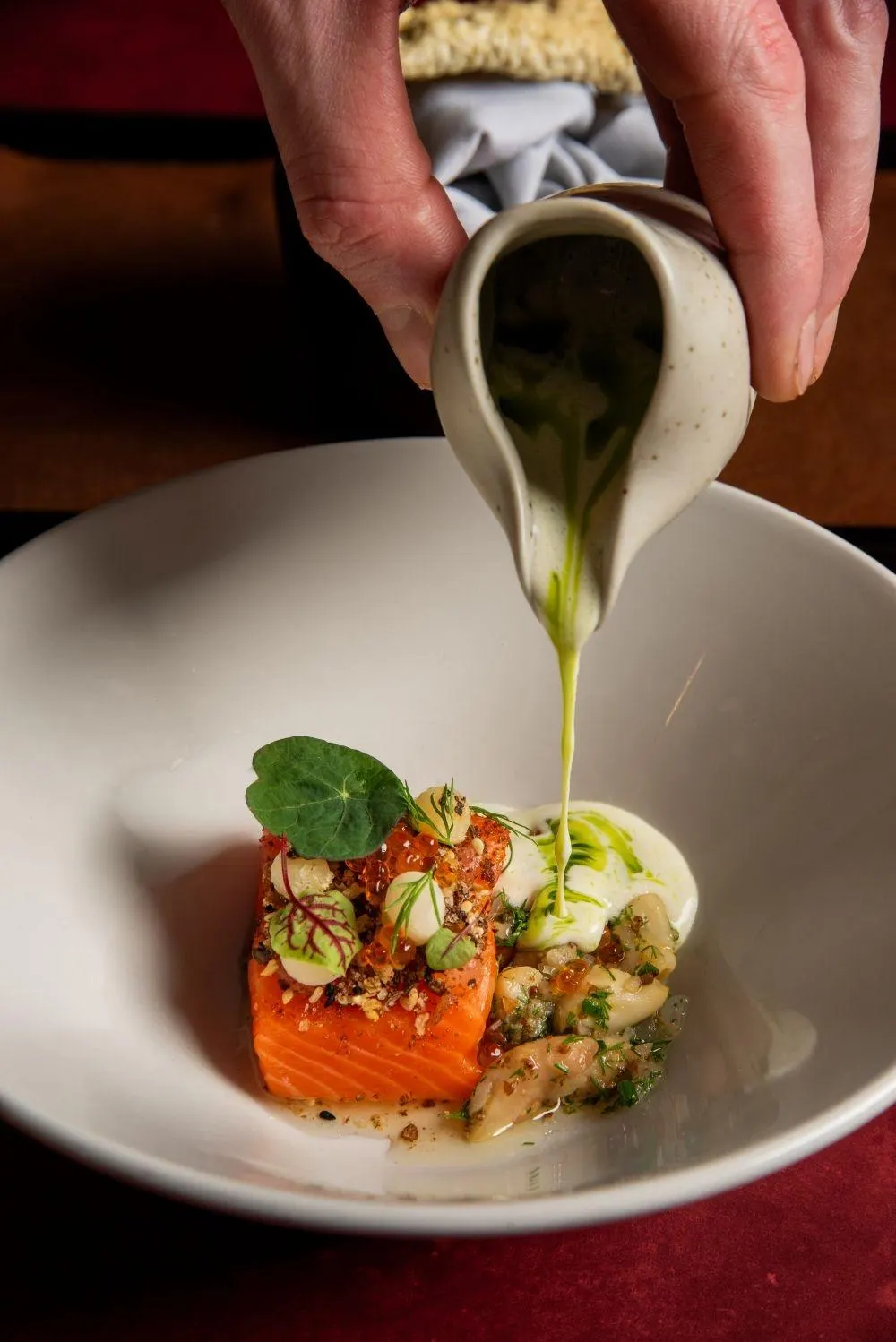
THE SAME PLATE, EVERY NIGHT. IMAGE: PRESS
At Sepia, in Chicago’s West Loop, constancy has become identity. Opened in 2007, the restaurant has held its star through fifteen consecutive editions of the guide, and kept it again in the 2026 Chicago selection. At the end of 2025, Andrew Zimmerman, who had led the kitchen since 2009, handed day-to-day command to Kyle Cottle, staying on as an adviser. A change of chef might suggest rupture. The guide’s own position is that a star belongs to the restaurant and the quality of its cooking, not to a single name, and Cottle, who joined in 2019 after Aviary, Next and Blackbird and spent years shaping the menu as chef de cuisine, knows the house intimately.
The plates confirm the continuity. Caviar with shiro dashi; dry-aged duck breast with cider jelly and brown butter. Cottle describes his work as refinement rather than revolution, improving what already works instead of chasing abrupt change. He also describes his creative process as introspective: ideas arrive in quiet moments, away from the pressure of the pass.
What the inspectors weigh
The inspection process keeps its aura of mystery, but the criteria are public and universal: the quality of the ingredients, mastery of technique, harmony of flavours, the chef’s personality expressed on the plate, and consistency across visits and across the menu. Décor, service style and the grandeur of the room do not count towards a star. Only what arrives on the plate does.
Anonymity is the system’s foundation. Inspectors pay their own bills and return more than once, so that the verdict rests not on an exceptional evening but on the ability to reproduce the same standard again and again. Repetition is the real test.
Keeping it is the harder part
Keeping a star can be as demanding as winning it. The distinction is reassessed every year, creating a permanent cycle of scrutiny, and a handful of chefs have asked to be removed from the guide, citing the creative and operational pressure that comes with the title. For many cooks it is the summit of a career; it can also reset expectations for an entire restaurant overnight.
Michael Beltran, of Ariete in Miami’s Coconut Grove, which marked ten years in January 2026 and has held a star since the guide arrived in Florida in 2022, compares a menu to a piece of music, in which each dish contributes to a larger narrative. Inspiration, in his telling, comes from culture, from the seasons and from constant observation. Consistency comes from something less visible: a trained, aligned team that shares a purpose.
For all the prestige, the stars are a measure, not the meaning. Restaurants without them still hold a city’s celebrations and memories. A star can crown excellence, but it is the guest’s experience, repeated quietly night after night, that sustains a restaurant’s legacy.
Milan never tried to out-Naples Naples. It made pizza in its own image instead: long fermentation, stone-milled flour, tasting menus and wine lists, from Confine, named Italy's best pizzeria in 2026, to the thin, crisp rounds of Le Specialità.
From a shoebox counter in the Haut Marais to a Japanese roastery that seems to stop the clock, the Paris cafés where coffee is treated as craft rather than habit.
Having reshaped the caviar trade, China now produces almost as much foie gras as France, with some analysts expecting it to take the lead as soon as this year. The question is no longer volume but reputation.