Why Condo-Style Hotels Beat Airbnb in Certain Destinations
The space of a home with the service of a hotel: on islands, beaches and ski slopes, the condo hotel has become the choice for stays of a week or more.
Some trips call for a house. Others call for a hotel. The best ones ask for both at once.
It is in that gap, between the house rented through an app and the conventional hotel room, that a category of lodging has been taking hold. Condo hotels, residential units run to the standards of a hotel group, have gained ground precisely where the classic Airbnb model shows its limits: long stays, large families and destinations where on-site service makes a practical difference to everyday life.
The shift is most visible in mountain resorts, on islands such as Hawaii and the Caribbean, and in remote areas near national parks, where guests tend to stay a week or more at a single address. There, the condo hotel offers what the market had treated as irreconcilable: the space and sense of belonging of a home, together with the service structure of a hotel.
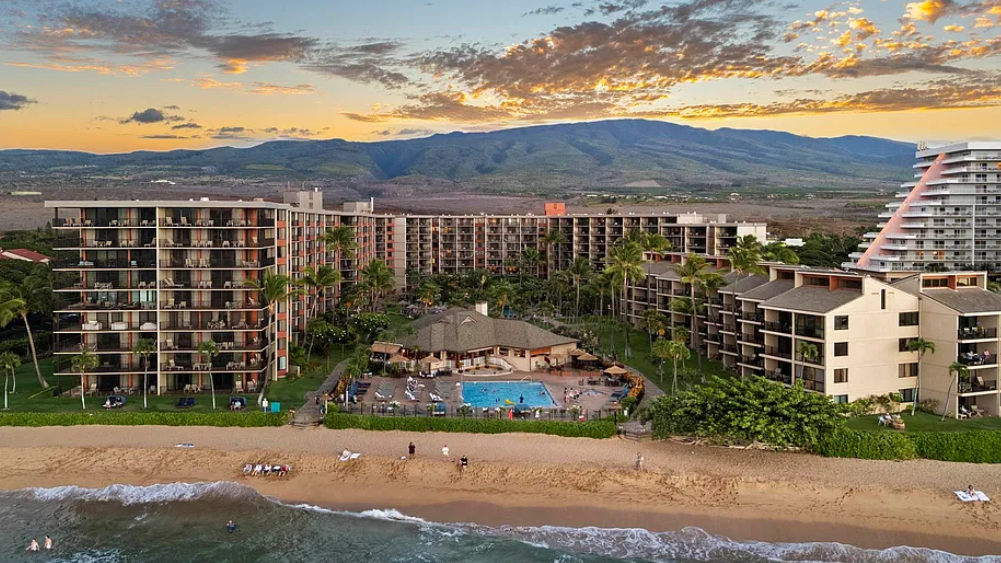
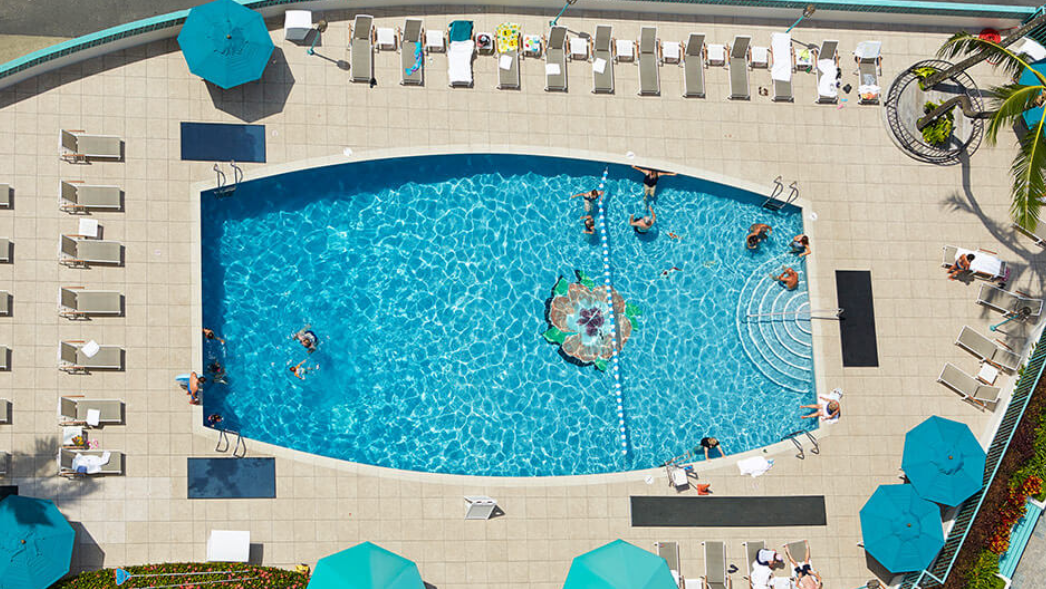
BEACHFRONT RESORTS, FERTILE GROUND FOR THE HYBRID MODEL
Consistency as the real difference
“Aparthotels and serviced units offer more consistency than Airbnb because they are professionally managed,” says Tay Belgeri, a travel writer for TravelAwaits. “Airbnb varies far more in terms of management, which changes the experience from one booking to the next.”
An Airbnb can be excellent in many respects, but a condo hotel usually guarantees a standard, from the interior design to the cultural, dining and recreational services available to guests. There is also the reassurance of knowing that if something fails, a broken air conditioner or patchy Wi-Fi, someone on site can fix it straight away, without waiting for a host to reply from a distance.
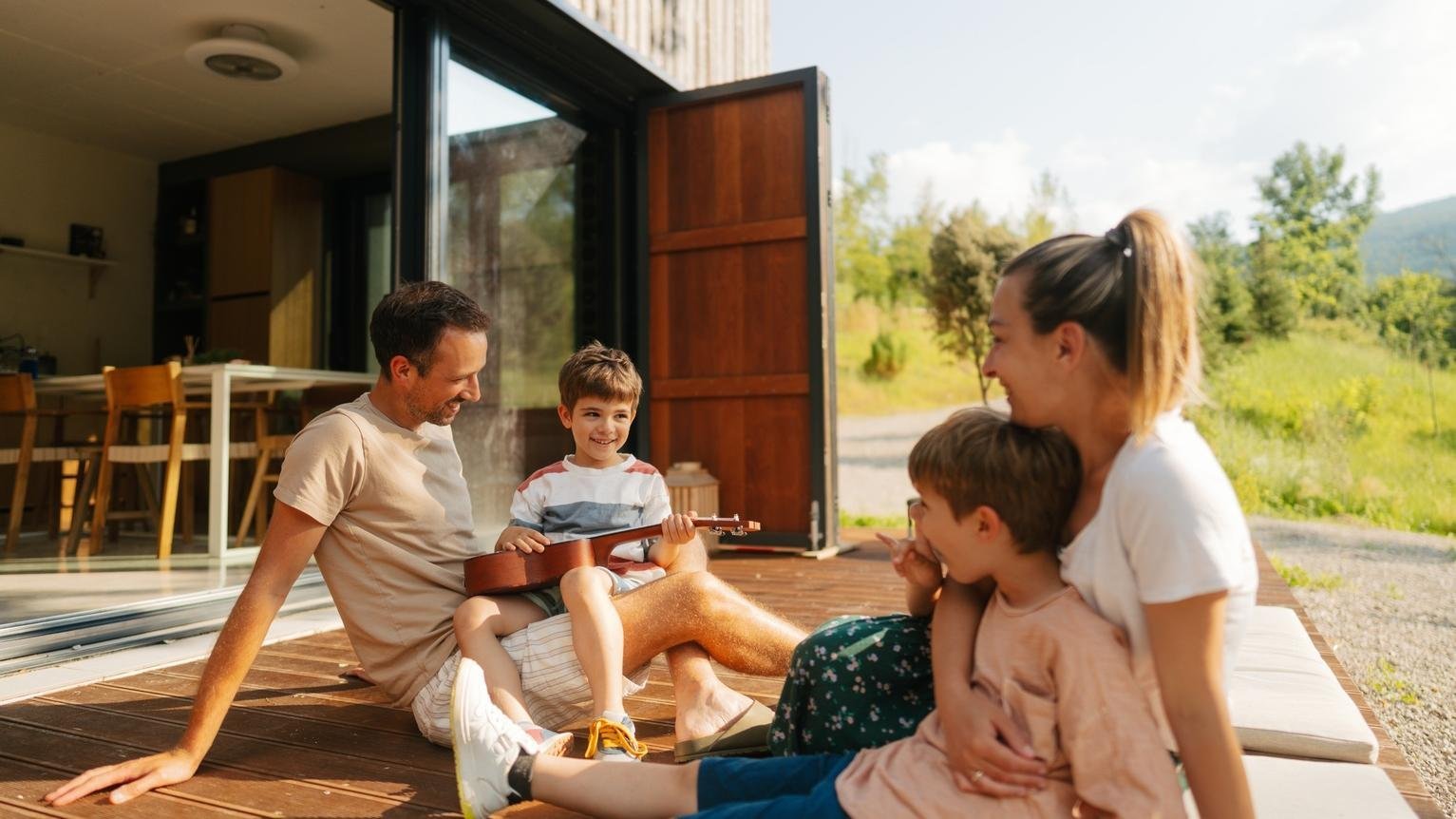
FAMILIES ON LONG STAYS VALUE PREDICTABLE SERVICE
Guests are not the only ones who benefit
Residential units run under a hotel brand’s standards are also an investment opportunity for individual owners, who can place the property in a rental pool while they are away and earn additional income.
“These developments combine hotel hospitality with private residential ownership, serving buyers who are looking for exclusivity, convenience and investment potential in prime locations,” says the Forbes contributor Daniel Berman.
According to Berman, the most demanding buyers no longer look only for a house or a hotel stay. They want curated experiences, high-end amenities and the prestige of owning a branded residence within a development of global standing. The benefits repeat themselves for owners and guests alike: concierge, housekeeping and security, none of which come as standard with an ordinary Airbnb.
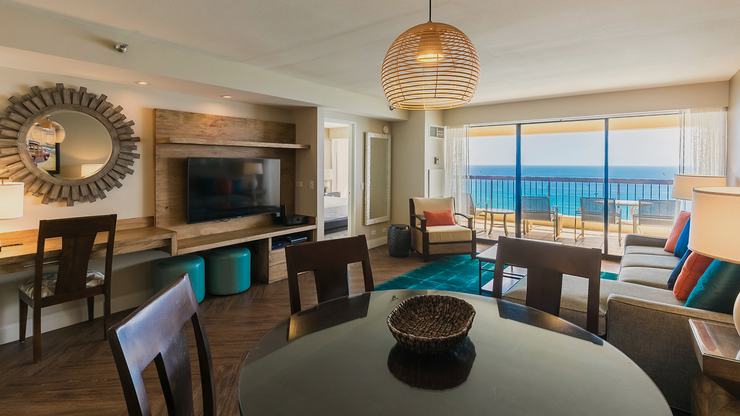
HOTEL-RUN RESIDENCES ATTRACT GUESTS AND INVESTORS ALIKE
Amenities that widen the stay
Another point in the condo hotel’s favour, especially in resort destinations, is access to a full recreational structure: gym, pool, spa and other activities. Aqua-Aston, with properties across the Hawaiian islands, runs a regular cultural programme that includes hula lessons, lei making, ukulele, weaving and weekly markets of local crafts, as well as yoga and fitness classes.
Such offerings are common at traditional island resorts. But the possibility for multigenerational trips to have units with several bedrooms, a full kitchen and laundry, alongside hotel services, creates a combination that a conventional Airbnb rental can hardly match.
THE FEELING OF LIVING SOMEWHERE, NOT MERELY STAYING
Regulation as an argument for the condo hotel
The regulatory climate matters too. With cities such as Amsterdam, Barcelona, New York and San Francisco restricting short-term rentals because of their effect on local housing markets, condo hotels do not add to the problem, since hotel operations follow specific zoning rules. For many travellers, there is some relief in knowing they are not feeding an urban distortion.
IN BARCELONA, RENTAL RULES REOPENED THE DEBATE
Belgeri says she has seen friends stay, without knowing it, in illegal Airbnbs in residential neighbourhoods abroad. Sandy Chen, a professor at Ohio University’s Patton College of Education, sees growing demand to “live like a local”, but notes that hotels have been making their offer relevant enough to meet that wish. “Rather than one replacing the other, the market has segmented,” Chen says. “Today the traveller does not automatically turn to a hotel. Instead, they choose according to the purpose of the trip.”
How condo hotel brands are moving towards the rental platforms
Earlier this year, Aqua-Aston signed a new distribution partnership with Airbnb and Hopper, placing dozens of its resort-style properties in front of millions of users on those platforms. The reach of Airbnb and Vrbo widens the scale of brands such as Aqua-Aston, which compete with traditional hotels in destinations where demand and competition are equally high.
For now, only a few Aqua-Aston properties are on Airbnb, among them Aston Waikiki Beach Tower, Ilikai Hotel & Luxury Suites and Aqua Palms Waikiki on Oahu, and Aston Kaanapali Shores on Maui. The goal is to bring the entire group onto Airbnb and Vrbo by April next year.
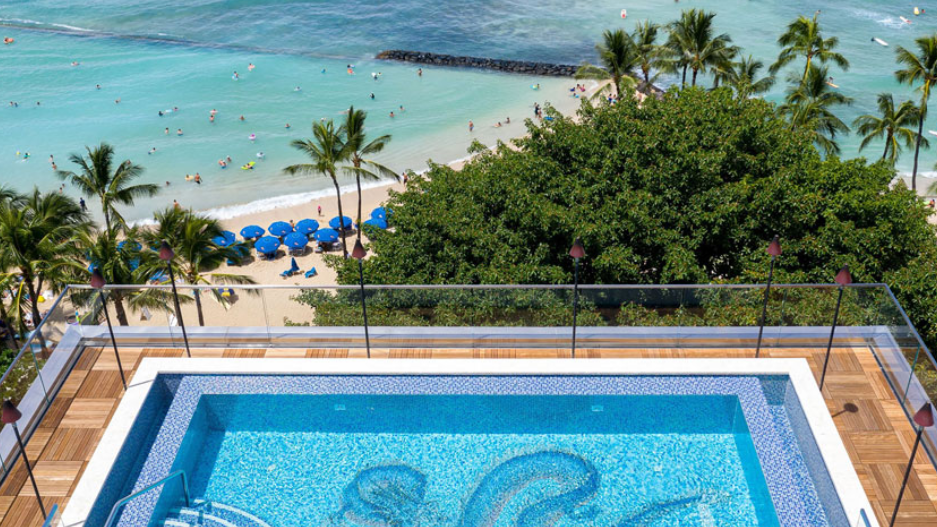
Also on Airbnb is Espacio The Jewel of Waikiki, an all-inclusive property of the highest standard that sits within the Airbnb Luxe category. With only nine suites, each occupying an entire floor, it guarantees guests near-total privacy, and it belongs to The Leading Hotels of the World. At Espacio, meals, housekeeping and butler service are included, with full kitchens, whirlpool tubs on the balconies and oceanfront amenities. The partnership with Hopper, experts say, brings Aqua-Aston’s inventory closer to a younger, more tech-minded public, a group that tends to value traditional hotel amenities even on leisure trips.
ESPACIO’S ROOFTOP POOL, BOOKED BY THE HOUR THROUGH A BUTLER
“In resort areas, travellers are looking for comfort, accessibility and convenience,” Belgeri says. “They tend to choose an aparthotel or serviced unit over an Airbnb if there is a good location, concierge support and extras such as daily housekeeping. They want a more practical stay that lets them enjoy the amenities and the location faster.” Kien Lam, of the site Where and Wander, notes that remote interactions with hosts and staff make booking an Airbnb more complicated, and that its cost has also risen in recent years. That is why, he says, he has turned more to traditional booking platforms, not least for the chance to build elite status.
Loyalty points, perks and card benefits
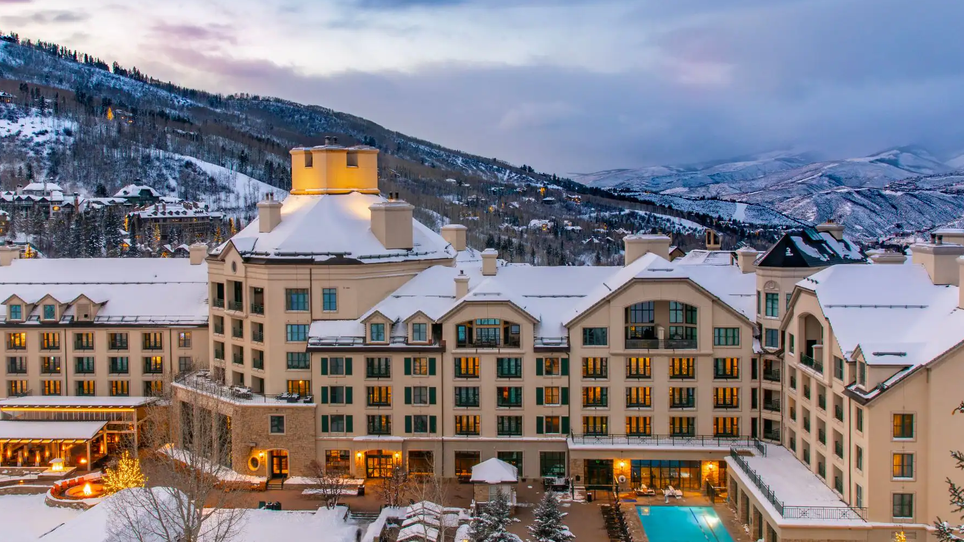
Condo hotels and holiday homes tied to hotel groups sometimes offer equivalent perks. East West Hospitality, which manages properties in a range of mountain and beach destinations, runs a number of units at the top of the Park Hyatt Beaver Creek. Although they are not formally part of the hotel, guests have full access to the resort’s amenities, pools, spa and gym, and can charge restaurant bills to their room, eligible for World of Hyatt points.
FULL LEISURE FACILITIES REMAIN AN EDGE OVER INDEPENDENT RENTALS
Then there are the credit cards. Whether it is a stand-alone residence or a serviced unit within a larger portfolio such as Aqua-Aston, cardholders have good news ahead. The American Express Platinum Card now allows its $600 annual hotel credit to be used at Airbnb Luxe properties, bringing hotel and high-end rental closer still. Any booking made through the American Express travel portal also earns Membership Rewards points, at five points per dollar spent.
American Express and Airbnb have also launched an additional benefit for Platinum holders: $250 in credits for Airbnb Experiences, usable on tours and activities booked through the platform. Delta SkyMiles (one mile per dollar spent) and Qantas Frequent Flyer (one point per Australian dollar) also reward Airbnb bookings.
Chase, for its part, has added holiday homes curated by Plum Guide to The Edit, its travel portal for high-end stays. Sapphire Reserve and J.P. Morgan Reserve cardholders already receive $500 in annual credits for this portfolio; from next year, Sapphire Reserve for Business customers will receive up to $1,000 in annual credits (capped at $250 per stay). When booking a holiday property, eligible customers also receive a $150 credit to use during the stay, valid for a private chef, airport transfers, early check-in and late check-out.
Brand association as a mark of status
For Berman, any kind of association with a hotel brand matters. Beyond signalling a standard of quality to the consumer, it also confers status on the owner within a given market. Owning a unit at the top of the Park Hyatt Beaver Creek, or on one of the highest floors of the Aqua-Aston Waikiki Tower, above most of the neighbouring buildings, can become a point of pride for the investor and the occasional guest alike.
IN SNOW DESTINATIONS, THE SAME STANDARD OF SERVICE AS ON THE BEACH
“Hotels offer standardised service and staff support, setting consistent expectations across properties,” Chen says. “The guest knows what they will find. Airbnb varies much more: the experience can be more personal and residential, but it depends heavily on the individual host.”
Other hospitality brands have joined the movement, with Homes & Villas by Marriott Bonvoy, Homes & Hideaways by World of Hyatt and Hotel Residences and Apartments by Hilton, all awarding loyalty points per stay. Brand association, especially in more remote destinations, works as a guarantee of quality.
A traveller’s needs change with the destination and the company, which leaves room for both formats to coexist without competing head on. Belgeri recommends that anyone heading into unfamiliar territory, with a different language and cultural codes, choose a serviced apartment or aparthotel: dealing with problems in an Airbnb abroad can become far more stressful across barriers of language and culture. Many travellers prefer to sort everything out themselves, but that takes time and energy that could go into the trip itself. When the concierge solves a problem in the kitchen or secures a front-row table at a luau, the stay takes on a calm that few independent rentals offer.
The house gives you space; the hotel gives you someone at the other end of the line. In places where one stays a full week, the best address is the one that offers both and never asks you to choose.
The independent LTI ranking puts Mandarin Oriental at the top for the fourth consecutive year, with 81.1 per cent, ahead of Oetker, Bulgari, Four Seasons and Rosewood. The full list of twenty brands.
Near Santa Gertrudis, a preserved farmhouse and works by artists connected to the Balearics offer another view of Ibiza. Craft and cultivation give the members’ club its setting.
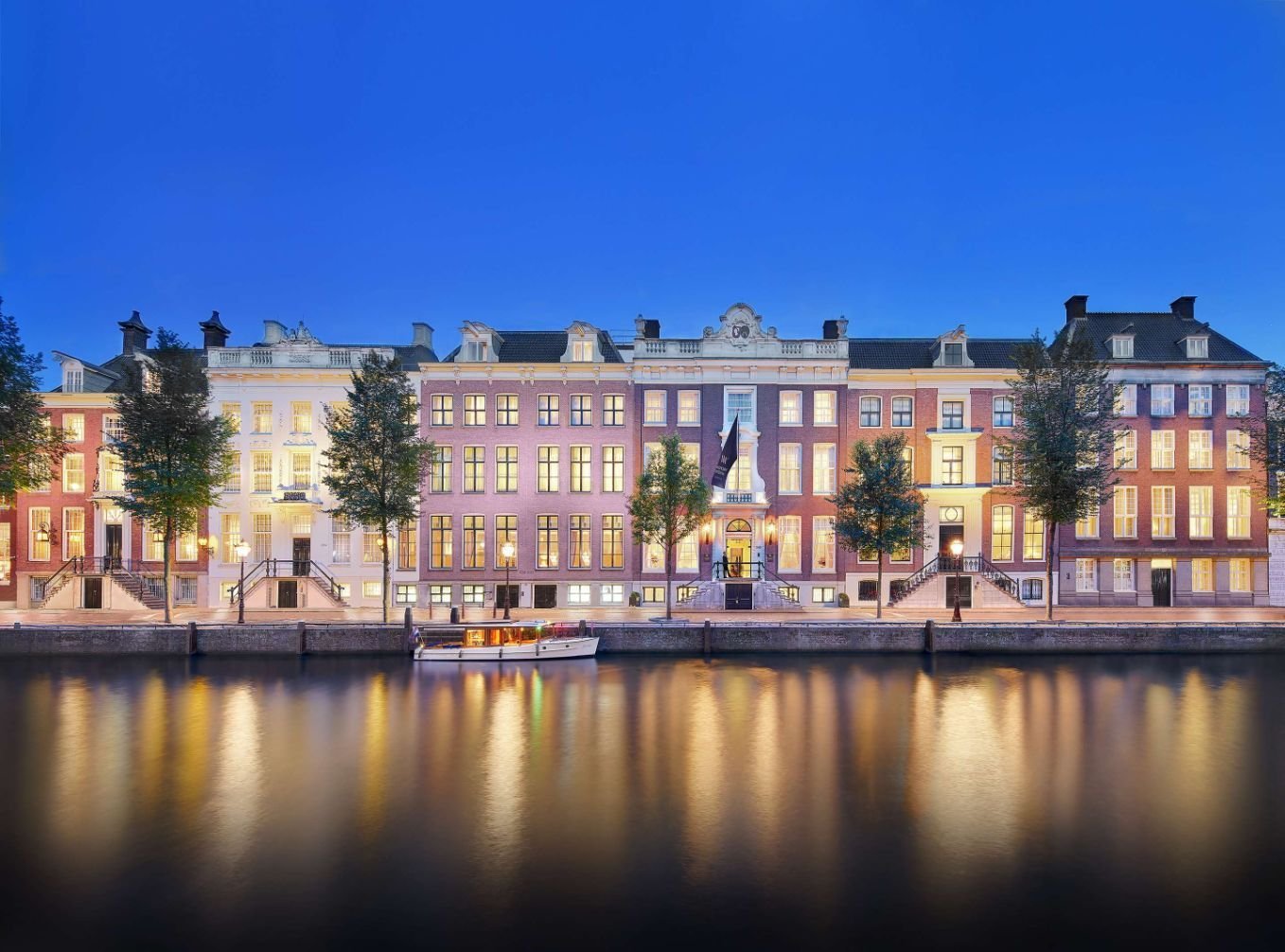
On the Herengracht, six seventeenth- and eighteenth-century houses become a 93-room hotel without concealing every change in floor, ceiling or domestic scale.