Nieuwe Instituut’s FUNGI: design beyond the idea of control
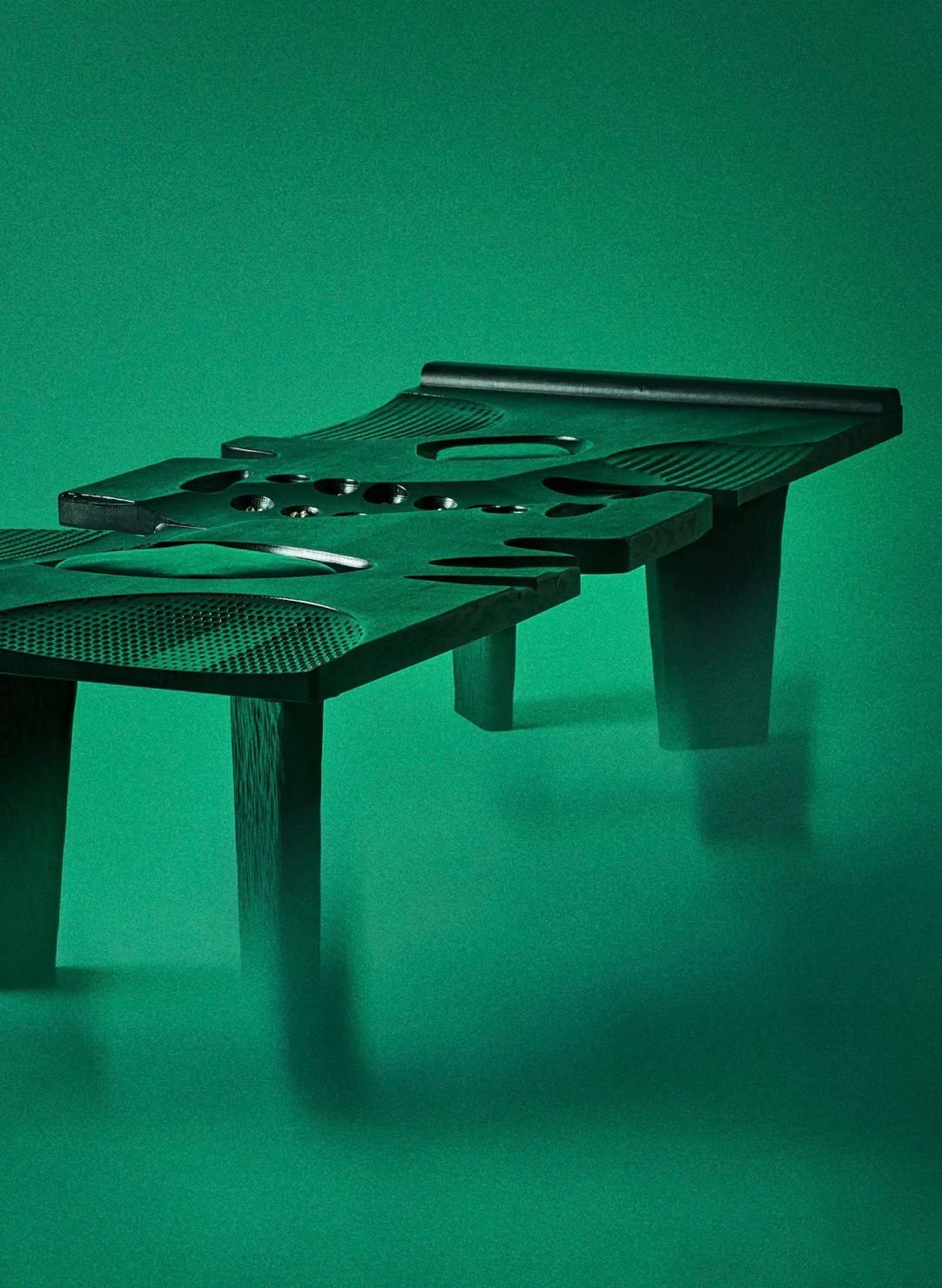
A living material does not necessarily obey the design drawn around it. FUNGI: Anarchist Designers at Rotterdam’s Nieuwe Instituut made that resistance its subject, challenging the idea that fungi matter only when they can be turned into objects or building products.
A living material does not necessarily obey the design drawn around it. FUNGI: Anarchist Designers at Rotterdam’s Nieuwe Instituut made that resistance its subject, challenging the idea that fungi matter only when they can be turned into objects or building products.
The exhibition ran from 20 November 2025 to 8 August 2026. Curated by anthropologist Anna Tsing and architect and artist Feifei Zhou, it brought artistic work and scientific research into an examination of relationships between organisms, environments and human systems. This is a reading of that curatorial proposition, not a guide to an exhibition still open.
A material is not the whole organism
A lamp or an insulation panel provides a clear object to photograph. An organism’s relationships are less readily contained. The exhibition’s argument shifts attention from what can be made with fungi to what happens when they act within an environment that humans do not completely control.
That distinction gives design another task. Rather than beginning with a desired product and asking nature to supply its material, a designer can begin with a system of dependencies. The finished object is no longer the only scale at which a decision has consequences.
One case: the coffee plantation
An installation developed by ecologists Ivette Perfecto and Zachary Hajian-Forooshani with artist Filipp Groubnov examined coffee rust in Latin American monocultural plantations. The work connected a fungal process with an agricultural system, making the organisation of production part of what had to be understood.
The case is useful because it resists a simple distinction between a helpful organism and a harmful one. A biological process has a context; the way land is organised changes the relationships within it. Design enters the argument through that organisation, not only through the invention of another surface or vessel.
Research has to become perceptible
The meeting of ecology and an exhibition introduces its own challenge. A visitor encounters a room, an installation or an image, while the subject may unfold across a landscape and through time. Artistic work must make some aspect of that larger relationship perceptible without claiming to contain it completely.
Here, collaboration matters as a method rather than a ceremonial list of professions. Scientific research can establish a particular process; artistic decisions determine how a visitor is invited to attend to it. The two roles remain different, and their relationship gives the exhibition its critical tension.
Beyond the finished object
The relevance of this approach is not tied to the end date of a museum programme. It offers a way to question what a design photograph leaves outside its frame: the environment supplying the material, the other organisms involved and the effects of trying to standardise their behaviour.
FUNGI begins where the familiar object stops being sufficient. The more demanding subject is the relationship around it, including what refuses to follow the plan.
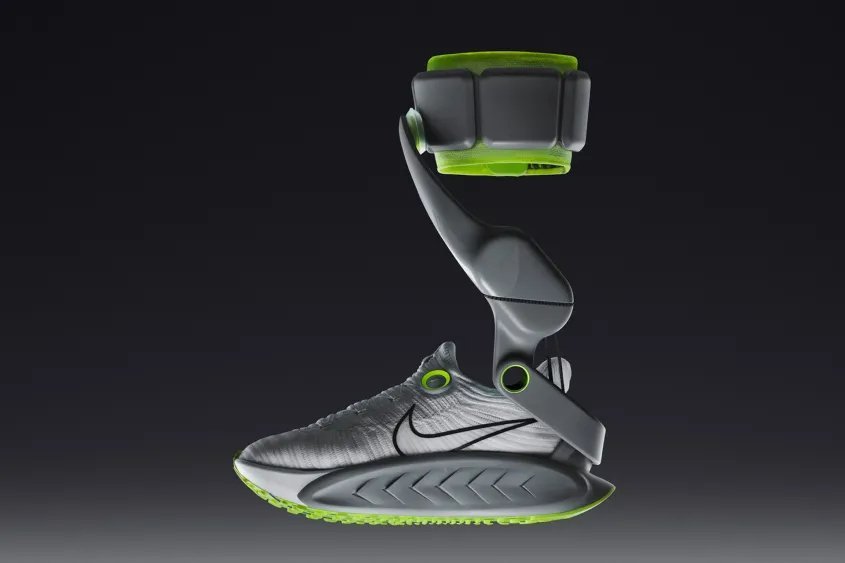
Developed with the robotics company Dephy, Nike's Project Amplify is a powered footwear system for running and walking. A year after its unveiling, it remains in testing, with a consumer launch still some years away.
Artificial intelligence has left the phone and moved into the kitchen, the bedroom and even the cat's litter box. Five recent objects suggest the domestic future is not about voice commands but about machines that learn to live alongside us.
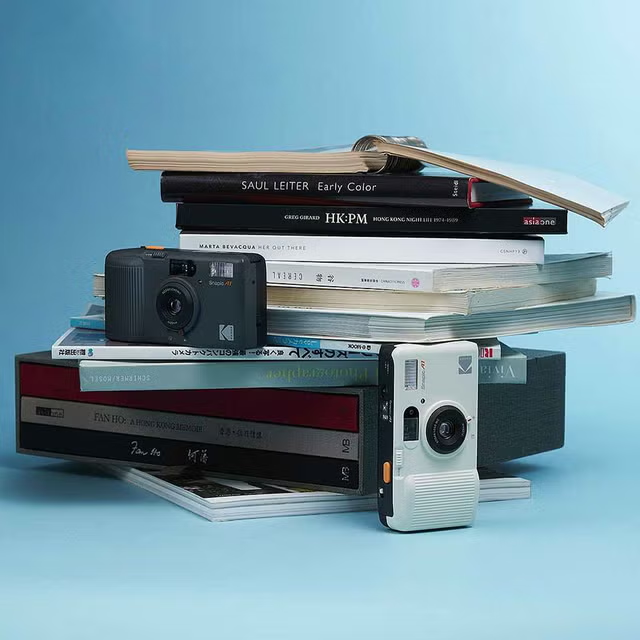
The smartphone made everyone a photographer. A new generation of dedicated compacts, from DJI's gimbal cameras to the Camp Snap CS-Pro, argues for a device that exists for one purpose only.