Dioriginals: Francis Kurkdjian Restores Thirteen of Dior’s Classic Perfumes
From Diorama to Higher Energy, Dior’s Perfume Creation Director has returned thirteen of the house’s historic fragrances to the colour and light of their original versions, in the 1948 Ovale bottle.
A perfume does not age like a painting. It ages like a recipe that slowly stops finding its ingredients.
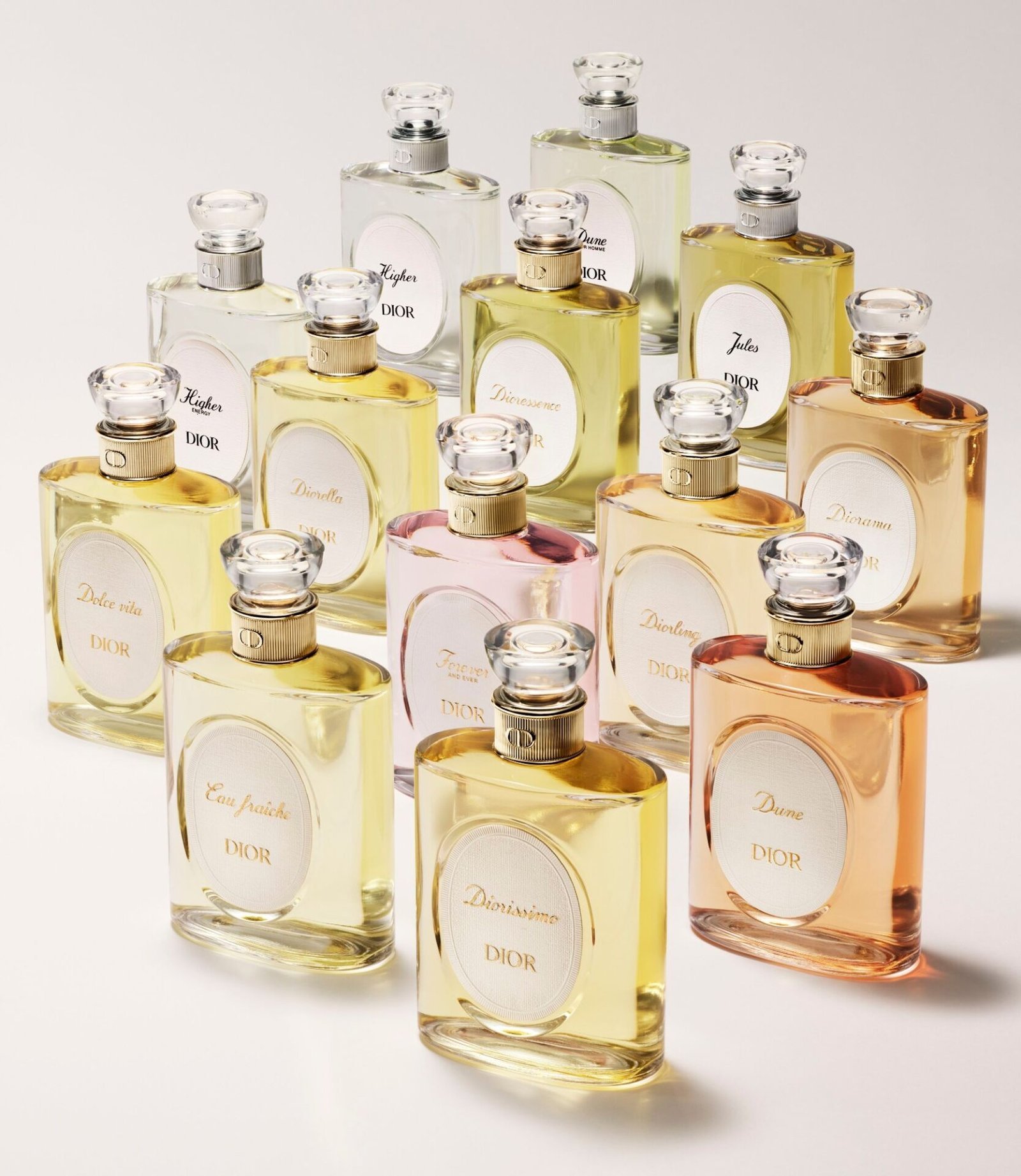
A supplier that disappears, a harvest that changes, a new rule that bans a molecule: over time, even perfumery’s great works shift in subtle ways. It was on noticing this erosion in the house classics that Francis Kurkdjian, Dior’s Perfume Creation Director, decided to act. The result is Dioriginals, the restoration of 13 fragrances spanning almost 80 years of Dior, returned to the colour, light and emotion of their first versions.
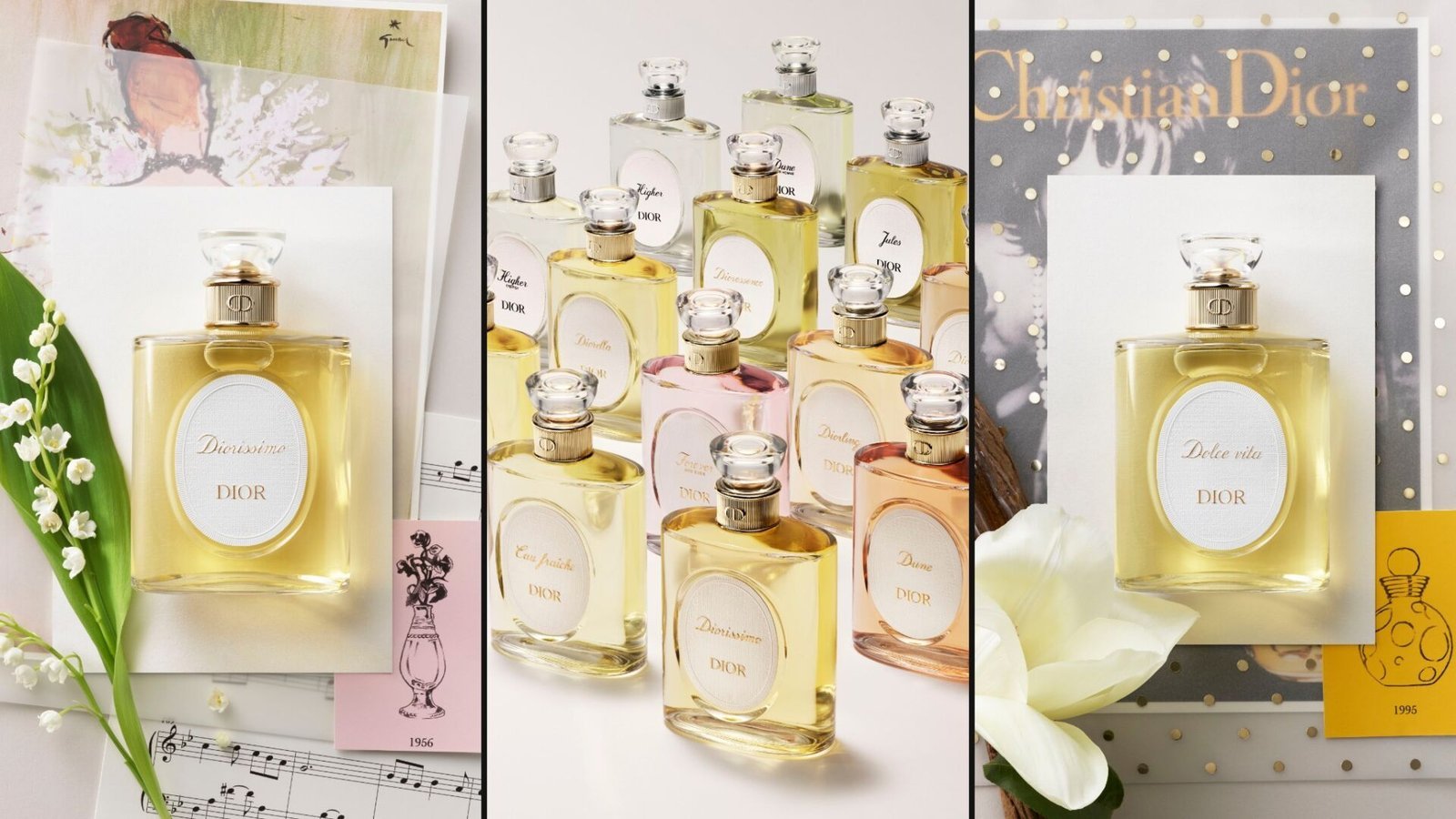
The Dioriginals collection · Photo: courtesy Dior
The craft of restoration
Kurkdjian worked with his studio and Dior’s creative teams like an art restorer, returning to the archives to recover the original formulas. The greatest challenge comes from toxicological and regulatory standards, which since the 1970s have gradually changed the list of permitted ingredients and caused small shifts in formulas, almost imperceptible but accumulated over decades.
A perfume must be cared for and preserved like a fragile work of art, subject to the vicissitudes of time. Just as one restores the brilliance and colours of a painting, one must preserve, in a fragrance, the quality, brilliance and nuances of its raw materials.
The words are Kurkdjian’s. He divided the project into two periods: “Dior in Grasse”, from 1949 to 1972, devoted above all to Edmond Roudnitska, and “Dior in Paris”, from 1979 to 2003, with more recent creations, many restored with their own perfumers.
Dior in Grasse
For Kurkdjian, Roudnitska is “the master”, whose partnership with Christian Dior revolutionised perfumery. Michel Roudnitska, the perfumer’s son, wrote to Kurkdjian in January 2024 that returning to the original creations was the most beautiful tribute that could be paid to his father.
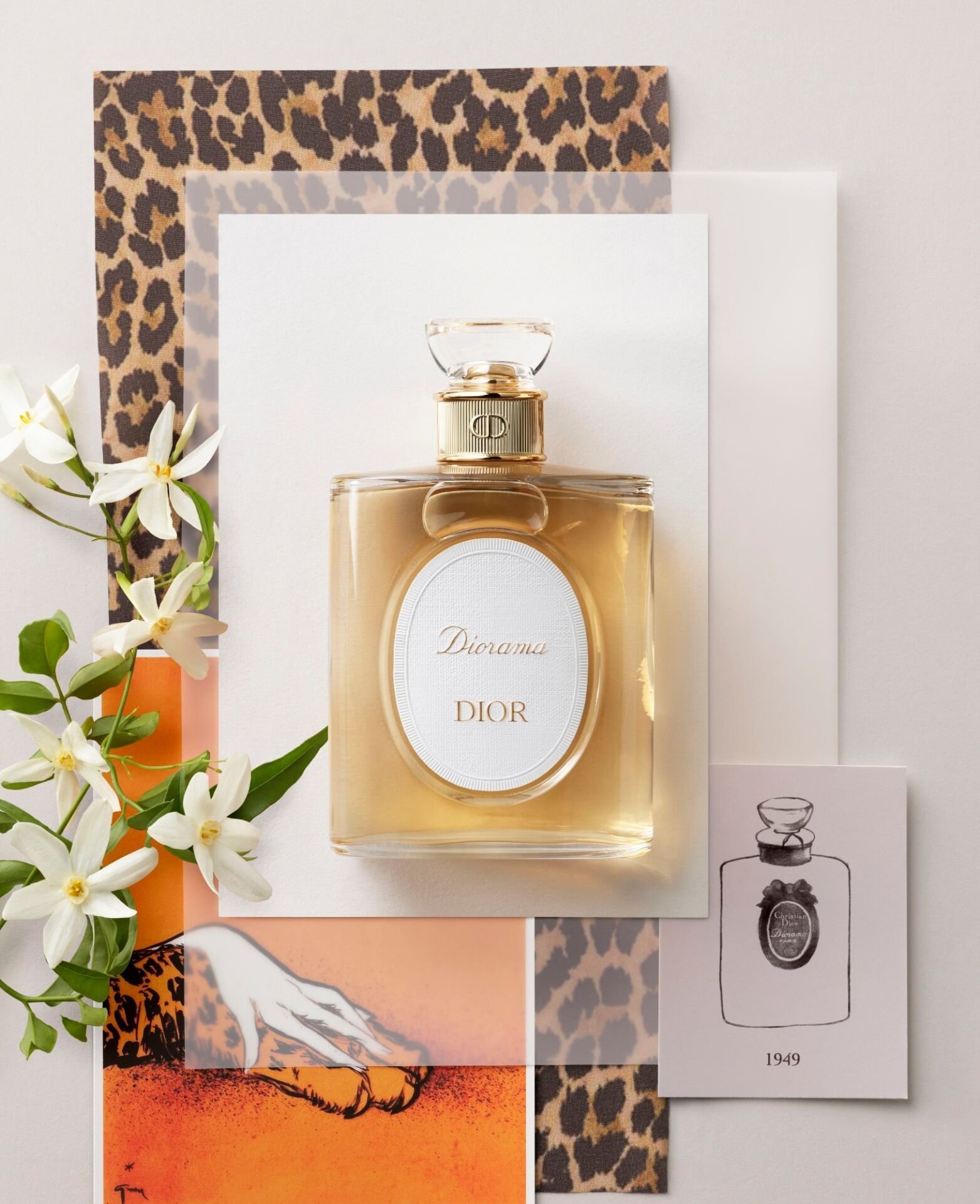
The young house’s second fragrance, sister to Miss Dior, was reportedly dedicated to Martha, the family’s loyal housekeeper. Kurkdjian focused on the jasmine, a Roudnitska signature, to give this classic chypre back its original radiance.
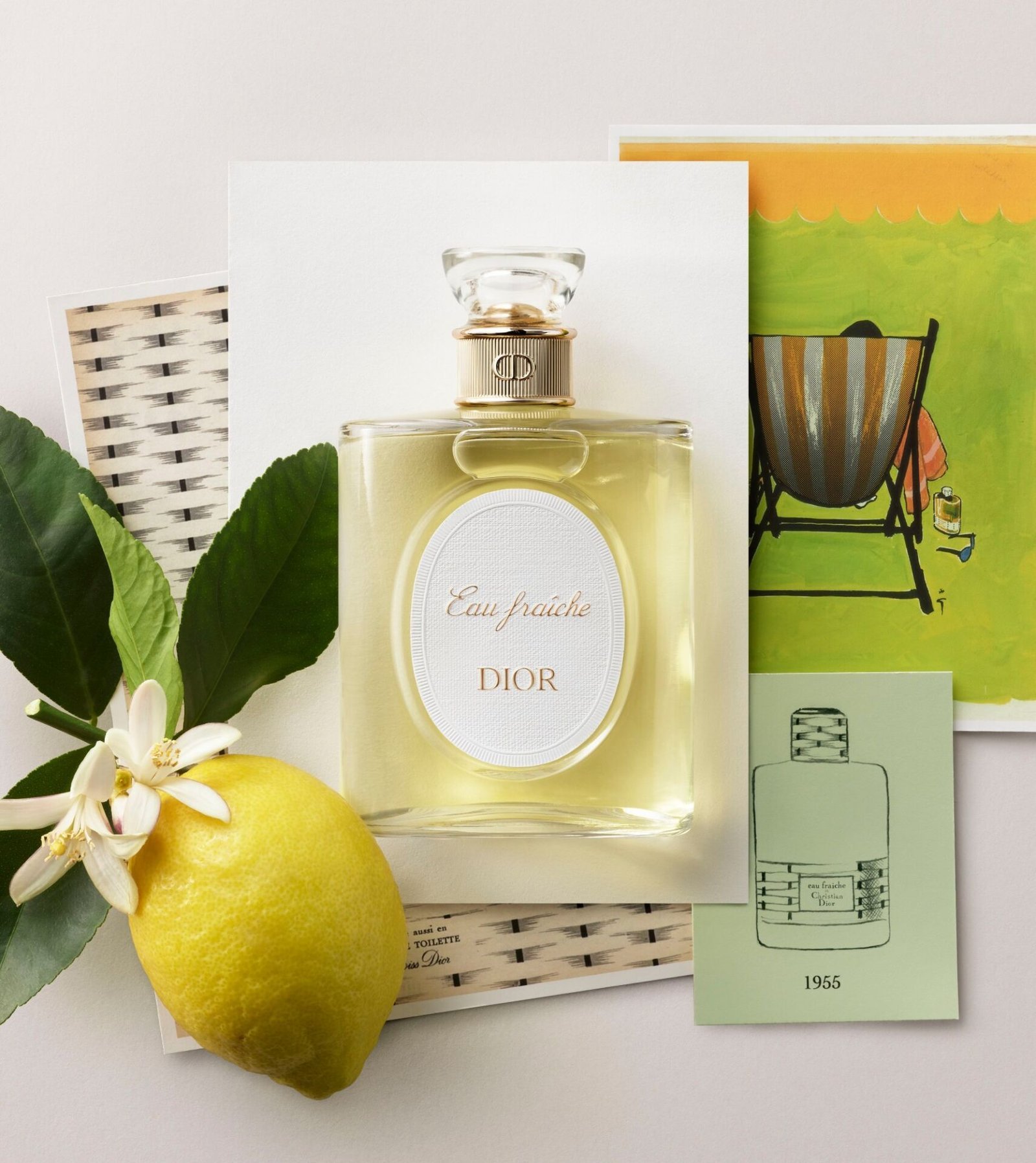
Worn by Christian Dior himself, it gave its name to an entire olfactory family and paved the way for Diorissimo and Eau Sauvage. The citrus shines again, the basil-tarragon accord threatened by regulation has been rebalanced, and additions that crept in over time, absent from the original formula, have been removed.
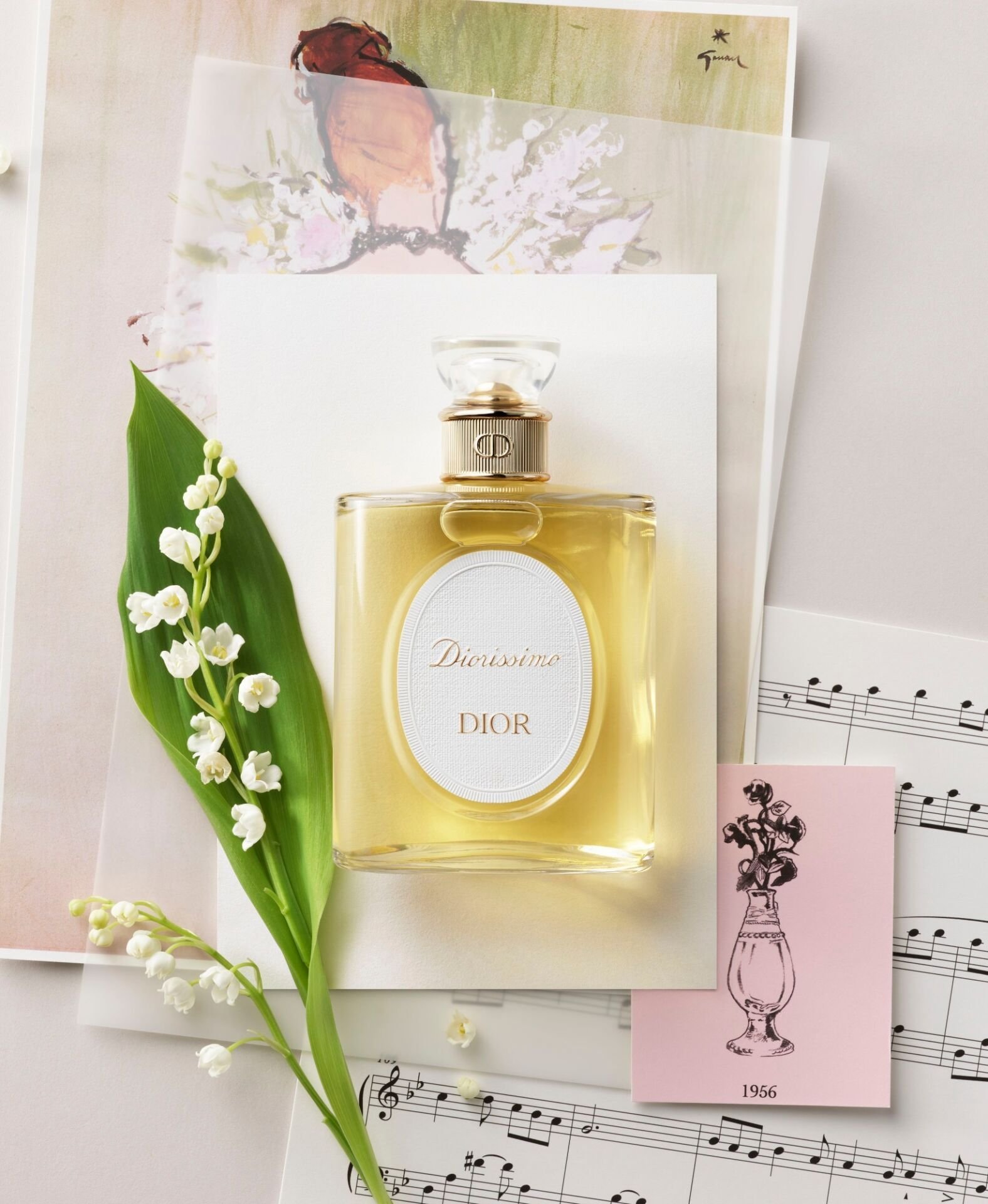
Christian Dior’s favourite flower became an obsession for Roudnitska, who planted whole beds of it at his property in Cabris, in the hills above Grasse. It was perfumery’s first lily of the valley and is still taught in perfumery schools worldwide. Kurkdjian restored the white lily-of-the-valley accord with a new quality of jasmine.
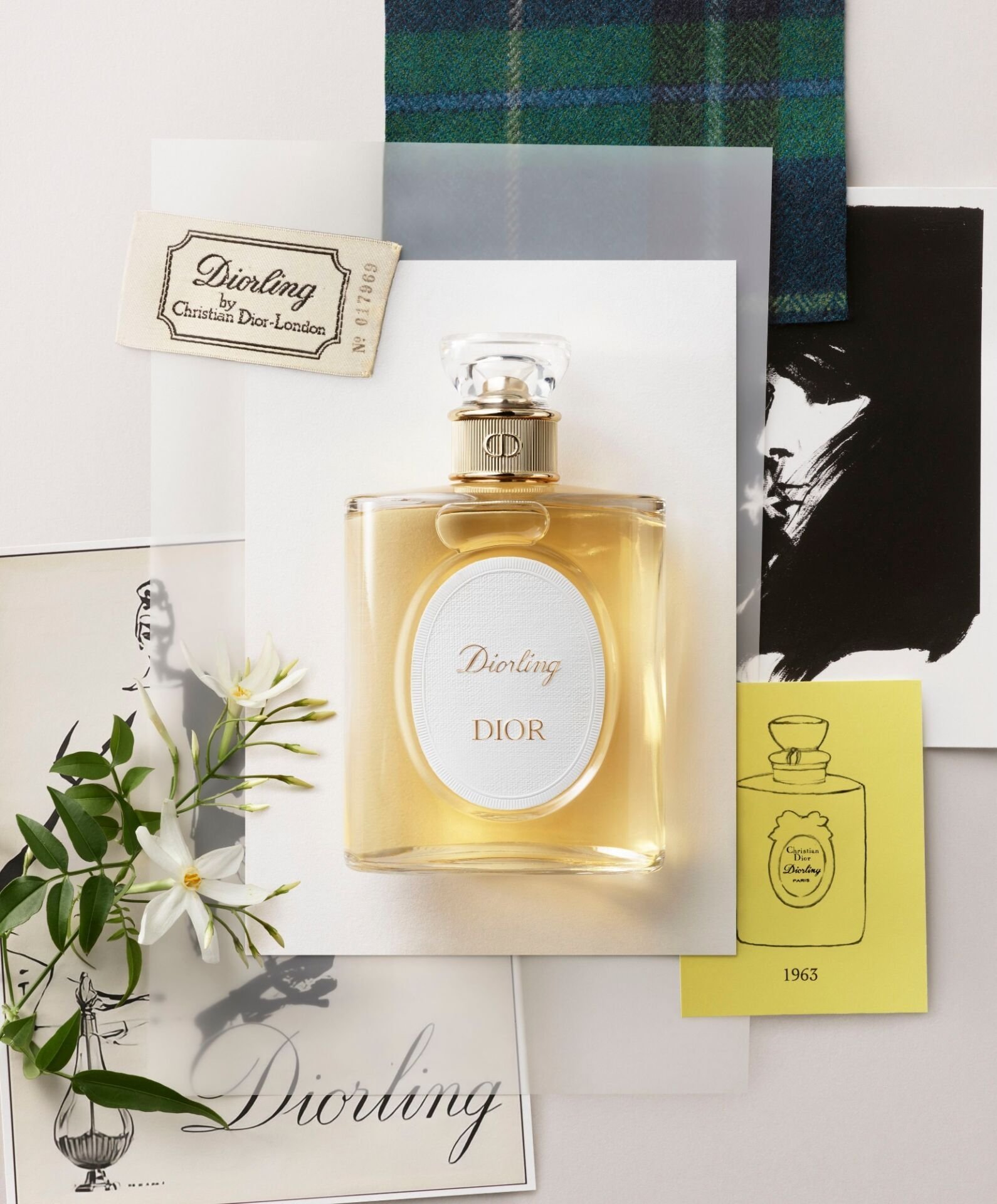
Diorling, 1963
Diorling · Photo: courtesy Dior
Perfumer: Paul Vacher. Family: leather floral chypre. Key materials: jasmine, galbanum and costus.
By the perfumer of Miss Dior, its formula survived in the house archives and was rediscovered when Kurkdjian arrived. Ingredients now banned, such as ambrette musk, required technical solutions, and the aldehydes, jasmine and oakmoss returned to the foreground.
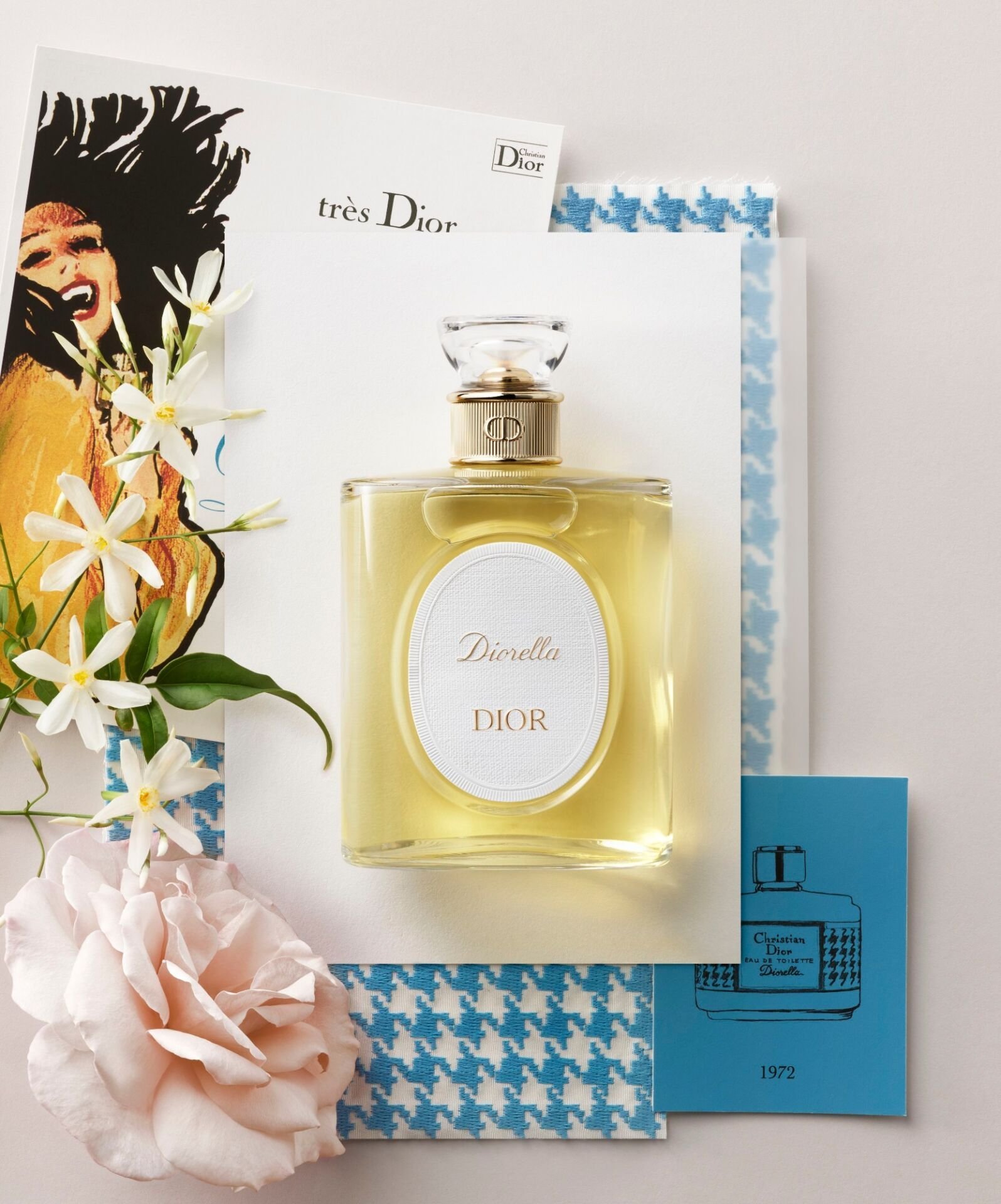
Diorella, 1972
Diorella · Photo: courtesy Dior
Perfumer: Edmond Roudnitska. Family: fruity floral chypre. Key materials: cumin, jasmine, violet and peach accords, vetiver and oakmoss.
The feminine counterpart to Eau Sauvage influenced a generation of perfumes. The bergamot, basil and violet facet, set aside for around ten years because of toxicological rules, have been restored.
Dior in Paris
The second period gathers fragrances from 1979 to 2003. Here, several of the original perfumers took part in the restoration, among them Max Gavarry, Olivier Cresp and Roseline Poignon-Martel, daughter of Jean Martel, creator of Jules.
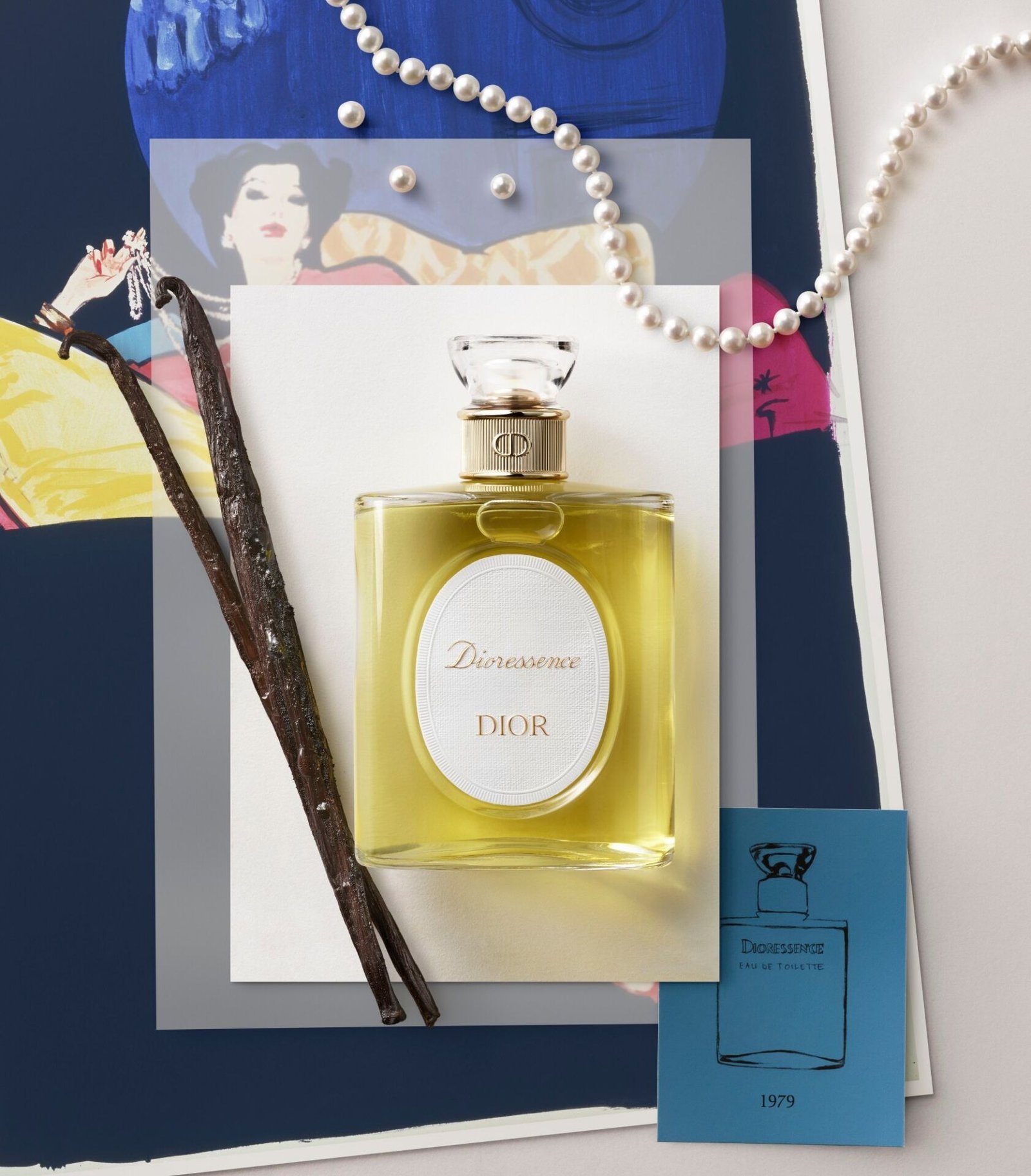
Dioressence, 1979
Dioressence · Photo: courtesy Dior
Perfumer: Max Gavarry. Family: spicy floral chypre. Key materials: orange, rose, jasmine, geranium, benzoin, oakmoss and patchouli.
Launched as “the barbaric perfume of Christian Dior”, it lost its natural civet and castoreum, replaced to give the floral heart its full brilliance. The woody base was reworked to recreate the body of the original signature.
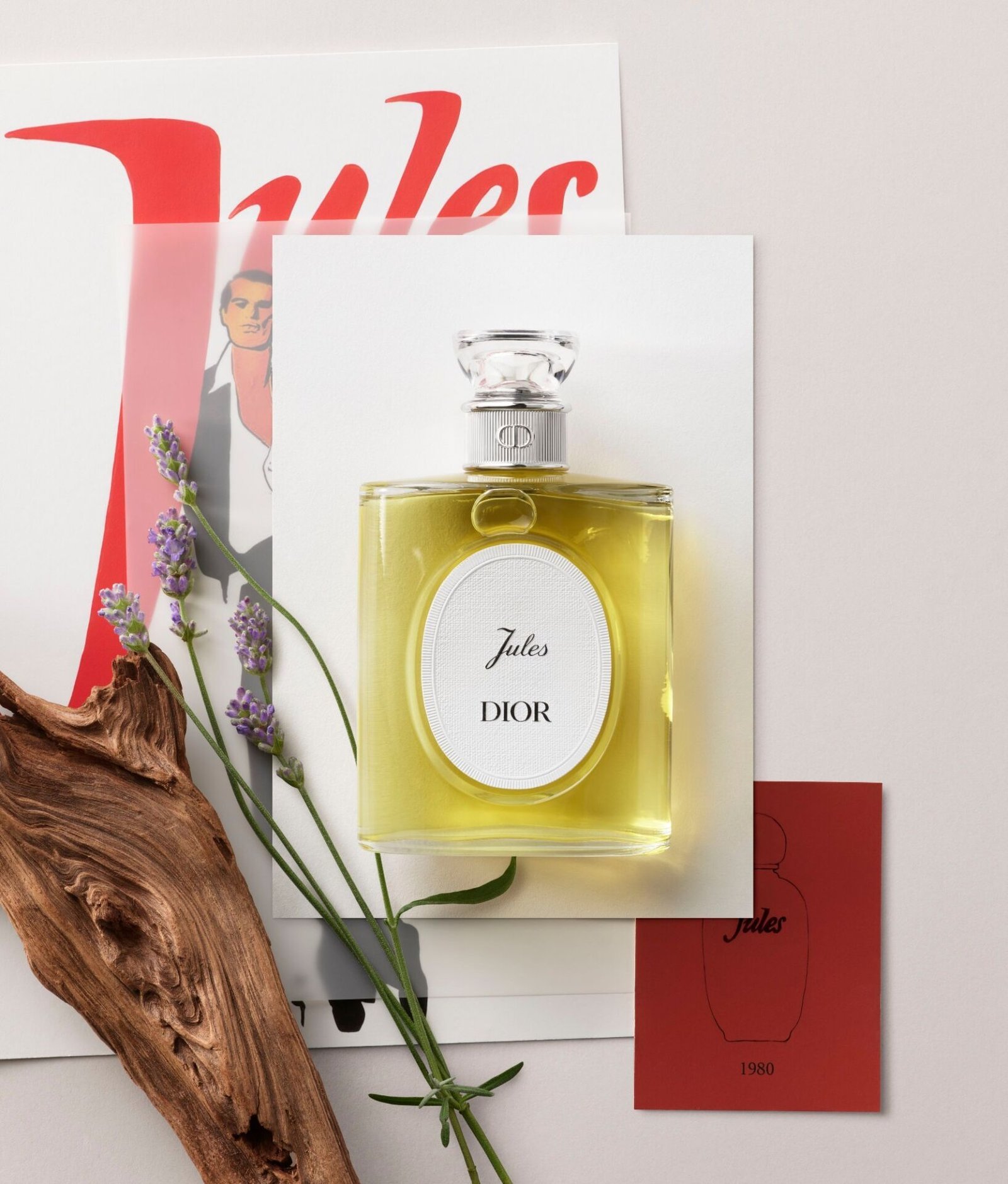
Jules, 1980
Jules · Photo: courtesy Dior
Perfumer: Jean Martel. Family: aromatic amber fougère. Key materials: clary sage, black pepper, lavender and woody-amber accord.
It divided opinion at launch with its animalic and leather notes. The restoration readjusts spices, mosses and tonka, and pairs a lavender absolute with an essence so the lavender is truly felt.
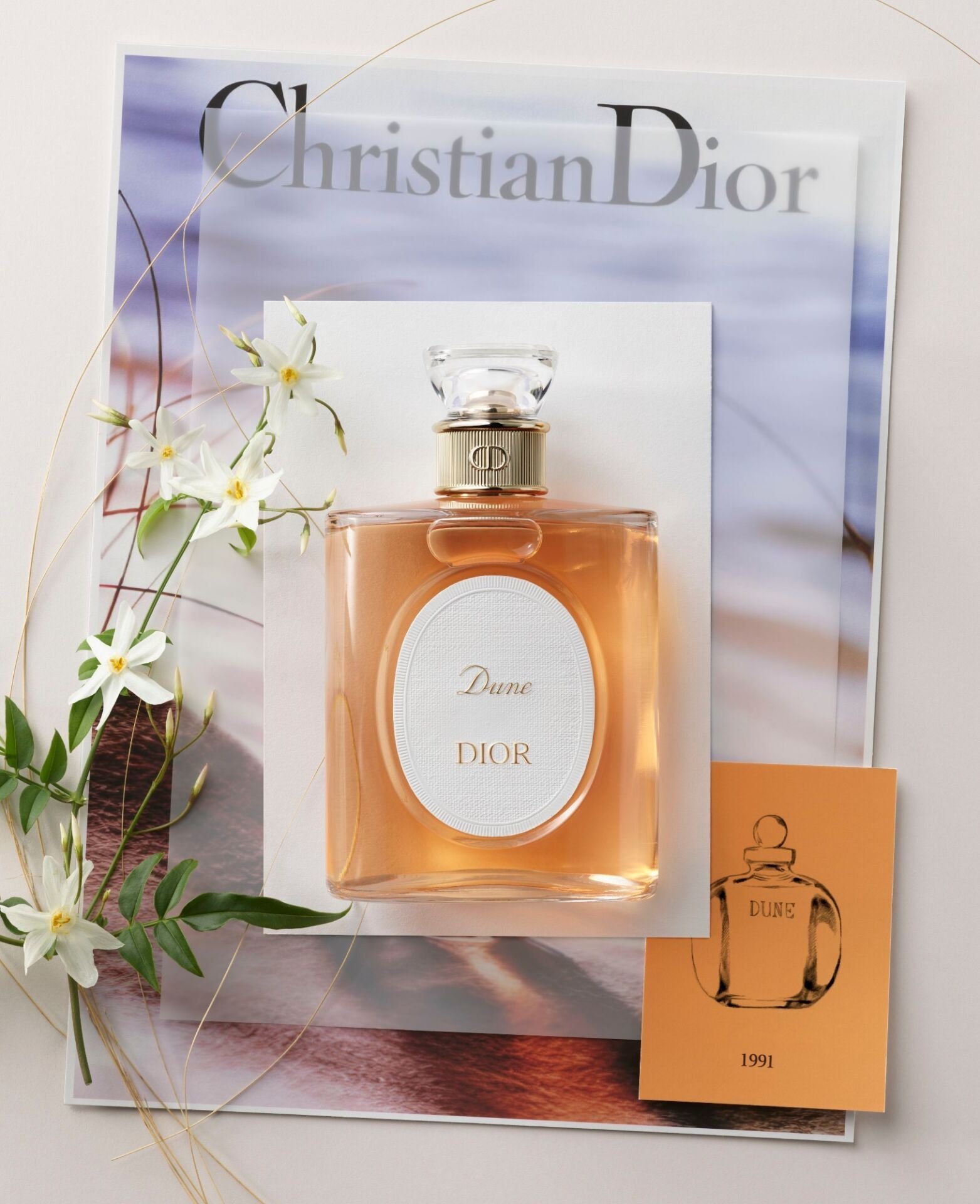
A garden by the sea was the brief, and the launch party at the Château de Vaux-le-Vicomte had Isabelle Adjani as its ambassador. Kurkdjian recreated the green fig and blackcurrant accord and the soft musks of the original formula.
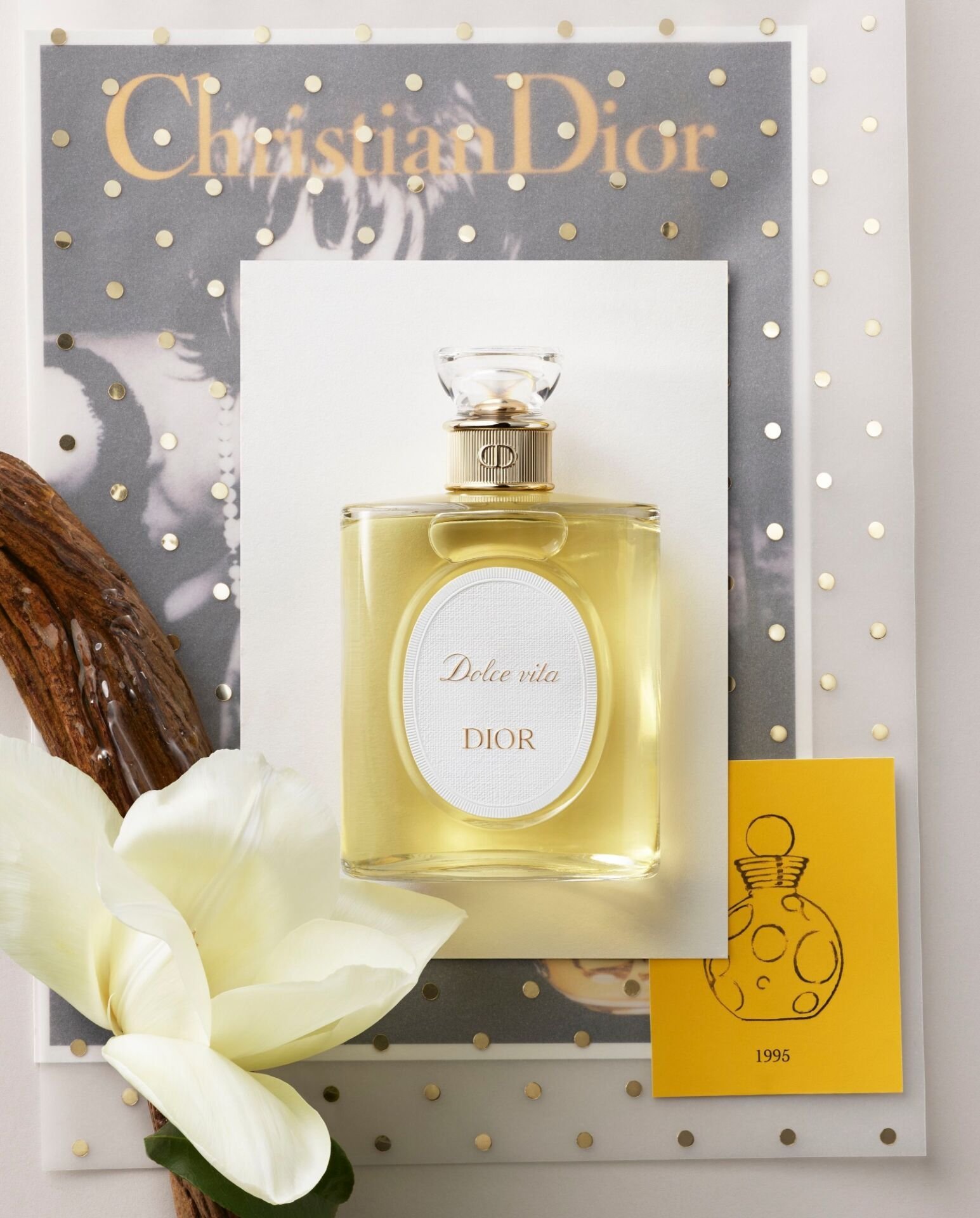
Dolce Vita, 1995
Dolce Vita · Photo: courtesy Dior
Perfumer: Pierre Bourdon. Family: woody fruity floral. Key materials: peach, rose absolute, vanilla and woody accord.
Visionary in its gourmand trail, it now feels strikingly contemporary. The peach base and the clove-cinnamon accord were rediscovered, and a certified rosewood restores its original aura.
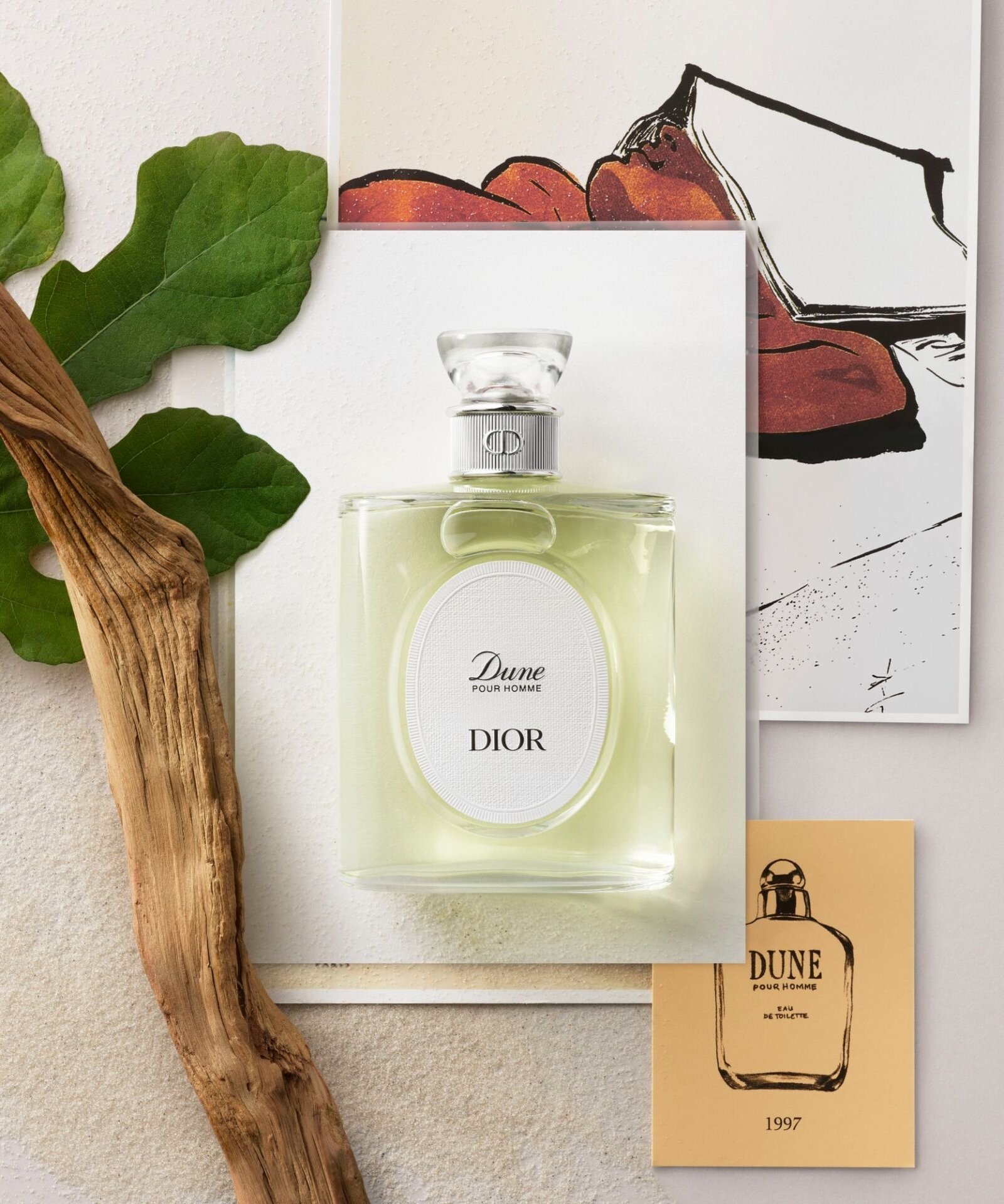
Dune pour Homme, 1997
Dune pour Homme · Photo: courtesy Dior
Perfumer: Olivier Cresp. Family: green citrus woody. Key materials: mandarin, green fig, cedar and sandalwood.
A short formula of marine inspiration. No proportion was changed: the citrus essences gained new quality and the sandalwood, now from Nepal, recovered the milky facets of the original.
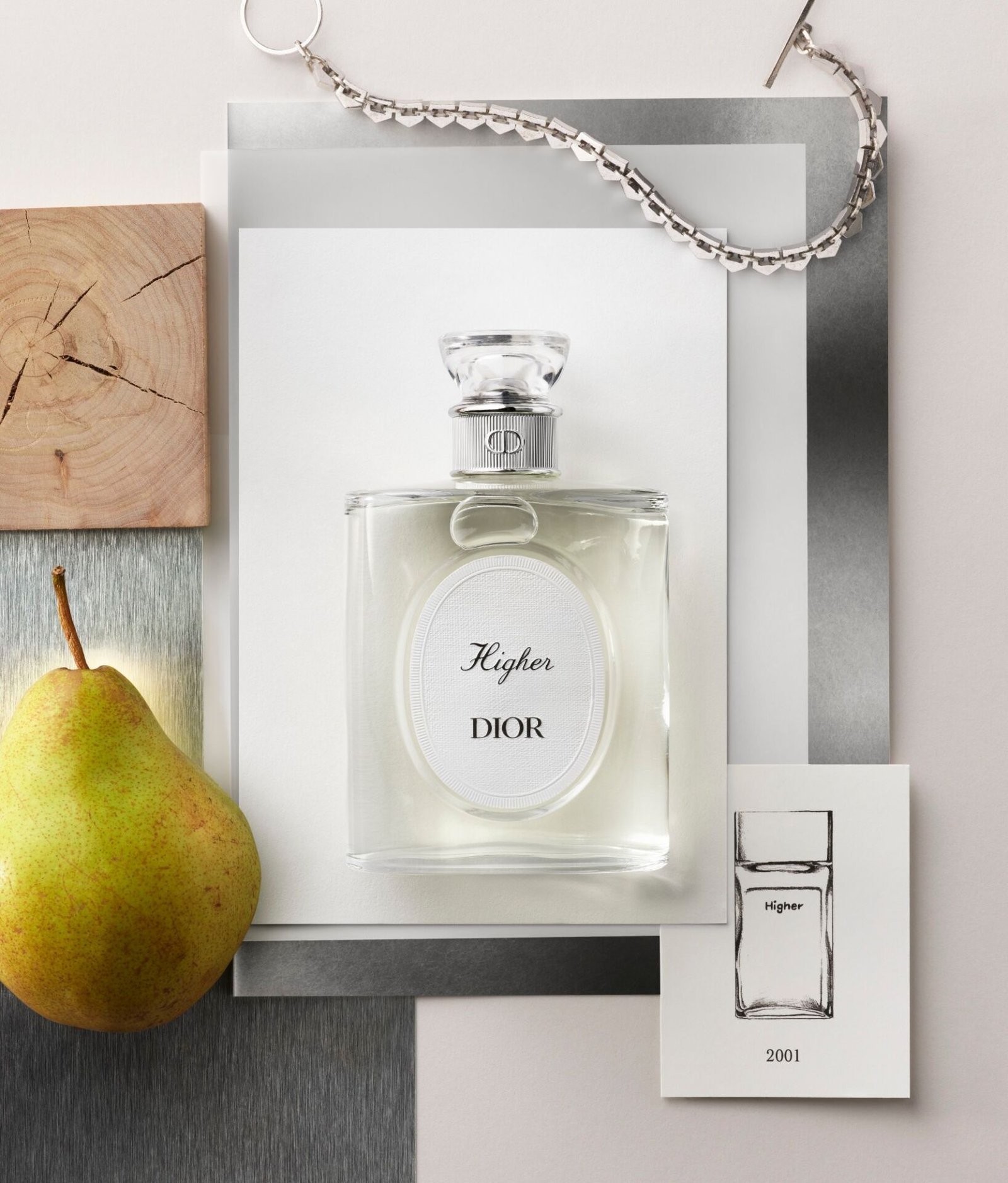
Higher, 2001
Higher · Photo: courtesy Dior
Perfumer: Olivier Gillotin and Olivier Pescheux. Family: fresh aromatic woody. Key materials: lemon, basil accord, rosemary, cardamom and cedar.
The scent of the urban elegance of the Hedi Slimane era. The work was light, limited to the basil accord, adjusted to current regulation.
The collection’s surprise: it aged so well that it was restored entirely to its original state, with the Turkish damask rose its creator chose.
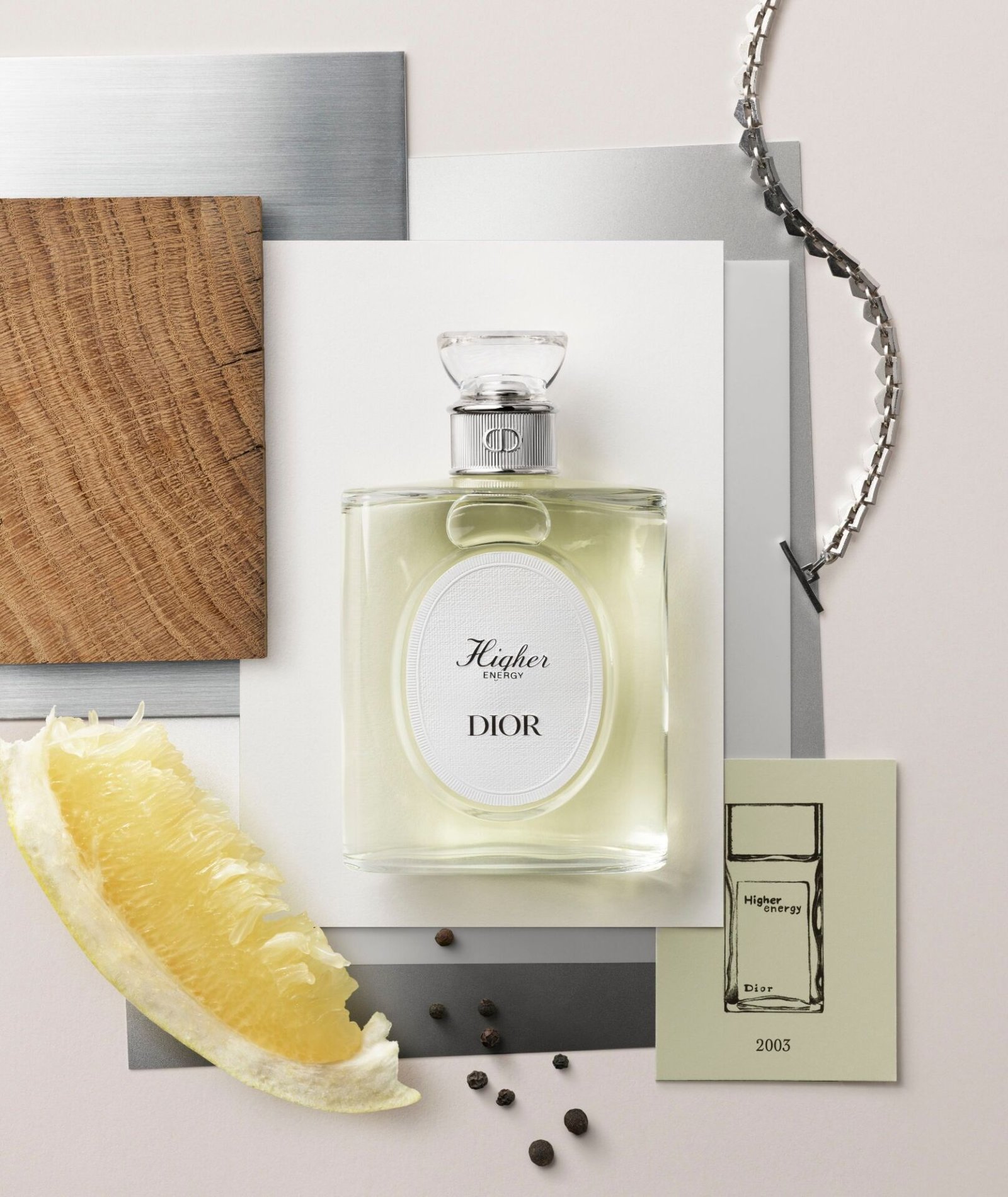
Higher Energy, 2003
Higher Energy · Photo: courtesy Dior
Perfumer: Nathalie Gracia-Cetto and Carlos Viñals. Family: fresh spicy woody. Key materials: grapefruit, absinthe accord, juniper, pink pepper, patchouli and vetiver.
City light at night, translated into iced grapefruit, juniper and a hot-cold contrast of spices. It embodies Dior’s daring at the turn of the 2000s.
The Ovale bottle
The Ovale bottle and its new box · Photo: courtesy Dior
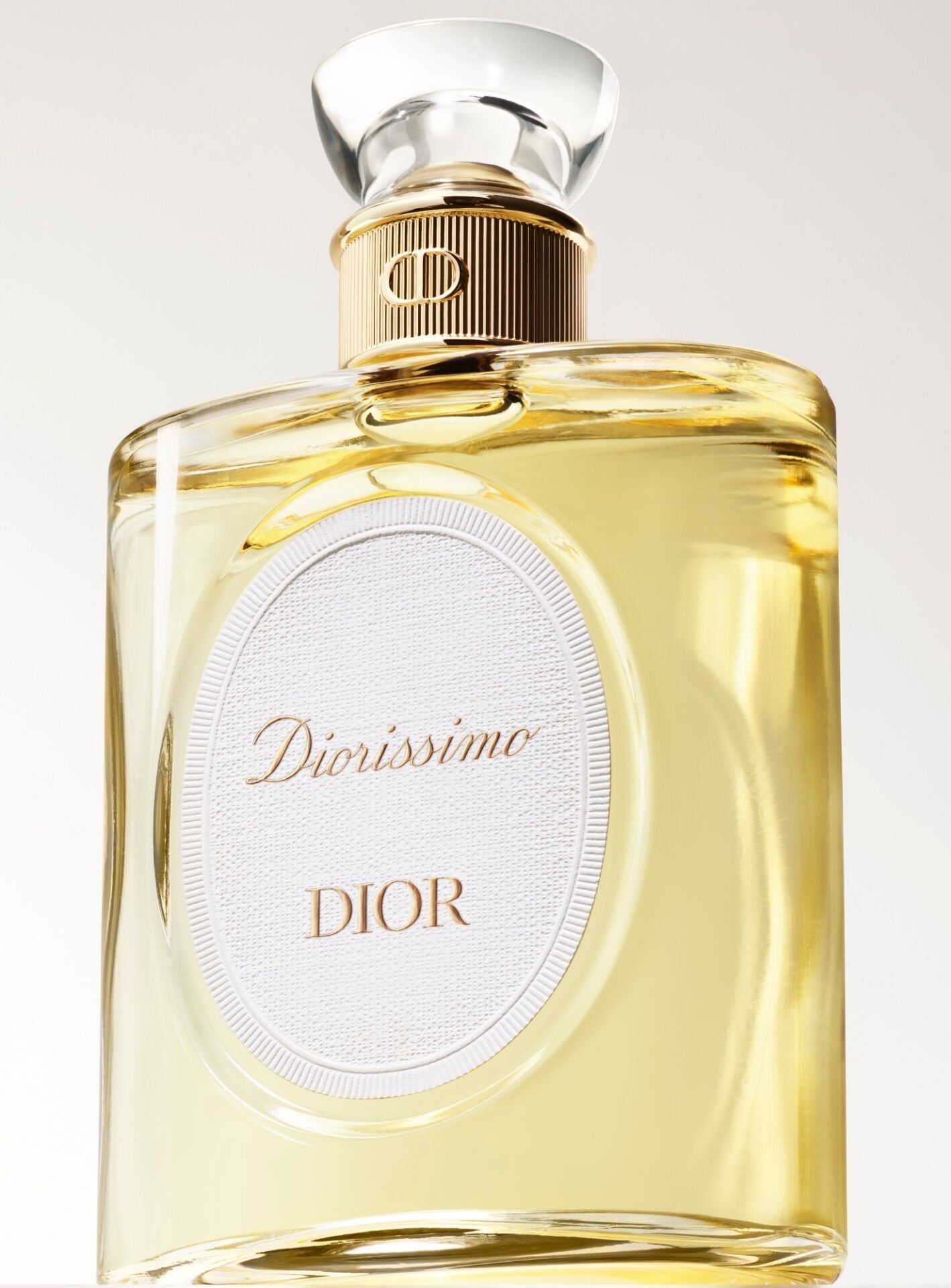
The 13 perfumes return in the Ovale bottle, created in 1948 at the initiative of Serge Heftler-Louiche, co-founder and first director of Parfums Christian Dior. Its name comes from the oval label crowned by an 18th-century-inspired Fontanges bow, which set the codes of the Dior style. It now gains a minimalist textured label and a finely fluted metal ring engraved with the CD monogram.
A perfume is made to outlive the person who created it. With Dioriginals, Dior chose to remember how each one was on its first day.
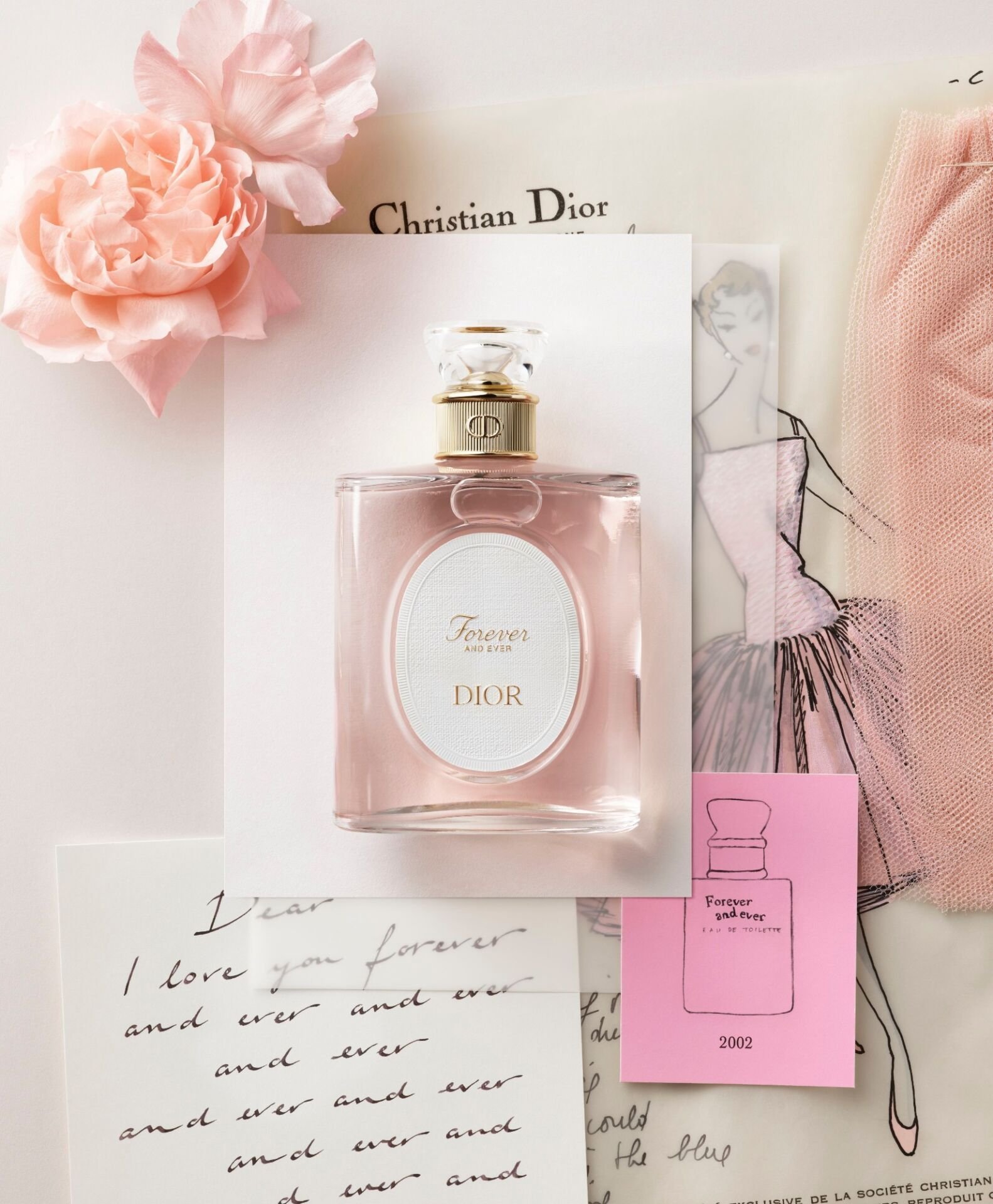
Details Dioriginals, by Francis Kurkdjian 13 restored fragrances: Diorama, Eau Fraîche, Diorissimo, Diorling, Diorella, Dioressence, Jules, Dune, Dolce Vita, Dune pour Homme, Higher, Forever and Ever and Higher Energy Bottle: the 1948 Ovale, with a new label and a ring engraved with the CD monogram Instagram: @diorbeauty and @dior
Concentrations rise and the bottles tell of journeys: the season's new fragrances from Prada, Hermès, Chanel, Louis Vuitton, Dior, Creed, Le Labo and more.
Softly framed eyes, skin that looks like skin and a sixties revival handled with a light touch: at the 83rd Venice Film Festival, make-up moved away from transformation and towards precision.
In 1976, a 23-year-old literature student distilled rosemary in Haute-Provence and sold the oils at market. Fifty years on, L'Occitane has more than 3,000 boutiques, a hundred spas and marks the half-century by refreshing its shea icon.
Travelling for an aesthetic procedure used to be a question of price. Today the decision turns on credentials, safety protocols and time to recover, and the trip increasingly folds into a wider programme of wellbeing.
From a floating ring of saunas in Swedish Lapland to a cedar cabin on a British Columbia bay, eleven hotels where heat, cold water and quiet have become the reason to travel.
THE CURATED GLOBE / FROM THE EDITORS
Good stories. Better company.
A considered selection of people, places and ideas from WAYFARER Edition, delivered to your inbox.
Welcome aboard. Your first letter is on its way.
We could not complete your subscription. Please check your email and try again.