Dom Pérignon and Takashi Murakami: flowers where the vines used to be
For Vintage 2015 and Rosé Vintage 2010, Takashi Murakami replaced the vines on Dom Pérignon's labels with his smiling flowers, a meeting of two cultures of patience that Chef de Cave Vincent Chaperon calls harmony.
Dom Pérignon has never been only a Champagne. It is a method of waiting. Under Vincent Chaperon, its Chef de Cave, that method has a name: harmony, understood less as a tasting note than as a way of working, almost a state of mind. Each vintage is an exploration rather than a repetition, a dialogue between what the year offers and what a person can read in it.
The idea reaches back to the monk himself, Dom Pierre Pérignon, who believed that many voices, the plots, the soils, the conditions of a season, could be brought into a single expression. The house’s collaboration with Takashi Murakami, launched in October 2025, set that conviction beside the work of an artist who has spent his career folding tradition into pop.
A label redrawn, a composition kept
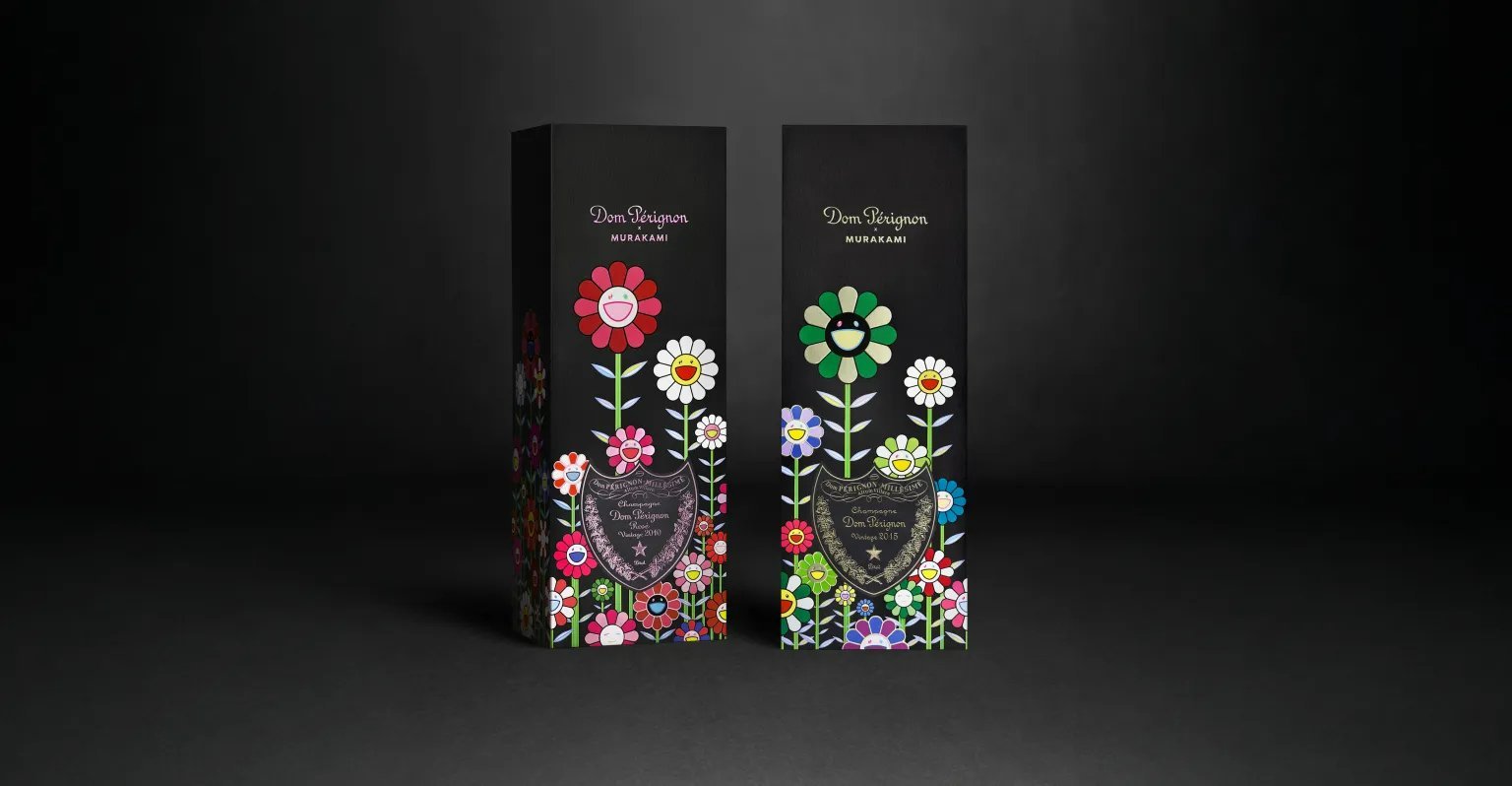
Murakami did not redesign the bottle so much as reread it. On the labels and coffrets of Vintage 2015 and Rosé Vintage 2010, he replaced the vines and leaves with his smiling flowers while keeping the original composition intact. Set side by side, the boxes form a single continuous field of blossoms, made to be collected. For the most devoted, a limited sculptural piece, a dark metallic sphere engraved with flowers, opened onto a resin garden holding the last Jeroboams of Rosé Vintage 2008.
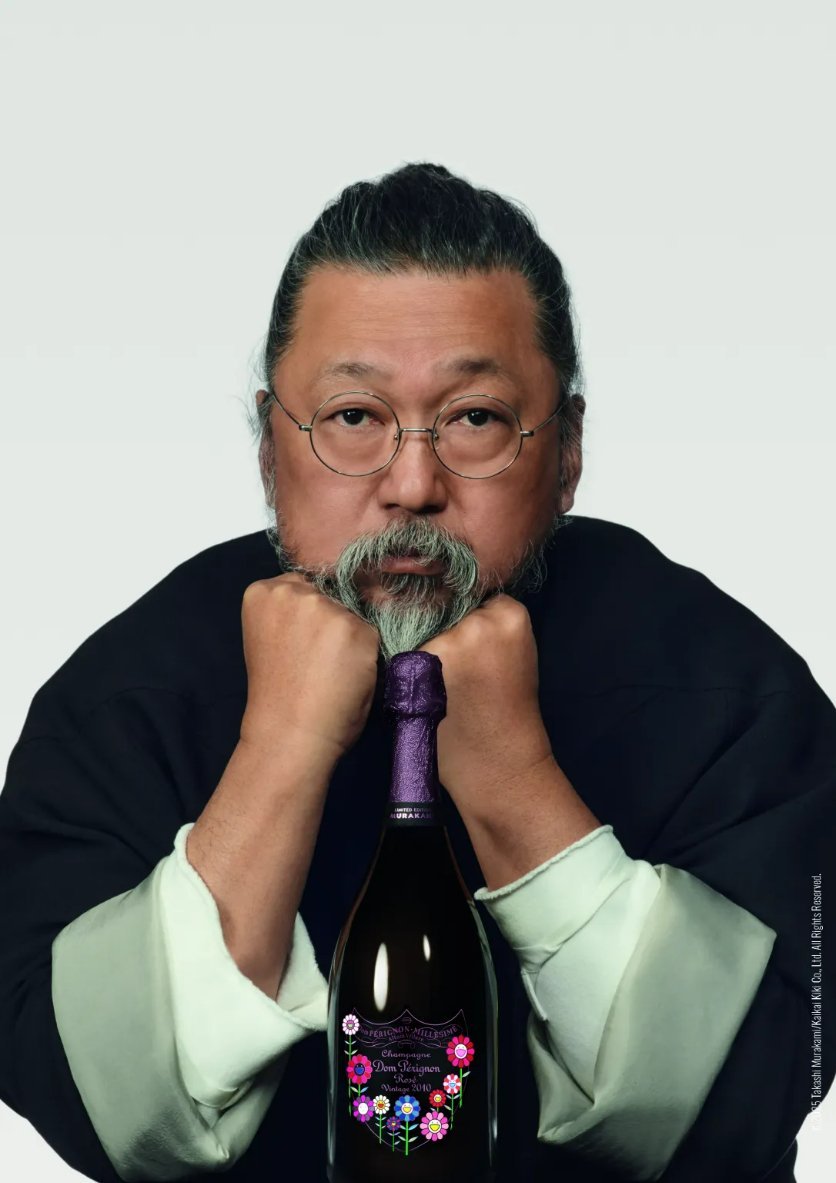
THE ARTIST WHO MADE FLOWERS SMILE. IMAGE: COURTESY OF DOM PÉRIGNON
The pairing works because both sides prize the same things: the hand, contemplation, transformation, and nature as the place one begins and returns to. Murakami’s cheerfulness does not override the house’s history. It lightens it, the way a good vintage carries weight without showing the effort.
2015: richness, held lightly
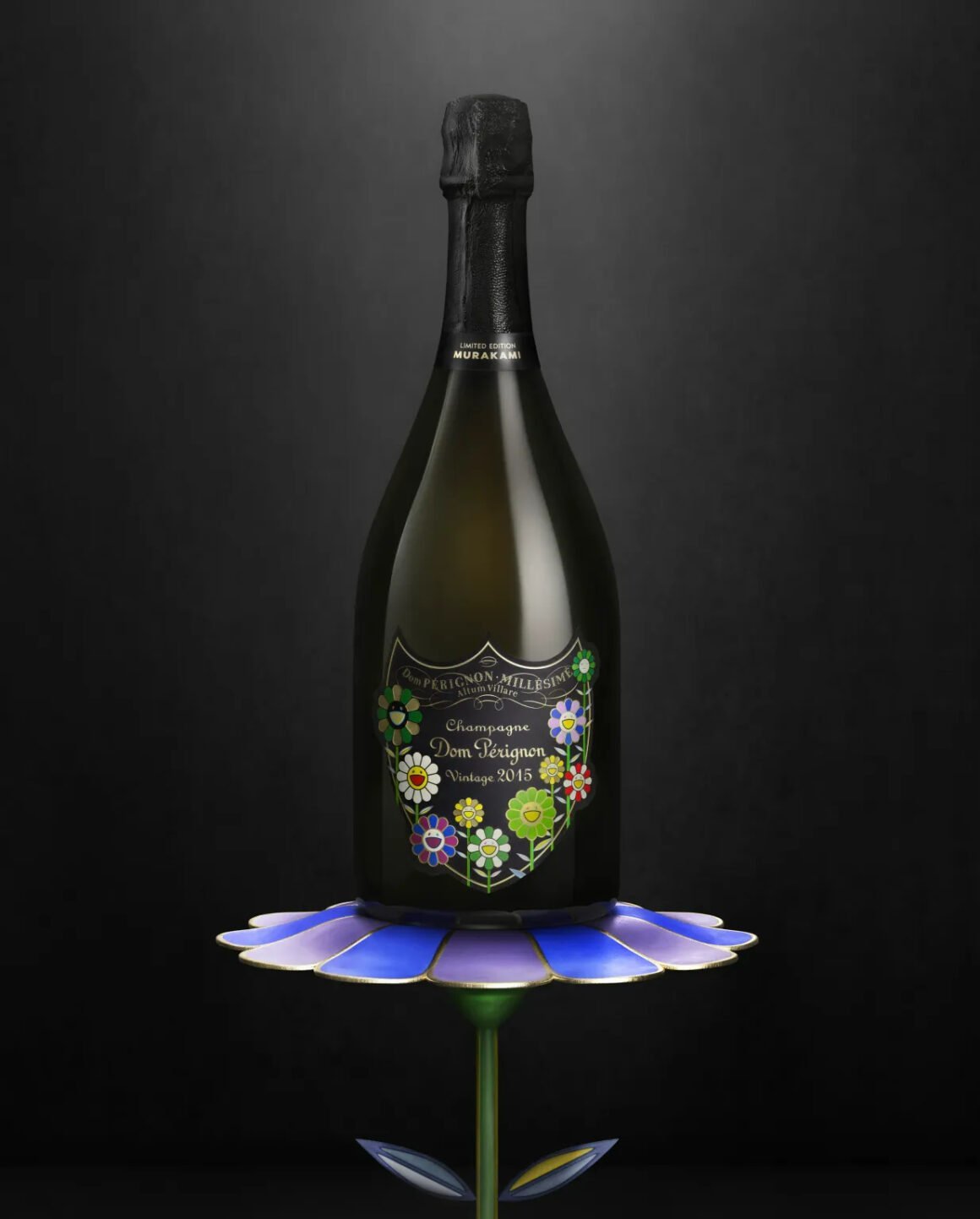
Vintage 2015 is a wine of contrasts, strong and serene, intense and delicate. It was born in a hot, dry year, part of a run of seasons that have forced Champagne to adapt. Since 2003, when the harvest began in August for the first time in living memory, the region has been changing fast. Chaperon’s task, as he frames it, is to welcome the richness these years bring without losing the lightness that defines the house. The answer lies in precision, sensitivity and an almost intuitive reading of the fruit.
A HOT YEAR, A COOL HAND. IMAGE: COURTESY OF DOM PÉRIGNON
Rosé 2010: Pinot Noir in the lead
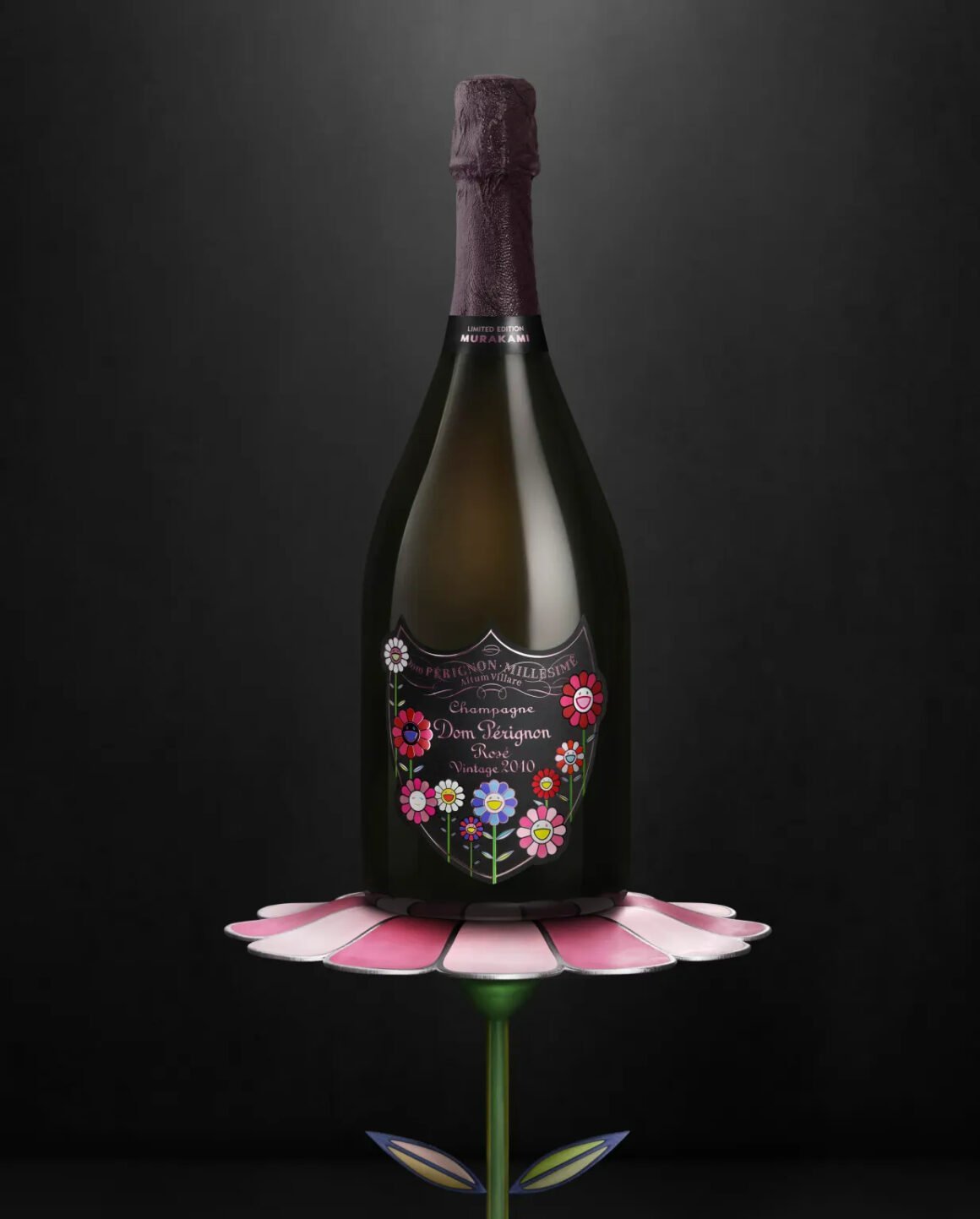
Rosé Vintage 2010 is the result of a decade of work on the power of Pinot Noir. The house rethought plots, methods and vinification to put the grape at the centre, and the result reconciles force and grace: intensity, structure and luminosity in one glass. The Murakami edition gave collectors first access to the wine ahead of its wider release in early 2026.
FORCE AND GRACE, RECONCILED. IMAGE: COURTESY OF DOM PÉRIGNON
At the heart of both wines is time, which Chaperon treats as an ally rather than an adversary. The vintages rest for close to a decade on their lees, in darkness, protected from oxygen and fed by the yeast. What happens there is patient alchemy, closer to meditation than technique. Depth, umami and texture emerge slowly, so that each glass seems to reveal another layer.
The Murakami bottles opened a series. In 2026 the house turned to Damien Hirst for its next artist edition, a separate chapter built around Vintage 2018. The flowers came first.
Everything here points towards feeling. The label, the wine, the history and the art are only doors to an emotion that lingers after the last sip, as light and effervescent as one of Murakami’s flowers. Harmony, it turns out, is what remains when the glass is empty.
Details: Dom Pérignon Vintage 2015 and Rosé Vintage 2010, Takashi Murakami limited editions, released in October 2025.
From the Penfolds Grange, raised in American oak since 1951, to the only cooperage inside a Burgundy house, the choice of wood still decides how a great wine speaks.
Mezcal is made from dozens of agave species, roasted in earthen pits and sipped slowly. Iván Saldaña, the biologist behind Montelobos, reads it as chemistry turned into flavour.
The guide that ranked kitchens in stars now ranks estates in grapes. Its first Bordeaux selection names 83 properties, places two second growths above three first growths and has unsettled a region that has trusted the same hierarchy since 1855.