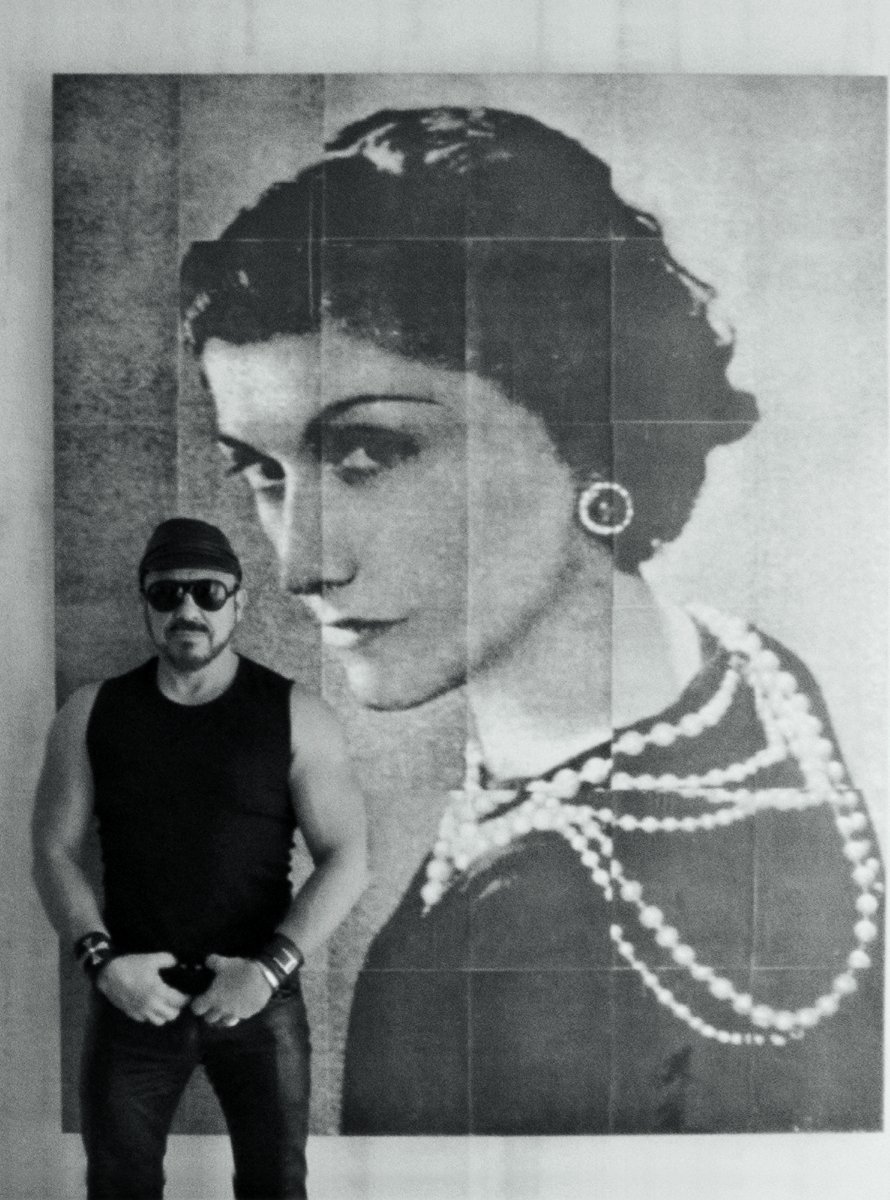
One of the most prominent designers shaping buildings in the world of fashion, Peter Marino has been Chanel’s architect of choice for 25 years, with more than 200 projects completed for the iconic house. Alongside the launch of his book The Architecture of Chanel, published by Phaidon, the architect unveiled a new Chanel building in the Miami Design District during Art Basel.
The long-awaited boutique embodies Chanel’s archetypal aesthetic: the smooth white stucco facade of a two-storey, cube-shaped structure set against contrasting black details, leading clients into a gallery-like space where Chanel pieces are displayed alongside striking works of art. Our conversation with the architect follows.
WAYFARER: How does your background in fine art define your approach to architecture?
Peter Marino: It made me more sensitive to things like colour, texture and the human visual perception of things, rather than what I would call typical architecture. It is a really different approach.
WAYFARER: How has the design of Chanel’s boutiques evolved over the years?
Peter Marino: The brand aims to be modern and timeless, so in theory our boutiques should not become dated. That said, we choose certain locations, like the new store in Miami, that will be more modern and playful than the ones we might do in London or New York. Just as you don’t sell winter coats in Miami, we won’t have the same architecture everywhere we go.
WAYFARER: What sets the new Miami Design District boutique apart?
Peter Marino: It is a big white cube with cubic windows and an enormous interior volume, far larger in that sense than almost any other I have done. There is an exciting staircase beneath a skylight, because the sun in Miami is something you really want to emphasise, and it is more striking because we used only black and white. Usually we have much more colour, but this building has a younger, bolder feel.
Just as you don’t sell winter coats in Miami, we won’t have the same architecture everywhere we go.
Peter Marino
WAYFARER: What distinguishes Chanel from other brands?
Peter Marino: It has a kind of modernity that never goes out of fashion, and that cannot be said of many other brands.
Twenty-five years and more than 200 projects on, Marino’s rule for Chanel is a paradox he states plainly: a house that must stay timeless, and boutiques that must still answer to the light and the life of each city.
Developed with the robotics company Dephy, Nike's Project Amplify is a powered footwear system for running and walking. A year after its unveiling, it remains in testing, with a consumer launch still some years away.
Artificial intelligence has left the phone and moved into the kitchen, the bedroom and even the cat's litter box. Five recent objects suggest the domestic future is not about voice commands but about machines that learn to live alongside us.
The smartphone made everyone a photographer. A new generation of dedicated compacts, from DJI's gimbal cameras to the Camp Snap CS-Pro, argues for a device that exists for one purpose only.