The I.C.E. St. Moritz: reading the 2025 field on the frozen lake
A Bugatti Type 59 led the 2025 concours, but its neighbouring categories explain the meeting’s broader design argument. The announced 2027 dates remain distinct from the conditions required on the lake.
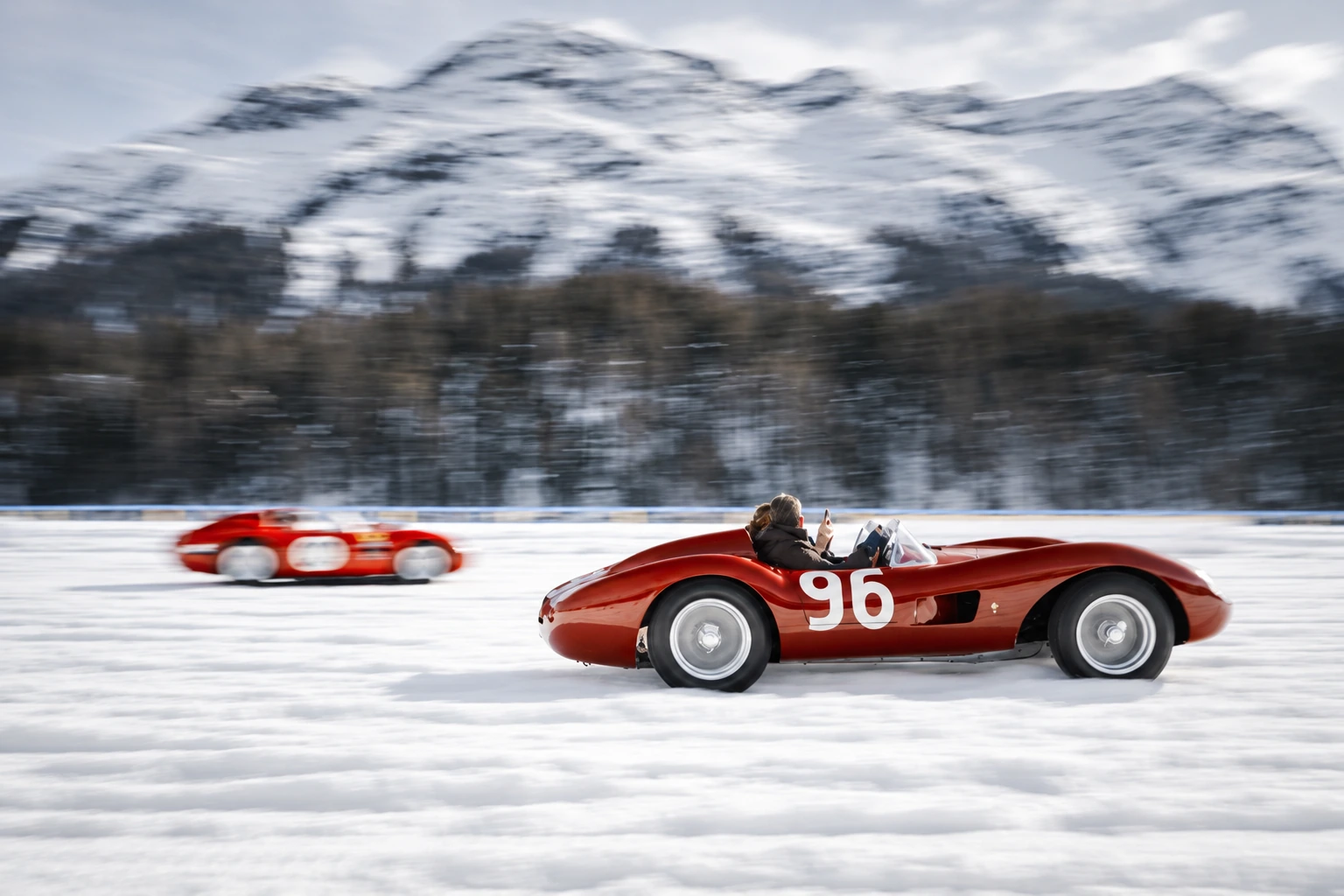
A racing car reads differently when the road disappears beneath it. At The I.C.E. St. Moritz, the frozen lake removes much of the usual visual clutter around an automobile, giving the chassis, wheels and bodywork a particularly direct presence.
The 2025 concours assembled cars whose forms belonged to different purposes and periods. Its results are most useful not as a hierarchy of expense, but as a way to distinguish those purposes: open-wheel racing, sports-racing bodies, prototypes and road-going icons.
Why the categories matter
The official 2025 archive names the Bugatti Type 59 as both Open Wheels winner and Best in Show. With the wheels exposed, the relationship between body, suspension and road is more readily visible than on a fully enclosed car.
The Ferrari 500 TRC won Barchettas on the Lake. The category directs attention to another racing proposition: a low, open sports-car body that covers the wheels while keeping the cockpit exposed.
Those two forms do not answer the same engineering question. Looking at them together makes a concours more instructive than treating every entrant as a variation on the word classic.
Racing, road use and singular bodies
The Porsche 908/03 took Racing Legends. The Alfa Romeo 6C 1750 GS Spider Aprile won Concept Cars & One-Offs, while the Ferrari 275 GTB/4 led Icons on Wheels.
These distinctions place a competition machine, an individually bodied car and a recognised road-car design in separate conversations. The design can be read through intended use rather than reduced to a silhouette.
A road-going coupé has to accommodate a different set of obligations from a racing prototype. An individually commissioned body brings a further question: how much of the object’s character comes from its mechanical platform, and how much from the particular body placed around it?
The Ferrari 250 GT SWB Sefac received the Spirit of St. Moritz distinction. The Lamborghini Miura SV was the public’s Hero Below Zero. Jury categories and audience preference therefore produced different kinds of recognition.
The lake is not an ordinary circuit
A concours is not a timed race. A dynamic presentation allows a car to be seen in movement, but that does not make lap speed the criterion by which its historical or aesthetic qualities are judged.
The setting adds another layer. Snow provides a pale field against which dark tyres and coloured bodywork stand out; the mountains supply a scale that neither a showroom nor an urban street can reproduce.
The controlled presentation gives movement a role within the concours without turning it into a road test.
A field with dates attached
The 2025 winning cars made chronology visible as well as category: the 1934 Bugatti 59, the 1957 Ferrari 500 TRC Scaglietti, the 1966 Ferrari 275 GTB/4 and the 1971 Porsche 908/03 belonged to markedly different moments in competition and road-car design.
The Best in Show trophy was designed by Norman Foster. That contribution gives the concours a further meeting between automotive form and another design discipline. The prize is an object in its own right, rather than simply a label applied to the winning car.
The 2025 field remains a useful reference precisely because it can be read beyond its date. On the lake, an automobile’s category became visible: what it was built to do, how its body expressed that task, and what survived after its working life changed.
Compare purposes, not just silhouettes
The Type 59 and the 500 TRC establish an immediate distinction between exposed and covered wheels. The 908/03 introduces another competition vocabulary, while the 275 GTB/4 brings a road-going coupé into the field. Read together, the winners provide a compact lesson in how intended use shapes what an automobile presents to the eye.
The one-off Alfa Romeo asks a different question again: how an individual body interprets the mechanical platform beneath it. That is why a concours category can be more informative than a single overall prize. It supplies a context for looking, rather than treating every car as the same sort of collectible object. The public’s recognition of the Miura SV records another response, one that belongs beside the jury’s distinctions rather than replacing them.
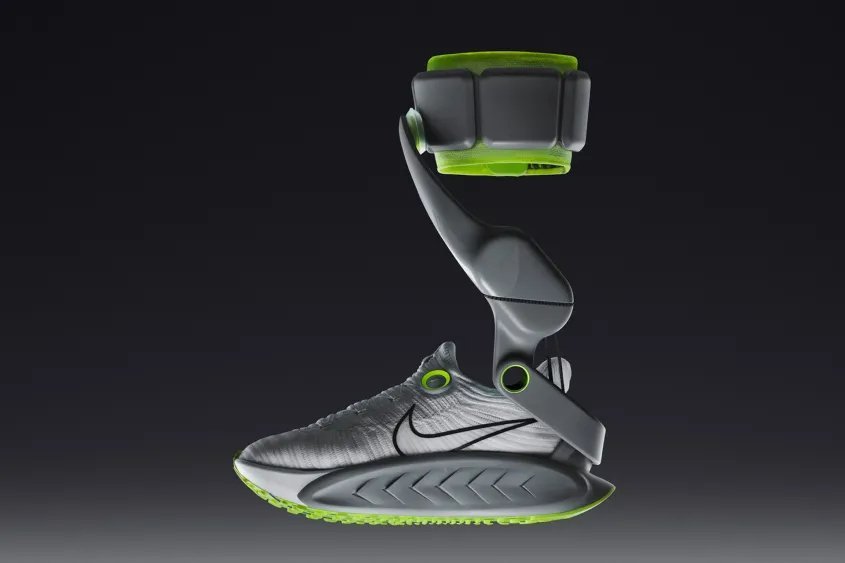
Developed with the robotics company Dephy, Nike's Project Amplify is a powered footwear system for running and walking. A year after its unveiling, it remains in testing, with a consumer launch still some years away.
Artificial intelligence has left the phone and moved into the kitchen, the bedroom and even the cat's litter box. Five recent objects suggest the domestic future is not about voice commands but about machines that learn to live alongside us.
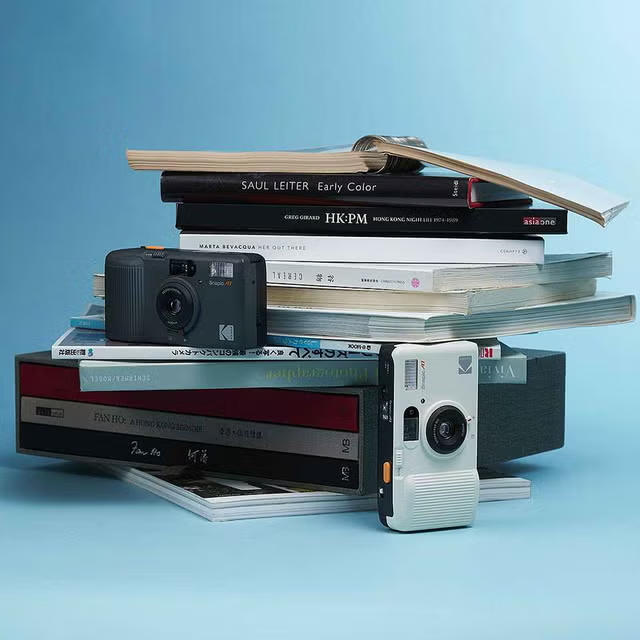
The smartphone made everyone a photographer. A new generation of dedicated compacts, from DJI's gimbal cameras to the Camp Snap CS-Pro, argues for a device that exists for one purpose only.