Culture / Reportage
Peter Simon: the collector’s eye moves from cloth to canvas
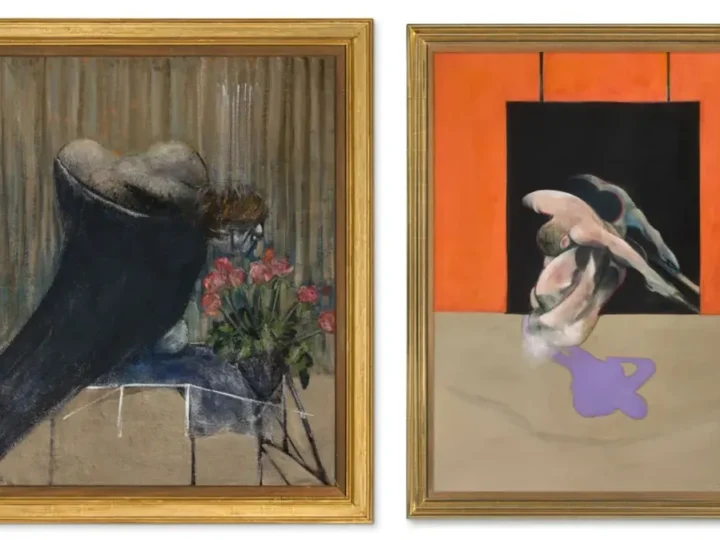
The Monsoon founder’s collection reaches Christie’s during Frieze Week, offering a study in colour, composition and the formation of taste.

THE CURATED EDITION.
Interview / Bay of Kotor
A Siberian-born DJ who conquered Ibiza and Dubai talks about starting over, and about the country she has never seen.

WAYFARER · The Interview · Aboard the KALIZMA, Bay of Kotor, Montenegro
There are interviews you conduct, and there are interviews the room conducts for you. This one was the second kind.
We are anchored off the coast of Montenegro, where the mountains drop straight into the sea in a way that happens only here. Beneath our feet is the KALIZMA: built in 1906, the oldest motor yacht still operating on the planet, the boat Richard Burton gave to Elizabeth Taylor, named for the couple’s three daughters. Brass that survived empires. Teak that remembers more famous nights than any of us will live. Today she belongs to Shirish Saraf, who deserves an honourable mention before any question is asked: a gentleman who understands that a boat like this is not owned but held in trust for the next story. He opened the decks with the quiet generosity of someone who knows the best thing to do with beauty is to share it.
Julia Bliss sits across from me, barefoot, the sun turning amber behind her. We begin.
WAYFARER: Let’s start where we are. The KALIZMA. Elizabeth Taylor’s yacht, off the coast of Montenegro. What does a night like this do to a person?
JULIA BLISS: It humbles you and challenges you at the same time. You feel every famous ghost on this boat saying: go on, do something worth remembering. I grew up in Siberia, in the cold, where a girl like me had no way of ending up on Elizabeth Taylor’s yacht in the Adriatic. So when I sit here, I don’t feel lucky. Luck is too small a word. I feel summoned.
Luck is too small a word. I feel summoned.
Julia Bliss
WAYFARER: You’ve been around the world. Place Montenegro for someone who has never come.
JULIA BLISS: Montenegro is a secret Europe hasn’t finished keeping. It’s the drama of Norway with the warmth of the Mediterranean: enormous mountains and then, suddenly, a sea of an almost unreasonable blue. The Bay of Kotor looks like a fjord that decided to be glamorous instead of frozen. And the people carry an old dignity that reminds me of the best of Russia, to be honest. I keep telling Gabriel: it’s the kind of place you don’t post about, because you want to keep it for yourself.
WAYFARER: This trip. Only this one. Which moment will you keep?
JULIA BLISS: It isn’t one big moment, it’s a sequence of small perfect ones. Coffee on deck before anyone else is awake, the water like glass. Swimming off the stern of a boat more than a hundred years old. Conversations that run past three in the morning because nobody wants to be the one to break the spell. That’s the privilege people don’t understand. It isn’t the gold or the marble. It’s time that refuses to hurry.

WAYFARER: Back to the beginning. The first time electronic music really reached you, how old were you?
JULIA BLISS: I was a teenager in Siberia, one of the coldest corners of the world, where music was the only thing that kept a house warm. My mother always had something playing. But electronic music touched me in adolescence, and it wasn’t a song, it was a sensation. As if the floor were breathing with me. I started DJing at fifteen. Some girls find a hobby at that age; I found a language I would speak for the rest of my life.
“I didn’t choose electronic music. It chose me before I knew its name.”
WAYFARER: You left a corporate career in Russia and ended up in India. How is the DJ the world knows today born?
JULIA BLISS: You make the leap before you’re ready, because you’re never ready. I went to India for a serious corporate job, after a holiday in Goa, and India simply refused to let me leave. I always say it this way: Russia is my janambhoomi, the land where I was born; India is my karmabhoomi, the land where I do my work. That’s where I became a DJ for real. I played Sunburn, Asia’s biggest festival, for more than a decade, was voted the country’s number-one international DJ and created my rawer side, techno, under the name MISS BLISS. India gave me a second birth.

WAYFARER: And the world beyond India? Tell me about life on the road.
JULIA BLISS: The road is my real home. Ibiza, the cathedral of electronic music. ADE in Amsterdam, where the whole industry meets once a year. The years I lived and played across Italy. And now Dubai, which has become my base for everything international. Each city gave me a layer: Europe taught me the patience of a long set, of building a journey over hours; the Middle East taught me glamour; India gave me the soul.
“I’m not a DJ from one place. I’m the sum of every airport that has ever spat me out at five in the morning.”
WAYFARER: There is a whole continent you have never set foot on. And it’s exactly the next one. Brazil.
JULIA BLISS: I have never been to Brazil. Never. And maybe that is exactly why it pulls me so hard. People tell me about D-Edge in São Paulo, which the techno world respects. Gabriel describes Laroc to me, with the sun rising over the dance floor, and I keep trying to imagine it. They say Copacabana on New Year’s Eve is millions of people in white with fireworks rising out of the water, and I still can’t picture it. And there is the South: Florianópolis, Jurerê, venues like Green Valley and Warung that live at the top of the global rankings. I haven’t lived any of it yet. I’m going to live all of it for the first time, with WAYFARER opening every door.
“To debut an entire country at once: how many artists get that in a career?”
WAYFARER: Beyond the decks. What are your other passions, and what are you building now?
JULIA BLISS: Music is my first love, but I have many. I’m an actress, I’ve worked in Indian cinema, and telling a story on screen taught me how to hold a room. I’m an entrepreneur: I built the Julia Bliss DJ Academy and my label, Bliss Sound Records, because I believe in opening the door for the next generation, especially for women. And I’m a dedicated traveller. But my deepest passion is transformation: taking a shy girl and making her a DJ; taking a silent room and making it a celebration.
“I don’t collect things. I collect the lives I’ve been lucky enough to live.”
WAYFARER: The last one, and make it the one they’ll remember. What is the dream, and what do you say to the kid who wants your life?
JULIA BLISS: The dream was never to be the biggest name. The dream is to be a bridge: between Russia and India, East and West, the girl with no connections and the career she prays for. That’s why I built the Academy and Bliss Sound Records: to train a hundred artists who end up better than me, especially women. The day a girl in Siberia, in Goa or in São Paulo says “I started because of her,” the dream is complete. And to the kid: protect your originality as if it were the last thing you have left. Be undeniable.
Be undeniable. The world always makes room for those it cannot ignore.
Julia Bliss

The sun has gone. Somewhere below deck, on a boat older than recorded jazz, someone has put music on. Julia is already swaying. In a few months she will cross an ocean and set foot for the first time in a country that, for now, exists for her only in stories. It will be under fireworks, on the other side of the world. But tonight, on the KALIZMA, off the coast of Montenegro, it is just for us.
Gabriel Silveirado, for WAYFARER. Aboard the KALIZMA, with gratitude to Shirish Saraf.
CONTINUE READING
Culture / Reportage
The Monsoon founder’s collection reaches Christie’s during Frieze Week, offering a study in colour, composition and the formation of taste.
Culture / Reportage
The film’s early-kitchen premise opens a wider conversation about food, apprenticeship and the difference between biography and fiction.

Culture / Reportage
Looking back at the 2025 Palais de Tokyo exhibition, scent emerges as a material for collaboration rather than simply a product to be displayed.