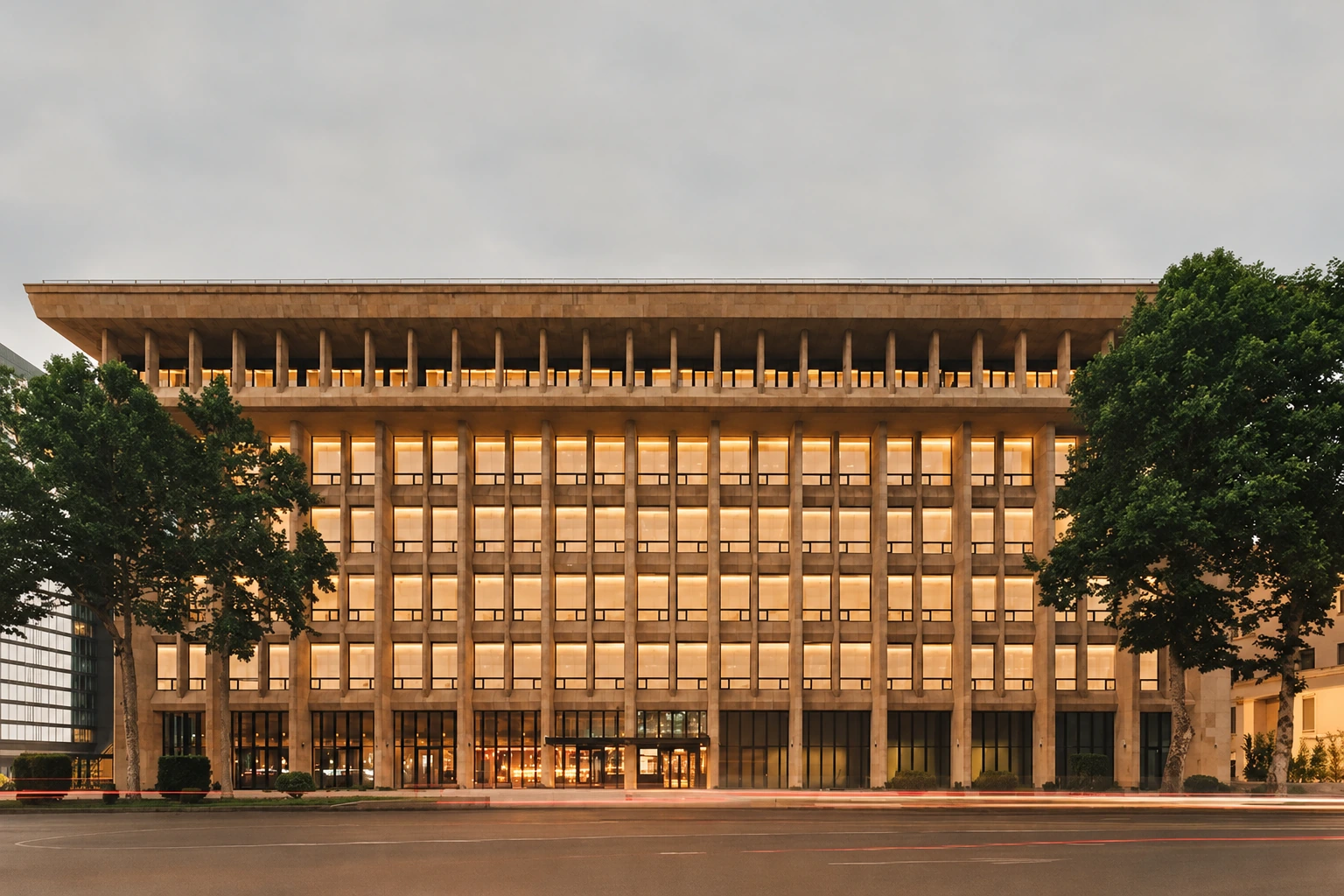
A change of use is more convincing when a building remains recognisable. At the Telegraph Hotel in Tbilisi, hospitality occupies a former communications landmark without making its earlier life disappear.
On Rustaveli Avenue, the monumental façade and geometric volumes retain the scale of a public institution. The hotel is not a newly built house borrowing a modernist appearance. Its architectural subject is an existing structure and the work required to give it another purpose.
The Georgian building comes first
Architects Lado Alexi-Meskhishvili and Teimuraz Mikashavidze designed the building, constructed in the 1970s as Tbilisi’s central post and telegraph office. Its recognition with a National State Award in 1983 gives that history a specific marker.
The façade, cornices and double atriums establish a monumental language. The building also responds to sloping ground, with transitions between levels, streets and views. Those relationships are as important as its outline: the structure belongs to an urban axis, not an isolated architectural object.
Calling it simply a Soviet relic would flatten the contribution of its Georgian architects. Equally, a hotel conversion cannot be judged only by whether the old façade survives. The question is what remains legible when the spaces acquire different uses.
Neri & Hu change the register
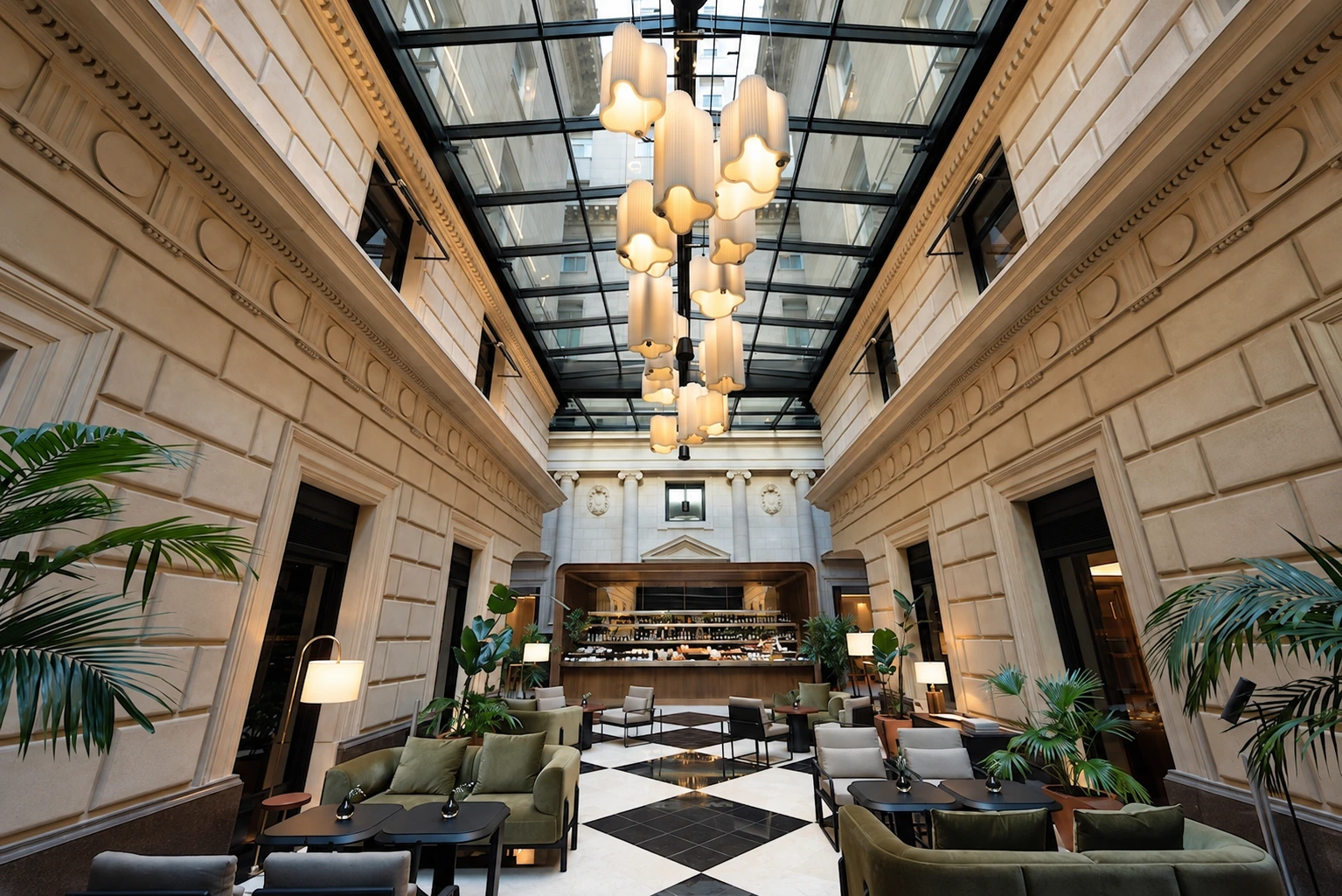
The interiors introduce walnut, fluted glass and brass, with a green drawn from vintage switchboard lamps. These materials give the preserved concrete structure another register. The communications reference is specific enough to connect past and present without requiring a roomful of historical equipment.
Black metal divisions and high ceilings give the new occupation a clearly drawn framework. The contrast between the building’s public scale and the smaller spaces used by guests is the more useful design story, beyond a general promise of comfort.
More than the guest room
The hotel lists 239 rooms and suites across nine categories. Its other spaces make the conversion a broader programme: Philosophico serves an Italian menu, Laan Thai brings Thai cooking into the building, and Grand Café pairs European and Georgian references. The three identities extend the building’s international conversation without making its Georgian setting disappear.
Tatuza Jazz Club takes its name from Georgian musician Tatuza Kurashvili. A wine library, courtyard bar and rooftop venue extend the range of settings beyond the accommodation floors.
The old communications building now gathers people for different reasons. Its strongest proposition is not to resemble another capital’s hotel, but to remain a recognisable part of Tbilisi while finding another use.
Telegraph Hotel · 31 Shota Rustaveli Avenue, Tbilisi, Georgia.
Four Seasons, Aman, Maybourne, Belmond and Mandarin Oriental now sell the journey as part of the stay, from helicopter transfers into London to 23-day circumnavigations at $238,000 a head. Who flies, why, and what is really being bought.
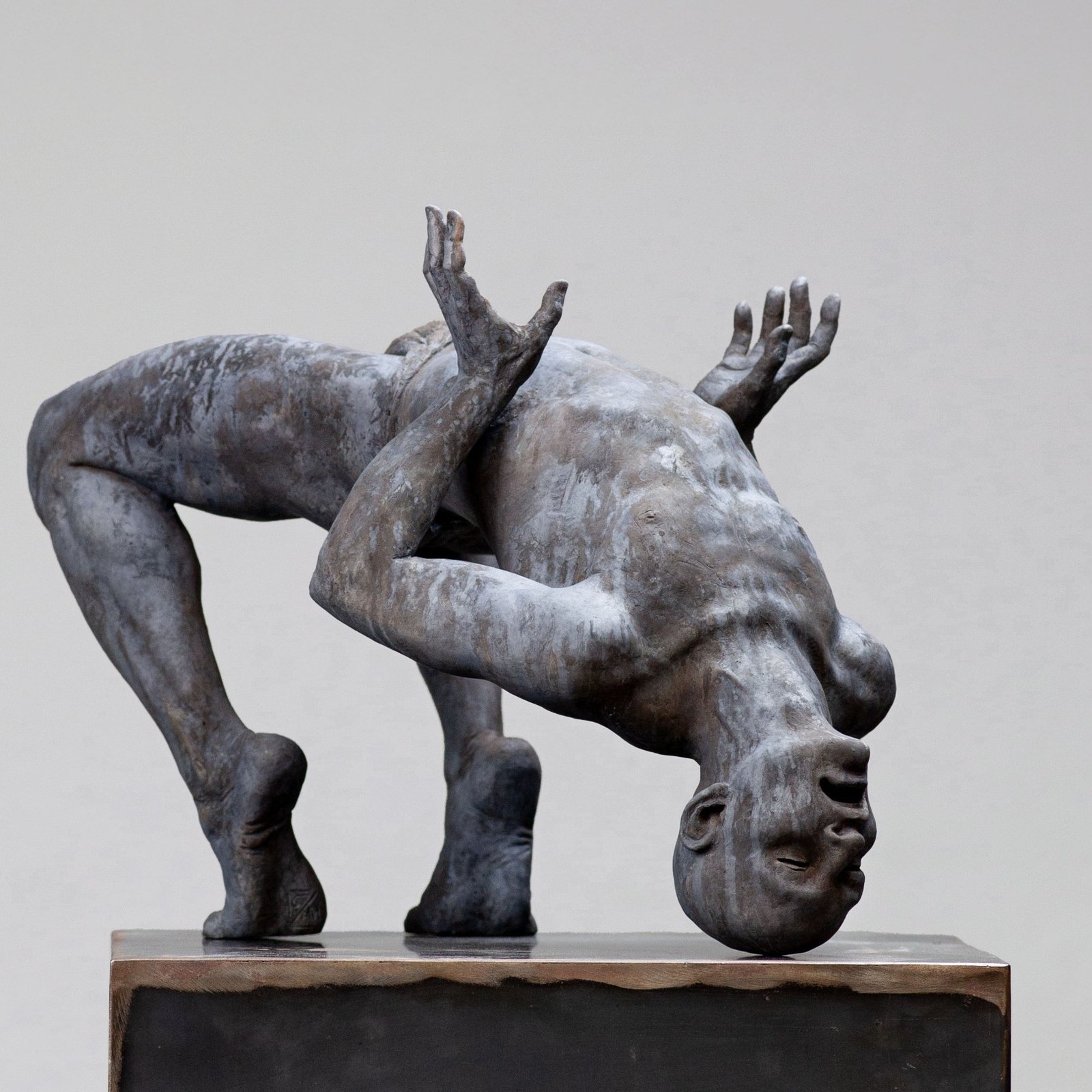
Airlifted by helicopter to the summits, monumental bronzes by Coderch & Malavia turn Courchevel's slopes into an open-air gallery, with Arman back in 1850.
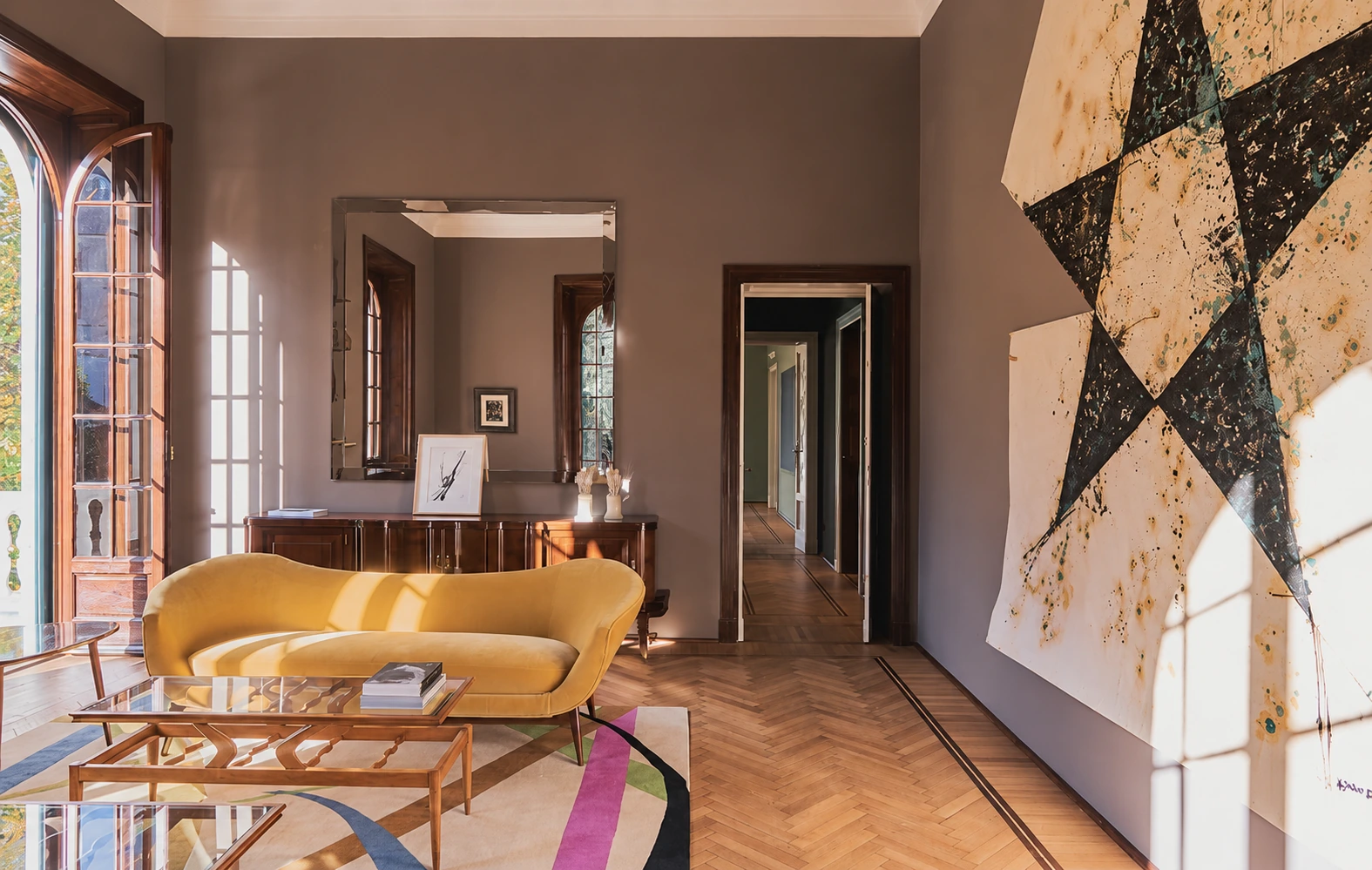
On Arroyo, the hotel brings Fernanda Schuch’s interiors and Argentine artists into a historic vertical landmark. Its strongest identity comes from the relationship between the building and the city.
At a handful of the world's most sought-after hotels and villas, money buys an application, not a room. Advisers now build dossiers to prove their clients belong.
From the three rivers of Passau to the thermal baths of Budapest, by way of Linz, the Wachau, Vienna and Bratislava: Central Europe read slowly, one bend of the Danube at a time.
Vienna
THE CURATED GLOBE / FROM THE EDITORS
Good stories. Better company.
A considered selection of people, places and ideas from WAYFARER Edition, delivered to your inbox.
Welcome aboard. Your first letter is on its way.
We could not complete your subscription. Please check your email and try again.