Style / Brief
Bottega Veneta Takes Spring 2027 Home to Venice
Chris Rhodes photographs Louise Trotter's Spring 2027 collection against the pink walls, terrazzo and damask of the lagoon city, with the new Verde bag at its centre.

THE CURATED EDITION.
Reportage / Rome
Micromosaic turns domes, ceremonial doors and rose windows into structures that can be worn.
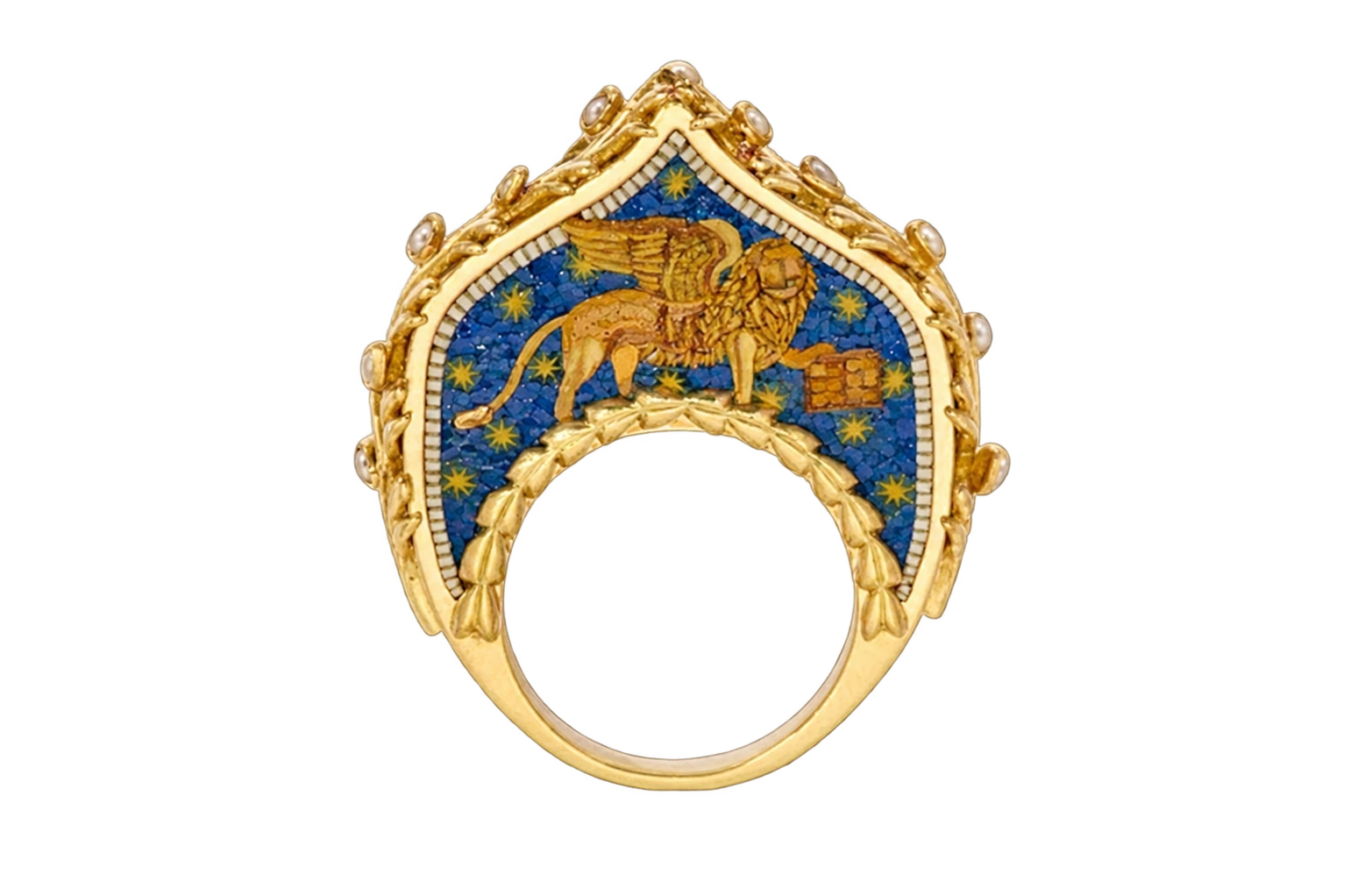
At Le Sibille, a dome is not reduced to an outline. It is rebuilt from small elements. The Roman atelier’s Crossings collection brings sacred architecture into jewellery through micromosaic, a technique in which the image is assembled rather than painted. Its detail is therefore also its construction.
Presented in Rome in 2025, the collection connects Gothic rose windows, mandalas, lotus forms and basilica domes. Such a range could easily become a catalogue of symbols. The more interesting connection is physical: each reference already depends on parts arranged into a larger pattern. Jewellery gives that pattern a new scale and a different relationship with the body.
Micromosaic turns the edge between colours into a physical meeting rather than a painted transition. The choice and placement of a tessera help define a curve, a border or a change in tone. At jewellery scale, those decisions have to remain readable within an object small enough to wear.
The gold support introduces another boundary. It contains the mosaic field while giving the piece a structure of its own, distinct from the building being referenced. A dome on a ring cannot reproduce the experience of standing beneath a dome; it translates a particular organisation of forms. Crossings is strongest when that translation remains visible. The architectural reference gives the eye something to recognise, while the assembled surface reveals how recognition has been rebuilt.
Roman micromosaic developed through the refinement of enamel tesserae, including work at the Vatican Mosaic Studio in the eighteenth century. Small pictorial objects subsequently travelled with Grand Tour visitors. The technique carries a history of architecture becoming portable, well before this collection.
Le Sibille describes a process of heating glass paste, drawing it into fine rods and cutting the material into individual tesserae. These are placed by hand on an 18-carat gold support. The distinction matters. A surface that appears continuous at a distance contains many decisions about colour, position and the meeting of edges.
Camilla Bronzini, Francesca Neri Serneri and Antonella Perugini founded the house in 1990. Their atelier history places this craft at the centre of its identity. In Crossings, the technique does not merely decorate an architectural shape. It repeats architecture’s own logic of assembly.
The Porta Santa pendant refers to the Holy Door at St Peter’s Basilica and the 2025 Jubilee. Gold, micromosaic and white and brown diamonds give the ceremonial threshold a tangible frame. The Cupolone ring takes another feature of the basilica, its dome, into a sculptural form crowned by an inverted diamond.
Fide works in a Byzantine register, using micromosaic rather than a gemstone centre. Elsewhere, Gothic windows and Venetian references bring a different balance between ornament and structure. These are not interchangeable motifs: a door suggests passage, a dome enclosure, and a window the organisation of light.
The symbolism belongs to the designers’ interpretation of architecture and religious imagery. Their workmanship can be examined more directly, in the spacing of tesserae and the relationship between the mosaic field and its gold boundary.
A monumental building establishes its presence before its detail can be read. A jewel asks for the opposite sequence. Crossings makes the viewer begin close, then reconstruct the larger reference. Rome is not simply pictured on the hand. Its methods of making become part of what the hand carries.
Instagram: Le Sibille.
CONTINUE READING
Style / Brief
Chris Rhodes photographs Louise Trotter's Spring 2027 collection against the pink walls, terrazzo and damask of the lagoon city, with the new Verde bag at its centre.

Style / Reportage
In Asnières, where the house has made its trunks since 1859, Pierre-Louis Vuitton talks about the Monogram and the craft, while Bruno Aveillan's suitcase, photographed in more than a hundred places, becomes a book and an exhibition in Paris.

Style / Reportage
Dior shows Jonathan Anderson’s Cruise 2028 in Shanghai on 14 May 2027; Gucci follows with Demna’s Resort 2028 on 17 May. Why fashion’s travelling season is heading for the Pacific.
Style / Reportage
Selected archives make the city’s relationship with film and fashion tangible, provided provenance is kept separate from atmosphere.

Sea & Sky / Interview
My Song, the Giraglia and weather-resistant fabrics reveal a practical connection between life at sea and the design of clothes.
Style / Reportage
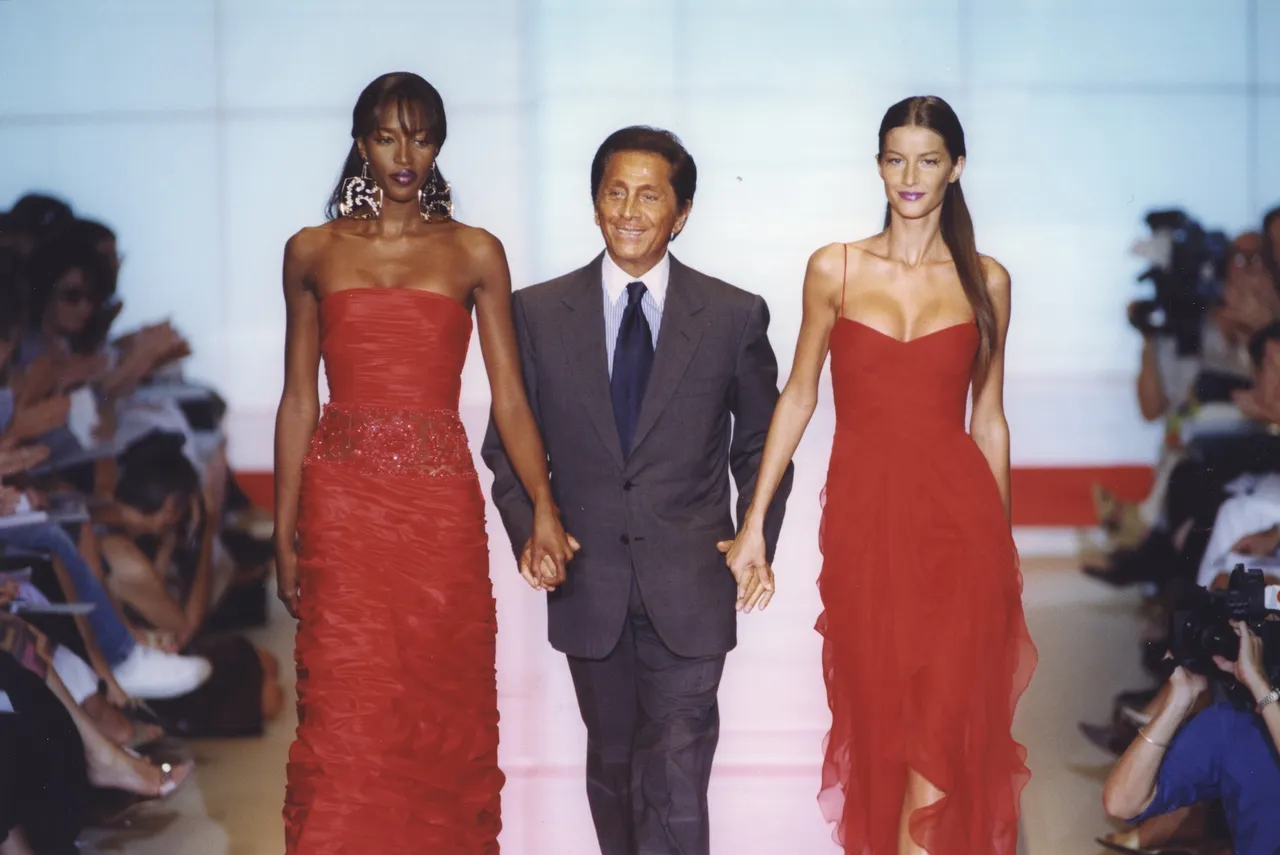
Valentino Garavani died at home in Rome in January 2026, at 93. From his Paris apprenticeship and the red that bears his name to the Florence show that made him and the foundation he built with Giancarlo Giammetti.
THE CURATED GLOBE / FROM THE EDITORS
A considered selection of people, places and ideas from WAYFARER Edition, delivered to your inbox.
Free. No data sharing. Unsubscribe in one click.