WAYFARER Drive · Road test
198 PS, under 6 l/100 km in town and no plug involved. The UX 300h contests German territory by a road the Germans have yet to take.
Photos Lexus
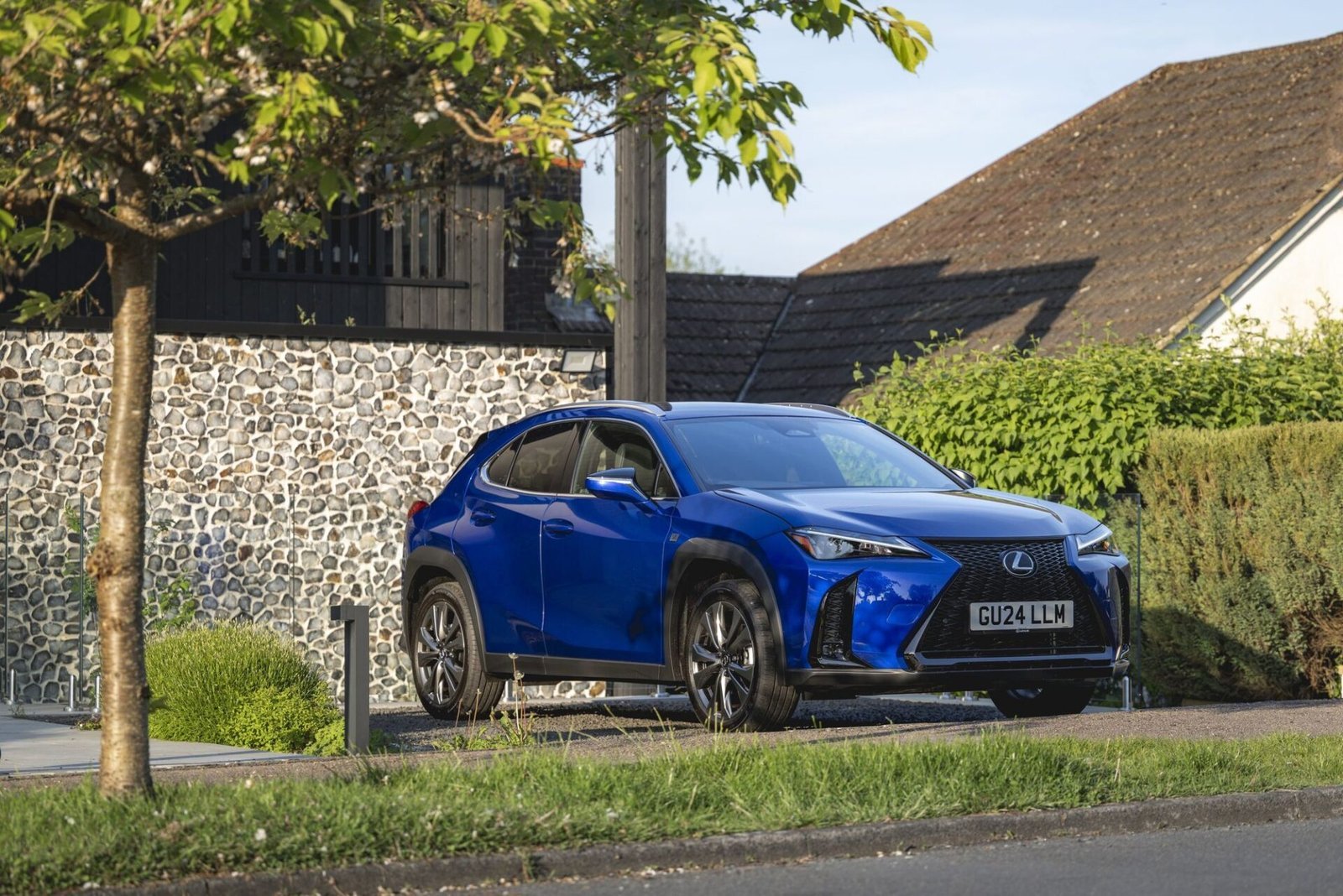
The first fact about the UX 300h is not on the spec sheet. It is on the pavement. Parked beside an X1 or a GLA, it looks half a size smaller than it is, and the impression does not come from a mistake in proportion: it comes from a design decision Lexus took in 2018 and never abandoned. While the whole segment raised its roof, thickened its pillars and began to sell presence, the UX stayed 1.52 m tall, with a shape that accepts being mistaken for a raised family hatchback. Eight years on, with a fifth-generation hybrid system under the bonnet, that stubbornness has become the car’s strongest commercial argument.
Timeline
From the smallest Lexus to the fifth-generation hybrid
Hatchback proportions, SUV stance
4.50 m that change how it behaves in town
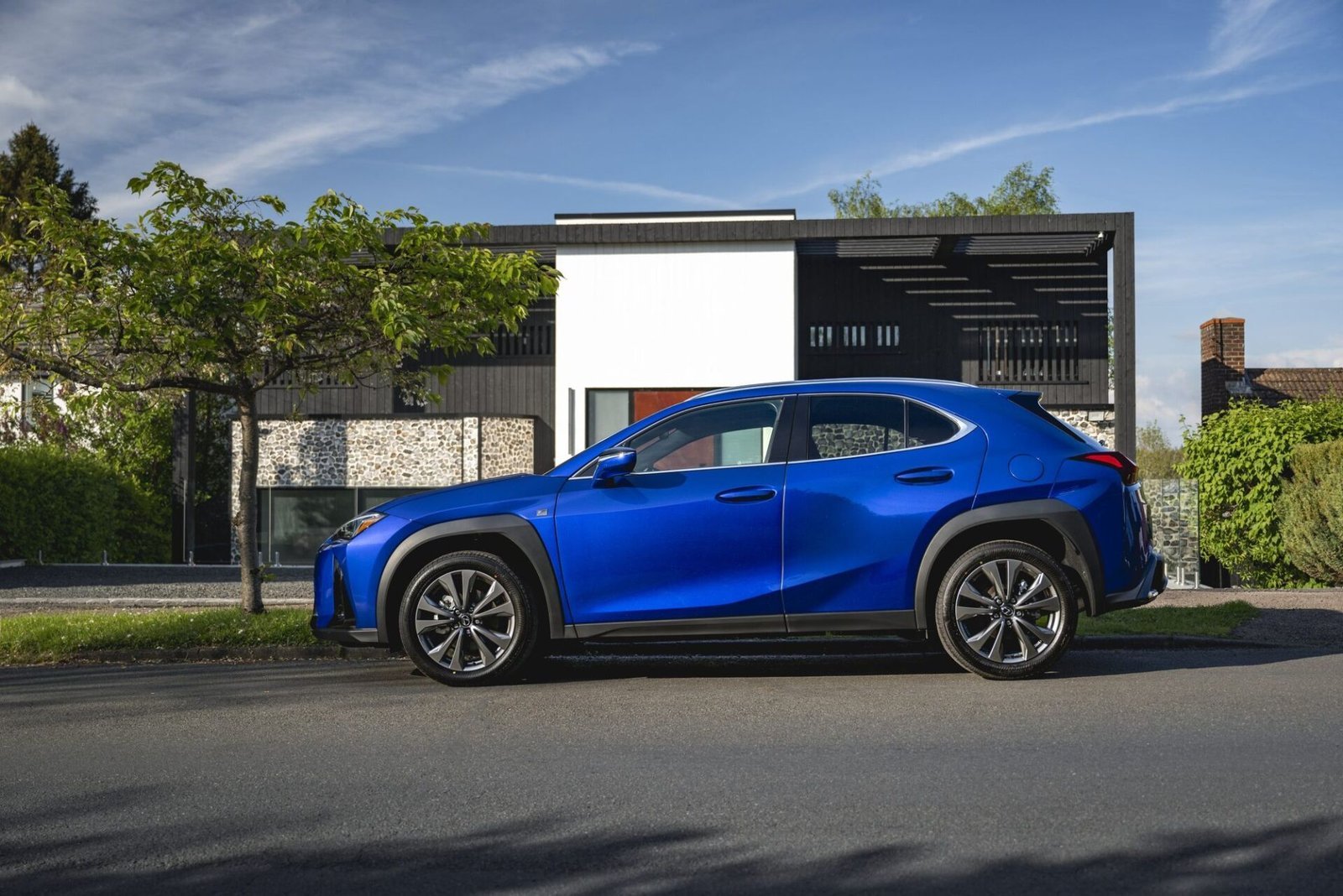
It measures 4.495 m long, 1.84 m wide and 1.52 m tall, dimensions that leave the UX in an awkward spot on classification tables and a very comfortable one for anyone driving in a dense city. The low centre of gravity follows directly from that, and it is what you feel at the wheel: the UX takes corners with ease and behaves more like a family hatchback than a conventional SUV.
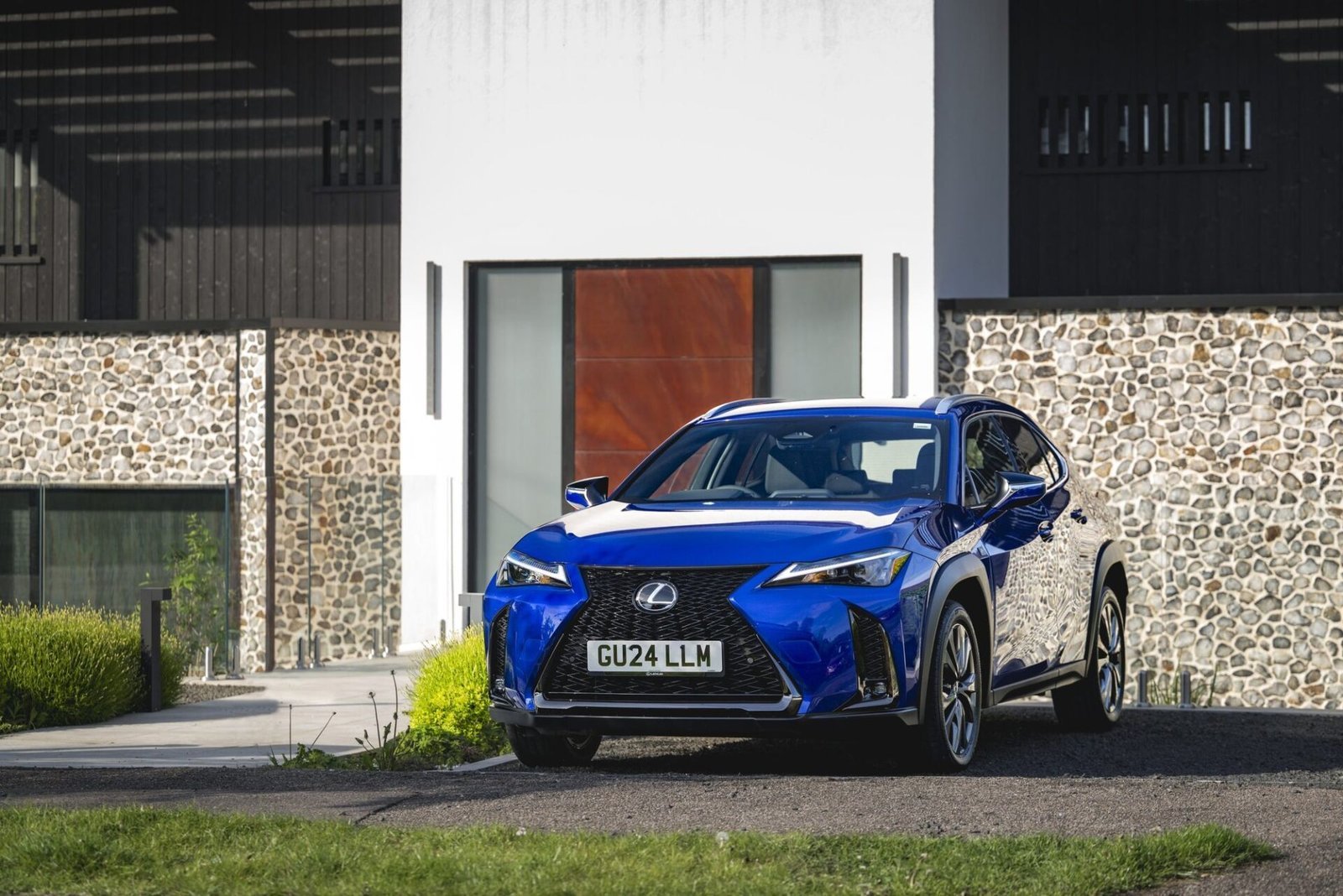
The styling remains the most divisive element of the project. The spindle grille takes up almost the whole front end, the headlights are narrow and tapered, the tail light runs from edge to edge and the flanks carry creases that change in intensity as the light falls on them. It is a car that does not go unnoticed, yet it does not use the German vocabulary of display, with oversized wheels and trim imitating carbon fibre. The Lexus wager is a different one, and more Japanese: technical, well resolved and a little eccentric.
The dark plastic wheel-arch cladding is the most dated feature of the whole, a legacy of the period when the segment demanded visual signs of toughness. It is the detail most at odds with a design that has otherwise aged well. At the wheel, the conclusion is similar: the UX is more powerful, more efficient and more comfortable than its predecessor, and has no pretension whatsoever to being sporty.
The fifth generation of the hybrid
Two motors, no plug
The powertrain pairs a naturally aspirated 2.0-litre petrol engine, with 152 PS and 184 Nm, with a front electric motor producing 112 PS and 202 Nm, for a combined 198 PS through a continuously variable transmission. The battery is lithium-ion with sixty cells, and the version tested is front-wheel drive. None of that information, taken alone, explains why the car works. What explains it is the absence of a cable.
The battery recharges through regenerative braking and from the combustion engine itself, which means the owner changes nothing about their routine. There is no charge planning, no charging-network app, none of the mental arithmetic every plug-in hybrid owner does before leaving home. In the many markets where charging infrastructure is still patchy outside the major cities, that has stopped being a technical detail and become a commercial proposition.
On paper, the advance over the UX 250h is modest. The previous system delivered 181 PS and, by Lexus’s figures, 8.5 seconds from 0 to 100 km/h. The 300h claims 8.1 seconds. Four tenths do not change the nature of the car, and Lexus does not sell the UX on that number. The difference shows less off the line than in the 60 to 100 km/h pick-up, which is where an urban car is really asked to perform.
The absence of a cable has stopped being a technical detail and become a commercial proposition.
How the UX really drives
Smooth until the pedal hits the floor
At urban pace, the UX 300h pulls away from the lights with no combustion noise, on the electric motor alone, and holds electric mode for longer stretches than most hybrids in the class can manage. The instant torque disguises a weight of almost 1.6 tonnes over the first few dozen metres, and the sound insulation copes when the 2.0 cuts in, which happens without a jolt and without warning.
The problem appears when the accelerator goes to the floor. The CVT lets the revs climb before the speed catches up, and the naturally aspirated engine holds a high note with a sound that does not suit the rest of the car. It is the familiar elastic sensation of Toyota hybrids, and no layer of insulation fixes it, because the problem is not acoustic, it is one of perception: the driver asks for one thing and the powertrain answers with another, half a second later. Under full acceleration the response feels less natural, and you sense it at the wheel straight away.
That is, in practice, the car’s instruction manual. Driven at seventy per cent of accelerator travel, the UX is refined, precise and discreet. Driven at one hundred per cent, it exposes the limit of the powertrain, which is the same as that of practically every hybrid with a continuously variable transmission. The good news is that stability does not pay that toll: the low body rolls little, the suspension inspires confidence and the steering is precise enough for everyday use, without asking for correction mid-corner.
Efficiency that shows up on the statement
Less fuel in traffic than on the open road
The homologated figures for the car tested are 5.8 l/100 km in the city and 6.7 l/100 km on the open road, good numbers for a premium SUV weighing 1,610 kg. In my own use, I measured 5.6 l/100 km in the city and 6.0 l/100 km on the road, better than the official figure in both cases. The inversion is the interesting point. This is one of the few cars in its class that uses less fuel in heavy traffic than at cruising speed, because it is precisely in stop-and-go driving that regeneration does its work.
The fifth generation also improved the urban sum. By the figures released at launch, city consumption fell from 6.0 l/100 km in the UX 250h to 5.8 l/100 km, even with 17 PS more. A gain in power accompanied by a gain in efficiency is rare, and says more about the system than the power figure alone.
For the buyer who covers between 1,500 and 2,000 km a month, mostly in town, the difference in consumption against a German rival with a conventional turbocharged engine shows up in running costs. That is where the UX’s argument stops being environmental and becomes financial.
Thematic module · Colour
Saturated blue in a segment that sells grey
The choice of launch colour is one of the most revealing decisions in a project, because it is the only one a manufacturer makes thinking exclusively about how the car will appear. The premium compact segment sells mostly grey, black and white, and even so Lexus presents the UX 300h in a highly saturated metallic blue, with a pigment that shifts in tone according to the angle of the light.
The official photographs make the reason clear. The blue is what gives the side creases a function: without it, the two grooves that cut across the door would be mere relief, and with it they become a line of light that divides the body into two horizontal halves. In the shadowed areas, the same pigment falls to an almost navy blue that darkens the plastic cladding and disguises the weak point of the design. It is paint working as design correction, and few manufacturers use that resource so knowingly.
Samples taken from the official photographs: highlight, body and shadow of the paint, plus the graphite of the dashboard.
The cabin and the distance it creates
Where the Lexus parts from the Toyota
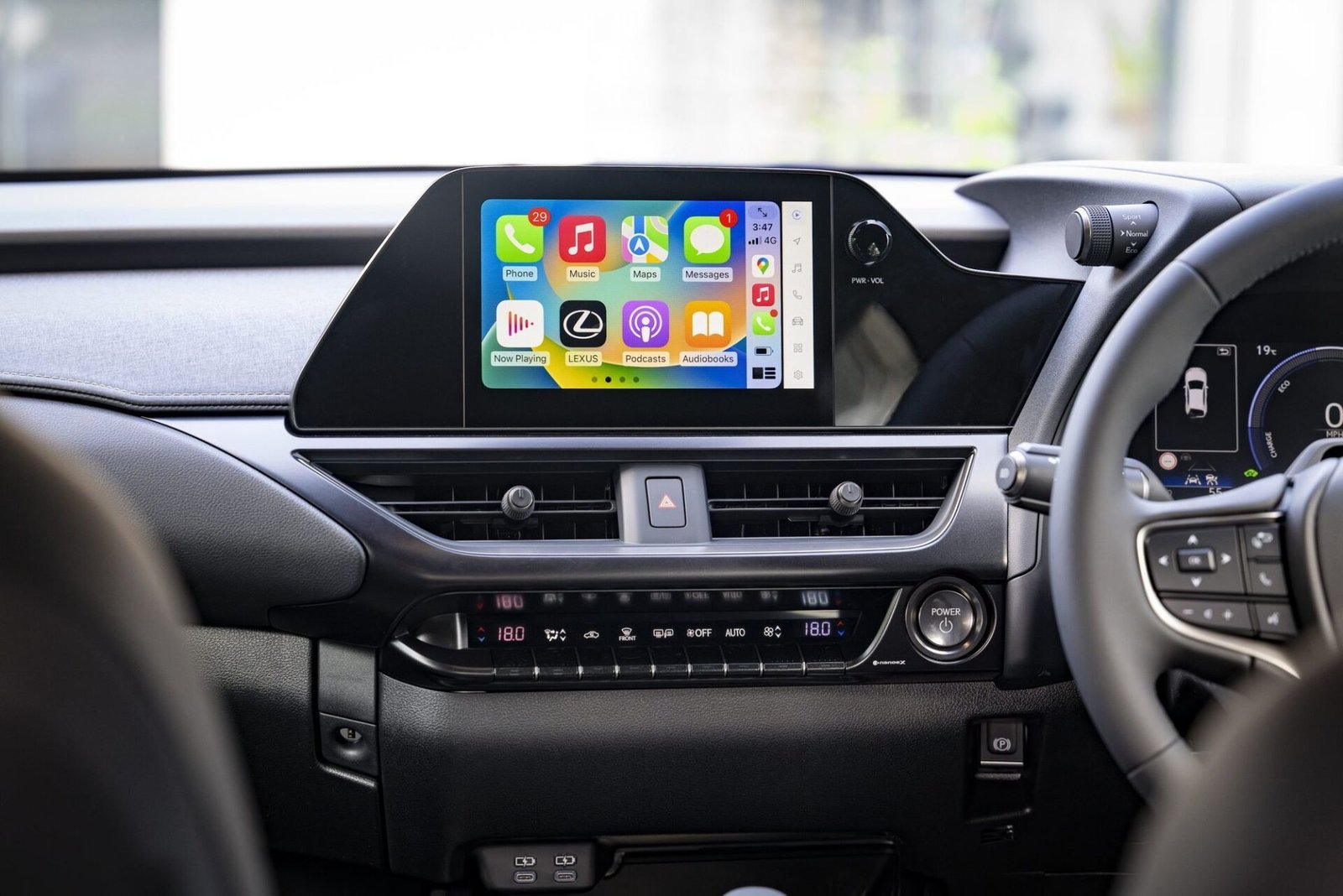
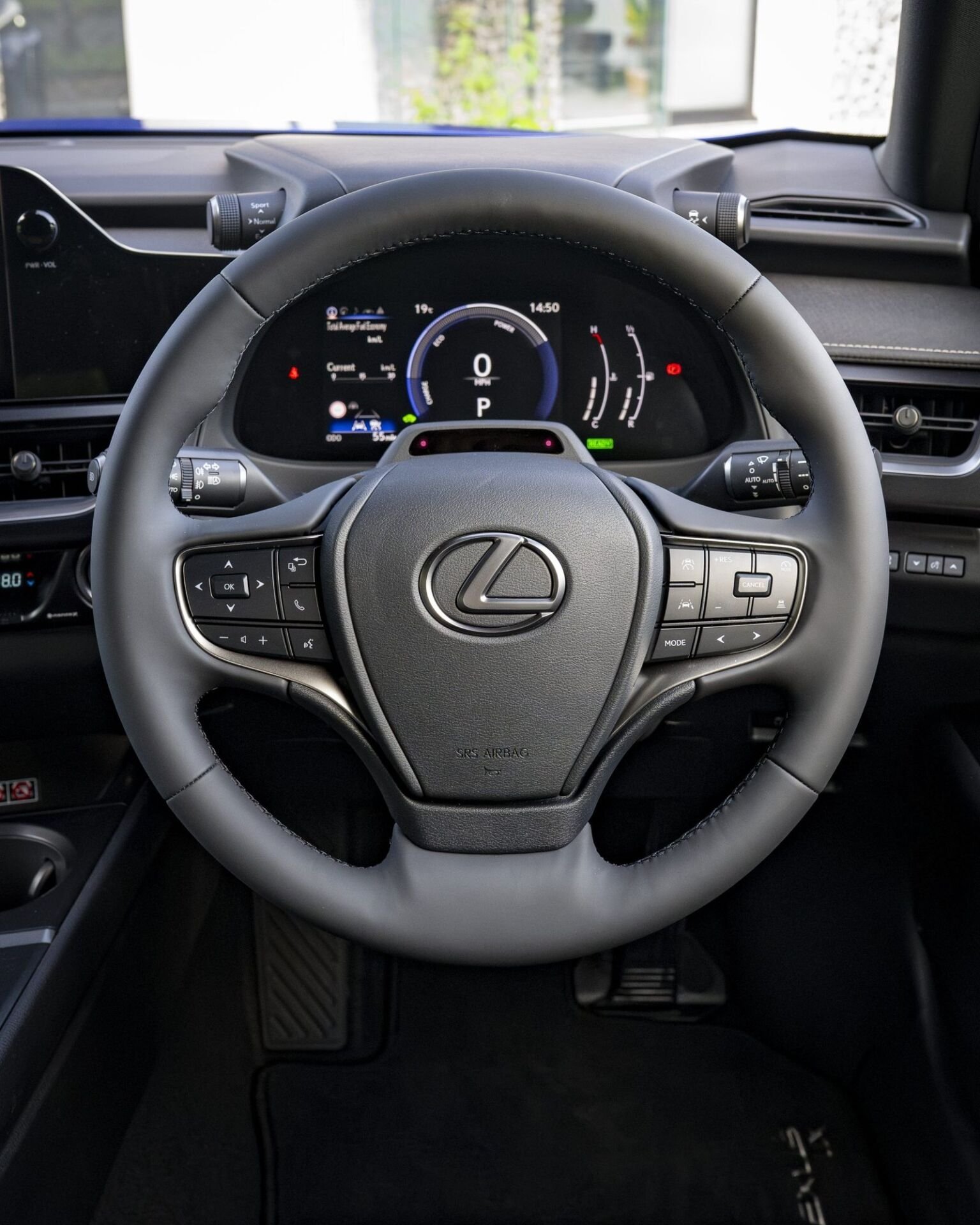
The cabin is the best-resolved environment in the car and one of the best in the segment, for a reason that is almost countercultural today: Lexus has not moved everything to the screen. The climate control keeps a row of physical buttons with clear temperature markings, the volume has a rotary control, and the drive-mode and traction-control selectors remain on the two small cylinders either side of the instrument binnacle, an idiosyncratic solution that works better than it looks. The gear selector is small, the steering column has a generous range of adjustment and the driving position is low enough to recall a saloon.
The digital instrument display measures 12.3 inches and the central touchscreen matches it, with wireless Apple CarPlay and Android Auto. The dashboard is well organised and the layer of information on how the hybrid system is working is detailed without being overly didactic. The sound system, with a subwoofer, is above what the class offers as standard.
The materials sit in premium territory at the points of contact, with soft coverings on the dashboard, visible stitching and a textile finish on the upper section that is a good substitute for the usual textured plastic. But the project’s Toyota origins appear in the background, in the column stalks, some of the door switches and the plastic of the lower console. Build quality is beyond reproach, and the point is a different one: in three or four details the parts catalogue still gives away the base shared with Toyota, something the brand has resolved better in the models further up the range.
The rear seat is where the project charges the price of its proportions. The 2.64 m wheelbase is reasonable for the class, but the low roof and bulky front seatbacks limit leg and head room for an adult of 1.80 m. The boot holds 234 litres, below the class average, a direct consequence of the low roofline. It is worth knowing the number before the test drive, because it is the one that defines who the car was made for.
Driven at seventy per cent of the accelerator, the UX is refined, precise and discreet.
Driver aids calibrated for real traffic
Safety without a hidden menu
The package brings together adaptive cruise control, autonomous emergency braking, forward collision warning, lane-keeping assist, blind-spot monitoring, rear cross-traffic alert, a reversing camera and parking sensors. The list is competitive, and what matters in it is less its length than its calibration.
The Lexus Safety System+ 3.0 package also adds automatic high beam, lane-departure alert with steering correction and eight airbags. On a road with faded lane markings, an everyday situation in many cities, it is the calibration of the lane assistant that decides whether it becomes a tool or a nuisance, and it is the point worth watching on a test drive.
Safe Exit Assist deserves a separate mention because it solves a specifically urban problem. On detecting a vehicle, cyclist or motorcyclist approaching from behind, it warns before the door is opened. In a city where motorbikes filter between lanes on every avenue, it is the item on the list most likely to prevent a real accident, and it is the kind of engineering that rarely appears in an advertisement because it does not make a pretty picture.
Against the German trio
A contest of premises, not of power
The UX 300h faces the BMW X1, Audi Q3 and Mercedes-Benz GLA, and loses to all three on rear space and boot capacity. It also loses on brand perception, which is a real asset and one Lexus has not yet built to the same depth in every market. What it offers in exchange is a different mechanical premise: a full hybrid system against conventional engines or mild-hybrid systems in the rivals’ entry versions, which means a difference in urban consumption that is not marginal but structural.
It is not the most powerful of the group and does not set out to be. It is the only full hybrid among them, the only electrification proposal that demands no change of routine.
The warranty closes the argument: in the market where WAYFARER drove it, five years, with unlimited mileage. For anyone intending to keep the car for five years, that line weighs as much as any comparison of power, because it affects resale value and the risk over the period.
Gallery
Five angles of the UX 300h
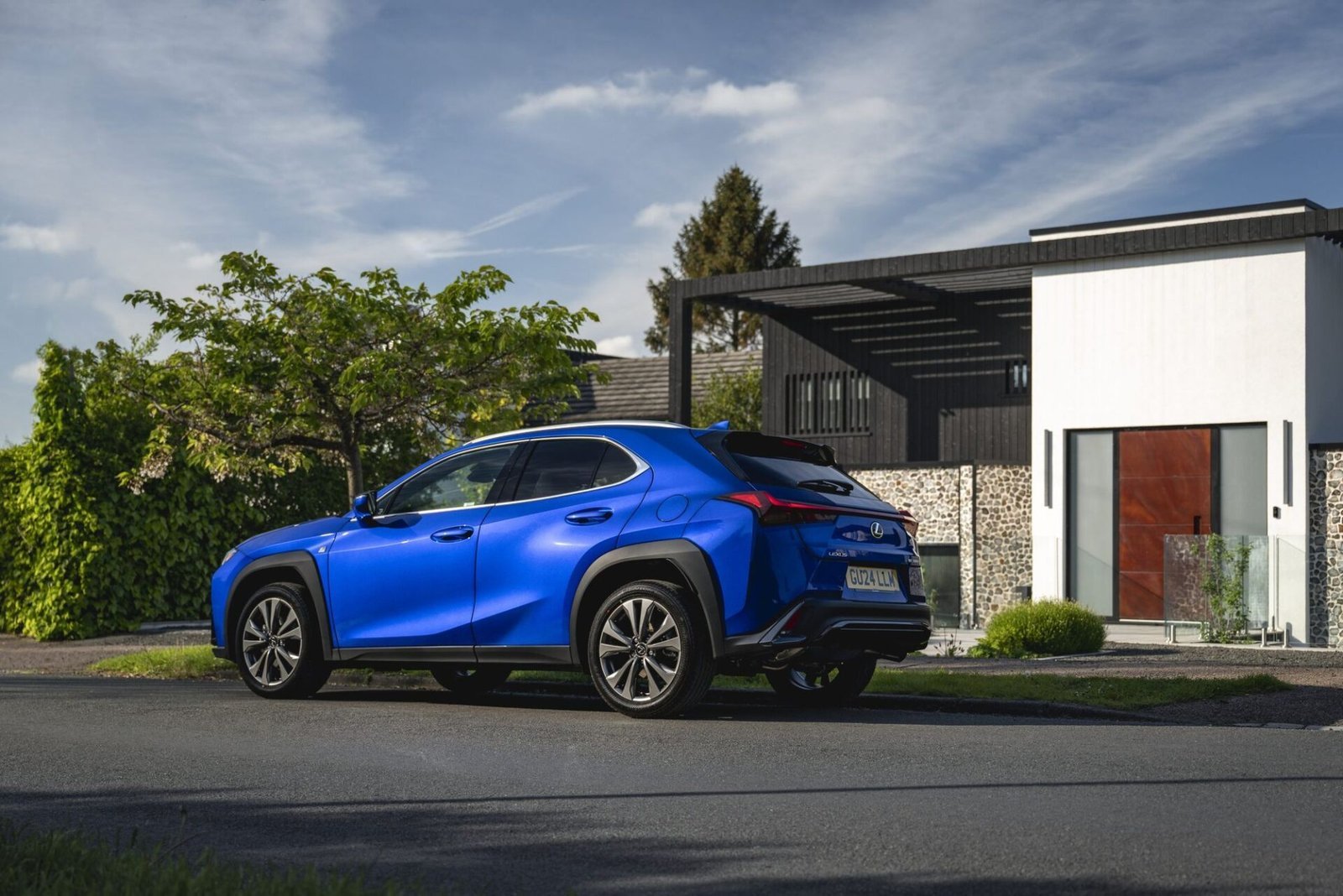
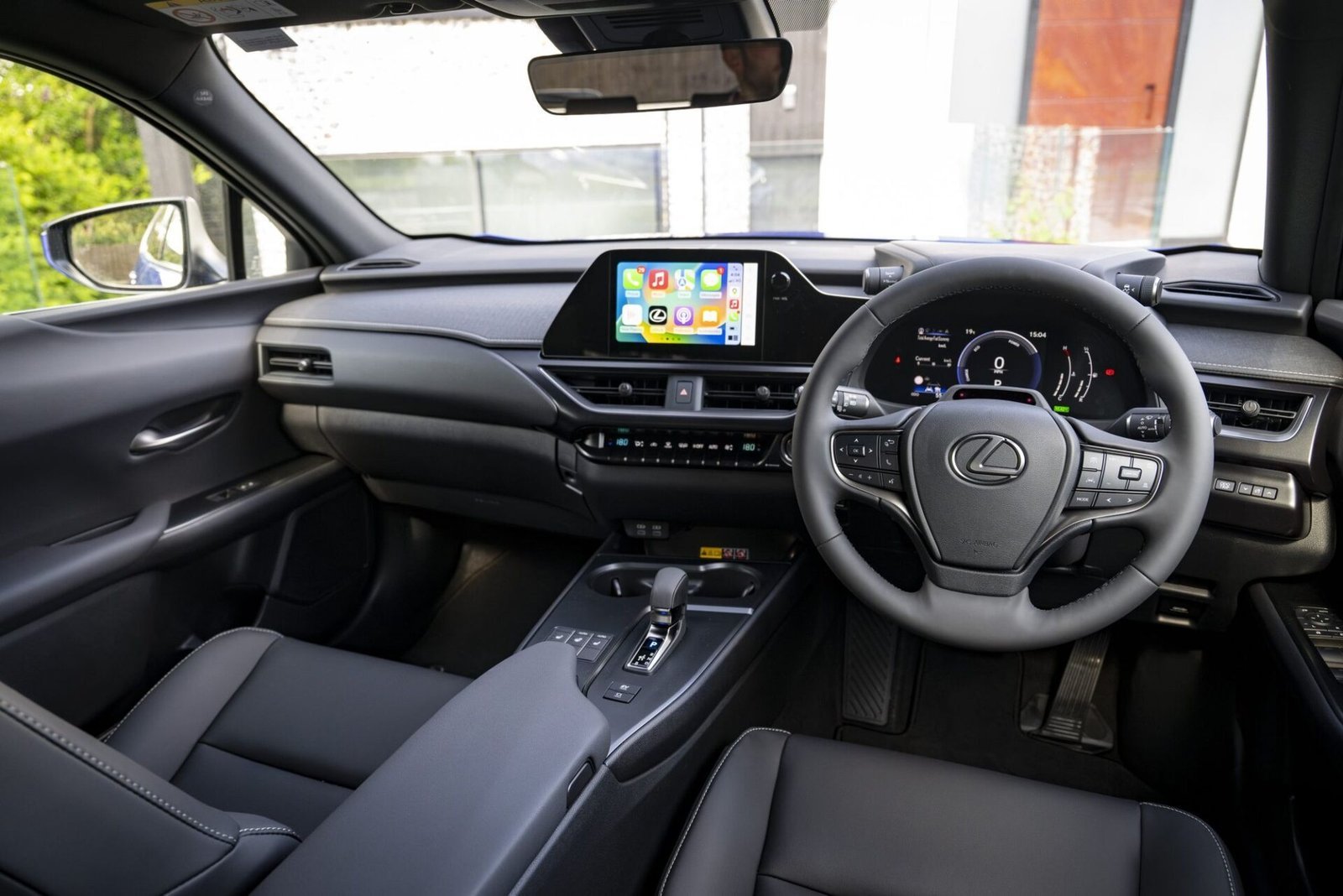
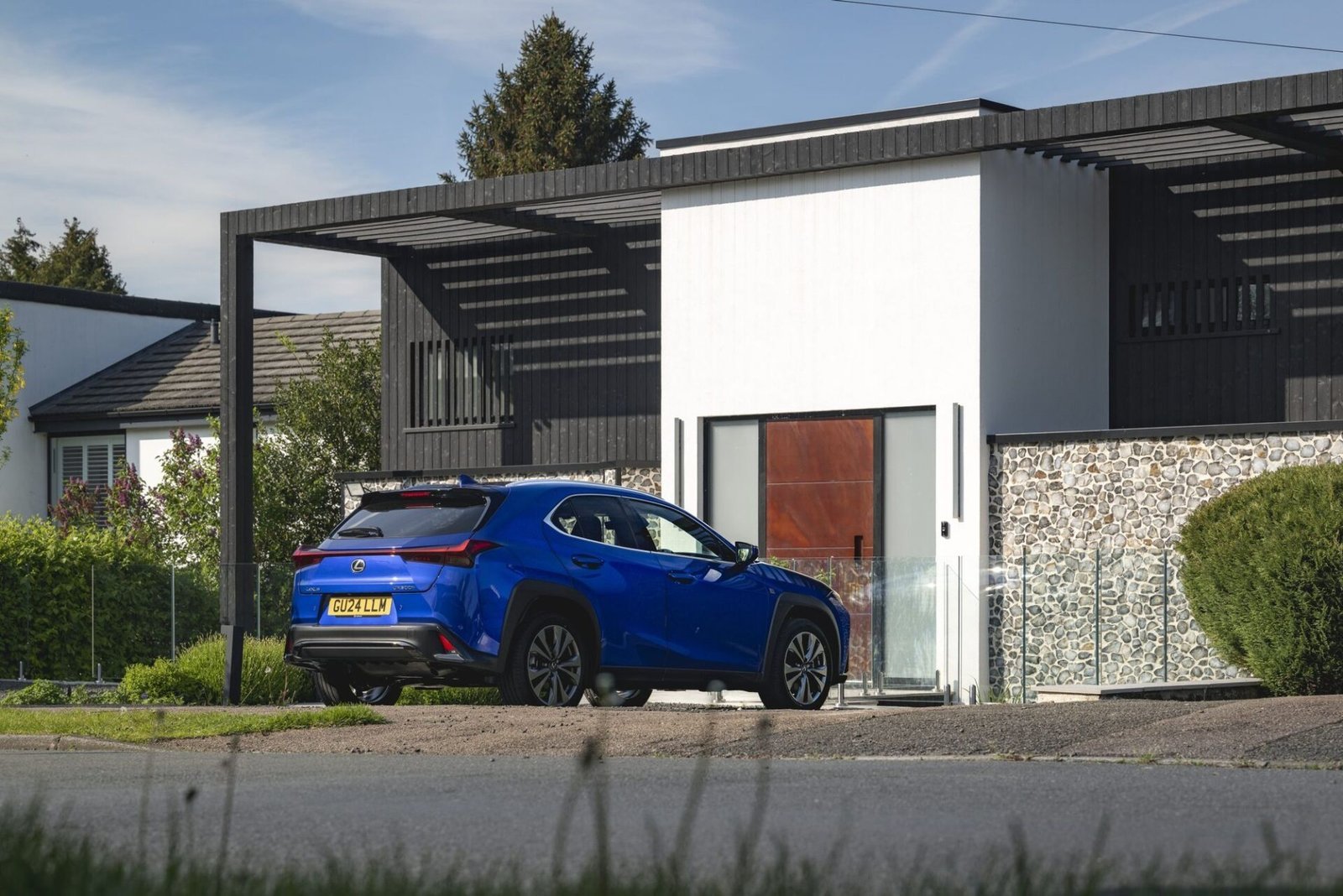
On the pavement, beside an X1 or a GLA, the UX 300h still looks half a size smaller than it is. Eight years after its debut, Lexus continues not to apologise for that: 1.52 m tall, a boot that chooses its own public and a hybrid that asks for neither a plug nor planning. The segment raised its roof. This one stayed where it was.
Originally published in Portuguese in WAYFARER, September 2026. This review is a nominee for Best Car Review Content at the 2026 RACER Creator Awards.
Specifications
Lexus UX 300h
01Powertrain
- Combustion engine
- 2.0 naturally aspirated, four cylinders, petrol, 152 PS and 184 Nm
- Electric motor
- Front, 112 PS and 202 Nm
- Combined output
- 198 PS
- Battery
- Lithium-ion, 60 cells, no external charging
- Transmission
- Continuously variable automatic (CVT)
- Drive
- Front-wheel drive
02Performance and consumption
- 0 to 100 km/h
- 8.1 seconds (factory figure)
- Consumption
- 5.8 l/100 km in the city and 6.7 l/100 km on the road (homologated); 5.6 and 6.0 l/100 km measured by WAYFARER
- Previous generation
- UX 250h, 181 PS and 8.5 seconds from 0 to 100 km/h (factory figure)
03Dimensions
- Length
- 4,495 mm
- Width
- 1,840 mm
- Height
- 1,520 mm
- Wheelbase
- 2,640 mm
- Boot
- 234 litres
- Weight
- 1,610 kg
04Equipment and warranty
- Safety
- Eight airbags; Lexus Safety System+ 3.0 with adaptive cruise control, autonomous braking with pedestrian detection, lane assist and alert, automatic high beam, blind-spot monitoring, Safe Exit Assist
- Screens
- 12.3-inch digital display and touchscreen, wireless CarPlay and Android Auto
- Warranty
- 5 years, unlimited mileage, in the market tested
- Rivals
- BMW X1, Audi Q3 and Mercedes-Benz GLA
- Website
- lexus.com