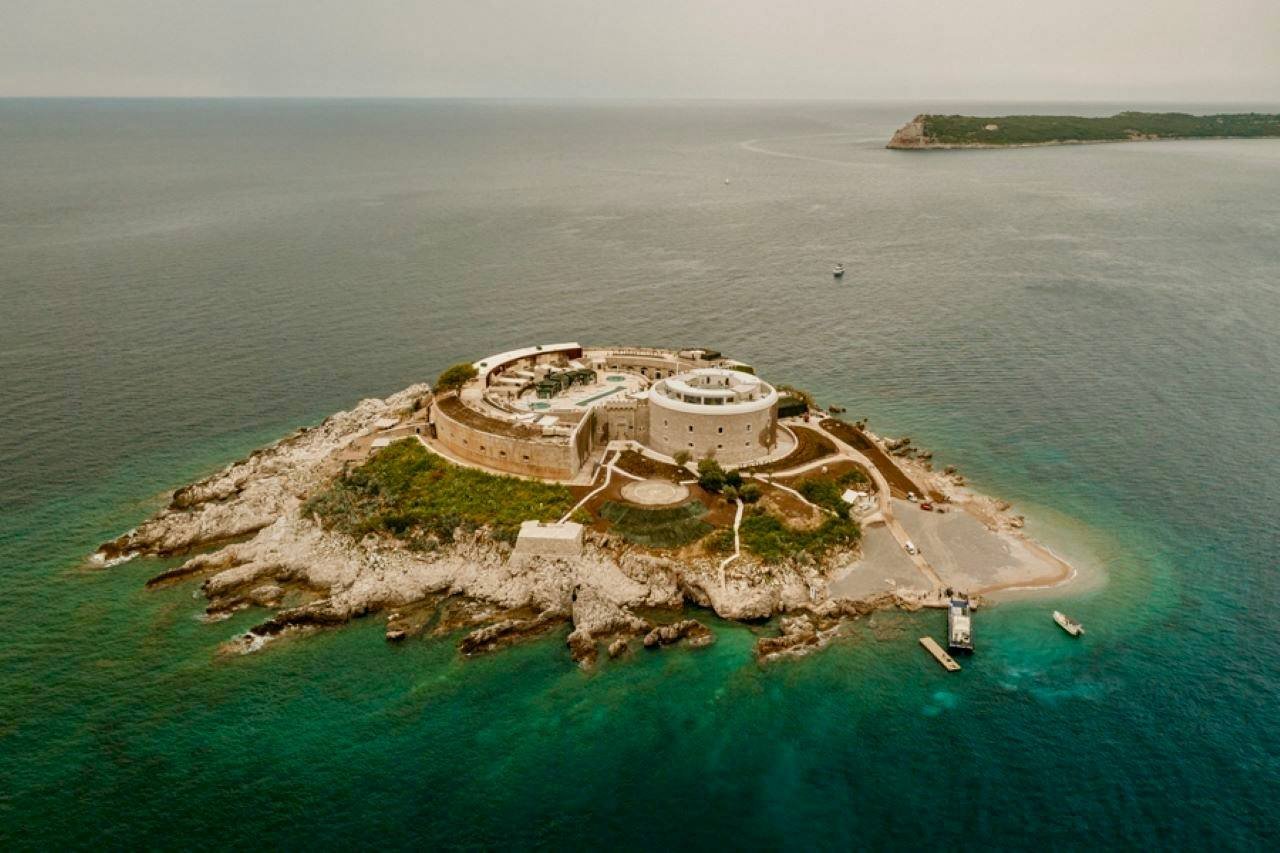
Mamula Island, at the entrance to the Bay of Kotor. Archive image.
HOTELS
The boat approaches a circular stone fortress before it approaches a hotel. Mamula occupies Lastavica, a small island at the outer entrance to Montenegro’s Bay of Kotor, with the mountains rising behind the coastline. The arrival establishes the building’s scale and its distance from the mainland more clearly than any photograph of a bedroom.
The nineteenth-century Austro-Hungarian fort took its familiar name from General Lazar Mamula. Its position was strategic: walls, sightlines and defensive geometry were designed to control passage, not to receive holidaymakers. The conversion has retained that geometry rather than concealing it behind a conventional resort façade.
What the restoration kept
The project associated with Samih Sawiris and Orascom took several years, with Lisbon-based MCM working within the existing masonry. Stone vaults and thick walls remain part of the interiors; contemporary surfaces and furniture introduce another layer without making the old structure disappear.
Now operating as Mamula Island by Banyan Tree, the hotel contains thirty-two accommodation units, including twenty-two suites. The small inventory matters on an island where circulation is constrained by the fortress itself. The experience is closer to inhabiting a single architectural object than moving between separate resort buildings.
Bedrooms do not all offer the same encounter with the structure. Some make the vault their main feature; others open more directly towards the water. Timber, natural fabrics and warm tones temper the stone. The differences between categories deserve attention when choosing a room: a dramatic interior and an uninterrupted view are not necessarily the same proposition.
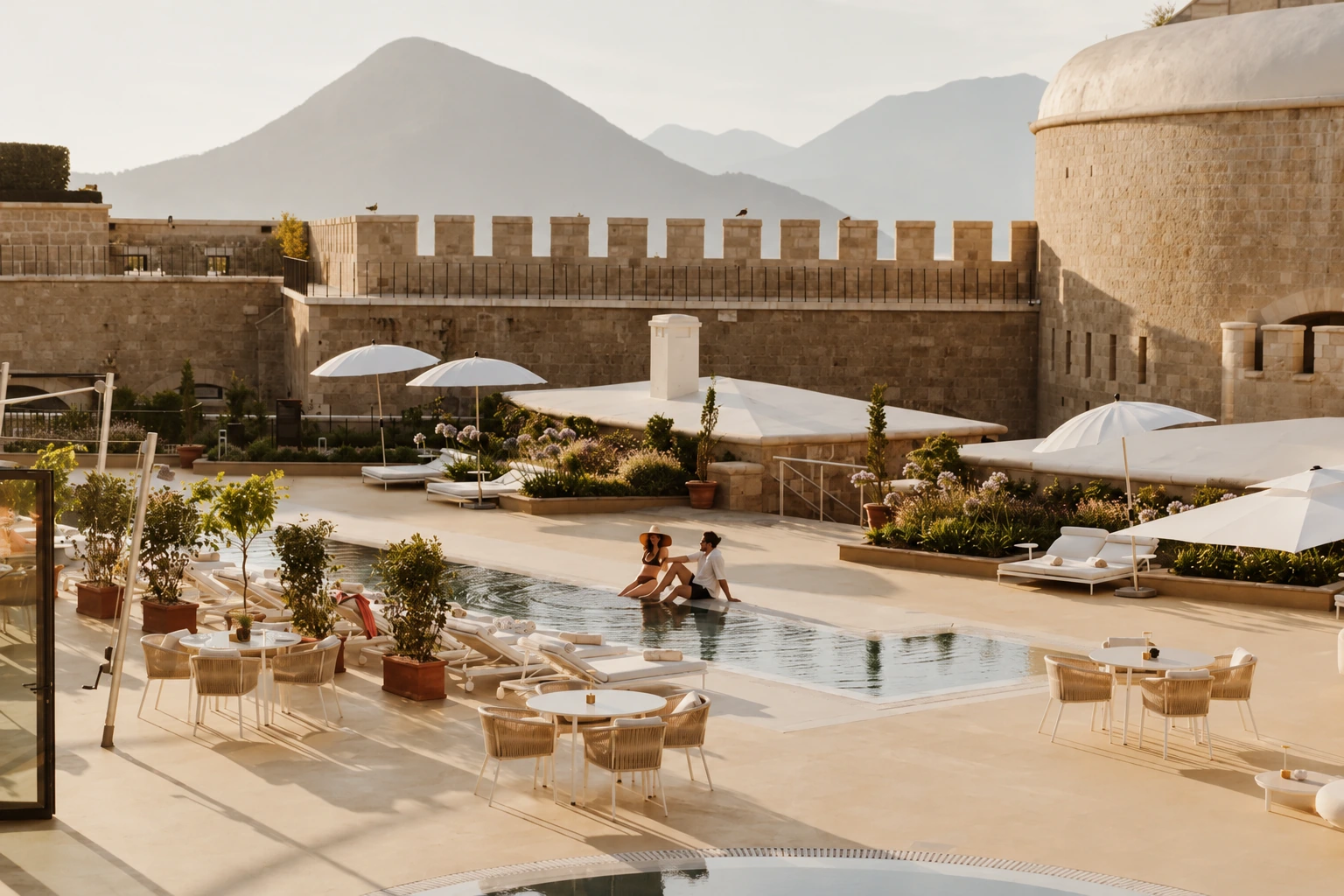
MAMULA ISLAND. The pool courtyard within the restored fortress. Photo: Rebecca Hope.
A history that belongs in the visit
During the Second World War, the fortress was used as an Italian internment camp. Imprisonment, violence and deaths are part of Mamula’s history, and survivors’ accounts cannot be reduced to a decorative explanation of the building’s age.
A memorial and historical interpretation provide a necessary counterpart to the hotel. Conservation of the masonry is only one responsibility. Preserving knowledge of what happened within it is another, and the two should not be confused.
The conversion can be read as a way of maintaining a difficult building. It is not a claim that hospitality has redeemed its past. That distinction changes how a visitor understands the courtyard, the former defensive spaces and the very exclusivity of an island arrival.
The Adriatic around the walls
The pool courtyard and spa introduce the present-day rhythm. Food draws on the Adriatic and Montenegro’s agricultural landscape, with fish, seafood, olive oil, herbs and regional wine providing the geographical connection that a generic international menu would lose.
Boat excursions bring the wider bay into the stay. Herceg Novi, Perast and Kotor offer different approaches to the coast, from waterfront streets to the deeper mountain-framed reaches of the bay. Mamula stands at the outer entrance, not in the narrower Verige Strait farther inside.
Its appeal rests on that conjunction: a compact hotel, a striking piece of military architecture and a maritime setting that can be explored beyond the island. The history is not an obstacle to understanding the place. It is an essential part of doing so.
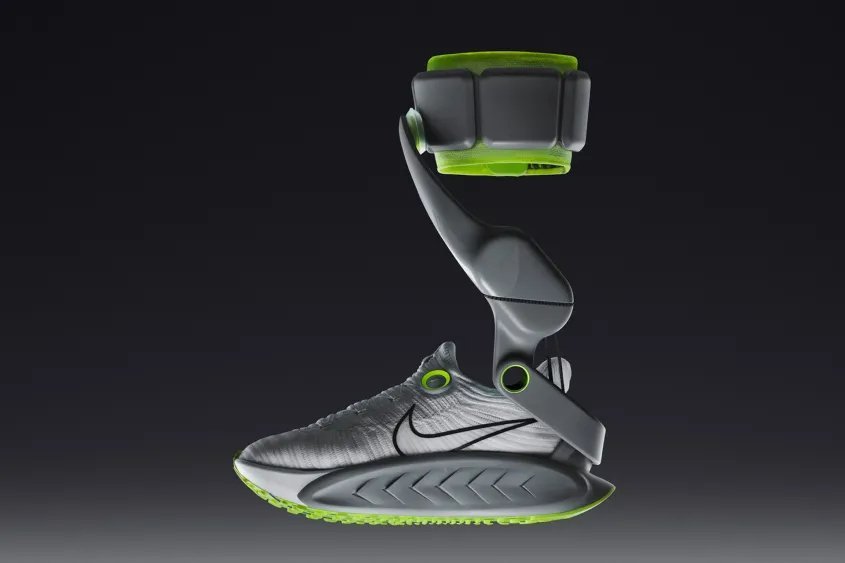
Developed with the robotics company Dephy, Nike's Project Amplify is a powered footwear system for running and walking. A year after its unveiling, it remains in testing, with a consumer launch still some years away.
Artificial intelligence has left the phone and moved into the kitchen, the bedroom and even the cat's litter box. Five recent objects suggest the domestic future is not about voice commands but about machines that learn to live alongside us.
The smartphone made everyone a photographer. A new generation of dedicated compacts, from DJI's gimbal cameras to the Camp Snap CS-Pro, argues for a device that exists for one purpose only.