Roy Lichtenstein, like new: the Whitney reopens the artist everyone thought they knew
More than 130 works, murals remade by hand and a room of mirrors: "Roy Lichtenstein: Like New" fills the Whitney's fifth floor until 10 May 2027 and asks us to look again at the most obvious name in Pop Art.
Images: courtesy of the Whitney Museum of American Art
ART · NEW YORK
Some artists are too familiar to be seen. Roy Lichtenstein is the clearest case: his dots, speech bubbles and tears have lived on T-shirts, mugs and notebook covers for sixty years. The Whitney Museum has chosen to treat that familiarity as a problem to be solved.
Roy Lichtenstein: Like New, open since 11 October, borrows its title from a 1962 canvas and turns it into a programme. More than 130 works, from the 1940s to the 1990s, fill the museum’s fifth floor, the largest column-free gallery in New York, designed by Renzo Piano and framed by the High Line and the Hudson. The curators, Meg Onli and the artist Alex Da Corte, have turned all that space into an exercise in rhythm rather than accumulation.
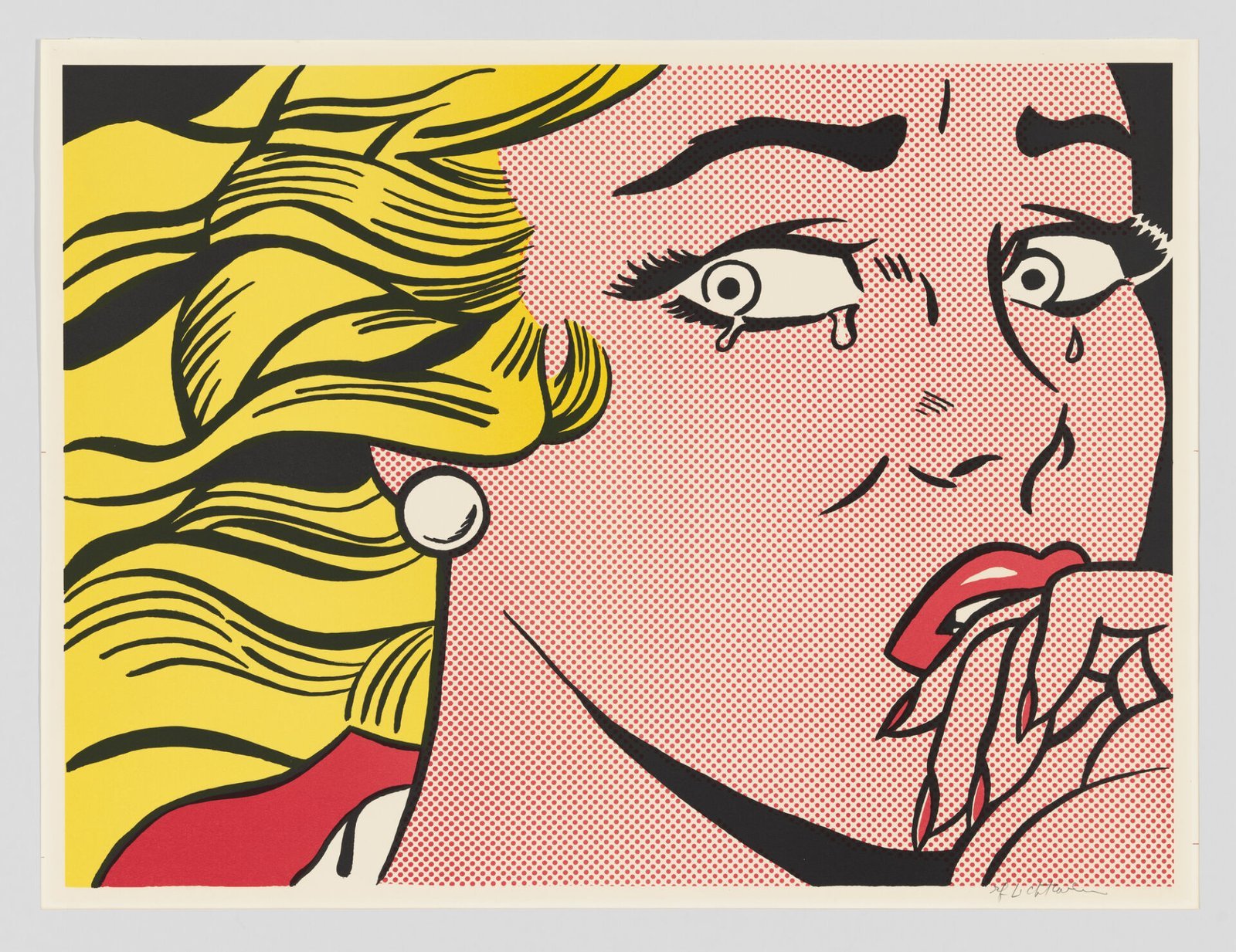
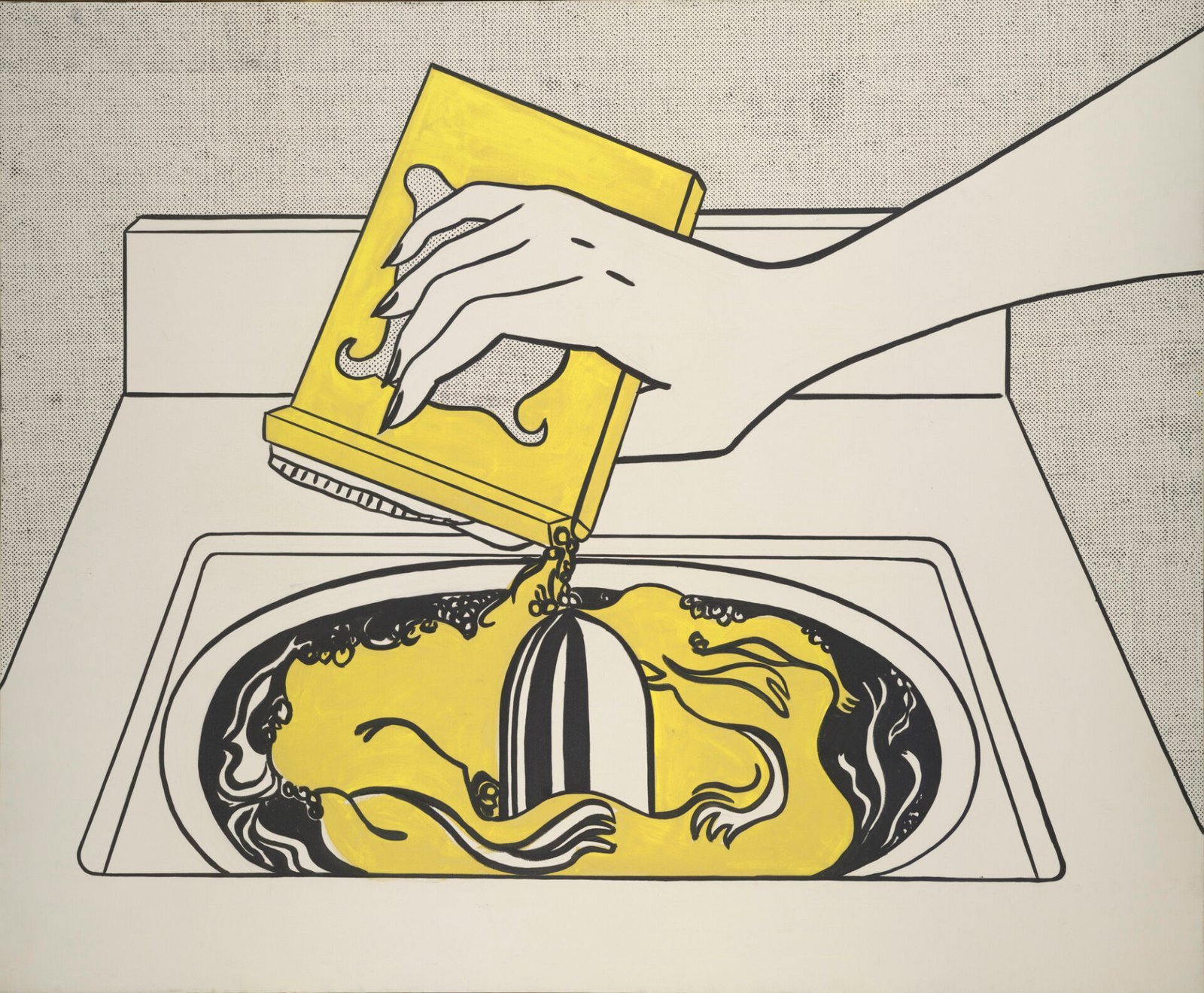
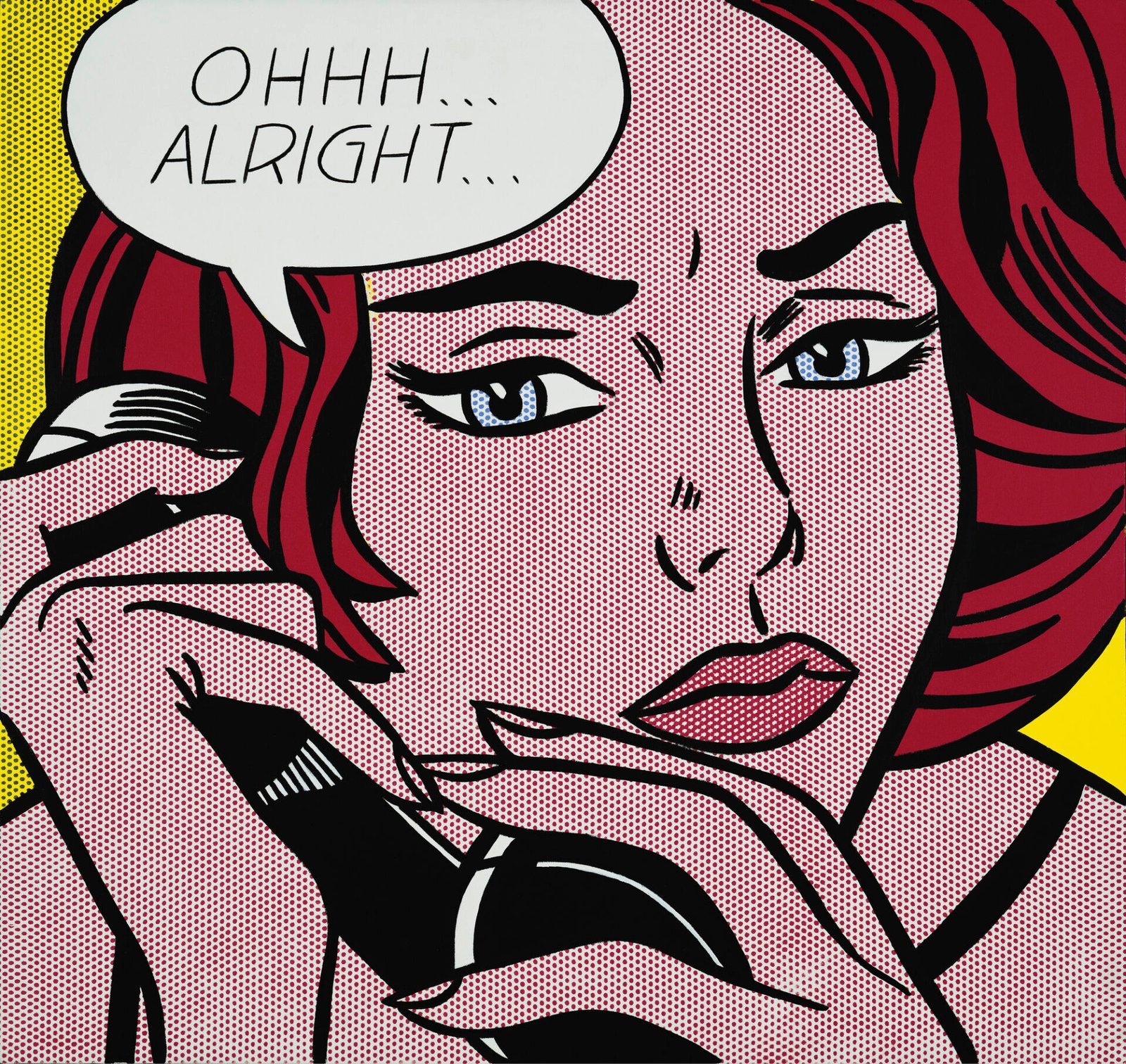
SATURATED COLOUR AND BEN-DAY DOTS, THE SIGNATURE EVERYONE THINKS THEY KNOW. IMAGE: COURTESY OF THE WHITNEY
Thirty years after the Guggenheim
Lichtenstein’s last major retrospective in his home city was at the Guggenheim in 1993, four years before his death at 73. Since then the Whitney has gathered some 400 of his works, along with his studio and the adjoining house on Washington Street, gifts from the Roy Lichtenstein Foundation that underpin the breadth of this show. The 365-page catalogue is designed by Irma Boom.
At the press preview, the museum’s director, Scott Rothkopf, described a show of masterpieces, icons and rigorous research, with a sensibility that brings the artist into the present. A rare opportunity, he said, the kind that comes once in a generation.
The exhibition spills beyond the building. A nine-metre aluminium sculpture shaped like a brushstroke answers the towers of the Meatpacking District. Da Corte has installed a hot dog billboard that hangs over the street-food carts like a religious icon, ketchup splashes standing in for stigmata. And an 18-piece collection with Gap carries the artist’s dots onto sweatshirts and tees.
MADE BY HAND TO LOOK PRINTED: THE CENTRAL IRONY OF THE METHOD. IMAGE: COURTESY OF THE WHITNEY
Everything in view, nothing obvious
The curators began from an honest suspicion. Da Corte admits he saw the work everywhere, but always as surface, and was unsure of the conceptual practice beneath it. Their answer was to return to Lichtenstein’s own voice, to the way he spoke about the work while he was making it.
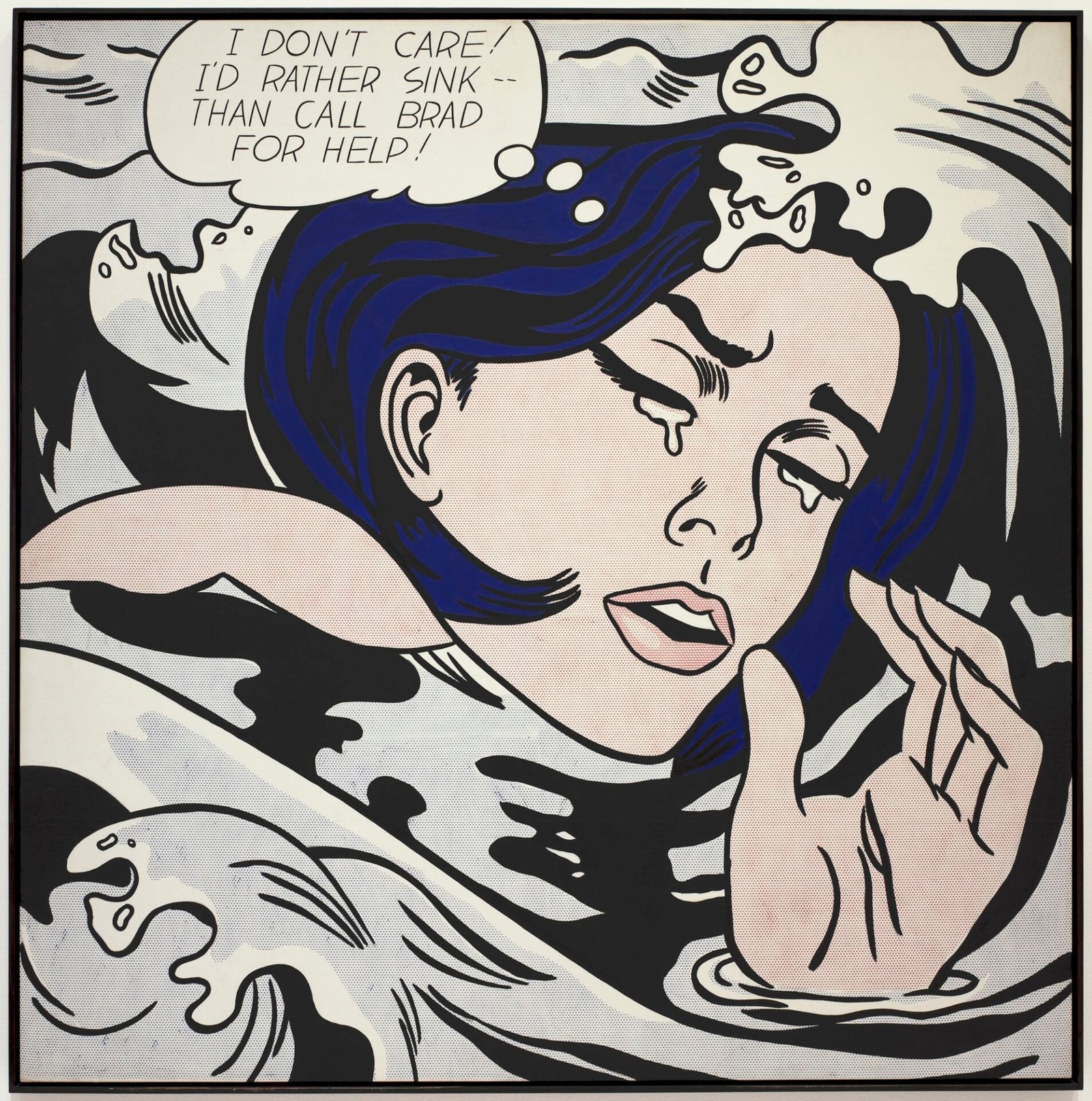
What emerges are oppositions that remain compelling precisely because they hide in plain sight. Lichtenstein achieved the look of mechanical reproduction entirely by hand, erasing every trace of craft. He simplified colour and line on purpose, a strategy he called false insensitivity, then manipulated them with precision through scale, form and juxtaposition. He turned the fleeting, sunsets, brushstrokes, reflections, into something solid, always in conversation with art history: the celebrated Drowning Girl weeps over someone called Brad, but the wave that swallows her comes from Hokusai.
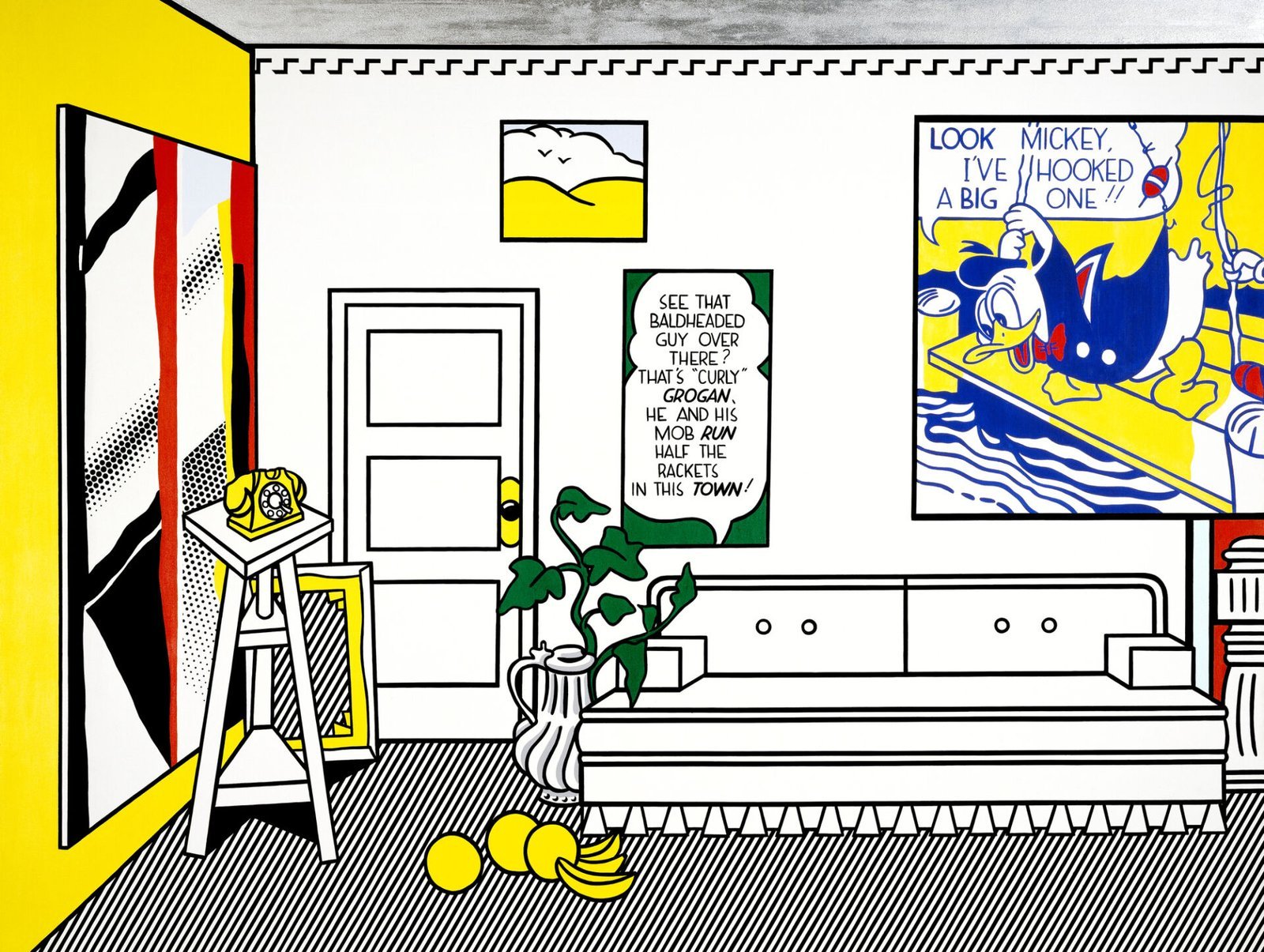
The show investigates that gesture and, to do so, abandons chronology. It is built from groupings that light one another up: a frame-by-frame recreation of the artist’s first solo show at Leo Castelli’s gallery in 1962; a route through the brushstroke as motif, titled Pop Abstraction; a playful reading of the imaginary studios he painted; and a room on seriality that talks to all the others.
SIX DECADES READ BY THEME, NOT BY DATE. IMAGE: COURTESY OF THE WHITNEY
A 29-metre mural, then a pause
The visit opens at the scale of architecture. The Greene Street Mural, painted in 1983 on the back wall of Castelli’s then-new SoHo gallery, returns remade by hand across its full 29 metres, an anthology of icons the artist had used and would use again. Onli explains the choice: give the public, straight away, the Lichtenstein they think they know, big, graphic and instant, and only then slow down.
Vitrines set into the mural hold preparatory drawings, maquettes and Polaroids. The route asks for three movements, repeated until they become habit: step back, come close, look again.
THE GREENE STREET MURAL OF 1983, REMADE BY HAND AT THE START OF THE SHOW. IMAGE: COURTESY OF THE WHITNEY
The Flash Lab, where he learned to see
The heart of the exhibition is a dark room. The Flash Lab revisits Lichtenstein’s formative years at Ohio State University under Hoyt L. Sherman, a charismatic teacher obsessed with human perception. Driven by intuition, wartime funding and observations gathered from art students and football players alike, Sherman reached principles of sensory physiology by unorthodox paths, and described them in almost oracular prose. Lichtenstein later recalled that many thought him eccentric, but that he seemed to know exactly what he was saying.
The method was simple and radical. In the dark, students fixed their eyes on a point on the screen; Sherman projected a slide for a fraction of a second and asked them to draw what they had seen. With no time to scan the image, they learned to see the whole at once rather than list its parts. Da Corte, who plays the teacher in a 15-minute video shown in the exhibition, sums up the lesson: what matters is less what you see than how you remember it. From there the work radiates outwards, like one of the artist’s own explosions.
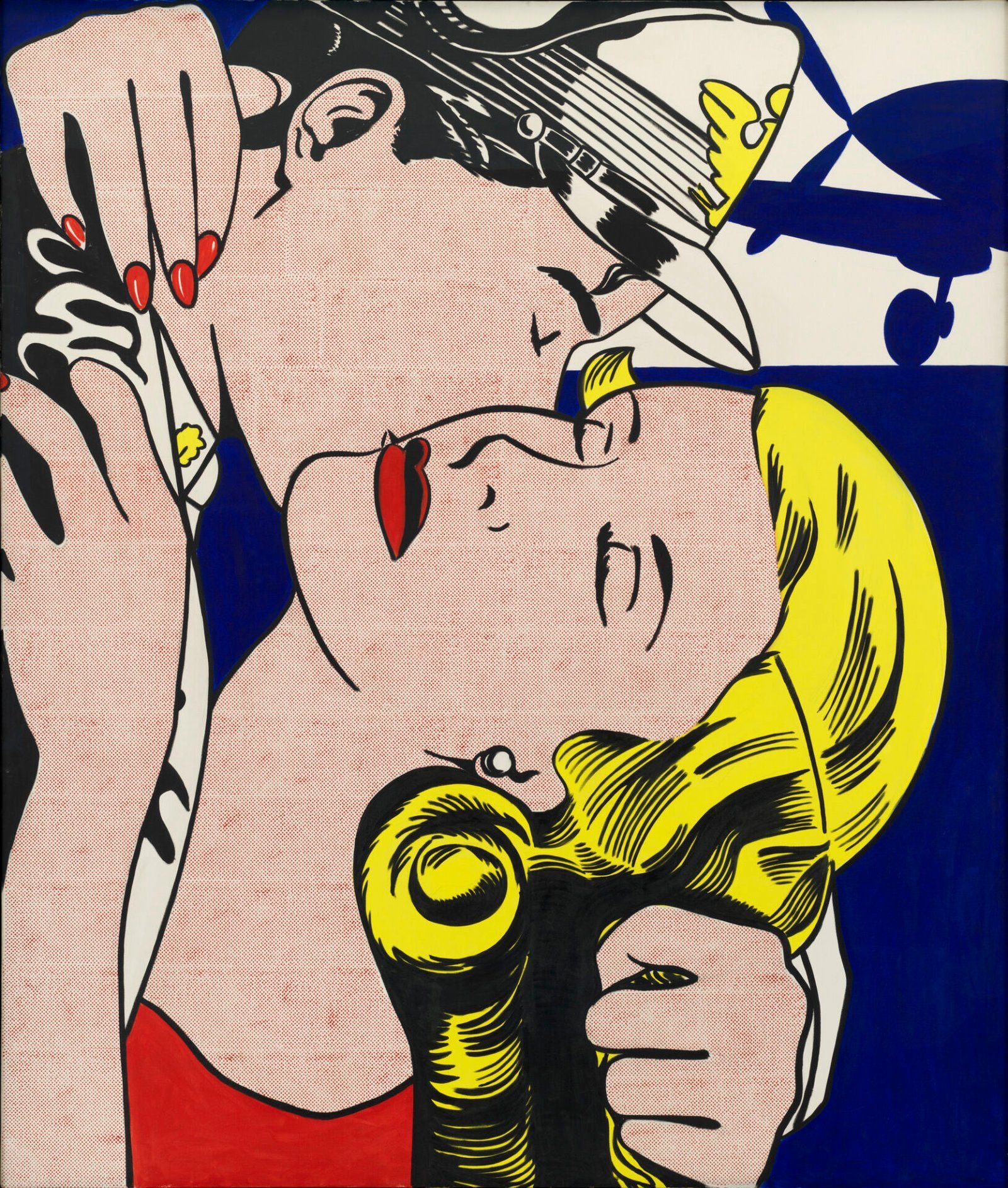
THE COMIC STRIP AS RAW MATERIAL, RECOMPOSED RATHER THAN COPIED. IMAGE: COURTESY OF THE WHITNEY
Mirrors that reflect nothing
Doubling and repetition run through the whole show, as in the Super Sunset Billboard of 1967, recreated and placed to echo the light that falls through the museum’s west-facing windows. But it is the Mirrors, painted between 1969 and 1972, that hold the eye most insistently. In a rounded room with silver walls, eight of them form the largest group ever shown in a retrospective. Onli speaks of an almost religious experience: being in a reflective space without reflection.
The canvases waver between object and stained glass, between funfair illusion and phases of the moon. They reflect nothing, or everything at once.
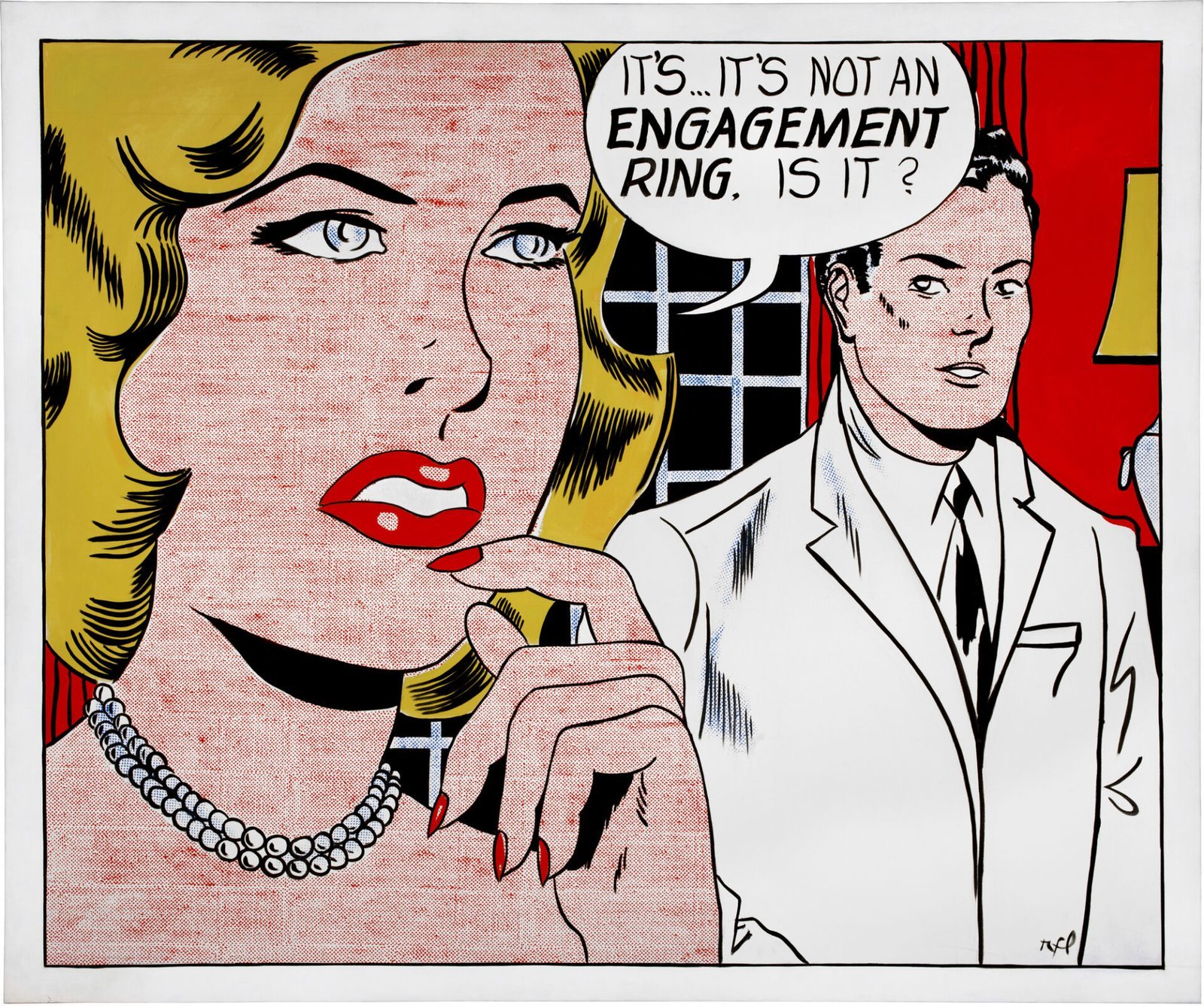
THE NEWSSTAND ROMANCE, RAISED TO A MUSEUM WALL. IMAGE: COURTESY OF THE WHITNEY
One leaves the Whitney with the uneasy sense of never having looked properly. The dots are still there, and so are the tears, but now they carry the weight of a dark room in Ohio and of a man who learned to see in a fraction of a second. Sixty years on, Lichtenstein looks exactly as the title promises: like new.
Details:Roy Lichtenstein: Like New, Whitney Museum of American Art, 99 Gansevoort Street, New York. 11 October 2026 to 10 May 2027. Timed tickets at whitney.org.
Frieze took place in Regent's Park from 14 to 18 October. Frieze Week took place everywhere else. A selection of ten programmes, from Yuko Mohri at the Barbican to Es Devlin at the Design Museum, and the exhibitions that remain open after the fairs close.
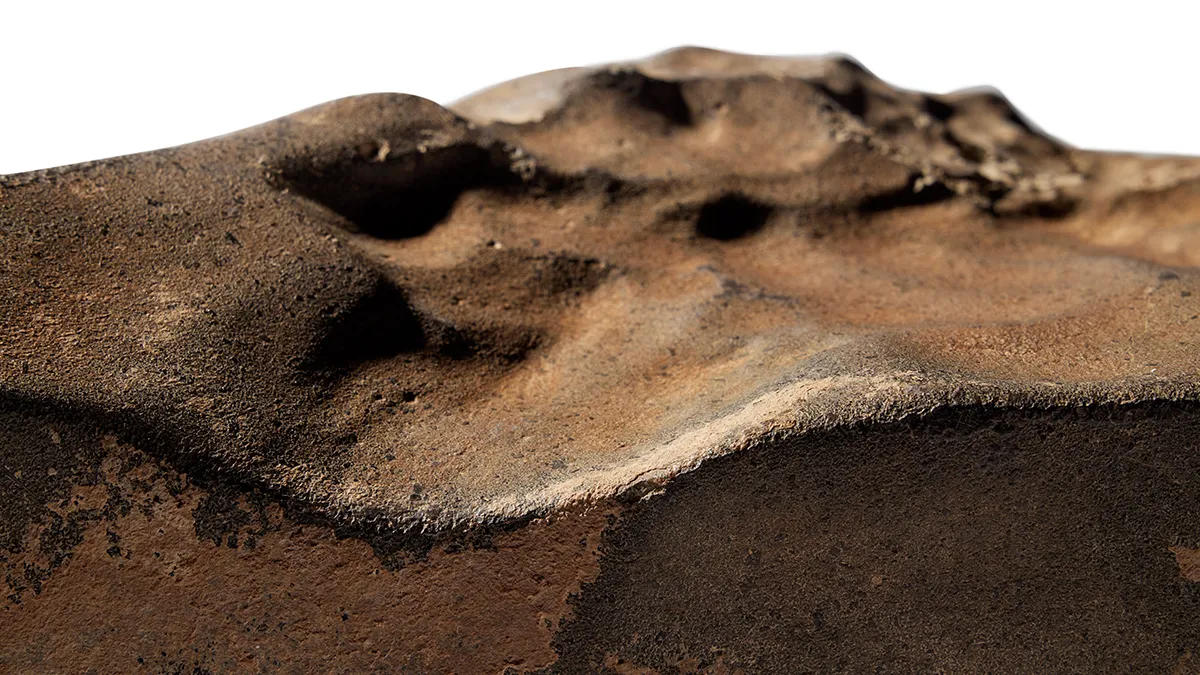
At 24.5 kilograms, NWA 16788 brought an unusual kind of scale to Sotheby's natural-history auction in July 2025. The meteorite was identified as originating from Mars and described in the auction catalogue as the largest known Martian meteorite at the time of the sale. Its importance was therefore not simply that it had come from another planet, but that such a substantial piece had survived to be found on Earth.