Aeroméxico Rethinks the Business-Class Seat as a Room, and Adds Its First Premium Economy
Designed by NewTerritory, the Mexican carrier's new Boeing 787 cabin has a suite with a table for two, stone and glass underfoot and overhead, and tags embroidered by hand in Chiapas.
There is a difference between designing a seat and designing the hours spent in it.
Aeroméxico has chosen the second. The airline’s new Boeing 787 Dreamliner cabin, designed by NewTerritory, the studio based in London and Atlanta, starts from Mexican architecture, craft and hospitality rather than from the usual catalogue of aircraft finishes.
It arrives as two new products: Premier One Suites Plus, the most ambitious business-class seat the carrier has built, and El Estudio, the first Premium Economy cabin in its history.
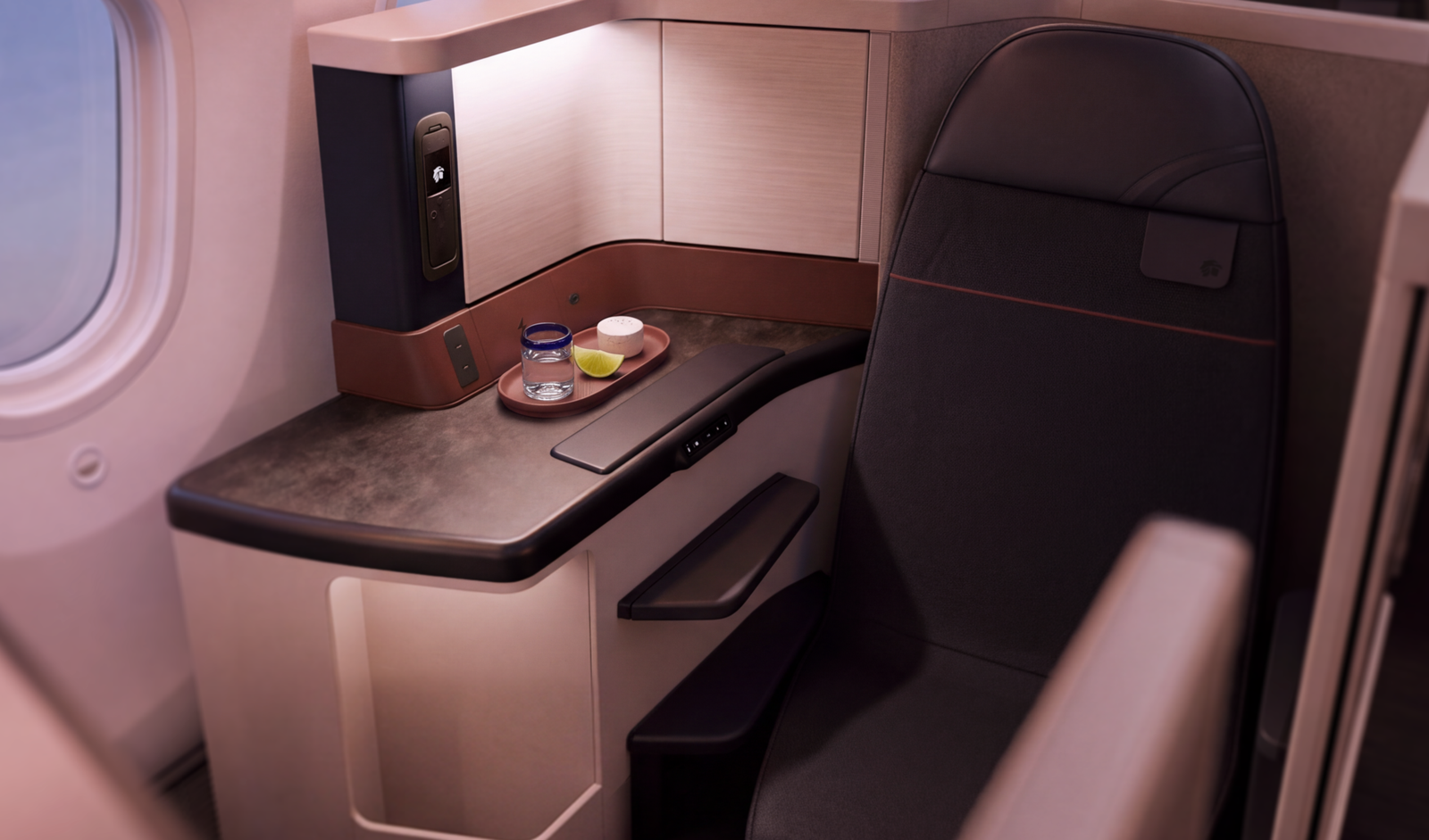
In Premier One Suites Plus, the table is large enough for dinner for two · Photo: Aeroméxico / NewTerritory
A seat that behaves like a room
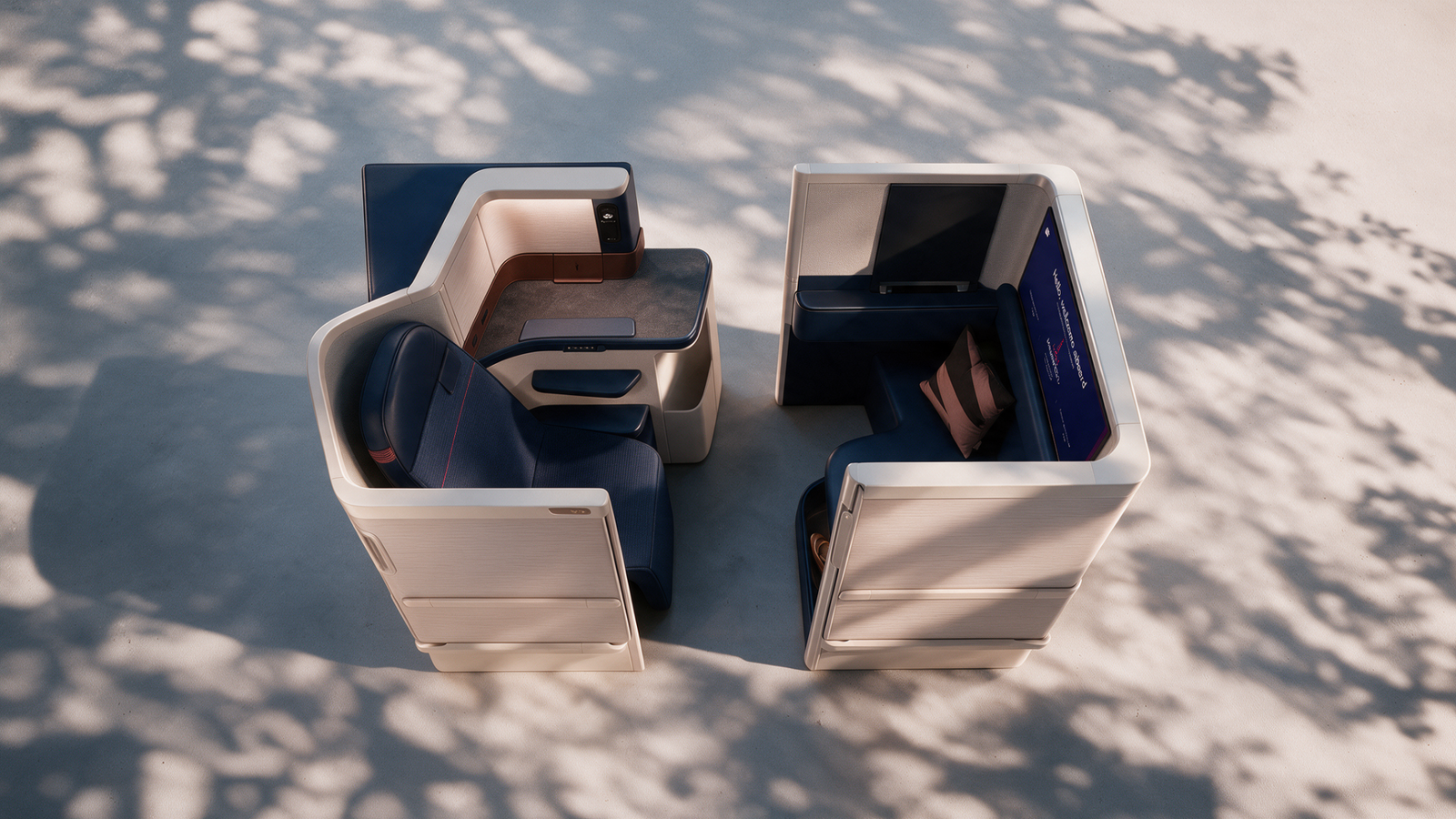
At the centre of the project is a second look at what a business-class seat can be. Built on Recaro’s R7 platform, Premier One Suites closes behind a door. In the Plus version the compartment becomes something closer to a small room: the footwell converts into a second seat with its own backrest, and a table of unusual proportions lets two passengers share a meal, a rare gesture at altitude.
The suites, in a studio image · Photo: Aeroméxico / NewTerritory
Mexican architecture as cabin language
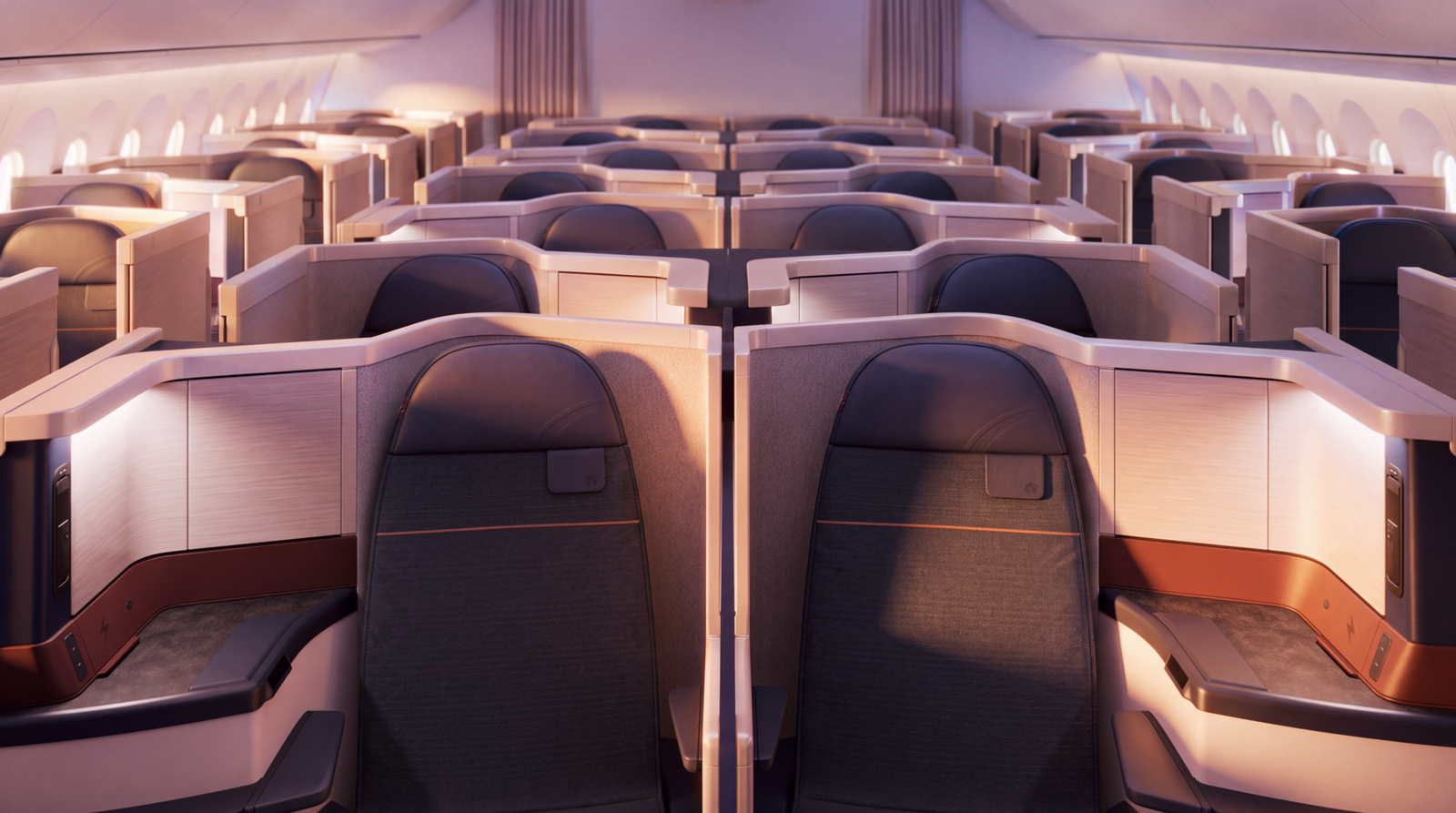
The vocabulary comes from the country’s contemporary architecture. The airline’s blue has been deepened into a denser, plum-leaning shade named Azul Ciruela, and the cabin gains matte surfaces, textured upholstery, stone and glass. The effect is almost architectural, a long way from the metallic chill of most aircraft interiors.
Aviation has always treated time as friction to be minimised. Our purpose is the opposite: to make time feel inhabited, not merely endured.
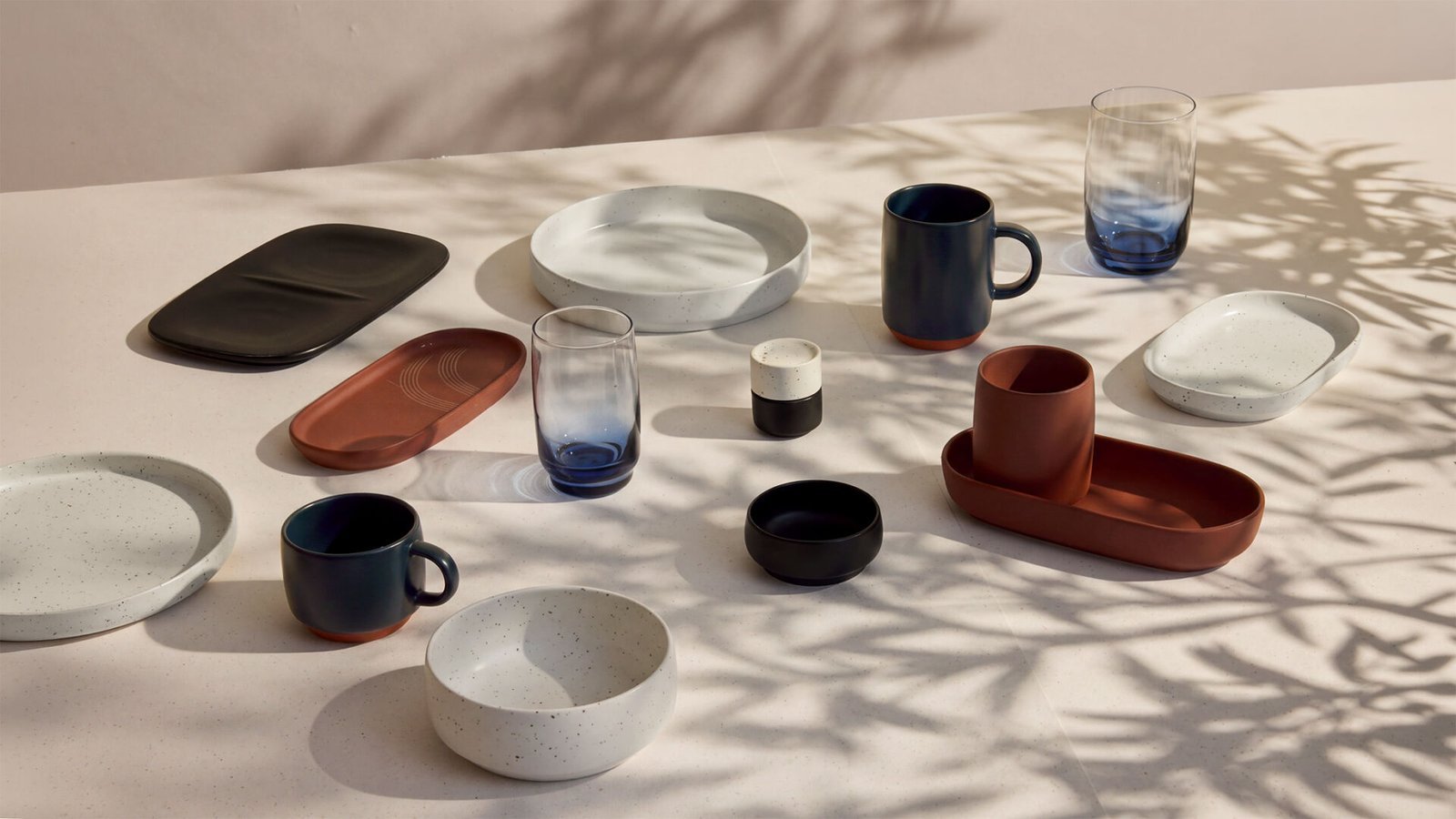
Mexico is there in the objects, too. The tableware borrows the colours and forms of Jalisco ceramics and Oaxacan clay, and the blue glass nods to the traditional tequila bottles made from recycled material.
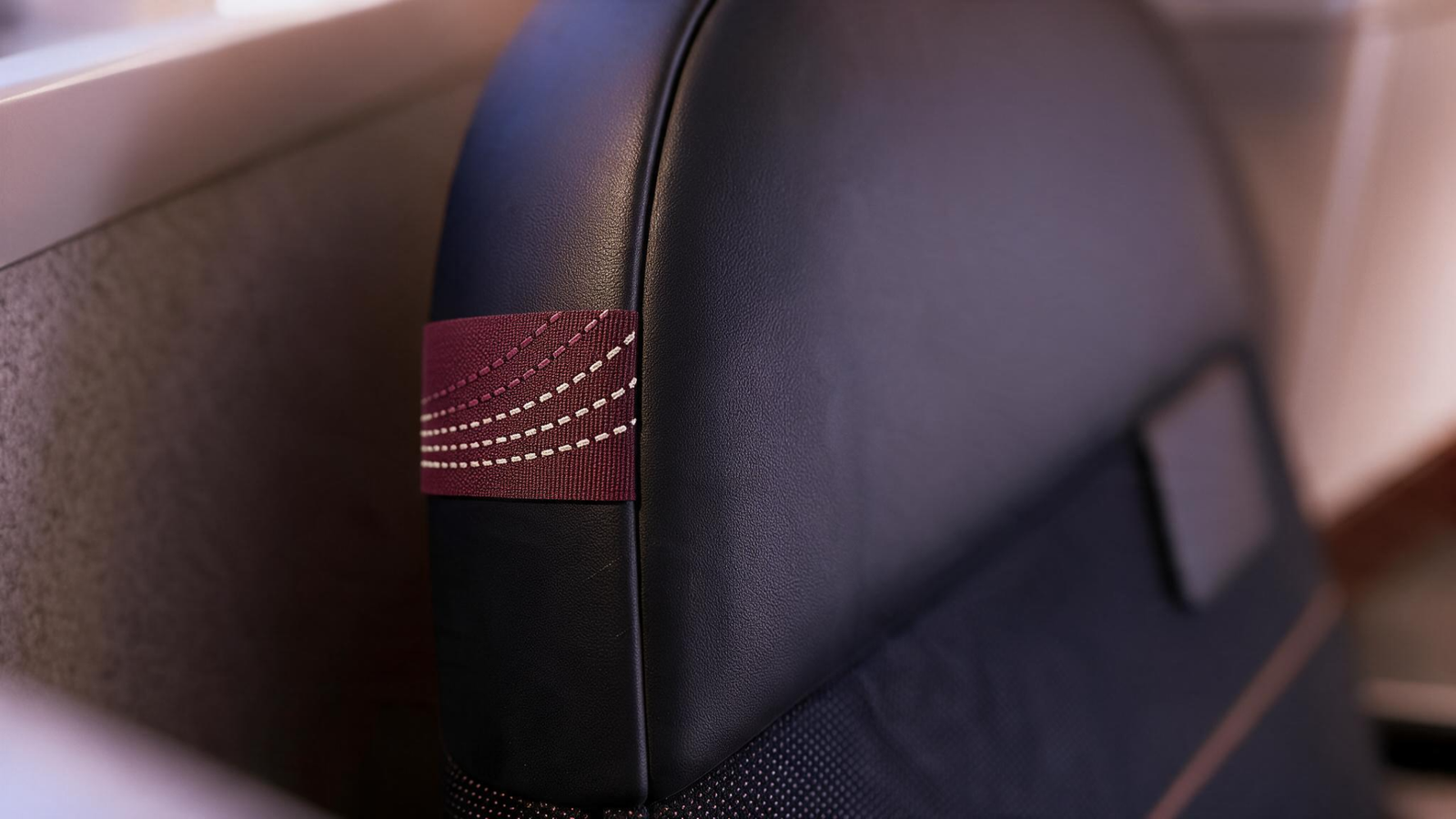
Even the seat tags carry a story. Each is embroidered by hand by one of more than 230 Indigenous craftswomen of the Sanul Konn group, from 14 communities in the Chiapas Highlands.
The tag, embroidered by hand in Chiapas · Photo: Aeroméxico / NewTerritory
El Estudio, and the rise of the middle cabin
El Estudio completes the programme by carrying the same language into the part of the aircraft that has become most valuable to airlines: the traveller who does not fly business, but will pay for more room.
The cabins were presented at APEX FTE EXPO in Singapore in November 2026. Installation across the Dreamliner fleet is scheduled for 2029 to 2031. The new suites and El Estudio go to the 787-9s; the 787-8s will take the business seats that currently fly on the 787-9.
The project
Studio: NewTerritory, London and Atlanta
Business: Premier One Suites and Premier One Suites Plus, on the Recaro R7
Premium Economy: El Estudio, the airline’s first
Colour: Azul Ciruela
Installation: 2029 to 2031, across the 787 fleet
Until then, the project exists in images and in one simple idea: that twelve hours in the air are hours of a life, and deserve a table with room for two.
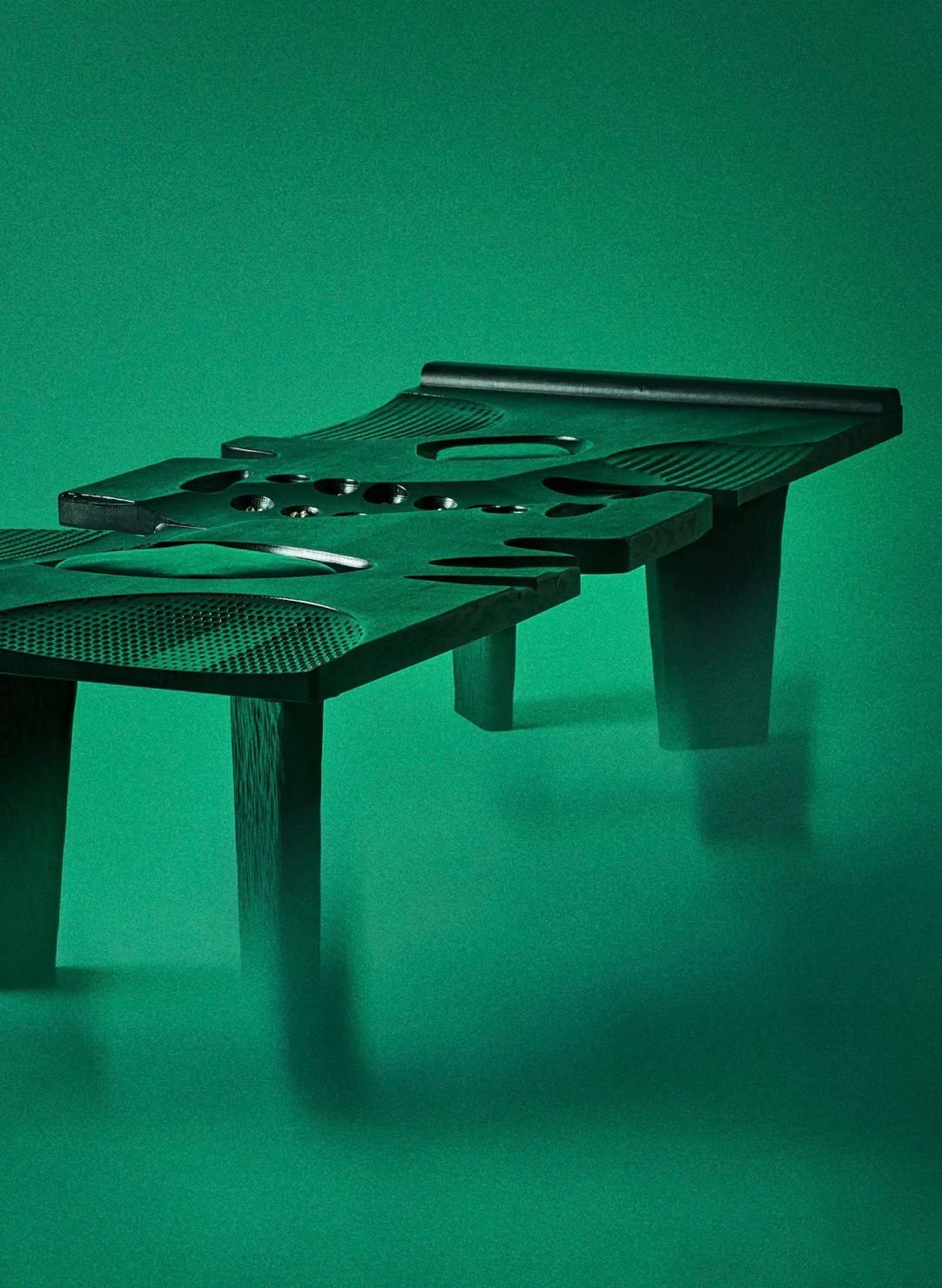
From 1 to 6 December in Miami Beach, curator Charlene Prempeh asks collectible design to reveal its process, its material and the hand that made it. The galleries, the names and the pieces worth the walk.
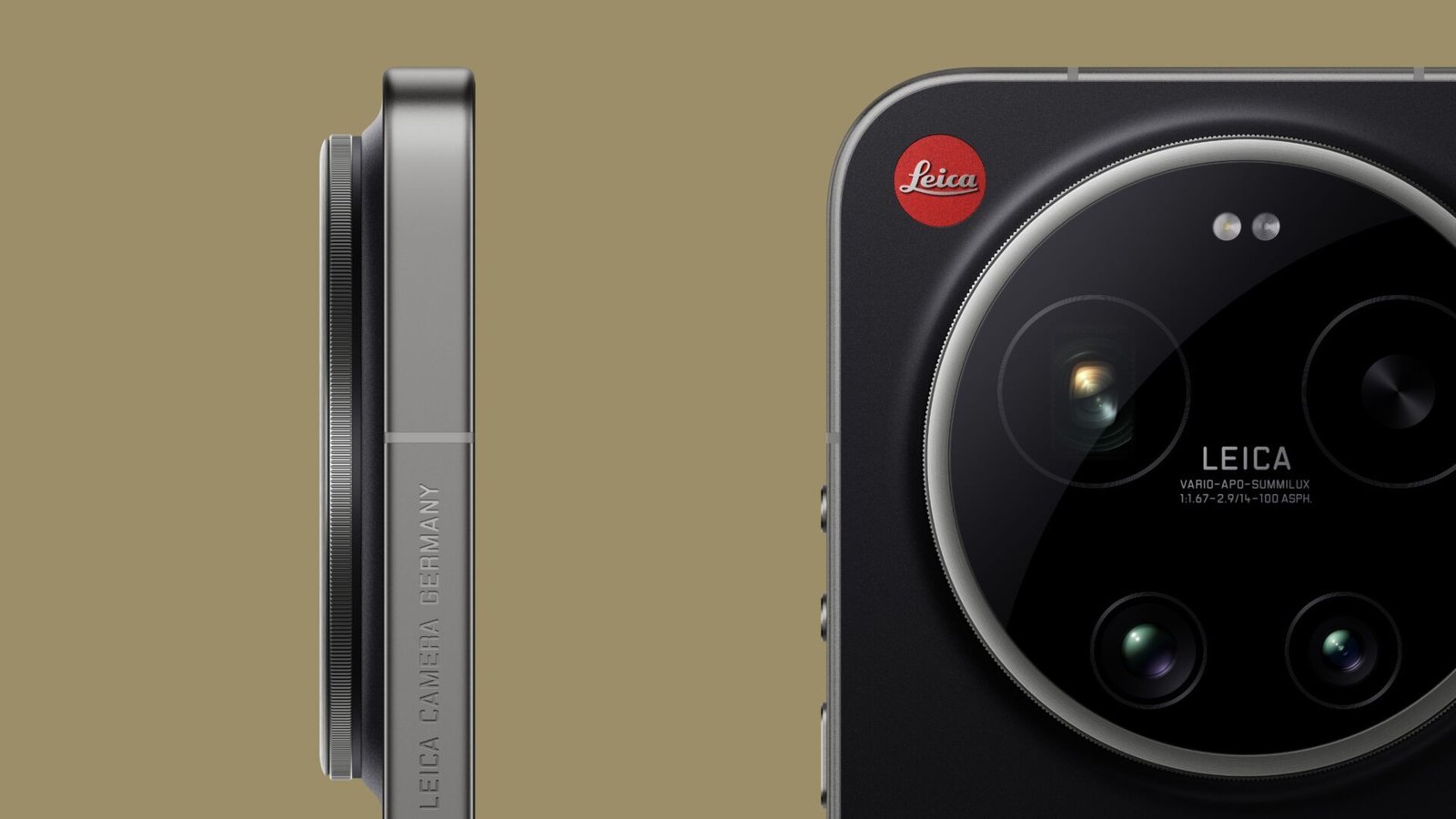
A rotating lens ring, a lens cap, film simulations with Leica names: Xiaomi has turned its partnership with the German house into product language, and Oppo and Sony are answering.
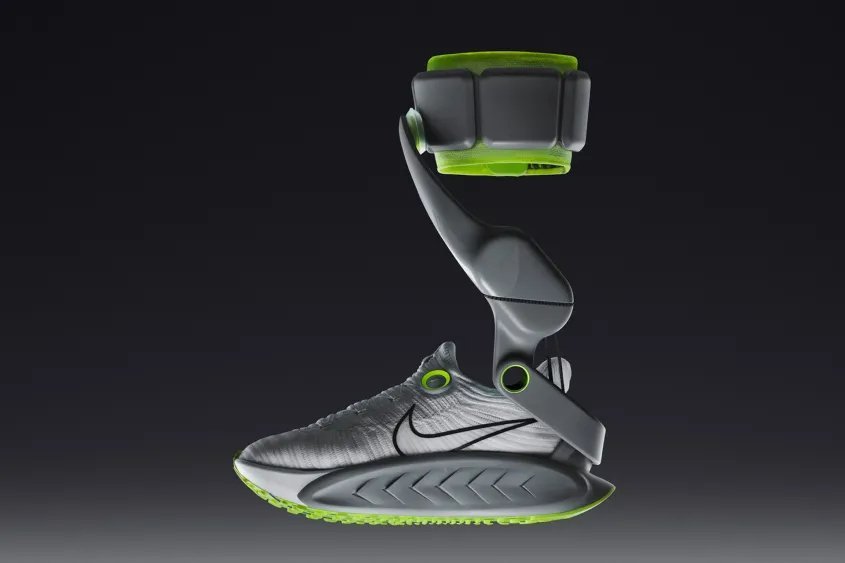
Developed with the robotics company Dephy, Nike's Project Amplify is a powered footwear system for running and walking. A year after its unveiling, it remains in testing, with a consumer launch still some years away.
A living material does not necessarily obey the design drawn around it. FUNGI: Anarchist Designers at Rotterdam’s Nieuwe Instituut made that resistance its subject, challenging the idea that fungi matter only when they can be turned into objects or building products.
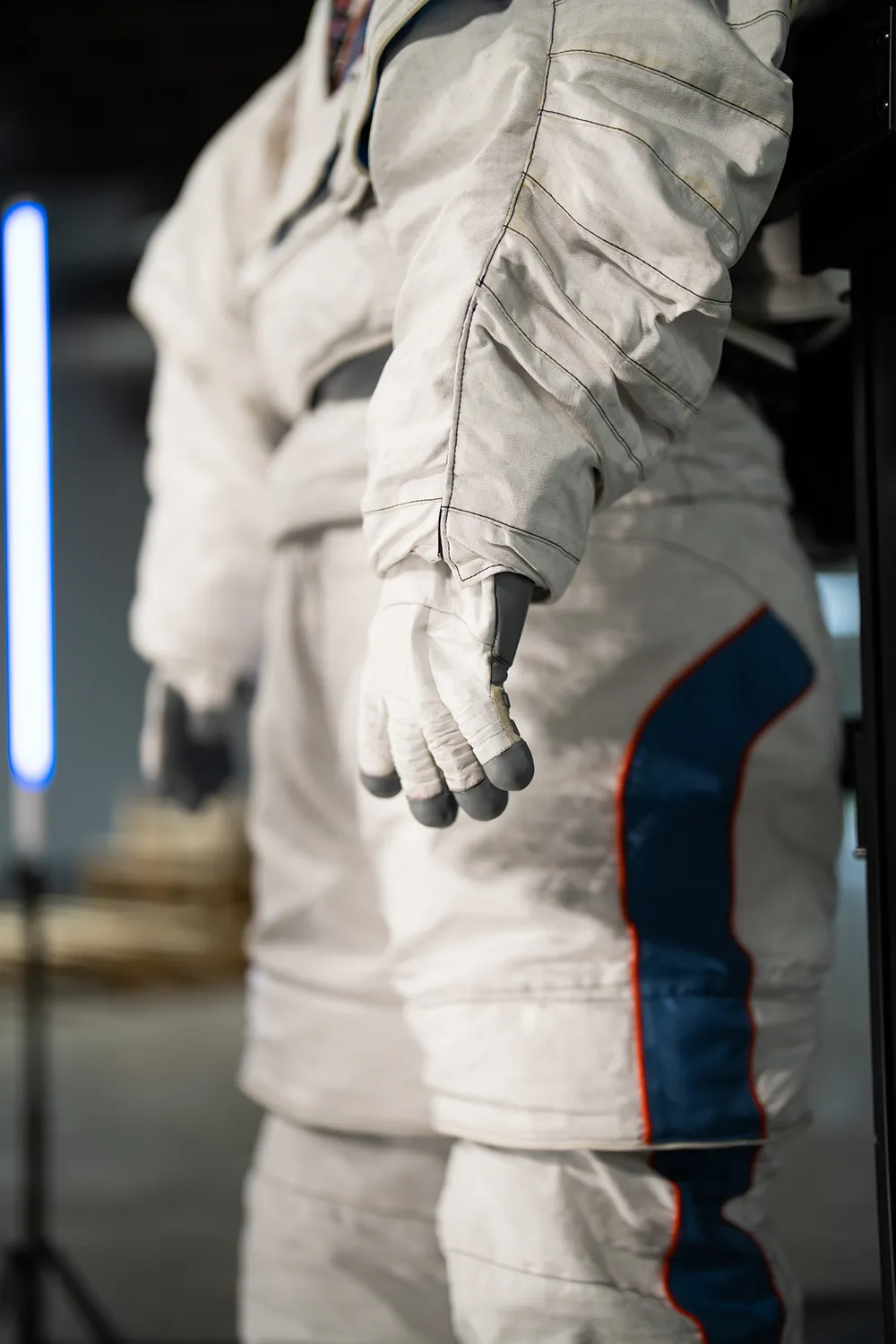
Announced in October 2023, the collaboration has moved from material research to a flight-design outer layer and a liquid-cooling garment for NASA’s revised Artemis programme.
THE CURATED GLOBE / FROM THE EDITORS
Good stories. Better company.
A considered selection of people, places and ideas from WAYFARER Edition, delivered to your inbox.
Welcome aboard. Your first letter is on its way.
We could not complete your subscription. Please check your email and try again.