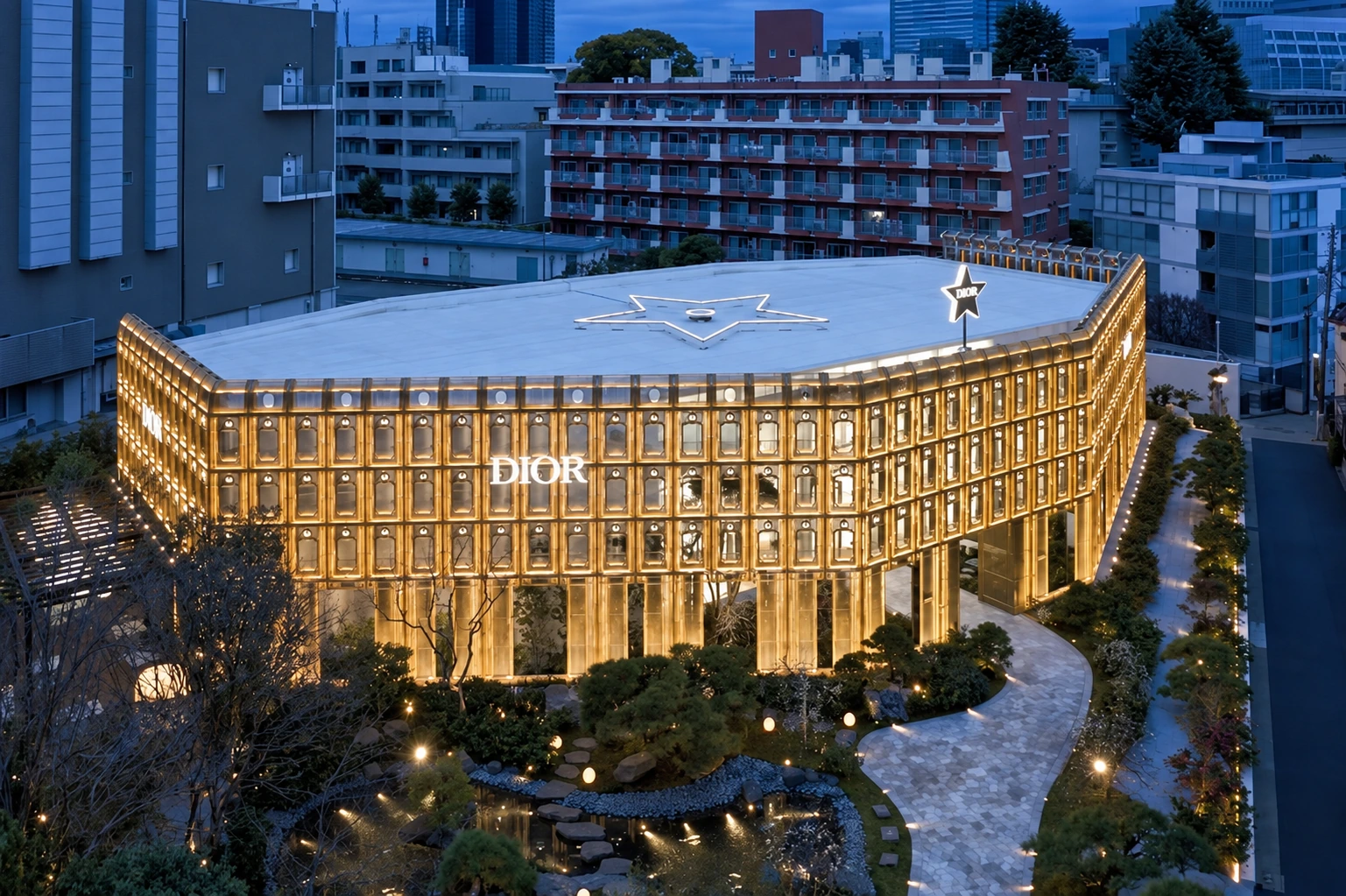
The bamboo surrounding Dior’s pavilion in Daikanyama is not bamboo. Recycled Japanese aluminium produces the golden stems, turning a familiar natural form into an architectural screen. The distinction is central to the project: the reference is botanical, the construction deliberately contemporary.
The Tokyo address opened on 12 February 2026. Gardens with pine, cherry and plum trees surround the pavilion, placing the boutique within a landscape rather than presenting it as a sealed retail box. Dior describes the overall setting as more than 1,800 square metres.
Rooms shaped by materials
Inside, a circular Awa washi room and lantern-like forms bring paper into the spatial sequence. A greenhouse accommodates seasonal floral work by Azuma Makoto. Those changing arrangements make the garden reference more than a fixed motif applied at the opening.
The Timeless Room connects the pavilion with Dior’s Paris vocabulary through white interiors and the Montaigne reference. A spiral staircase gives the movement between floors a sculptural presence. In the menswear rooms, blue and Toile de Jouy encounter the texture of tatami-inspired walls.
Design studio we+ contributes seating made with recycled fish-box polystyrene and tables using algae-based composites. These are specific material experiments, not evidence that every component in the project shares one environmental profile. Their interest lies in how a discarded or unfamiliar material becomes part of a finished room.
A café within the pavilion
Café Dior brings Anne-Sophie Pic’s culinary direction into the address. Her distinction as a three-star chef belongs to her restaurant career; it should not be transferred automatically to the Tokyo café as its own Michelin rating.
Dior’s relationship with Japan precedes this building, including a 1953 presentation of its work there. The pavilion adds another chapter through local materials and collaborators, rather than attempting to move a Paris boutique unchanged into Tokyo.
The façade supplies an image strong enough to be recognised at a distance. The more substantial story begins closer: metal standing in for bamboo, paper shaping a room, flowers changing with the season and furniture introducing a different origin for its surface.
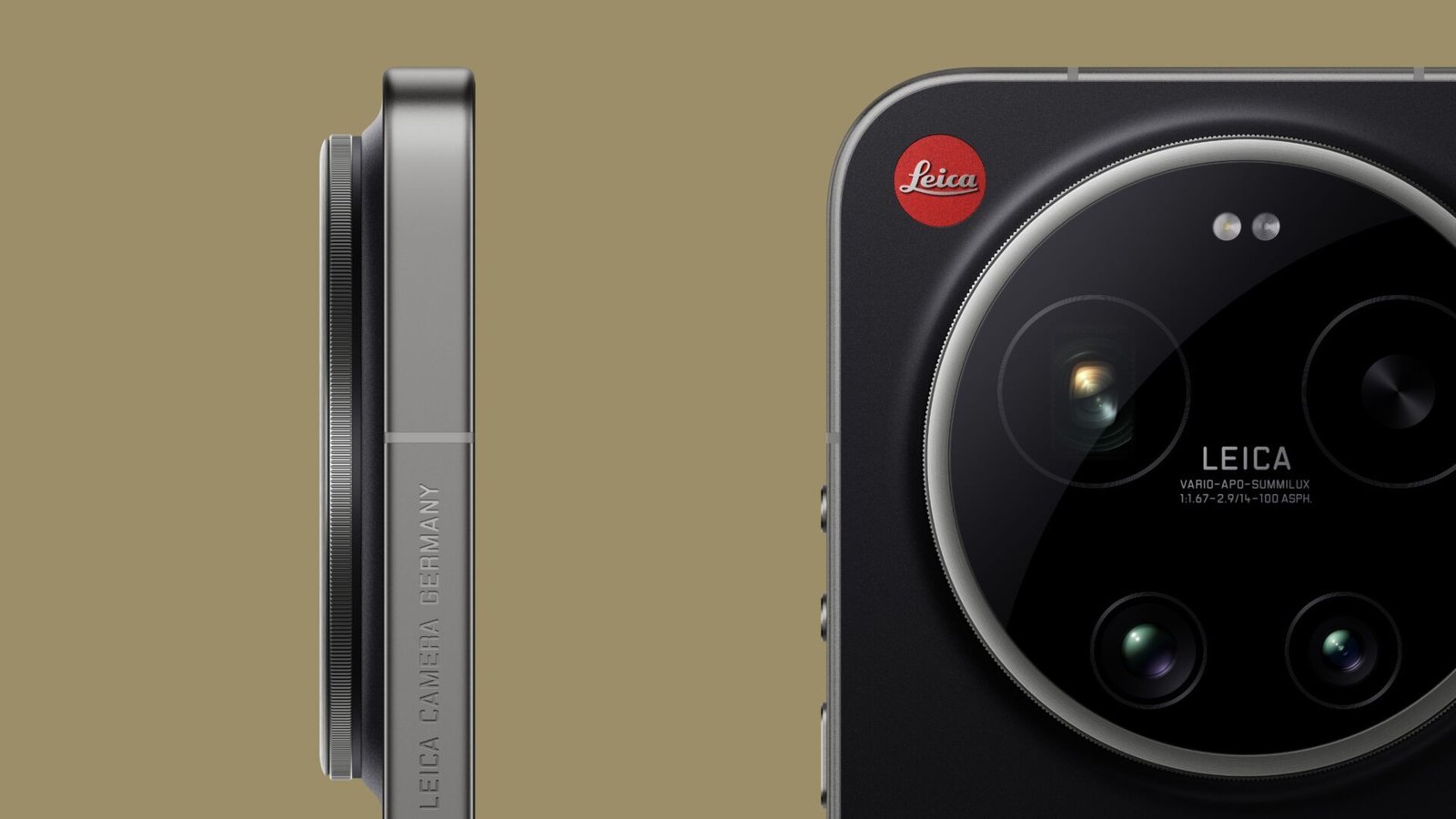
A rotating lens ring, a lens cap, film simulations with Leica names: Xiaomi has turned its partnership with the German house into product language, and Oppo and Sony are answering.
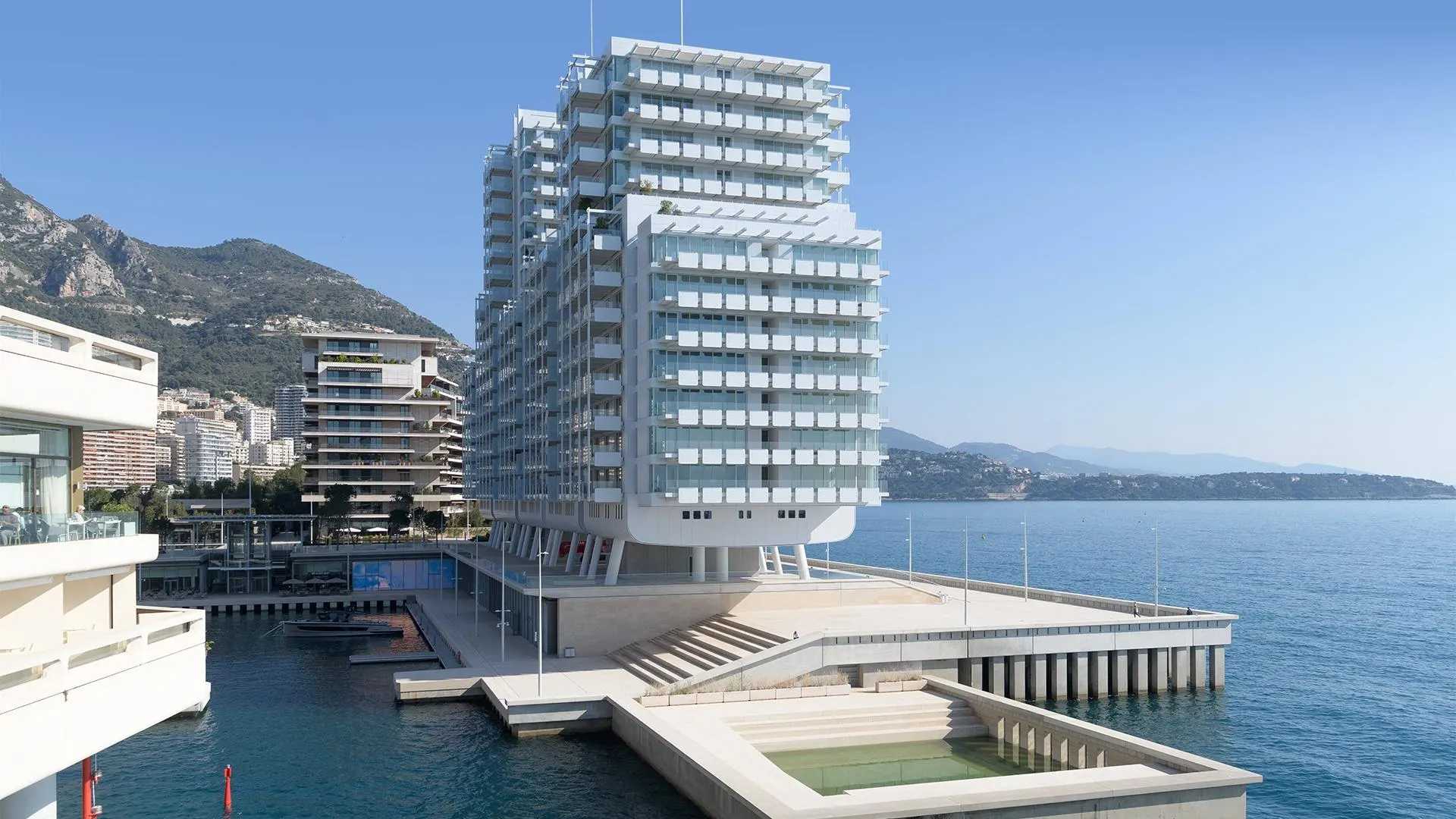
At Sunset Harbour, Yodezeen’s interiors connect a’Riva to a more private social world. The distinction is architectural, but it is also written into access and photography rules.