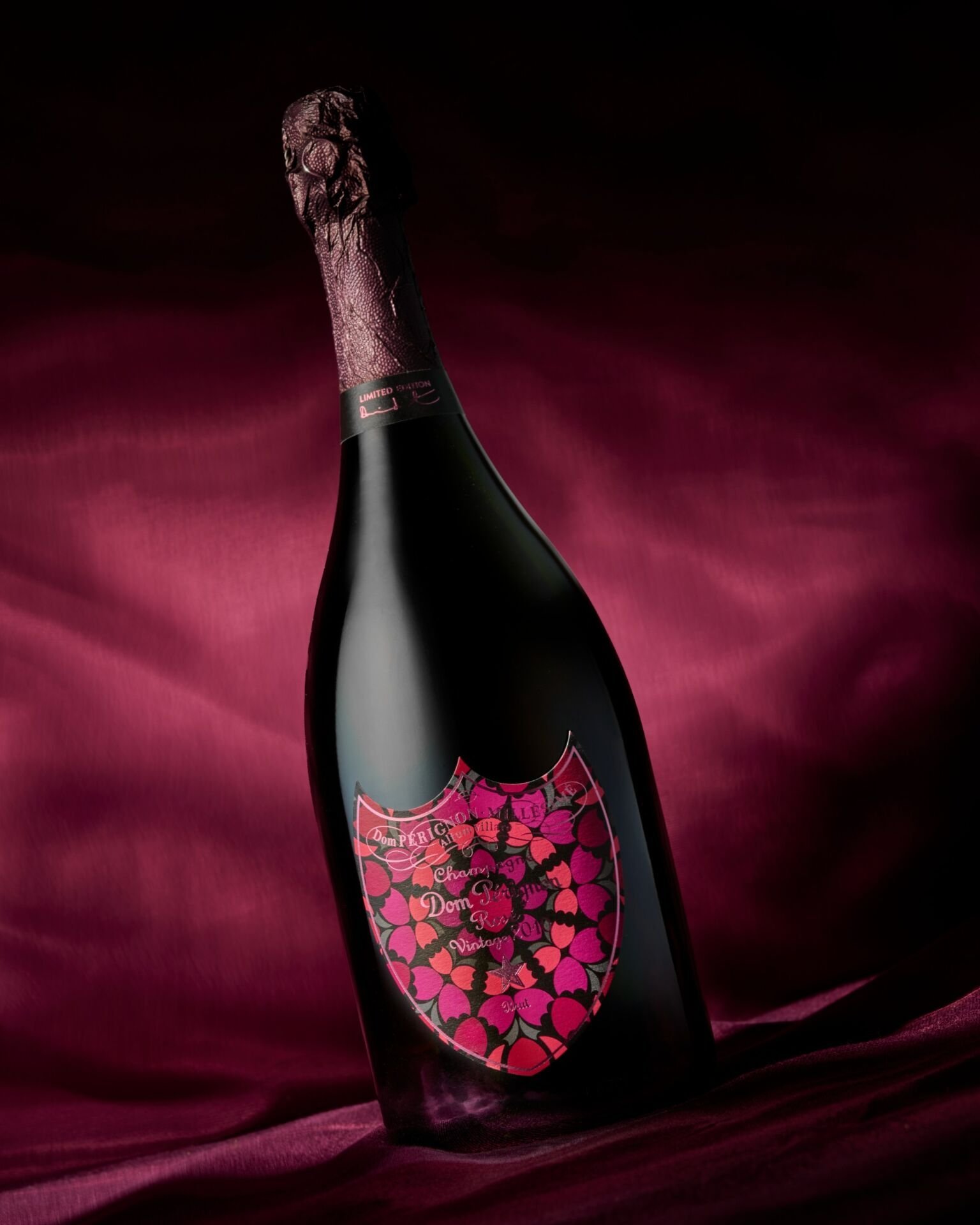
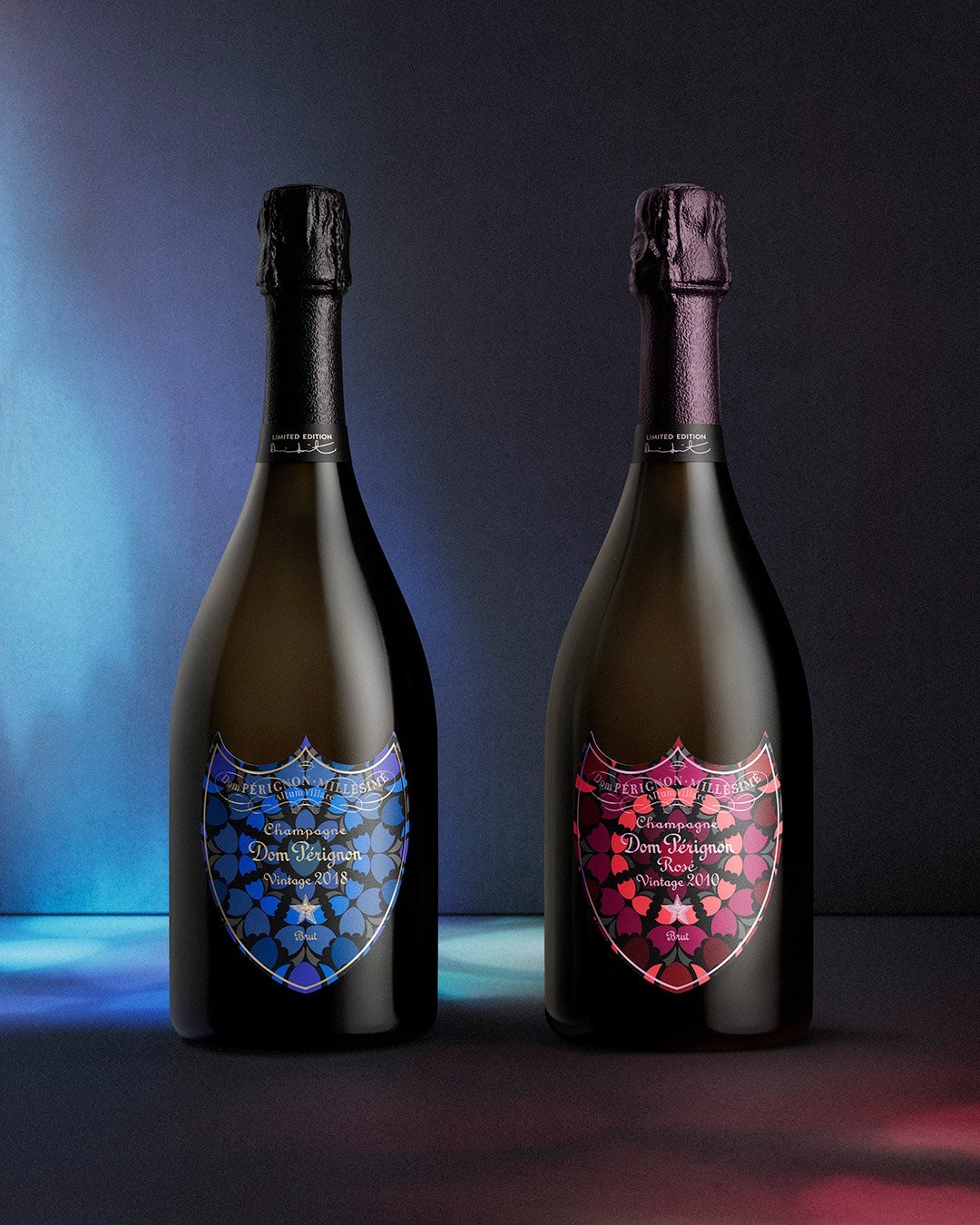
Damien Hirst’s butterfly imagery has a new surface: the shield on a Dom Pérignon bottle. The 2026 collaboration places the artist’s kaleidoscopic vocabulary around two wines, Vintage 2018 and Rosé Vintage 2010, with different colours giving each edition its own presentation.
The work draws on Hirst’s Kaleidoscope series, begun in 2001. Repeated butterfly forms create patterns that can appear ordered at a distance and more materially complex up close. On the bottle, the familiar shield becomes the meeting point between that visual language and an existing identity.
Blue and pink
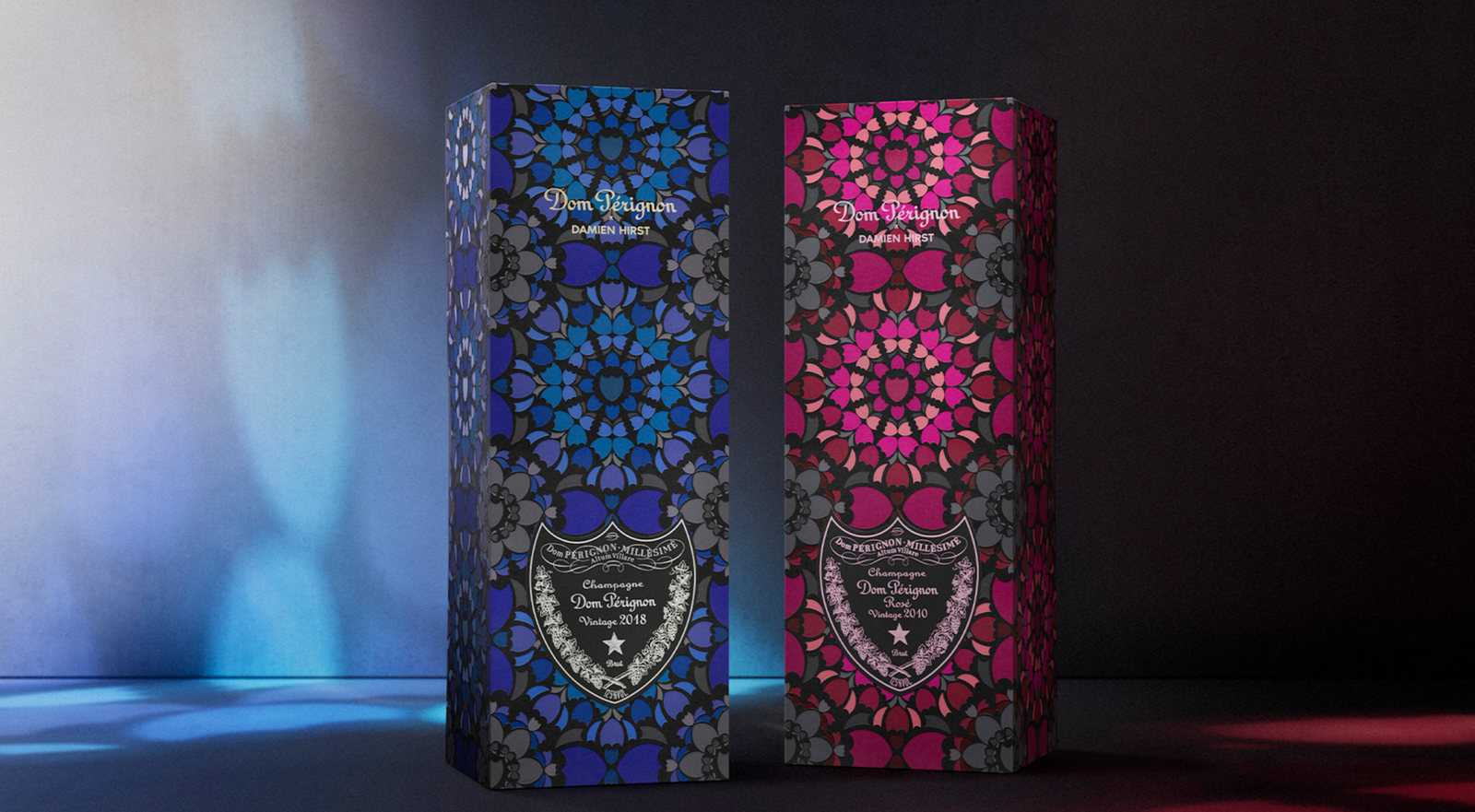
Vintage 2018 receives a deep blue treatment. Rosé Vintage 2010 uses a softer, warmer pink. The distinction is visible in the bottles and their boxes, rather than requiring the two wines to be presented as interchangeable versions of the same object.
The artwork changes the presentation, not the identity of the vintage printed beneath it. A collector interested in the design and a drinker interested in the wine may approach the release differently, but both need to distinguish the artist edition from a new vintage announcement.
DOM PÉRIGNON. Damien Hirst’s two palettes for Vintage 2018 and Rosé Vintage 2010.
Craft, function and assemblage
Hirst has connected his interest in the project with the balance between making an object work and making it visually compelling. His repeated forms offer one kind of assemblage; the composition of a wine offers another. The comparison is an artistic proposition, not a technical description of how champagne is made.
Dom Pérignon’s earlier creative collaborations have involved figures including Karl Lagerfeld, David Lynch, Lady Gaga, Lenny Kravitz and Jeff Koons. Hirst enters that history with a vocabulary already recognisable from his own work, rather than a design devised to imitate another contributor’s edition.
The conversation around the release also touched on music and the artist’s curatorial activities at Newport Street Gallery, including Jack White. Those relationships place the bottle within a broader network of art and performance, without making the wine a substitute for the work shown in a gallery.
The result is most clearly understood at the scale of the object. A familiar outline receives a different surface; two vintages retain separate identities; and Hirst’s butterfly pattern leaves the gallery to become something that can be held, displayed and eventually opened.
DOM PÉRIGNON. The Kaleidoscope motif extends to the presentation boxes.
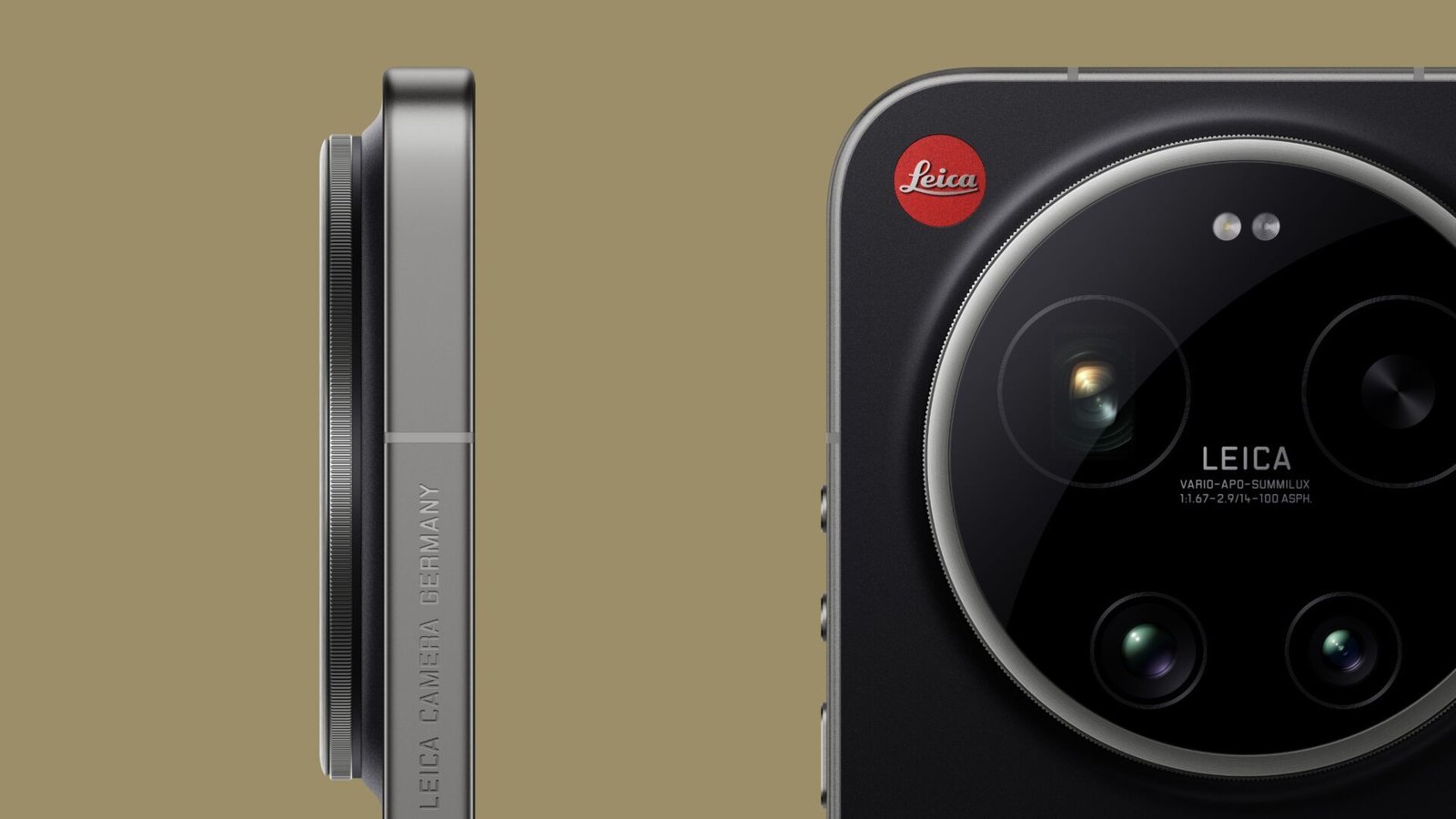
A rotating lens ring, a lens cap, film simulations with Leica names: Xiaomi has turned its partnership with the German house into product language, and Oppo and Sony are answering.
Developed with the robotics company Dephy, Nike's Project Amplify is a powered footwear system for running and walking. A year after its unveiling, it remains in testing, with a consumer launch still some years away.
A living material does not necessarily obey the design drawn around it. FUNGI: Anarchist Designers at Rotterdam’s Nieuwe Instituut made that resistance its subject, challenging the idea that fungi matter only when they can be turned into objects or building products.
THE CURATED GLOBE / FROM THE EDITORS
Good stories. Better company.
A considered selection of people, places and ideas from WAYFARER Edition, delivered to your inbox.
Welcome aboard. Your first letter is on its way.
We could not complete your subscription. Please check your email and try again.