Harbour Club Miami: where the public restaurant ends and the club begins
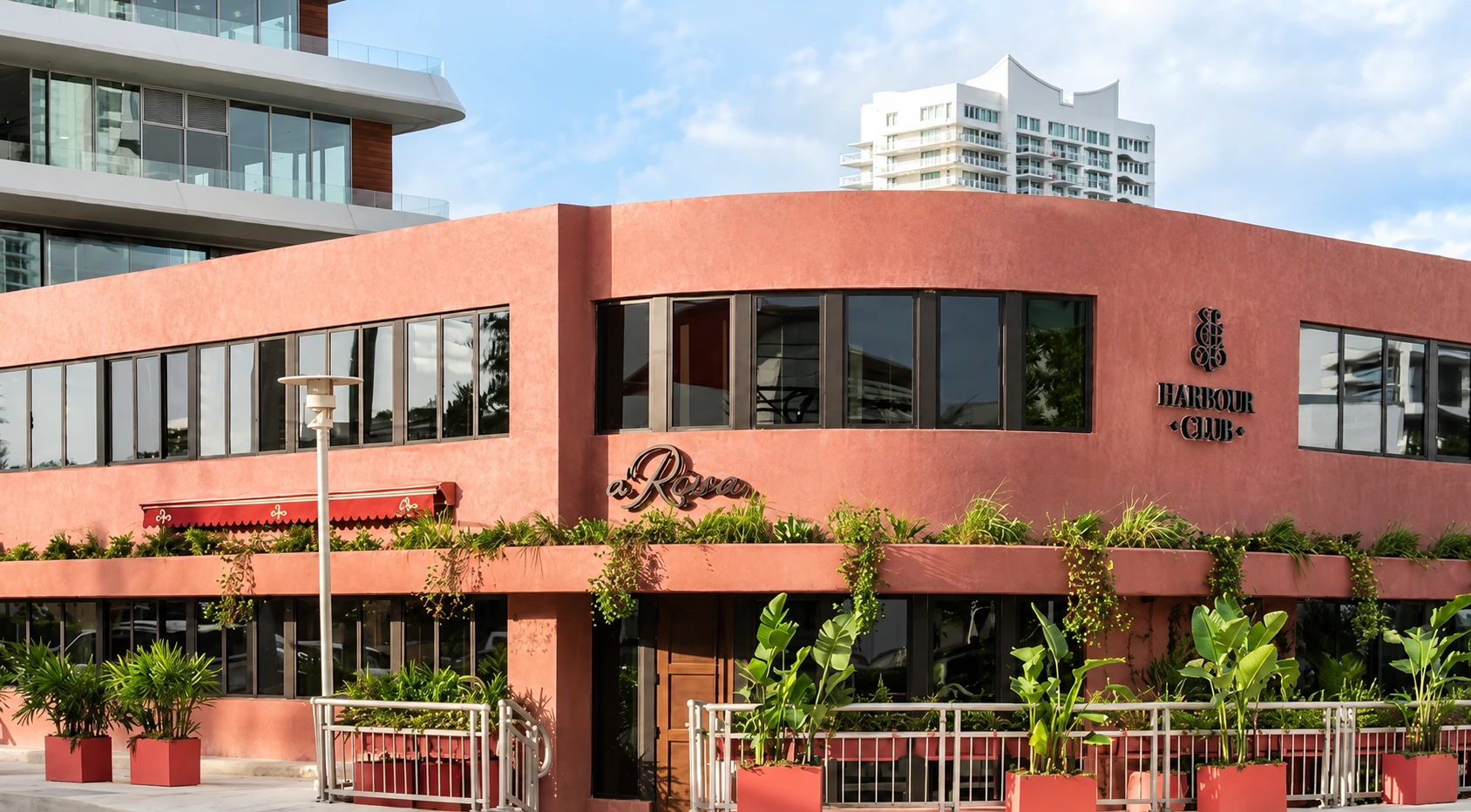
At Sunset Harbour, Yodezeen’s interiors connect a’Riva to a more private social world. The distinction is architectural, but it is also written into access and photography rules.
A private club is defined as much by its boundaries as by its rooms. Harbour Club Miami makes that distinction particularly clear: its street-facing restaurant and its members’ spaces belong to the same address, but not to the same system of access.
The club occupies 1766 Bay Road in Miami Beach’s Sunset Harbour. Founder James Julius developed it with interiors by Yodezeen, drawing on the domestic register of British social clubs rather than the scale of a resort.
A restaurant connected to the neighbourhood
The club’s current material explicitly welcomes members and non-members at a’Riva. Its Italian and Mediterranean identity gives the public-facing part of the address a clear dining function.
That does not make a meal at a’Riva an entitlement to use every other room. The restaurant, the club membership and attendance at a private event are separate arrangements.
The terrace and street-facing façade also give the project a neighbourhood scale. A building can remain attached to the pavement even while more restricted spaces occupy its interior.
Palms translated into surfaces
The two-storey scheme uses palm forms at several scales. Orlean wall coverings appear in the bathrooms and Palm Room; brass lights shaped like palm leaves relate to velvet seating in the upper-level spaces.
The repetition supplies continuity without requiring every room to be identical. A leaf drawn on a wall and a leaf shaped into a light fitting perform different tasks: one gives a surface pattern, the other occupies space and illuminates it.
The staircase is another point of emphasis. A Hajime Sorayama Sexy Robot sculpture and floral wall treatment make the passage between levels part of the interior’s visual structure. A Damien Hirst disc near the windows brings a further layer of art into the street-facing view.
Visibility from outside is not the same as public access to an artwork inside. The distinction belongs to the building’s social structure, not merely to its décor.
The rules are part of the atmosphere
The club’s published rules prohibit photography and filming in all areas, including sharing images taken inside on social media. The bathrooms should not be described as an exception. A room can be visually elaborate without being available as a photographic backdrop.
The current rules also identify the Palm Room as an adults’ space for those aged 21 and above. Members remain responsible for their guests. Those are practical constraints, not details to be hidden behind the idea of an informal second home.
Domestic scale, institutional control
Soft seating and patterned walls suggest a domestic interior. Membership rules, guest responsibility and restrictions on recording establish something more organised than a private living room.
The tension is the project’s useful subject. Design can make a social space feel familiar, but familiarity does not erase its boundaries.
The chef gives the public room a subject
The opening account named Michele Esposito, a Naples-born chef whose background included Casa Tua in Miami, Villa Crespi and Caruso on the Amalfi Coast. His Italian-Mediterranean menu included spaghetti alla Nerano with courgette flowers and basil, alongside lamb with tamarind and chimichurri.
Those preparations give a’Riva a culinary identity beyond its role as the club’s public entrance. Campanian memory and ingredients associated with other traditions meet at the table. The neighbourhood restaurant can be read through the cooking, not only through the rooms beyond it.
The strongest reading of Harbour Club is therefore not simply that it is private. It is how the public table, the internal stair and the rules between them define different ways to inhabit the same building.
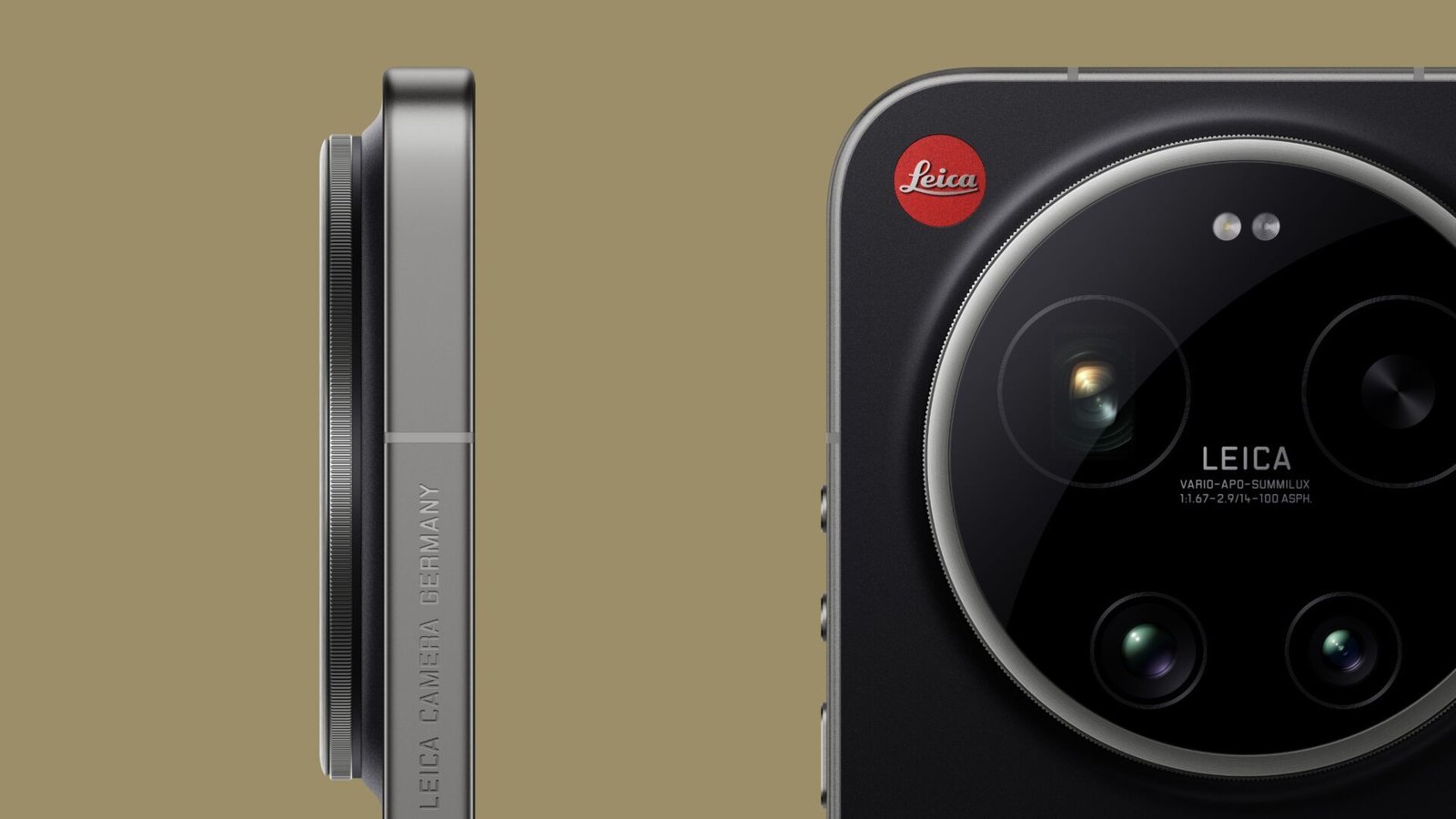
A rotating lens ring, a lens cap, film simulations with Leica names: Xiaomi has turned its partnership with the German house into product language, and Oppo and Sony are answering.
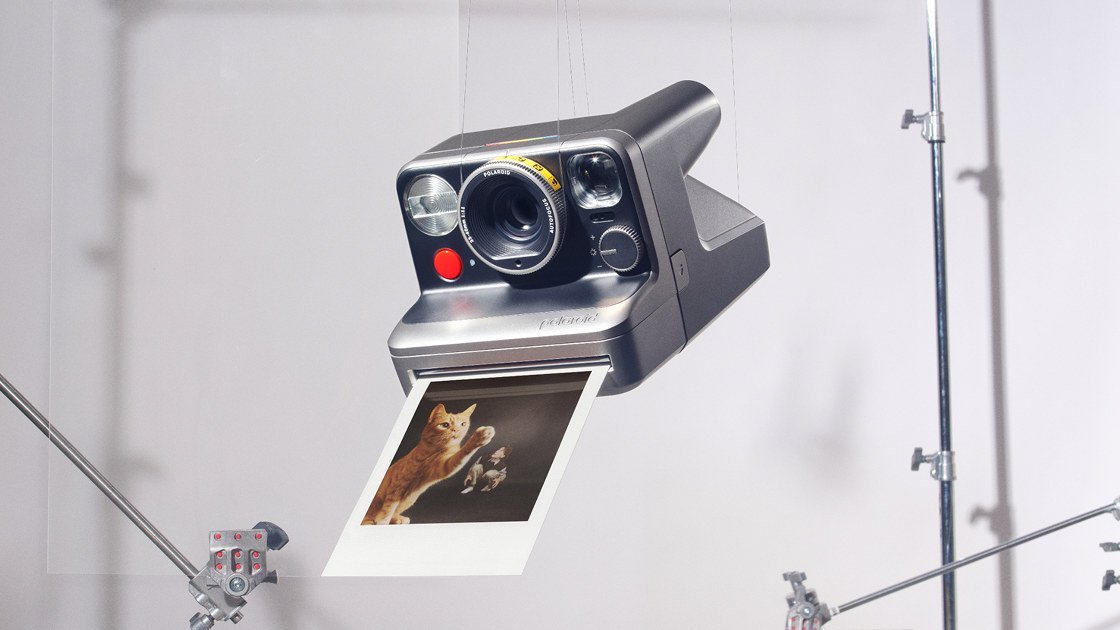
Four creative modes on a physical dial, no menus and no app: Polaroid's new instant camera returns creative control to the amateur, and makes the case for the imperfect frame.
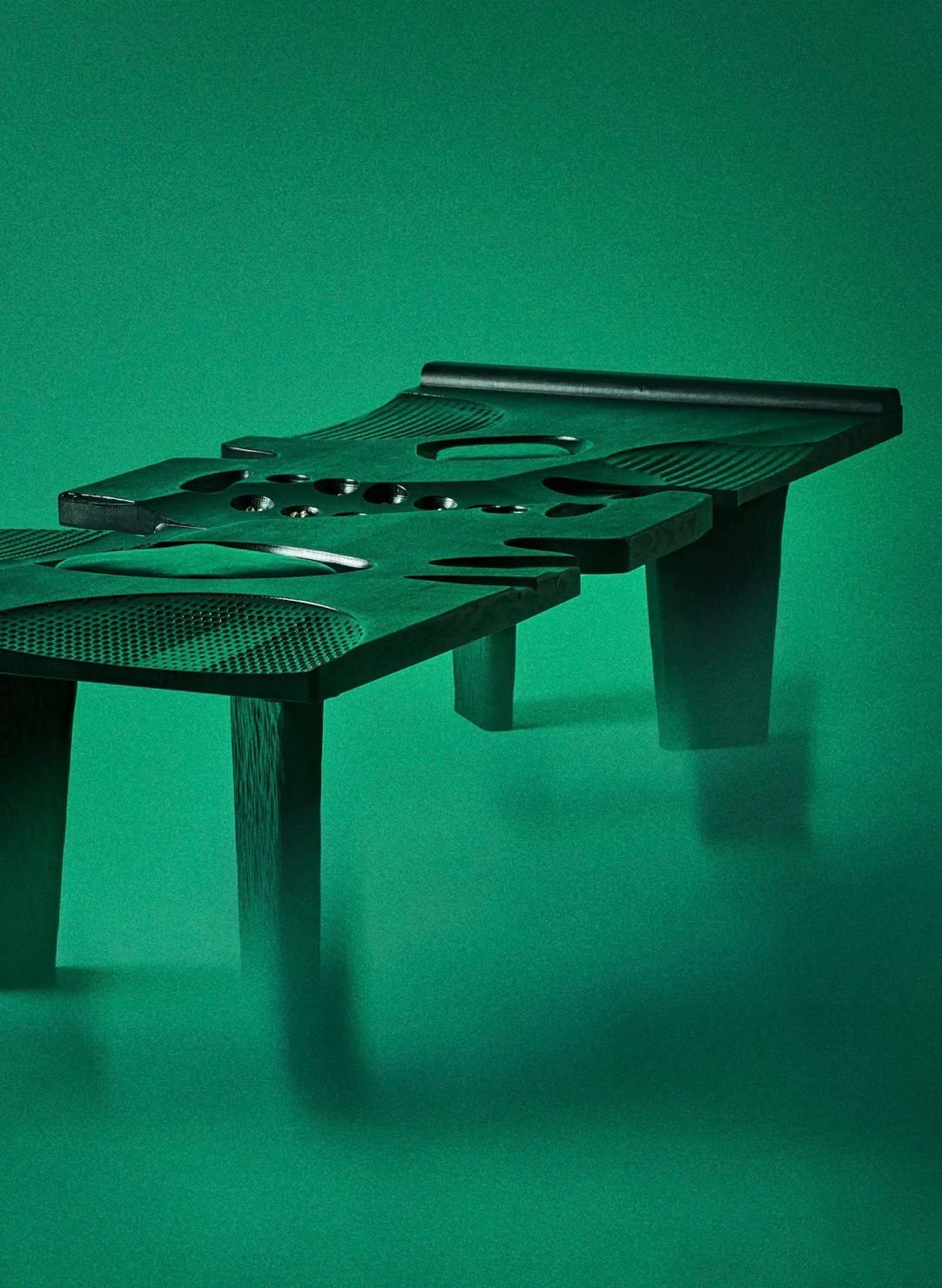
A living material does not necessarily obey the design drawn around it. FUNGI: Anarchist Designers at Rotterdam’s Nieuwe Instituut made that resistance its subject, challenging the idea that fungi matter only when they can be turned into objects or building products.
THE CURATED GLOBE / FROM THE EDITORS
Good stories. Better company.
A considered selection of people, places and ideas from WAYFARER Edition, delivered to your inbox.
Welcome aboard. Your first letter is on its way.
We could not complete your subscription. Please check your email and try again.