Ferrari 12Cilindri: The Naturally Aspirated V12 That Learned to Be Gentle
With 830 PS at 9,250 rpm and a design that quotes the Daytona without copying it, the 12Cilindri is the most complete front-engined Ferrari GT of the modern era: quiet below 4,000 rpm, a classic Ferrari above it.
The fury is still there. It has simply learned to wait.
Some cars explain themselves in the first minute, through sound, power and the instant answer of the throttle. Others reveal themselves slowly, over hundreds of miles, in the details that usually fade behind the roar of a V12. The Ferrari 12Cilindri belongs to the second kind, and that is exactly why it surprises.
No single element defines it: not the power band that seems never to end, not the precision of the steering, not the 1,600 watts of the Burmester system, not the ergonomics of the cabin. What defines the car is the sum, blended so well that nothing rises above the rest. Front-engined V12 grand tourers are a pillar of Maranello’s history, and this is the most complete of the modern era. Perhaps the best since the Daytona.
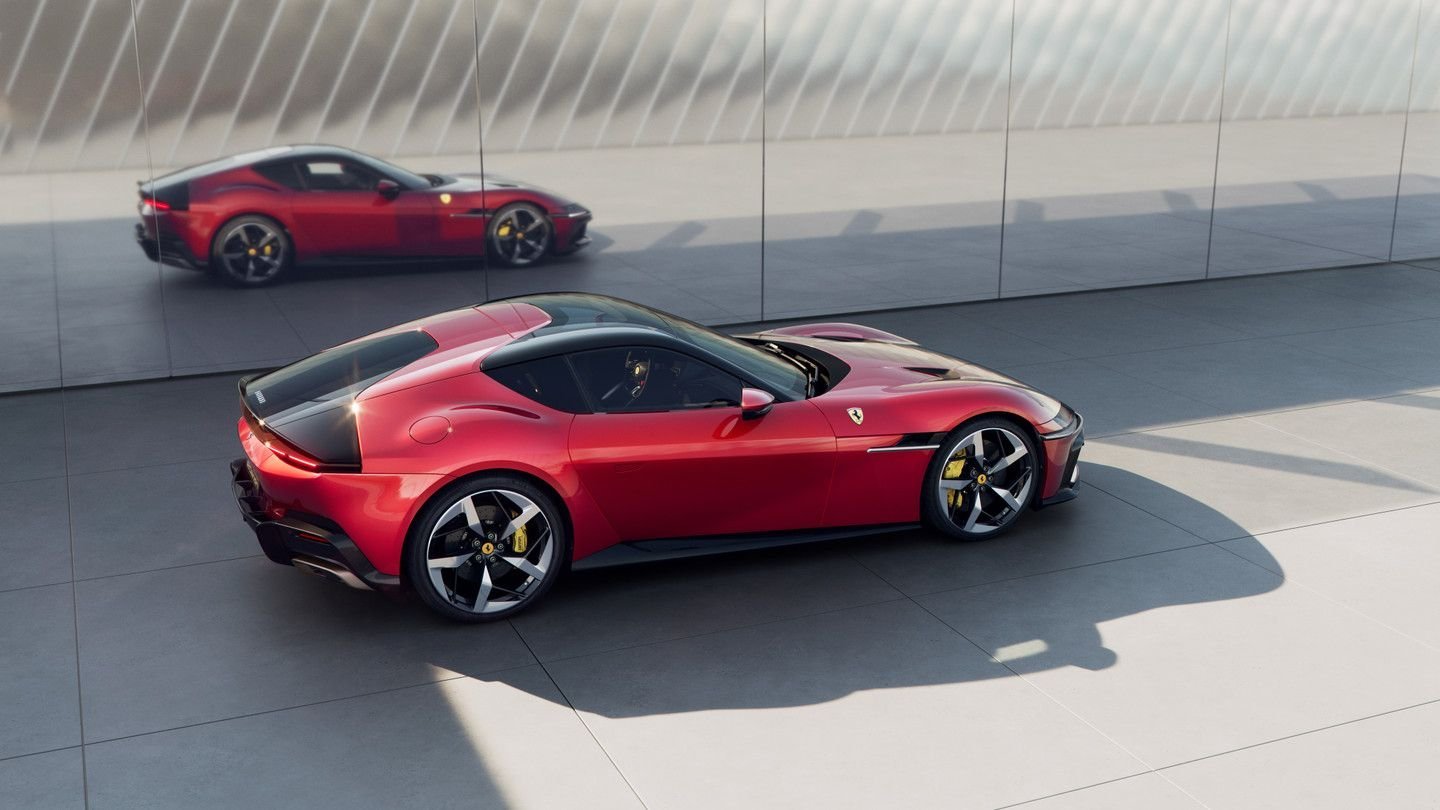
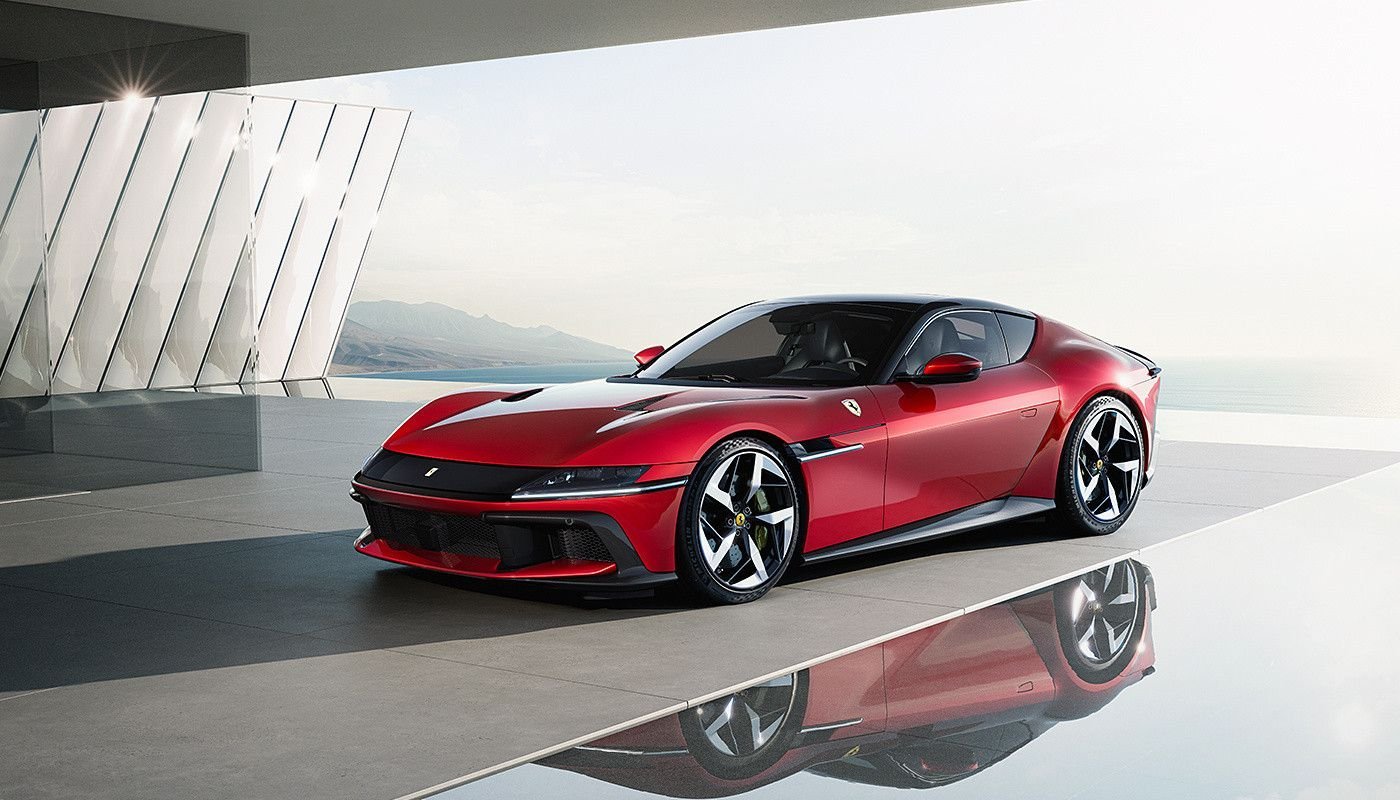
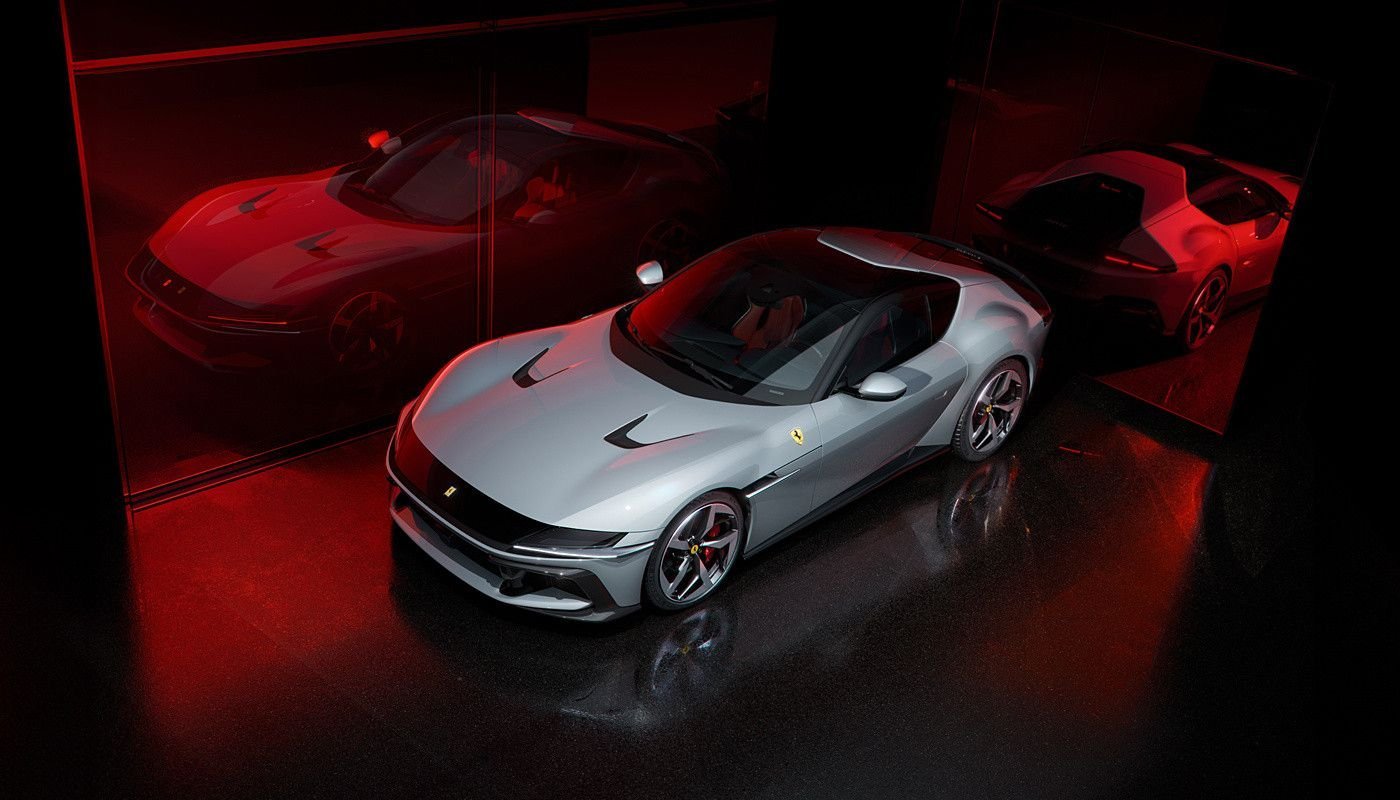
The nose translates the Daytona reference into sheet metal. Photo: Ferrari
Design: a heritage that demands rigour
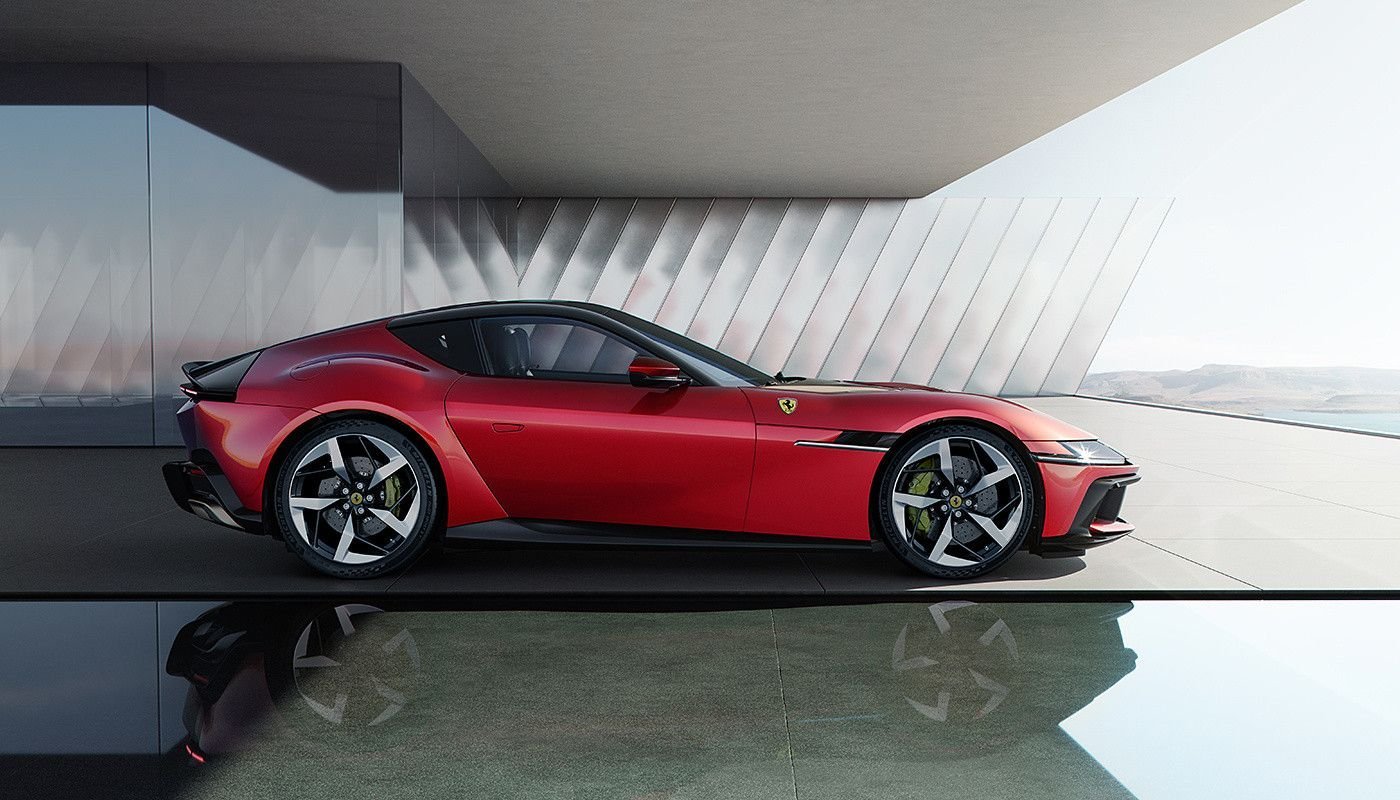
Flavio Manzoni drew the 12Cilindri with open references to the 365 GTB/4, the Daytona. Quoting an icon is risky: the yardstick is merciless and every compromise shows. Opinion split at the launch, but the consensus that followed is clear. It is a beautiful car, with a profile that rewards a long look, and the roofline seen from the A-pillar is one of those details that ask for a pause.
In profile, the roofline that asks for a pause. Photo: Ferrari
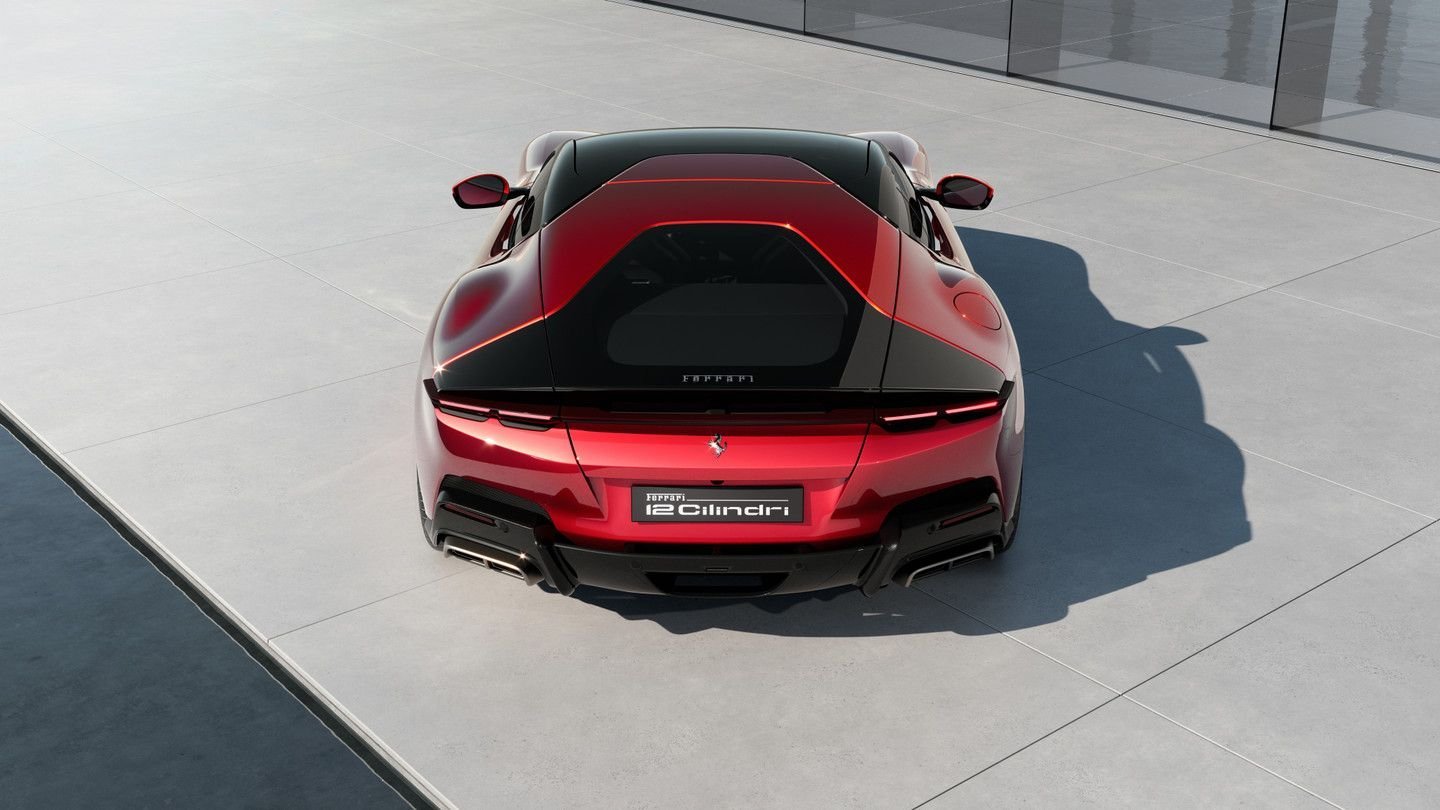
More telling still is what Manzoni chose not to do. Against the 812 Superfast it replaces, the 12Cilindri is an exercise in restraint. The same holds against the F12berlinetta and the 599 GTB Fiorano. You have to go back to the 575M Maranello, out of production for two decades, to find a front-engined V12 Ferrari of equal elegance. Like that car, this one should age well.
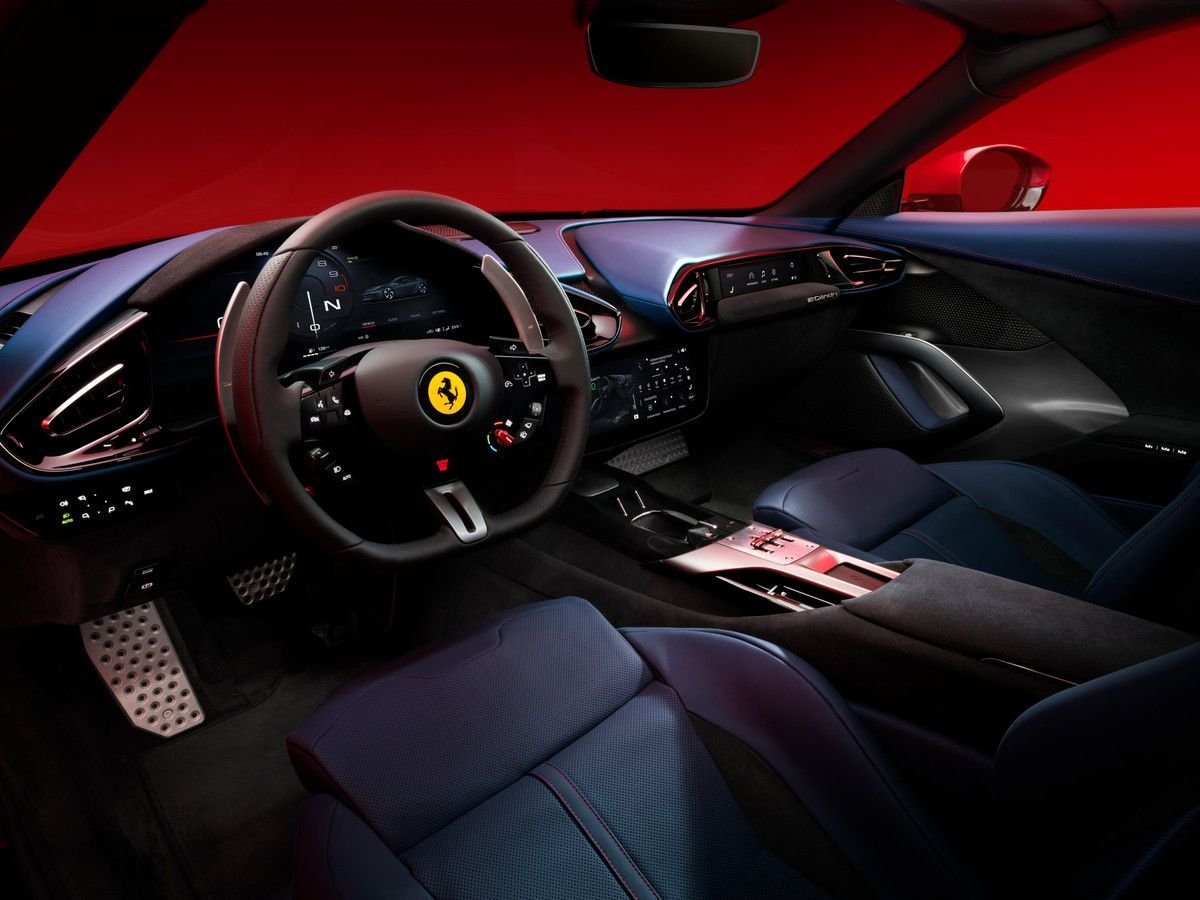
Physical buttons return to the wheel, and the menu mistakes end. Photo: Ferrari
Interior: a cabin that welcomes rather than imposes
The cockpit is built around the driver. The 10.25-inch central screen ends up showing Apple CarPlay most of the time, and the 15.6-inch digital cluster does its job well thanks to the return of physical buttons on the wheel, which ends the mis-presses caused by the haptic controls of earlier generations. The one reservation is the start button, still capacitive. A physical one, red or yellow, would be the final touch on an almost perfect wheel.
The optional 8.8-inch passenger display, dismissed by some as a gimmick, proves genuinely useful. Being able to lower or mute the music from the right-hand seat mid-conversation is the kind of feature you only miss once you have used it. And conversation flows: even at motorway speed, the insulation allows a normal speaking voice.
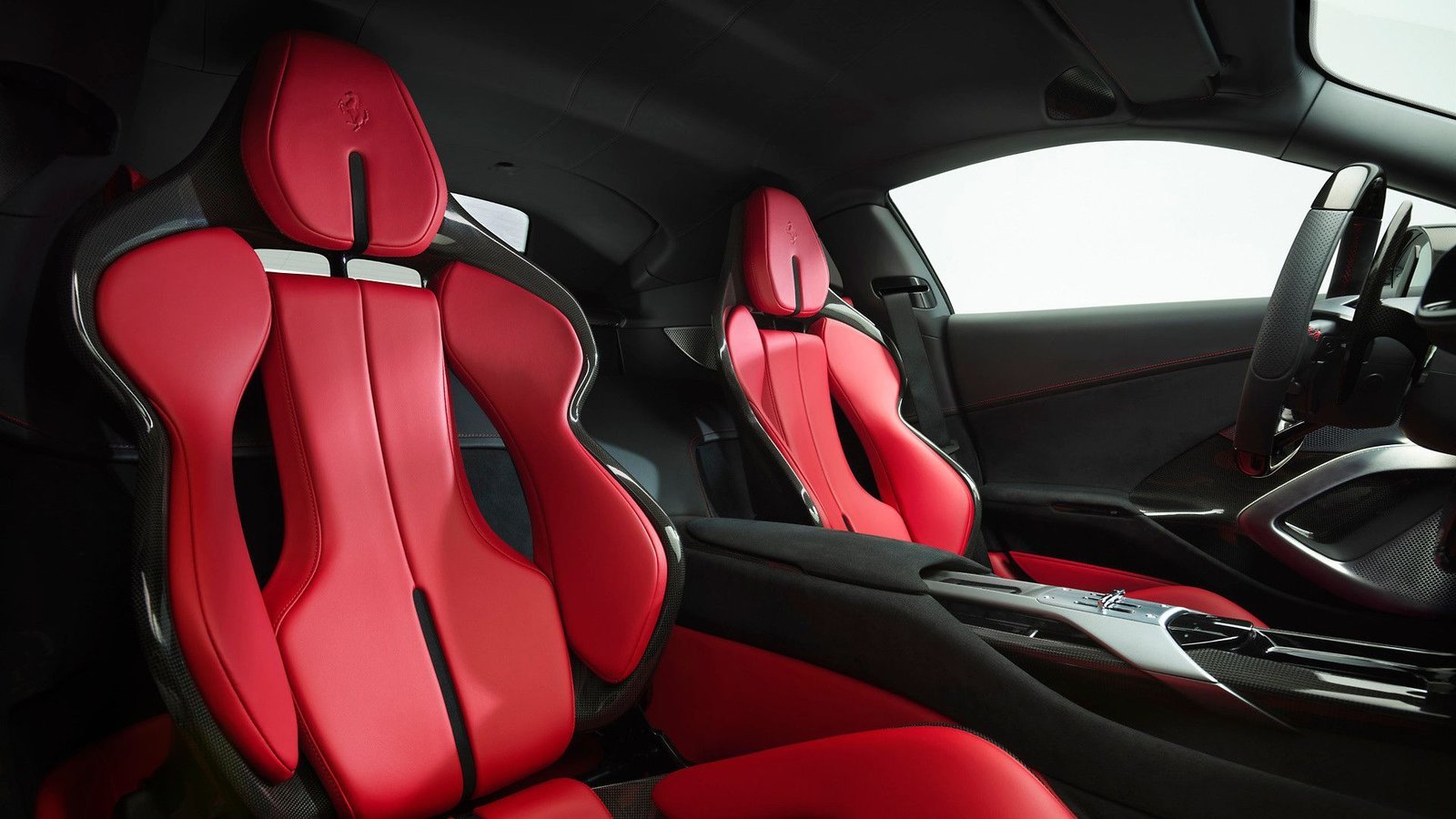
In the optional comfort seats, ventilation and massage go almost unnoticed day to day; heating is the one feature that would be missed against the excellent carbon sports seats offered elsewhere in the range. There are cubbies for phone and wallet on both sides of the tunnel, and the 270-litre boot takes two hard-shell carry-ons and two cabin bags, with room behind the seats for a suit carrier or two.
The carbon sports seats, the alternative to the comfort pair. Photo: Ferrari
Performance: two cars in one
It is remarkable that Ferrari still offers a naturally aspirated V12 capable of this much comfort. Loyal 575M Maranello owners might say their car already does the job. With all respect to those who have covered many miles in Ferraris of different eras, the comparison does not hold.
The 12Cilindri asks nothing of a driver who simply wants to drive, and lets a passenger truly relax. Below 4,000 rpm it is just a car, and a very good one, so much so that parts of the internet complain it is too quiet or too smooth. The criticism does not survive a downshift. Press hard and the 6.5-litre climbs to 9,500 rpm, delivers 830 PS and turns the GT into a Ferrari in the most classical sense, from 0 to 100 km/h in 2.9 seconds.
The promise of a V12 that still knows how to roar when provoked. Photo: Ferrari
For years the brand, and much of the motoring press, said Ferrari’s V12 GTs balanced excitement and refinement in equal measure. With the 12Cilindri, the line finally holds true. The excitement was always there. The refinement was not.
Silence in town, a storm on request. Photo: Ferrari
Positioning: the everyday grand tourer
Heavy traffic, broken city tarmac, narrow lanes and winding mountain roads are not easy ground for an 830 PS GT. The 12Cilindri handles all of it with ease. A car that can soothe for hours and, a moment later, raise the hairs on your arm, whether through a favourite song on the Burmester, the delivery of power at the limit, the exhaust or the search for lateral grip, is a rare achievement.
Ferrari spent decades promising a V12 that could be both companion and storm. The 12Cilindri is the first in a long time to keep that promise without effort: silent while nobody asks anything of it, whole the moment someone asks for everything.
Profits in China have shrunk, Chinese marques are pricing above German rivals in Germany itself, and analysts speak of the worst crisis in the industry’s recent history.
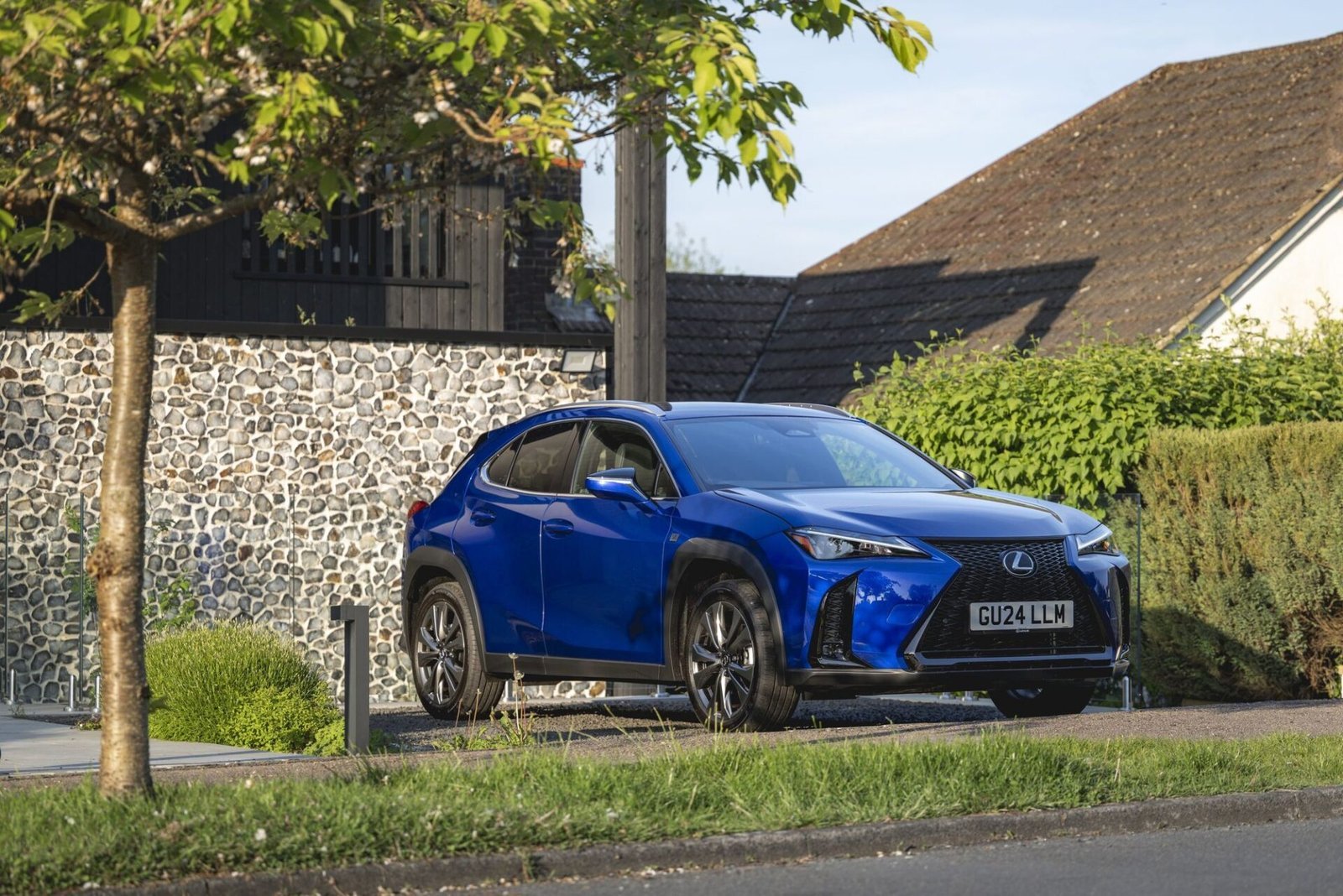
While the segment raised its roofline, Lexus kept the UX at 1.52 m tall, with a 198 PS hybrid that needs no plug. It uses less fuel in traffic than on the open road, and sends the bill to the rear seat and a 234-litre boot. A nominee at the 2026 RACER Creator Awards.
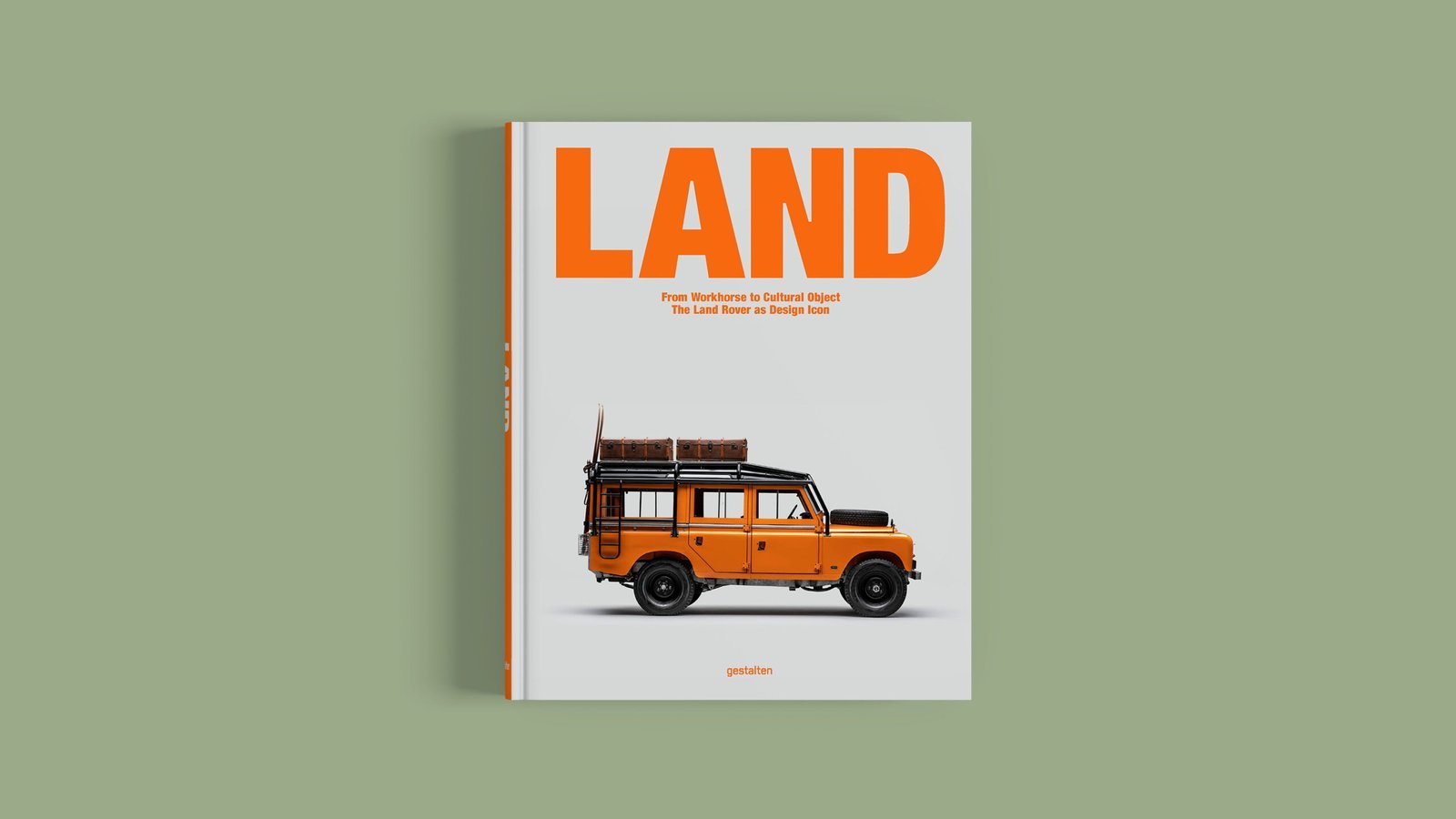
Land, a monograph from Gestalten, follows the Land Rover in three movements, from specialist workshops and electric conversions to art studios and the culture of adventure.
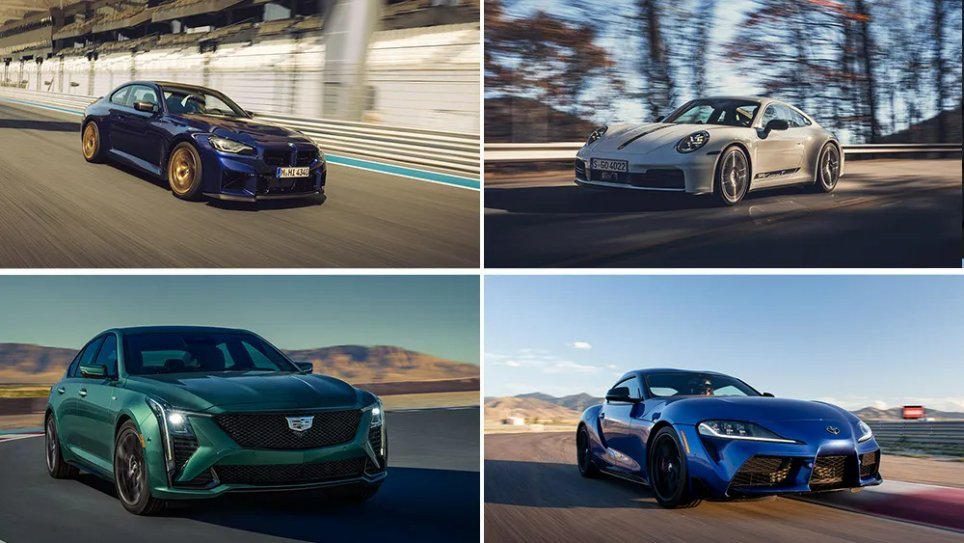
The manual gearbox has gone from rule to rarity. In late 2026, BMW M, Porsche, Nissan and Lotus still build cars that let the driver choose the gear, while the Toyota GR Supra and BMW Z4 have already taken their last bow.
On the eve of the Paris motor show, Stellantis gathered six concepts at Hangar Y in Meudon. The electric Citroën 2CV led the evening, and with it a case for the small, honest European car.
Paris
THE CURATED GLOBE / FROM THE EDITORS
Good stories. Better company.
A considered selection of people, places and ideas from WAYFARER Edition, delivered to your inbox.
Welcome aboard. Your first letter is on its way.
We could not complete your subscription. Please check your email and try again.