Culture / Reportage
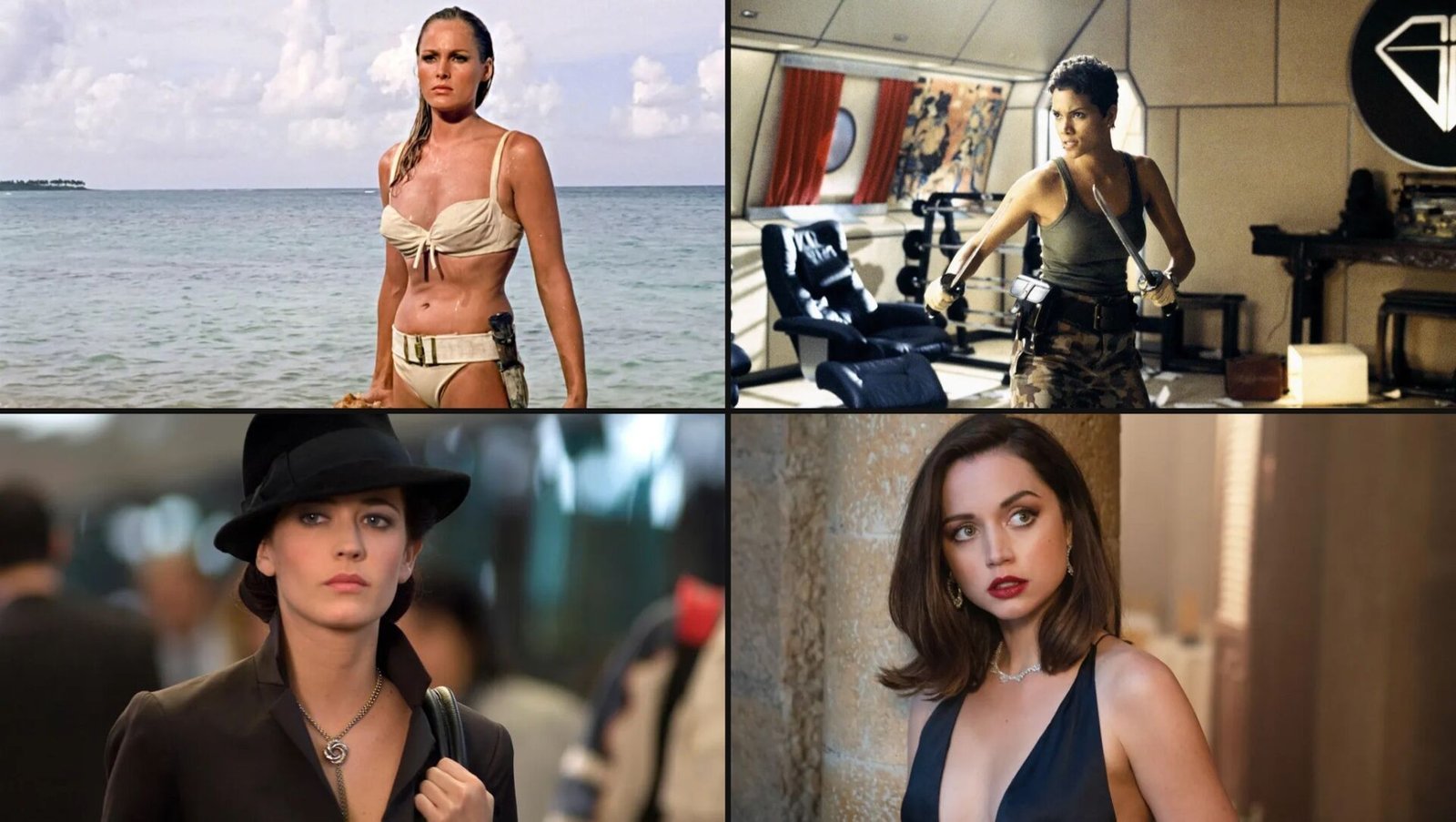
Fourteen Bond Women Who Defined Their Decades, as Robert Pattinson Becomes 007
From Ursula Andress to Ana de Armas, fourteen women who changed what James Bond meant, as Robert Pattinson is named the seventh 007.

THE CURATED EDITION.
Reportage / Giza
Heneghan Peng’s museum in Giza uses the relationship between valley, plateau and pyramids to organise the approach. The building’s scale is best understood through its sequence, not through superlatives.
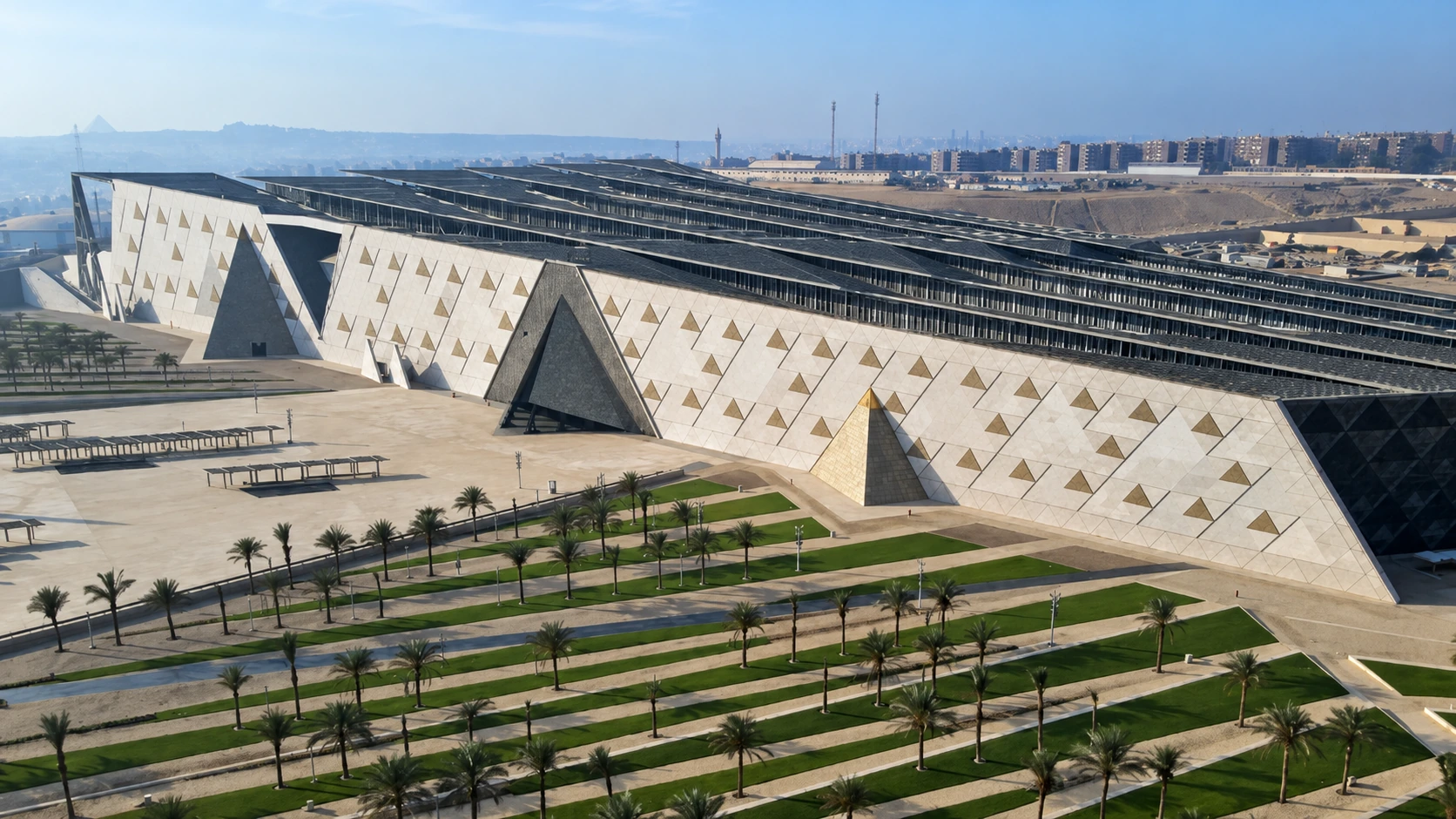
A museum beside the pyramids has to decide where its authority begins. At the Grand Egyptian Museum in Giza, Heneghan Peng’s answer is a sequence of spaces that makes the surrounding landscape part of the visitor’s orientation.
The project emerged from the 2003 international competition. Its architectural account places the building between the Nile Valley and the desert plateau, using the difference in levels rather than extending above the plateau.
A monumental forecourt leads towards a shaded entrance, followed by the grand stair rising to the gallery level. The pyramids become visible from inside the museum as the visitor reaches that level.
This gives arrival a structure. The forecourt establishes distance, the entrance changes the exposure and the stair changes the visitor’s height. The view is part of a progression, not an image attached to the end of an otherwise unrelated building.
It is also a different response from copying the pyramids as an exterior motif. The ancient structures establish axes and relationships; the museum works within those relationships using contemporary construction.
The architects describe five bands determined by visual axes towards the pyramids, alongside the chronological route of the grand stair. Roof folds and heavy service walls make the gallery organisation legible while allowing different exhibition arrangements.
That is the relevant design problem at this scale. A very large room can offer flexibility but become difficult to understand. A strong framework can provide orientation without deciding every display in advance.
Natural light is controlled by the roof folds. The movement from the exterior into the galleries depends on light as well as on the building’s monumental structure.
The project credits identify Arup and Buro Happold among the engineering collaborators, with West 8 and Sites International responsible for landscape. ATELIER BRÜCKNER is credited for the Tutankhamun gallery exhibition design.
The names distinguish different responsibilities. The architectural framework, the display of artefacts and the external landscape are related, but they are not the work of one interchangeable author.
That distinction also helps a visitor look at the museum. An object’s case, the route between galleries and the building’s view can be considered separately before they are understood together.
The current official visitor information includes the Tutankhamun galleries, main galleries, grand hall, grand stairs, Khufu’s Boats Museum and exterior gardens. The architecture now frames an operating museum, with objects and exhibition design giving the rooms their purpose.
Check gallery hours separately from the complex’s hours: the published closing times are not identical. Last entry is one hour before the galleries close. The official ticketing site also distinguishes general admission from guided-tour tickets.
Photography has conditions, including designated restrictions within the Tutankhamun galleries. A visitor should follow the current museum rules rather than assume that every displayed object can be photographed in the same way.
The building’s scale becomes clearer when read through these transitions. Outside and inside. Valley and plateau. The artefact before the visitor, and the pyramids beyond the room.
Heneghan Peng · project account · Grand Egyptian Museum · official visitor information
CONTINUE READING
Culture / Reportage
From Ursula Andress to Ana de Armas, fourteen women who changed what James Bond meant, as Robert Pattinson is named the seventh 007.

Culture / Reportage
As Grand Theft Auto VI arrives on 19 November, Vice City revives a Miami built less by architects than by Miami Vice and Scarface: pastel, neon and danger in equal measure.
Culture / Reportage
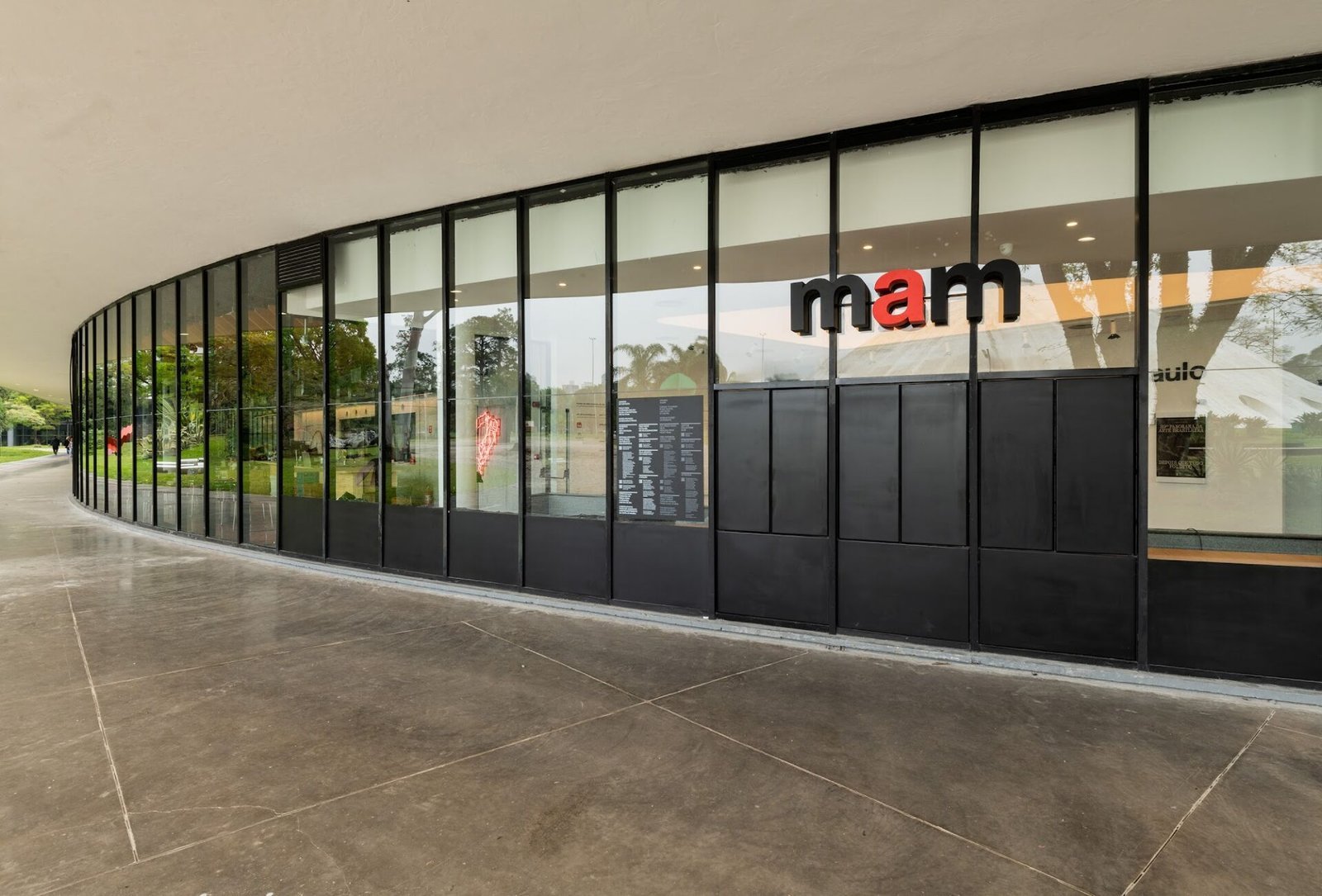
The museum's September 2026 reopening connected an exhibition with a revised route through the building.
Culture / Reportage
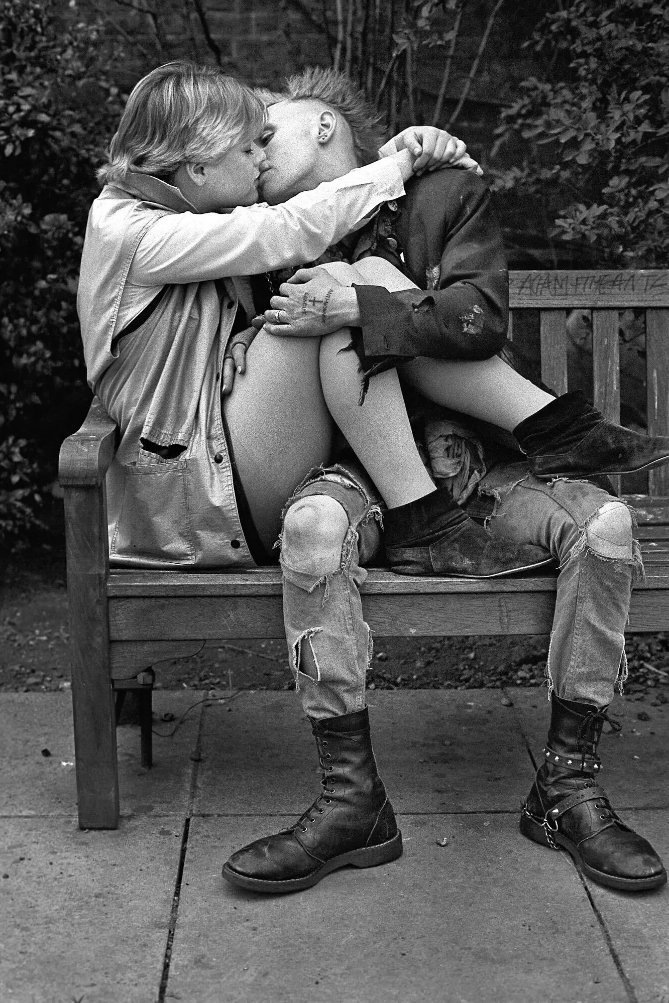
Derek Ridgers' Hello, I Love You gathers kisses caught by flash on London nights in the early 1980s. Seen today, the pictures record something more fragile than romance: a night that did not need to be documented to exist.
Culture / Reportage
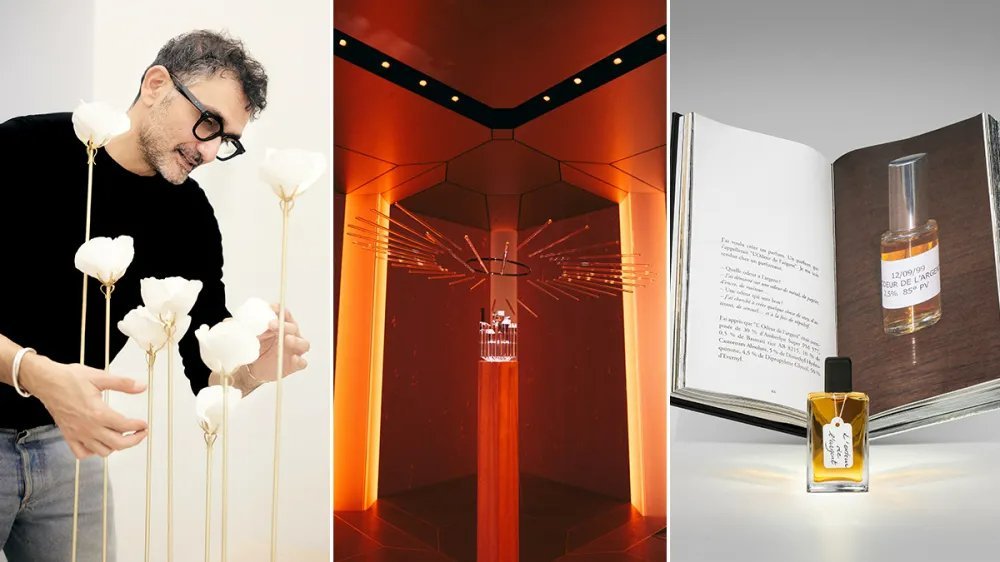
At the Palais de Tokyo, a thirty-year retrospective made fragrance meet photography, crystal, food and virtual reality.
Culture / Interview
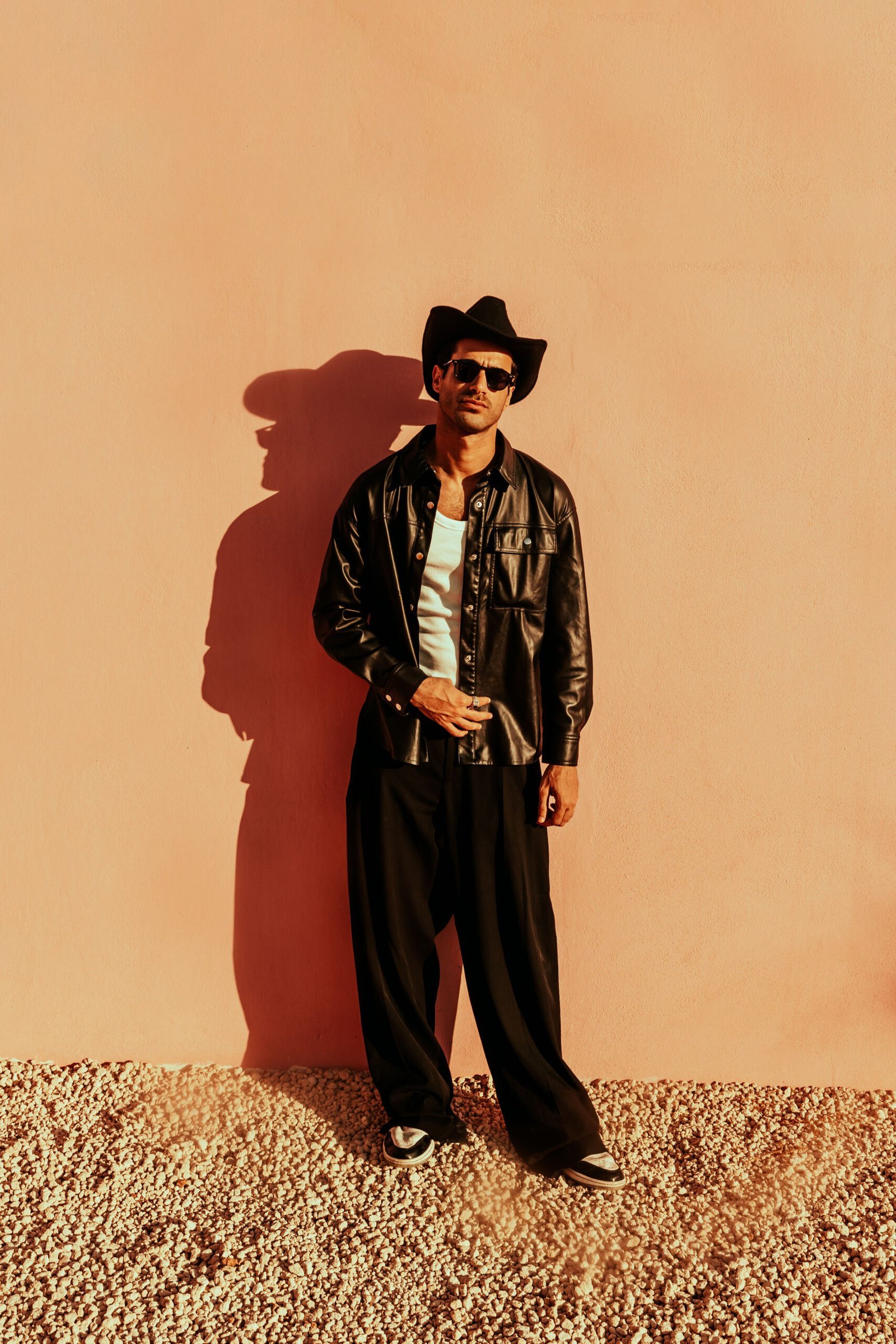
From Tel Aviv to a Brooklyn warehouse that kept him for four hours, the Stardust Records founder on reading a dance floor, saying yes to a party and the slow build of Red Roses.
THE CURATED GLOBE / FROM THE EDITORS
A considered selection of people, places and ideas from WAYFARER Edition, delivered to your inbox.
Free. No data sharing. Unsubscribe in one click.