Design / Reportage
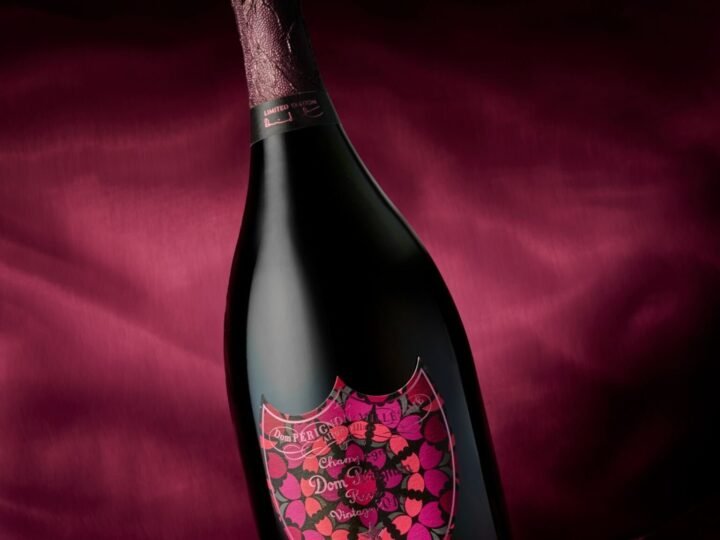
Dom Pérignon and Damien Hirst: symmetry on a label
A butterfly composition supplied a visual language for the champagne house’s 2026 collaboration.

THE CURATED EDITION.
Reportage / Italy
A roadside building offers a less familiar entry into the country’s post-war design landscape.
FROM THE WAYFARER BRAZIL ARCHIVE / English adaptation. Date shown is the original publication date.
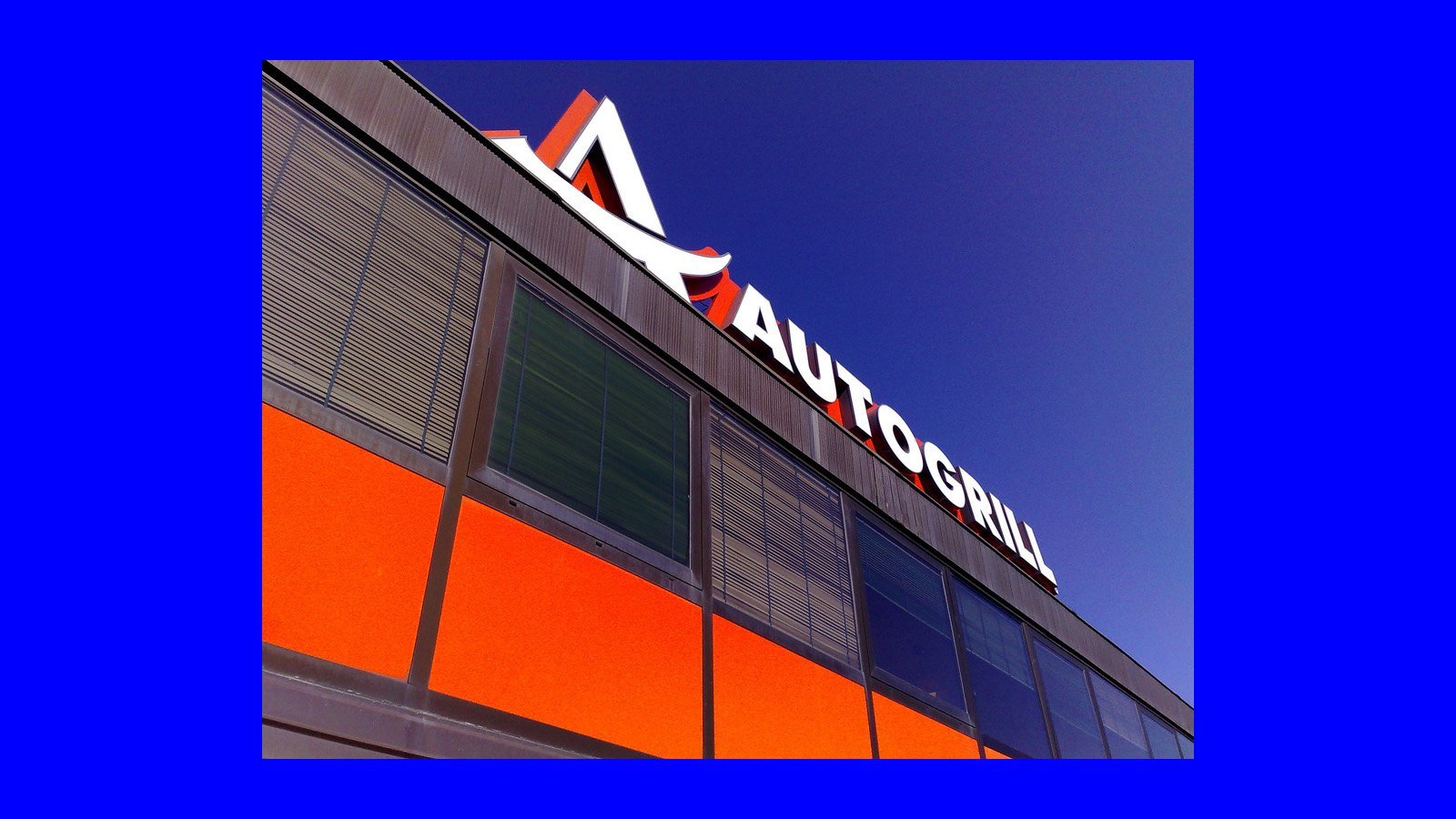
A motorway stop can contain an architectural idea worth noticing. Italy’s bridge restaurants joined two directions of travel above the road, turning a routine pause into an encounter with a distinctive building type.
WAYFARER Brazil’s August 2026 account discussed the structures through architect Carlo Ratti’s Objectify column for Wallpaper*. Its historical focus included Angelo Bianchetti’s work and the ambition of post-war road infrastructure. The restaurant was not simply attached to the motorway. Its position made the motorway part of the room’s experience.
Glazing above moving traffic introduced a peculiar relationship between a stationary diner and passing vehicles. The building could be seen as an object from the road and the road could be seen as a moving scene from the building. Those two viewpoints belonged to the same design.
The archive account raised questions of preservation and the loss of individual examples. This adaptation does not certify which structures are accessible today. It retains the more durable invitation: look beyond the familiar canon of Italian furniture and household objects. Design also shaped the places where a journey was interrupted, where a meal took place and where two streams of traffic briefly shared one address.
Adapted from the WAYFARER Brazil archive, first published 2026-08-10. English adaptation: 6 October 2026. This is an archival account, not a report of a new visit. Exhibitions, collections and menu details are described in their original context, not as current availability.
CONTINUE READING
Design / Reportage
A butterfly composition supplied a visual language for the champagne house’s 2026 collaboration.
Design / Reportage
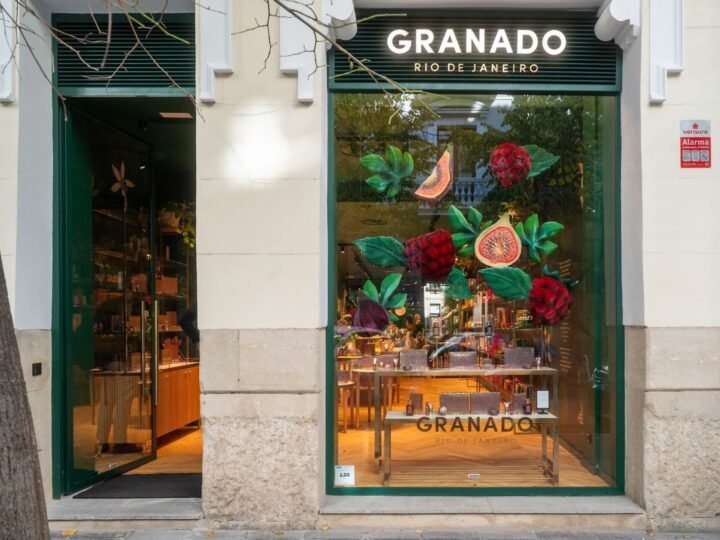
Green panels, botanical imagery and an archive wall connected a Salamanca shop with the brand’s Brazilian origins.
Design / Reportage
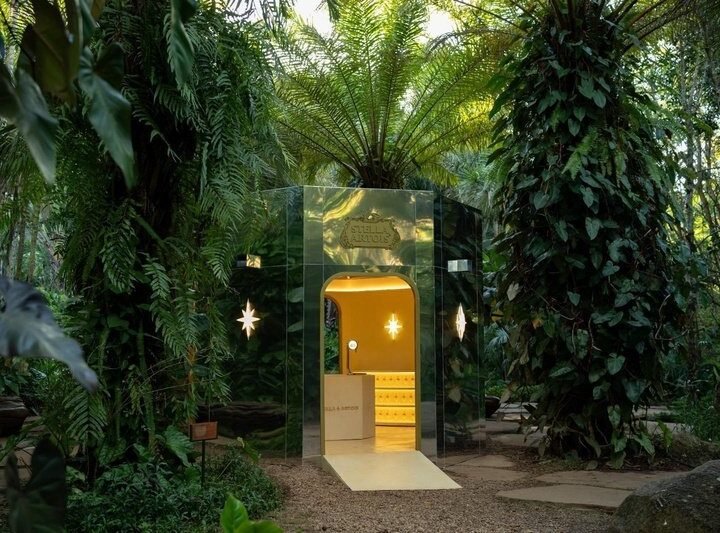
Palma's mirrored structure makes trees and sky part of its exterior, with a contrasting interior beyond an arched entrance.