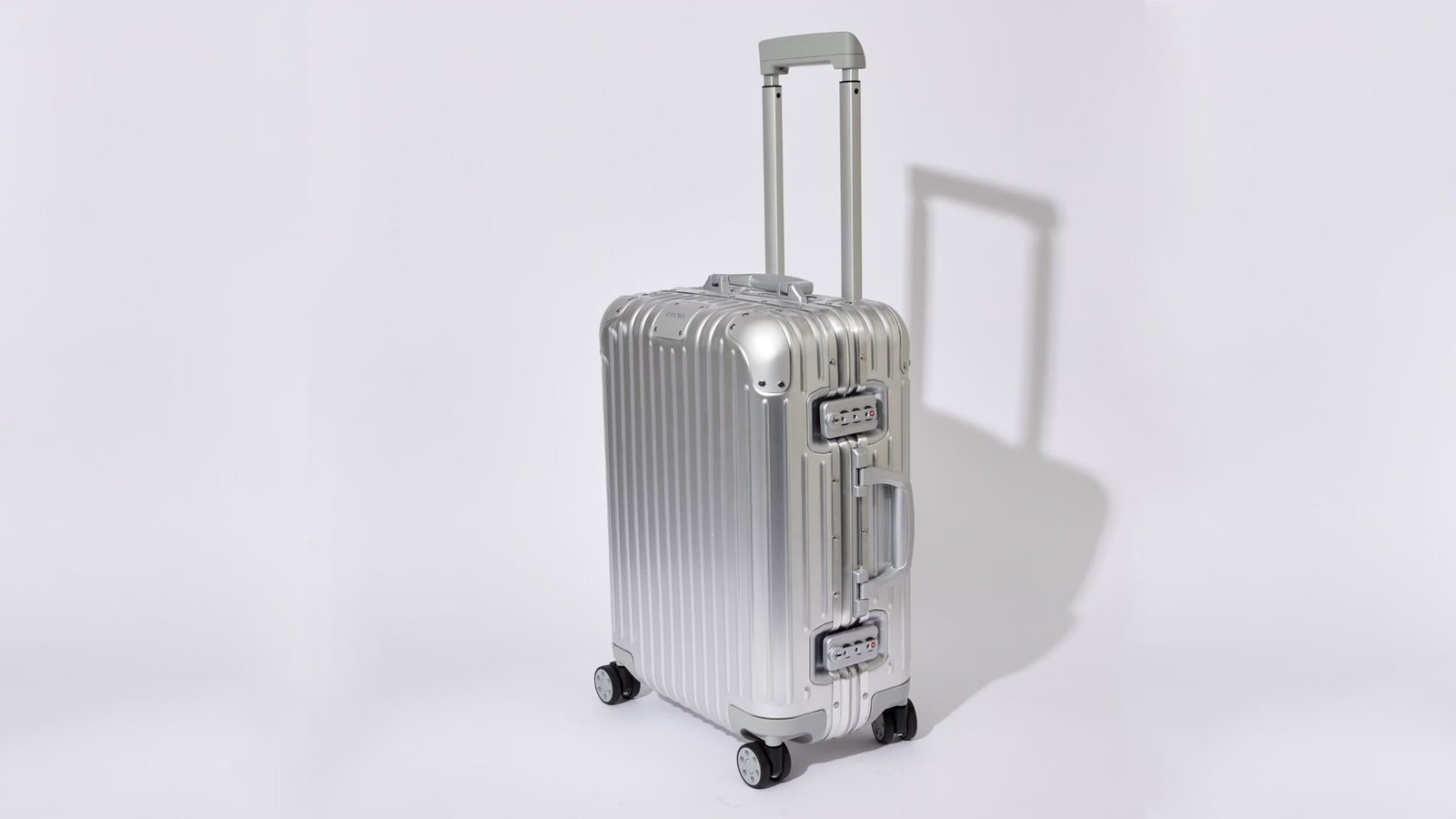
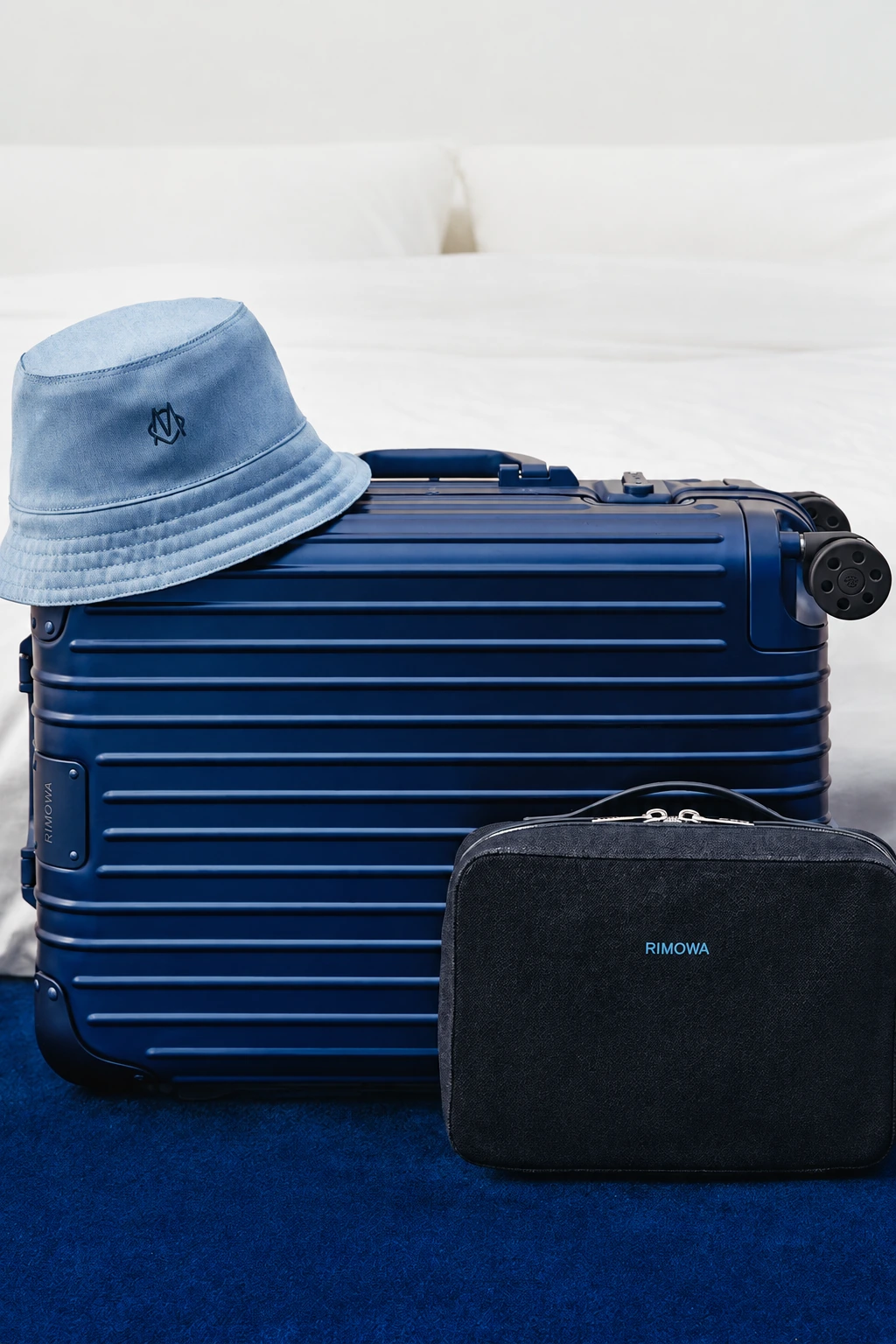
A suitcase has to move before it can become a symbol of travel. Rimowa's aluminium case is interesting because its recognisable surface remains attached to the work of carrying, protecting and being handled.
The company began in Cologne in 1898, when Paul Morszeck opened a workshop making cases for travelling professionals. Leather-covered plywood and cardboard belonged to that early repertoire. Aluminium became part of a later response to mobility and weight.
Aviation, without the mythology
In 1950, the parallel grooves entered the aluminium shell. The house connects their design with early all-metal aviation and the Junkers F13. It is an aircraft reference, not a story about the first jet.
Those lines do several kinds of work in the object we recognise today. They establish rhythm across the exterior and connect a modern suitcase with an earlier industrial language. The case remains legible at a distance, before its handles or closures can be examined.
The identity is not limited to the ribs. Corners, wheels, latches and the telescopic handle turn that surface into an object intended for repeated use. Each component has to operate within a system rather than serve as an isolated visual detail.
Inside the shell
Adjustable dividers give the interior a more flexible arrangement than the exterior might suggest. The case has a clear outline, but what goes inside changes between journeys. Clothes and smaller items need support without a fixed layout imposed on every traveller.
That contrast belongs to the design category itself. Luggage must negotiate floors, luggage racks and handling that cannot be controlled as carefully as a showroom. Scratches and dents may record use, but their appearance does not establish that every damaged case remains functional.
Repair as part of the proposition
Rimowa introduced its lifetime guarantee for new suitcases purchased from 25 July 2022. The distinction is important for older cases, which have different guarantee terms. The current policy and the particular product determine coverage, rather than the brand name alone.
Repair gives the engineering story another dimension. Wheels, handles and other functional elements are not simply background to an exterior finish. Maintaining them keeps the case in service.
The strongest argument for an enduring travel object is therefore practical. A familiar surface, an interior that can change with a journey, and components whose working life matters after the photograph has been taken.
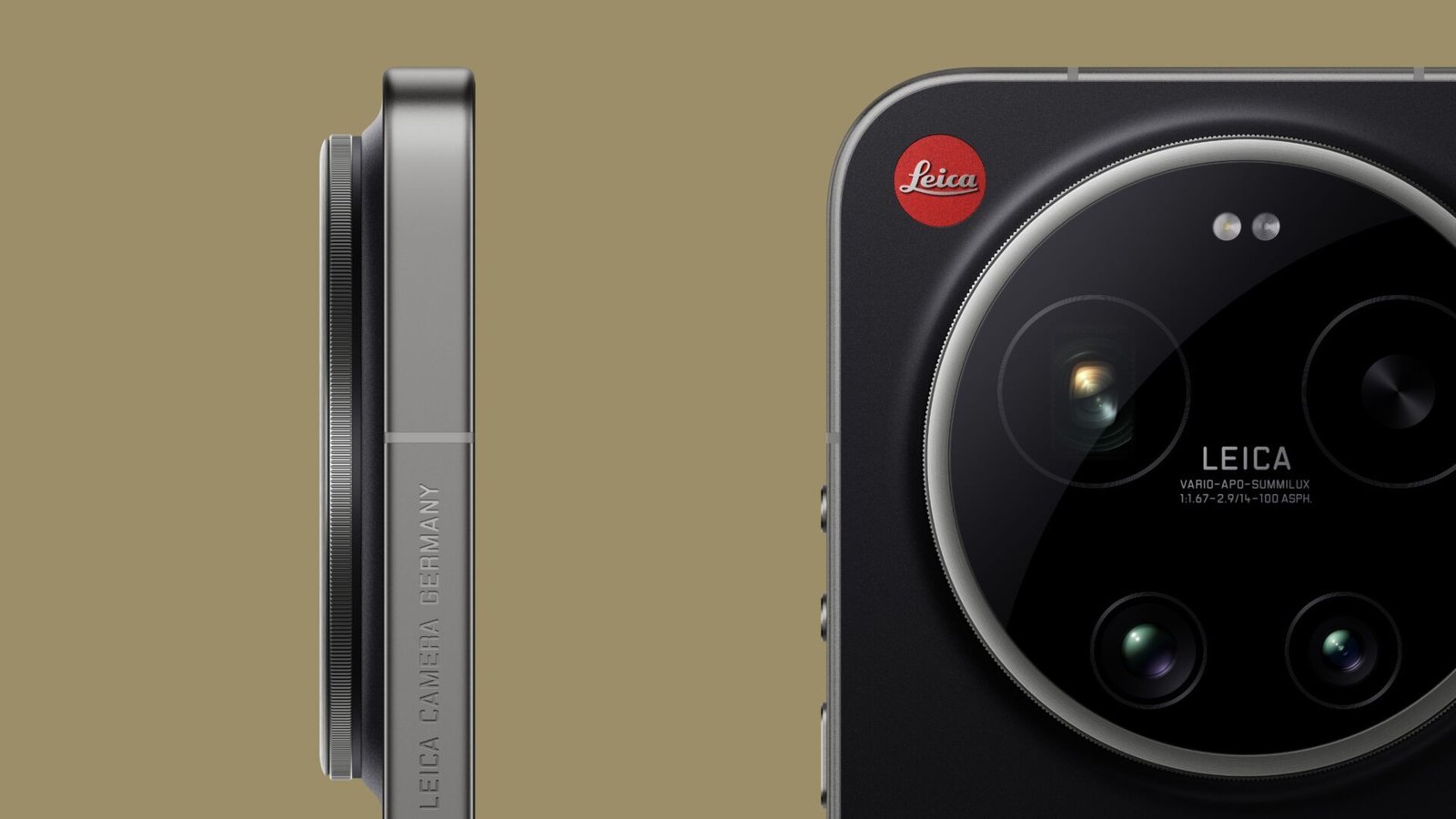
A rotating lens ring, a lens cap, film simulations with Leica names: Xiaomi has turned its partnership with the German house into product language, and Oppo and Sony are answering.
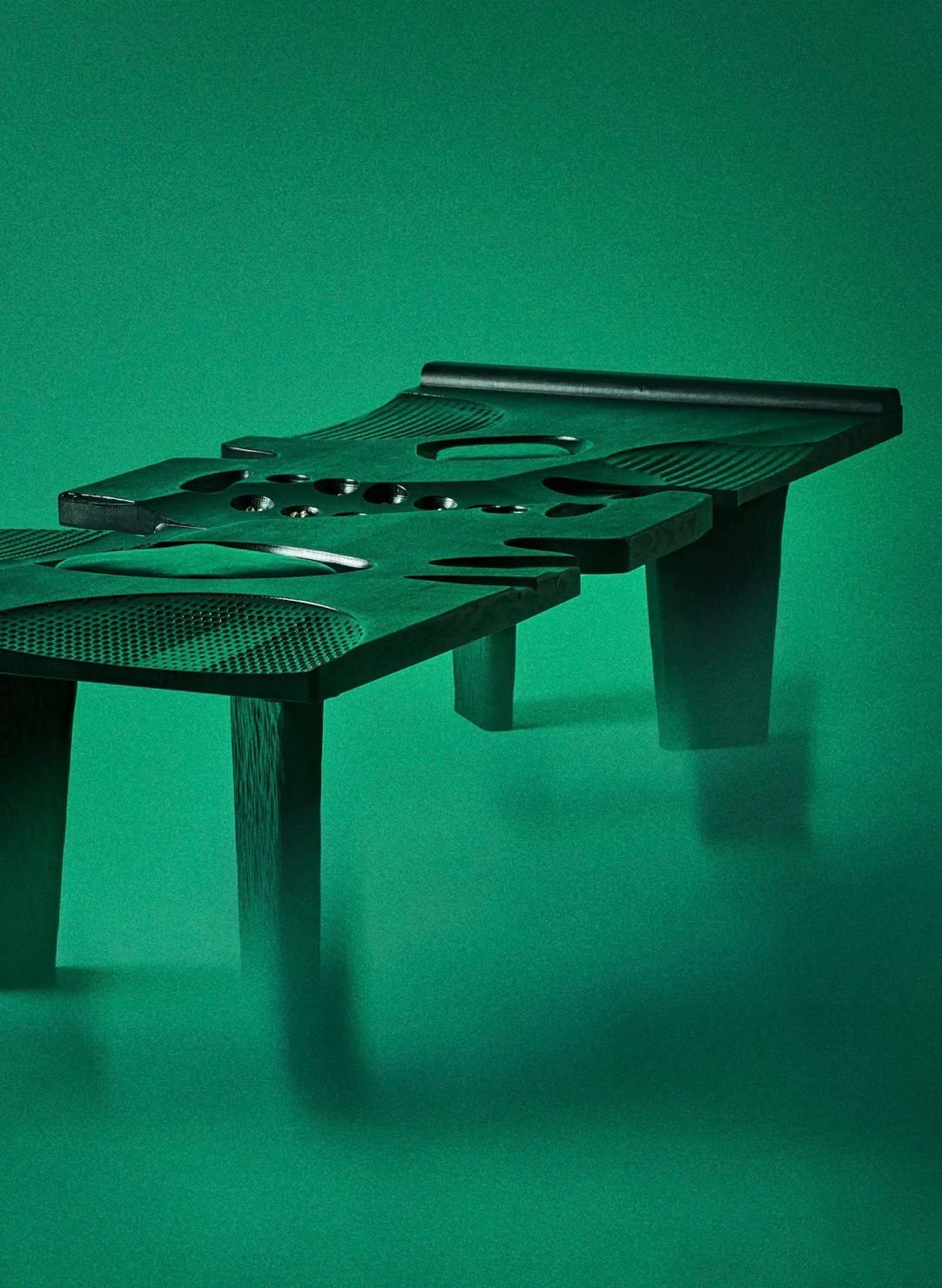
A living material does not necessarily obey the design drawn around it. FUNGI: Anarchist Designers at Rotterdam’s Nieuwe Instituut made that resistance its subject, challenging the idea that fungi matter only when they can be turned into objects or building products.
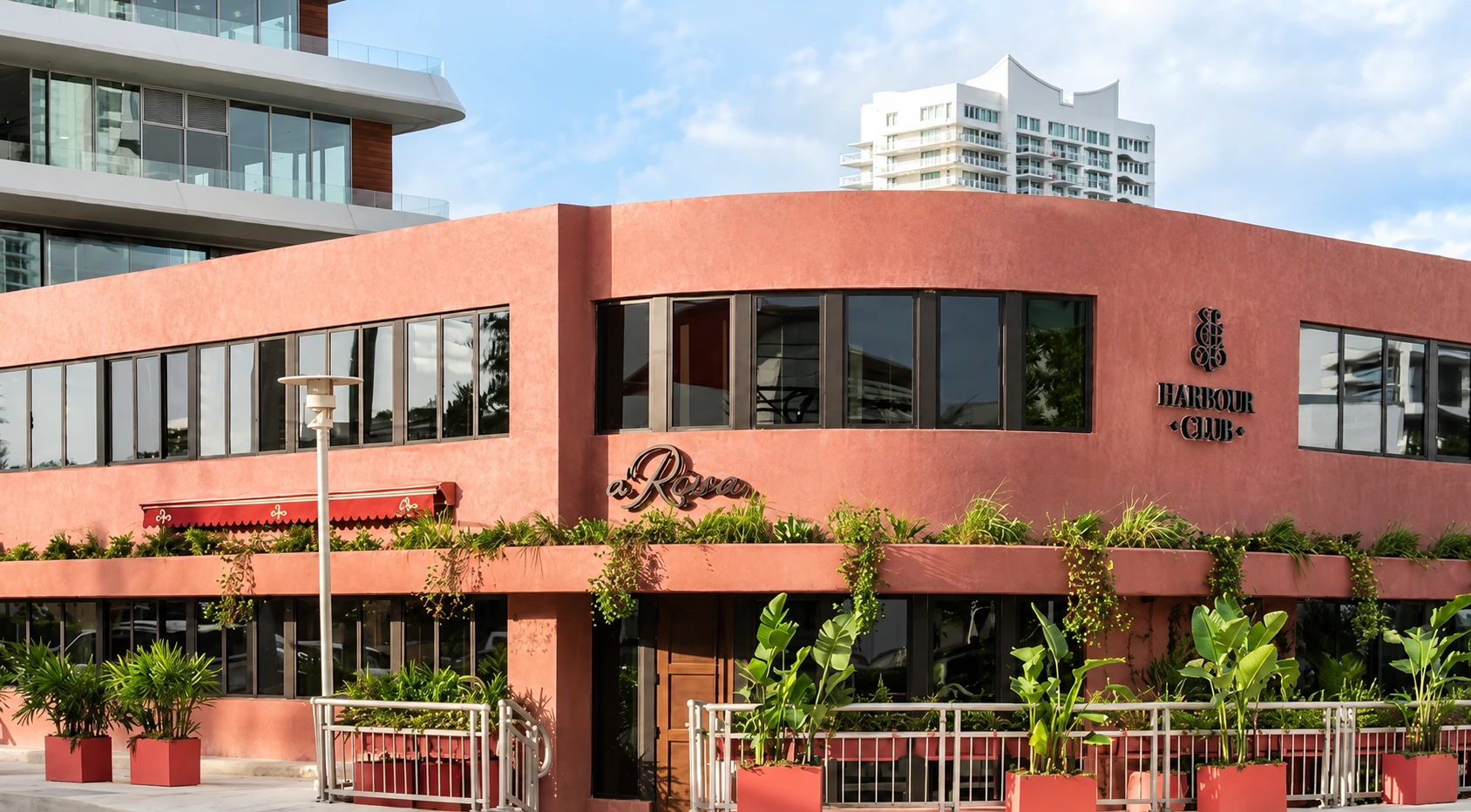
At Sunset Harbour, Yodezeen’s interiors connect a’Riva to a more private social world. The distinction is architectural, but it is also written into access and photography rules.