Brabus CEO Constantin Buschmann on the “dark luxury” behind the brand’s new yachts
After cars, motorcycles and a residential project in Abu Dhabi, Brabus takes to the sea with three yachts built with AB Yachts. Constantin Buschmann explains why black, carbon and attitude count for more than engineering.
Some brands change category. Brabus only changes surface.
The German house built its reputation by turning cars into statements of visual power. Then came motorcycles, motorboats, a clothing line and a residential development in Abu Dhabi. Seen along that path, large yachts read less as diversification and more as the consequence of a method.
Constantin Buschmann, chief executive and owner, describes Brabus today as a design house in the broadest sense, sustained by an audience that follows its aesthetic signature wherever it goes. “The logic is to take that audience on another journey, this time towards yachts,” he says. “But deep down, we just like designing incredible things. Why stay stuck in a single category?”
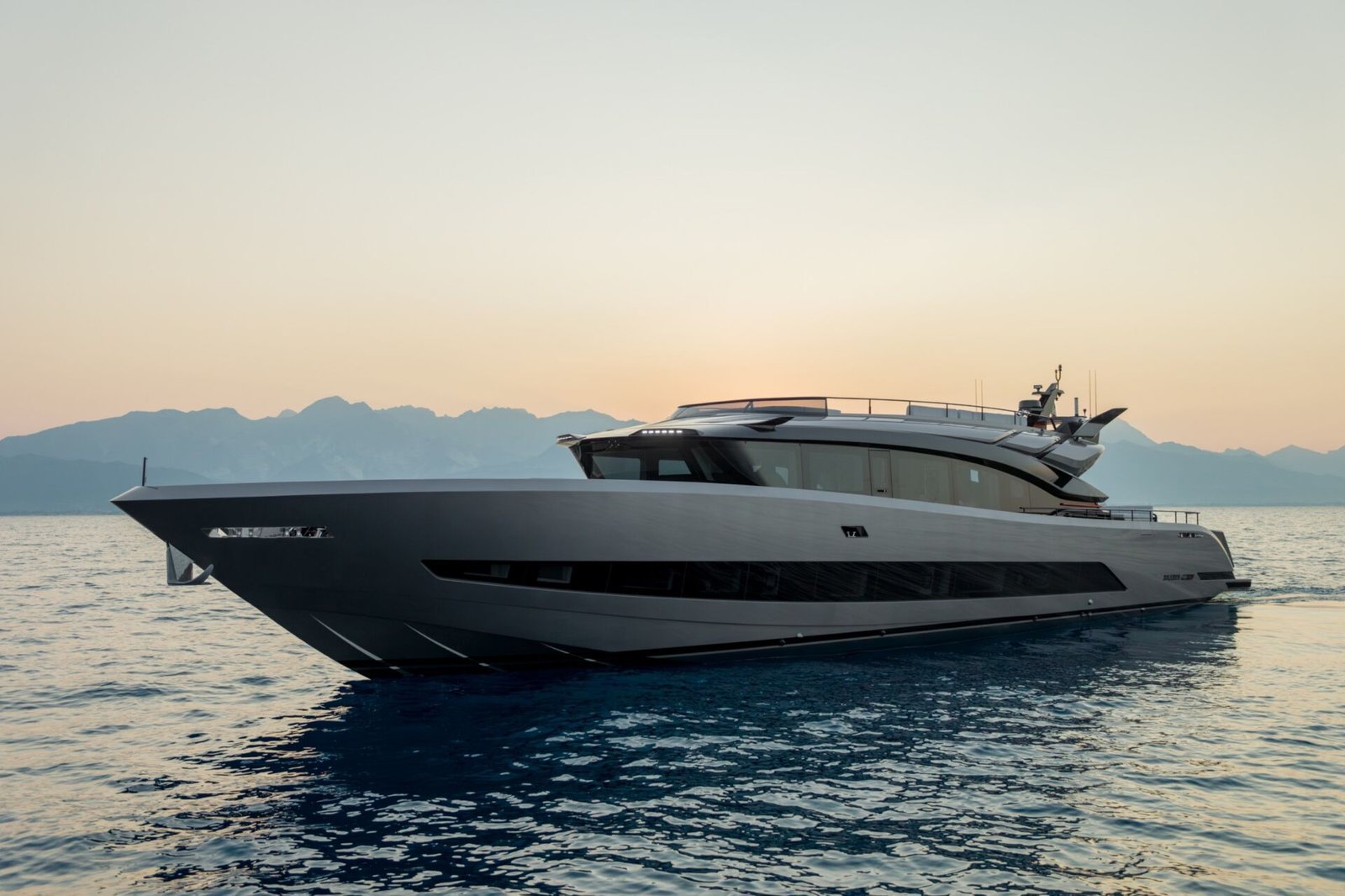
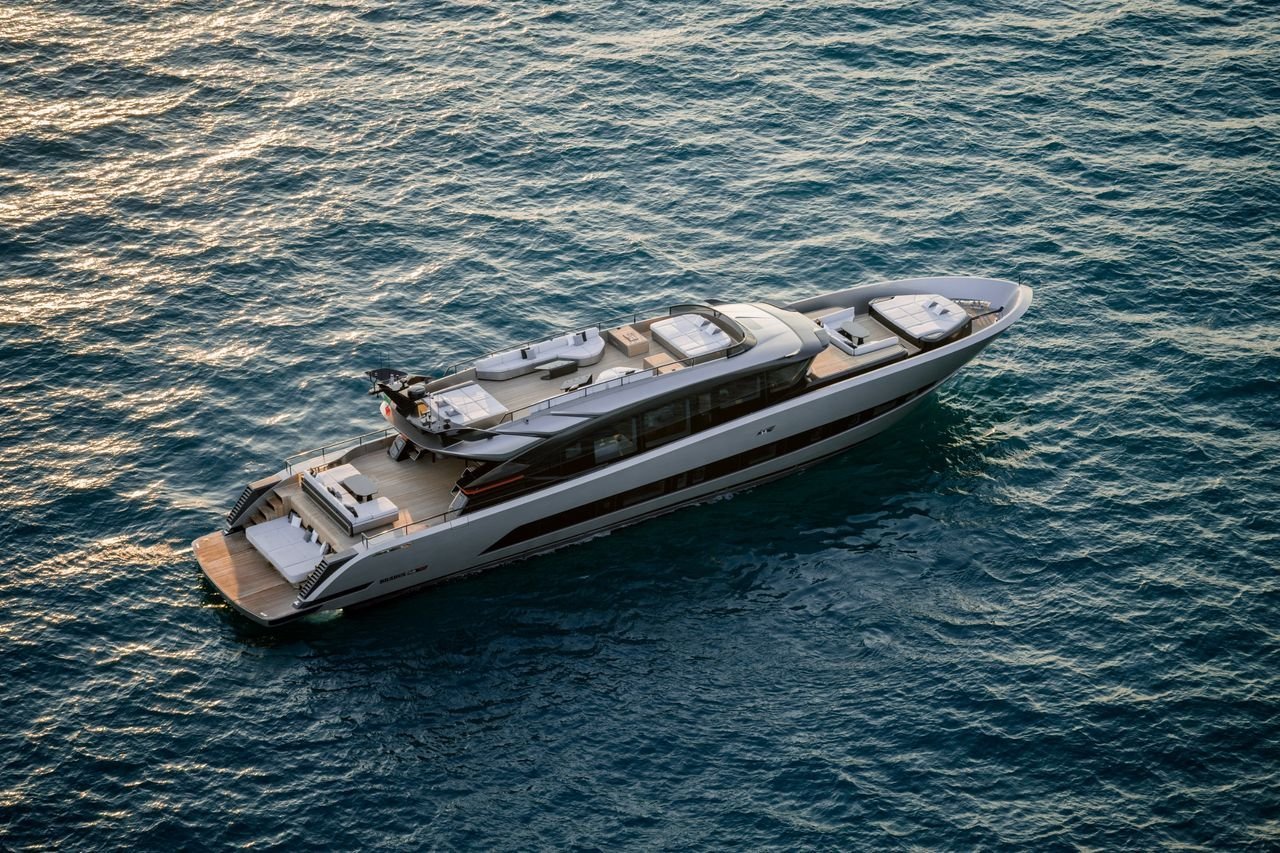
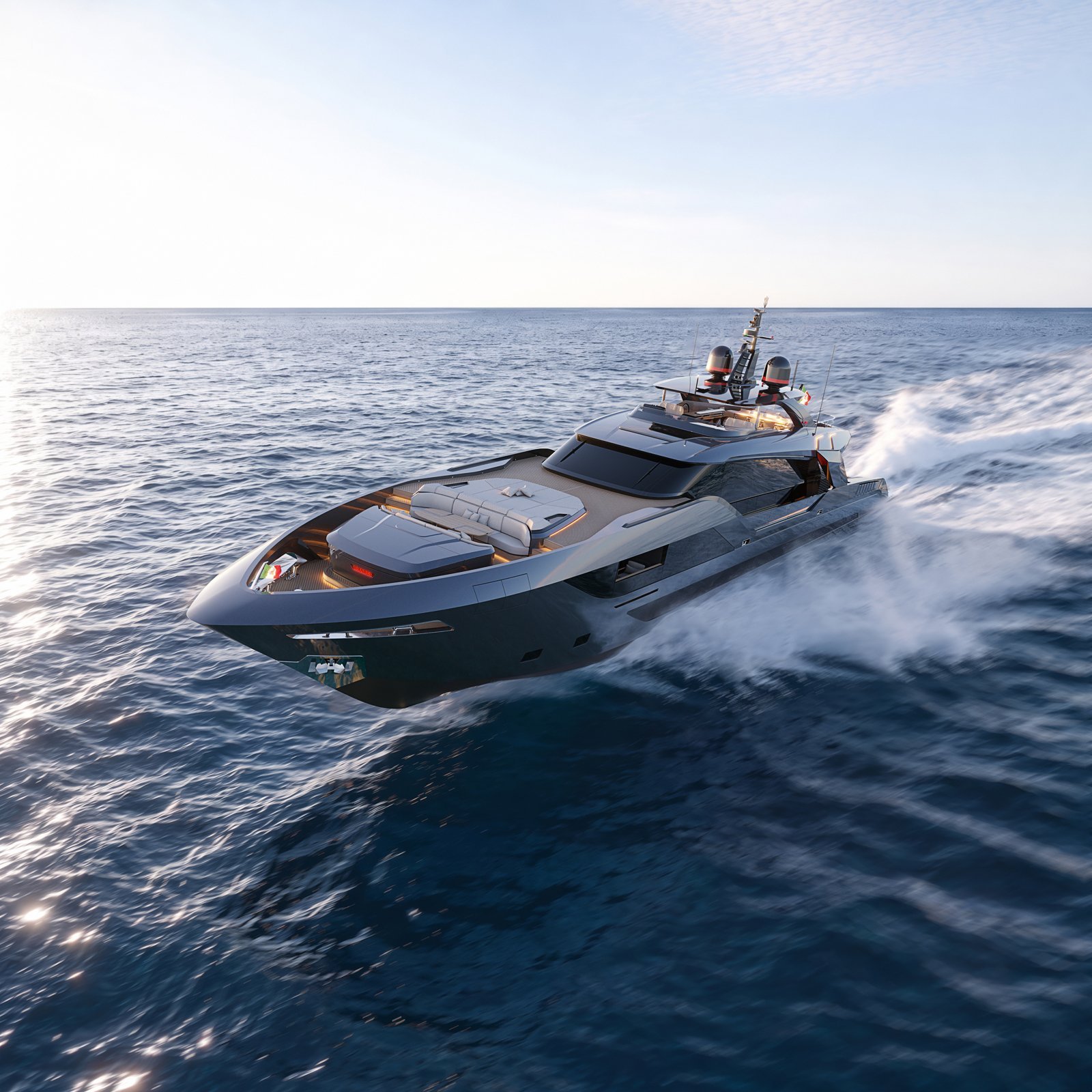
THE AB95 OPENS THE NEW BRABUS MOTOR YACHT LINEA LOW PROFILE AND A SPORTING SILHOUETTE
The fleet: three hulls, 48 knots
The partnership with AB Yachts, the Next Yacht Group shipyard known for construction methods borrowed from aerospace to refine hull shape and trim control, has produced a line of three boats. The AB95 and AB110, at roughly 29 and 33 metres, are already available. The largest of the three, at 45 metres, reaches the market next year. All share composite hulls, a top speed of 48 knots on steerable waterjet propulsion and room for 14 people, guests and crew combined.
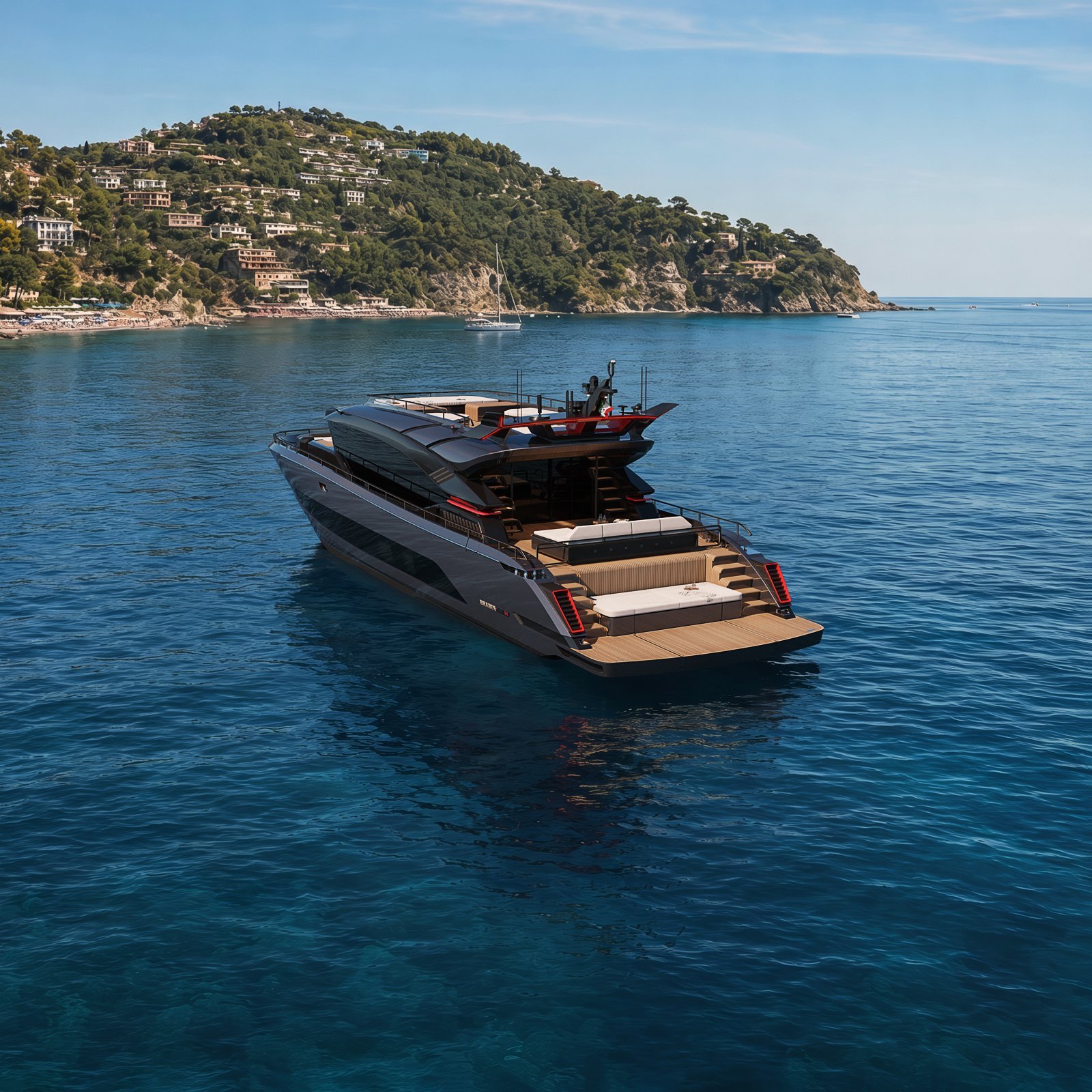
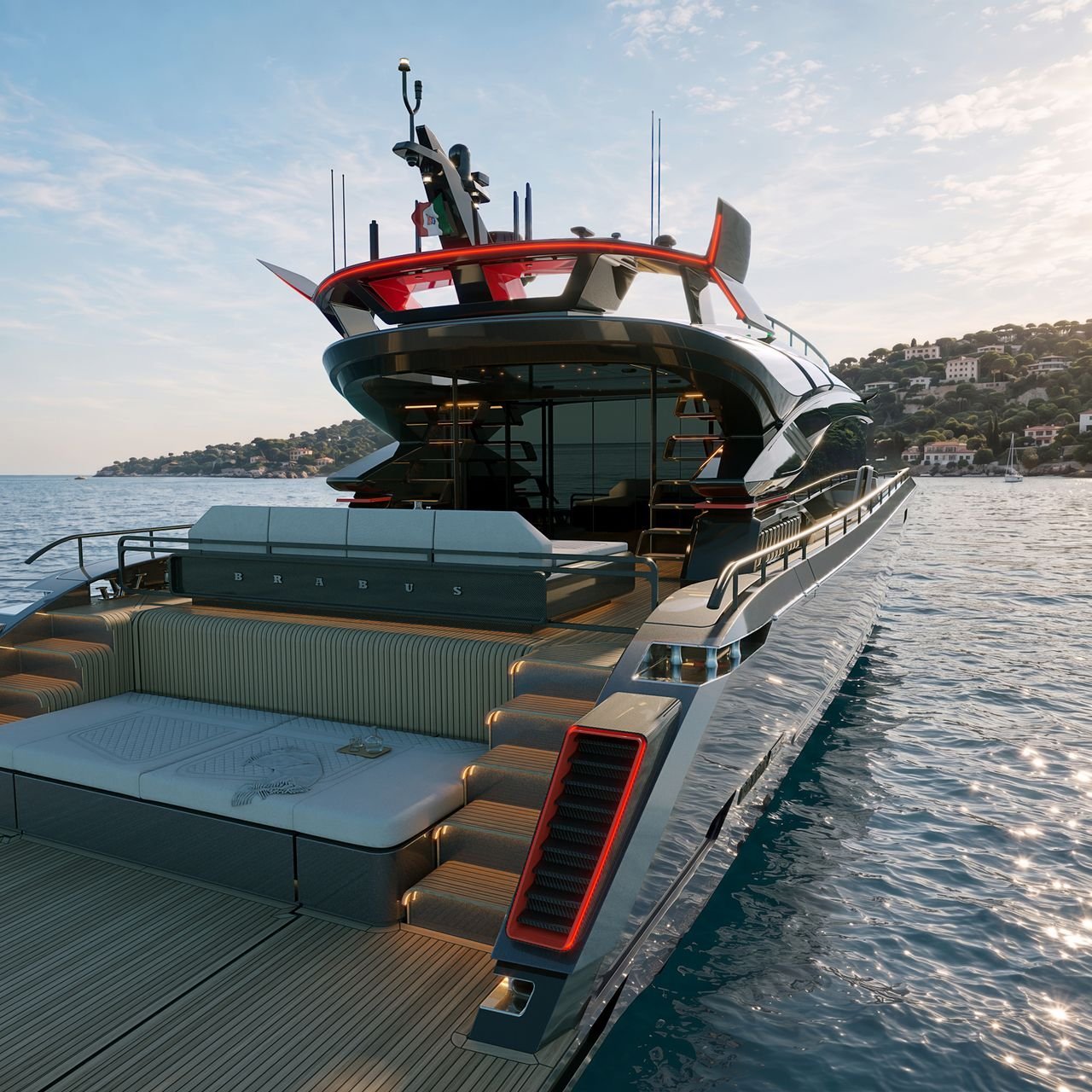
THE BRABUS VISUAL CODES, TRANSLATED TO THE SEATAUT LINES AND SCULPTED SURFACES DEFINE THE HULLAT THE BOW, THE DIRECT INFLUENCE OF THE BRAND’S CARS
The design: carbon, quilting and a spoiler at sea
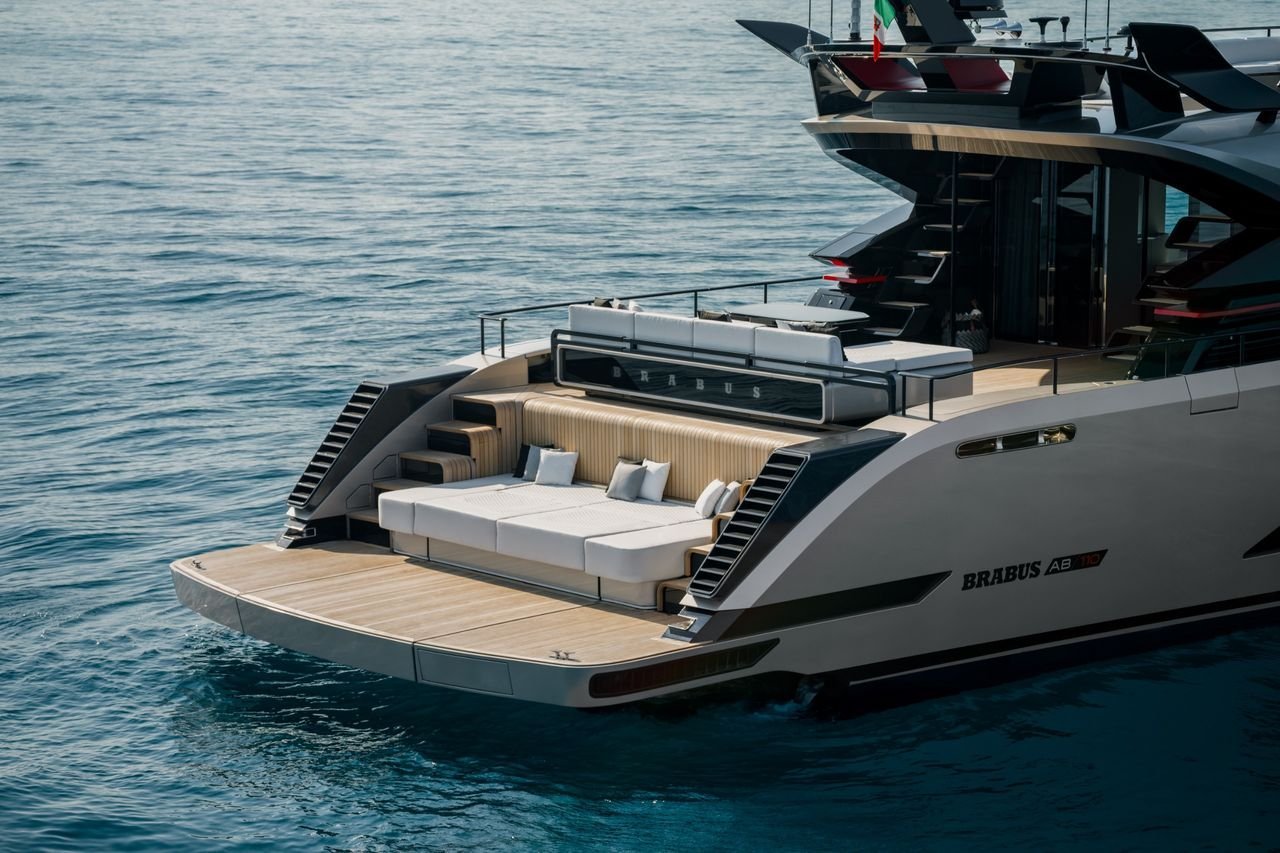
It is the visual signature, though, that draws the eye to these low, tightly drawn boats. There is an illuminated roof spoiler, LEDs set into the hardtop, front aerofoils in exposed carbon fibre and the same material lining the engine air vents.
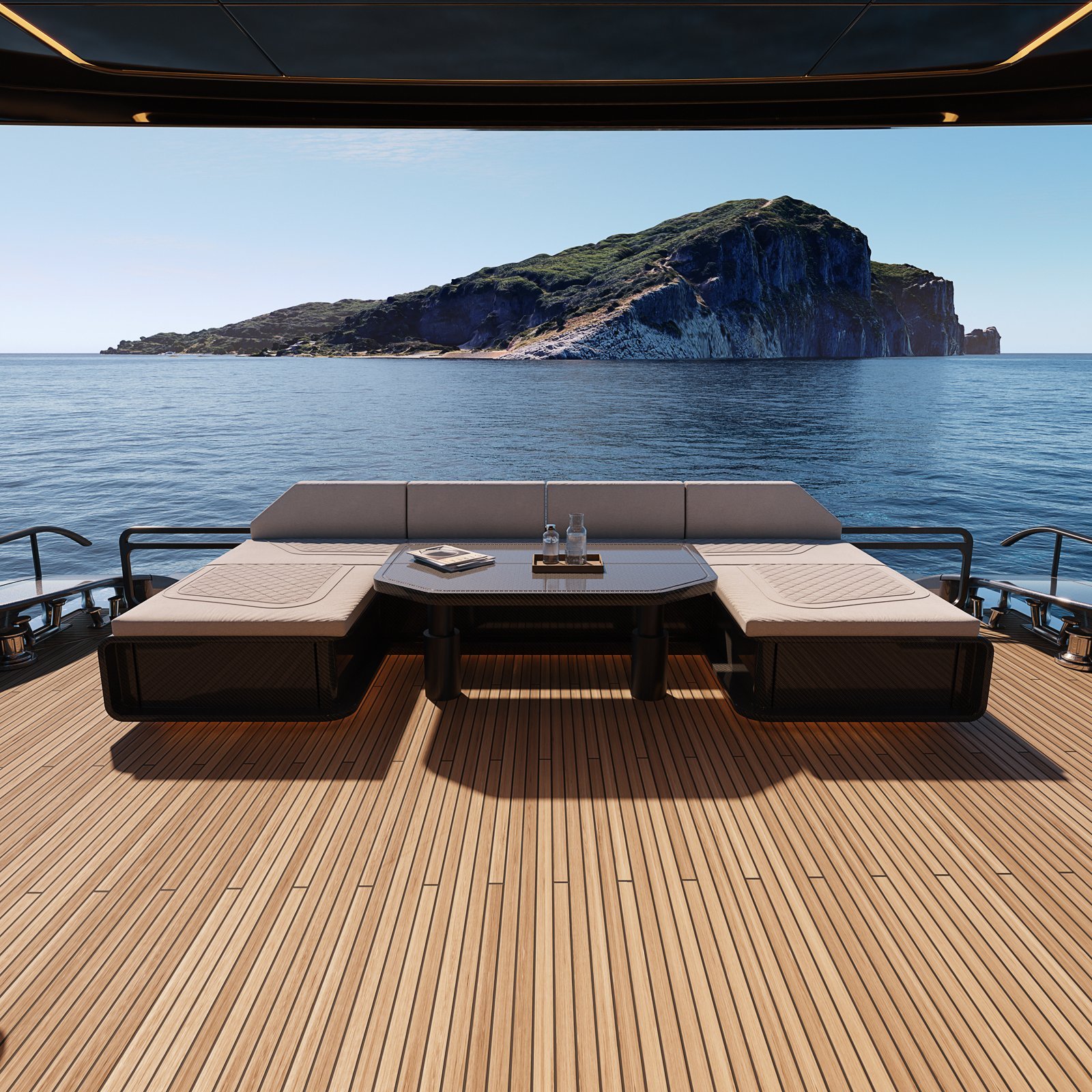
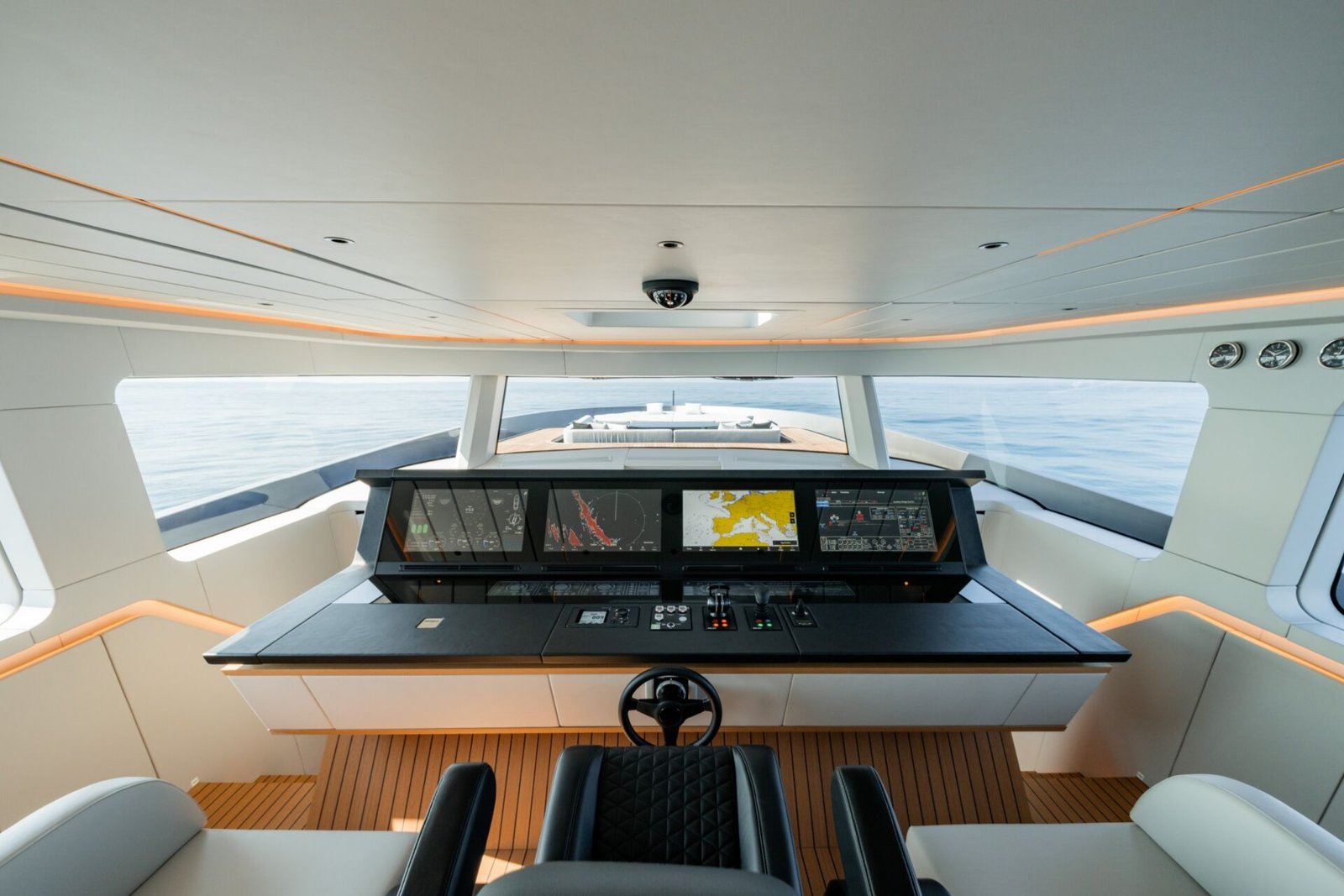
Carbon, a constant in the Brabus automotive repertoire, appears even on two tables on the sun deck. The exterior upholstery carries the house’s triangular quilting, repeated on the helm seat, and the wheel itself bears the brand’s name and is made to measure to the owner’s specification.
THE AB110 HELM, MADE TO MEASURE AND SIGNED BY BRABUS
“A client’s reaction to one of our products has to be, above all, visceral: you see it, you fall in love and you want it, all in one second,” Buschmann explains. “Almost every company in Germany is born from an engineering culture. But objects of desire, and yachts certainly are that, work because the appeal is cultural, which is not always how engineers see things. They need to have attitude and reflect an attitude: in this case, perhaps that of someone who has seen it all, done it all and bought the T-shirt, probably 25 years ago.”
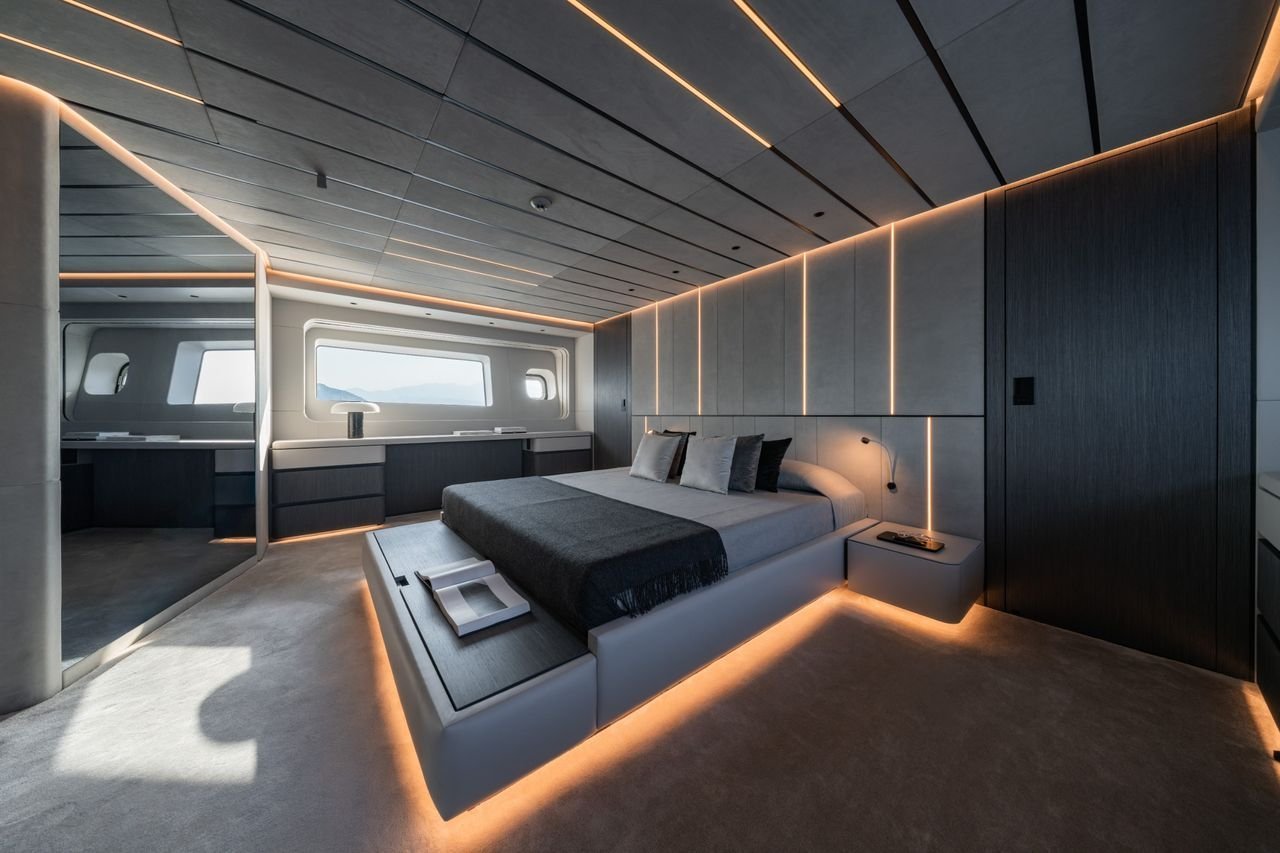
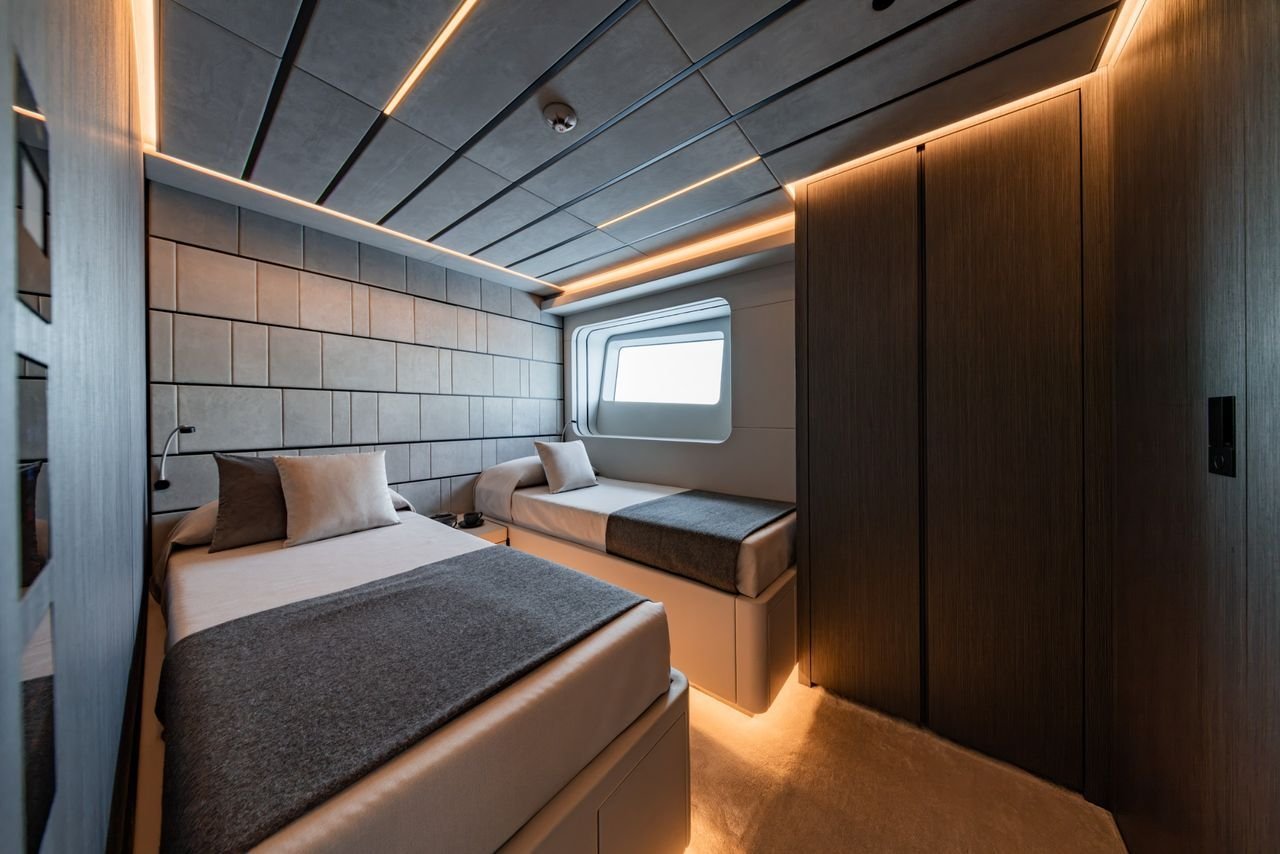
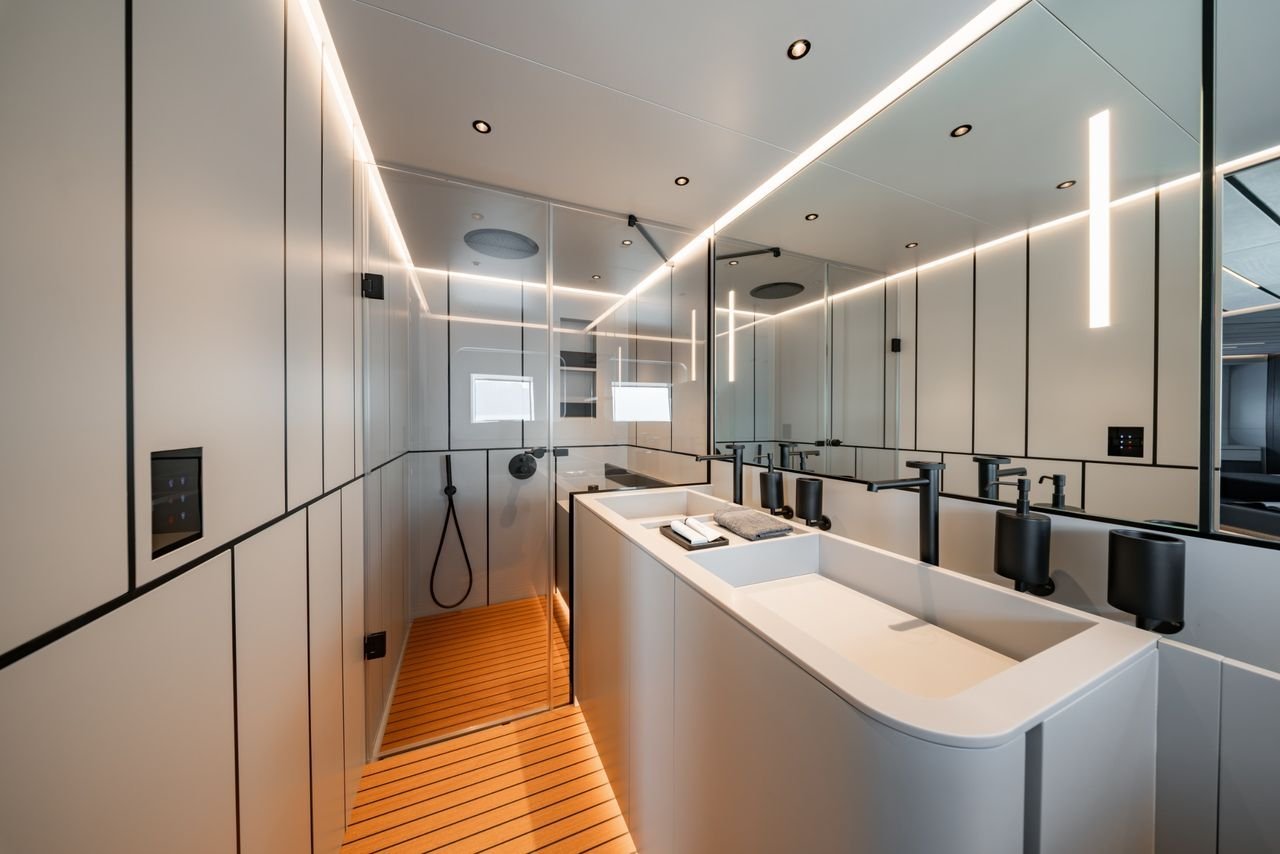
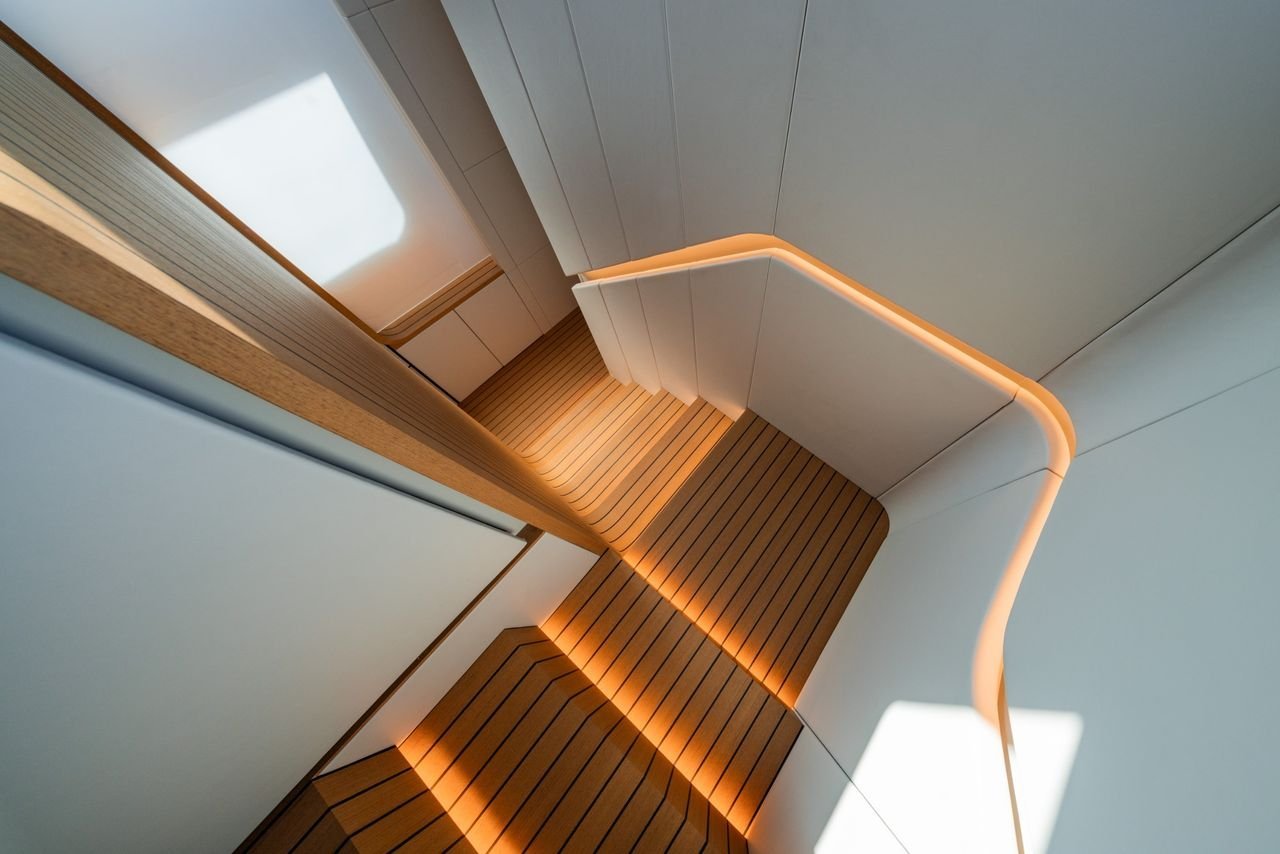
ON BOARD THE AB110, TRIANGULAR QUILTING CARRIES THE IDENTITYTHE INTERIORS FOLLOW THE HOUSE’S DARK PALETTEEXPOSED CARBON FIBRE RETURNS INDOORSEVERY INTERIOR DETAIL REPEATS THE SAME VISUAL LANGUAGE
The philosophy: “dark luxury”
Buschmann calls this language “dark luxury”, a reflection of Brabus’s long-standing preference for black (“which doesn’t mean everything has to be black, even though it is the best colour in the world,” he notes) and of a history tied to high-performance vehicles. “It is a certain vibe that suggests power, in every sense of the word, but above all in presence,” he adds. “A Brabus yacht has to look like it means business. It is serious, something like a Batmobile for the water.”
“A Brabus yacht has to look like it means business.”
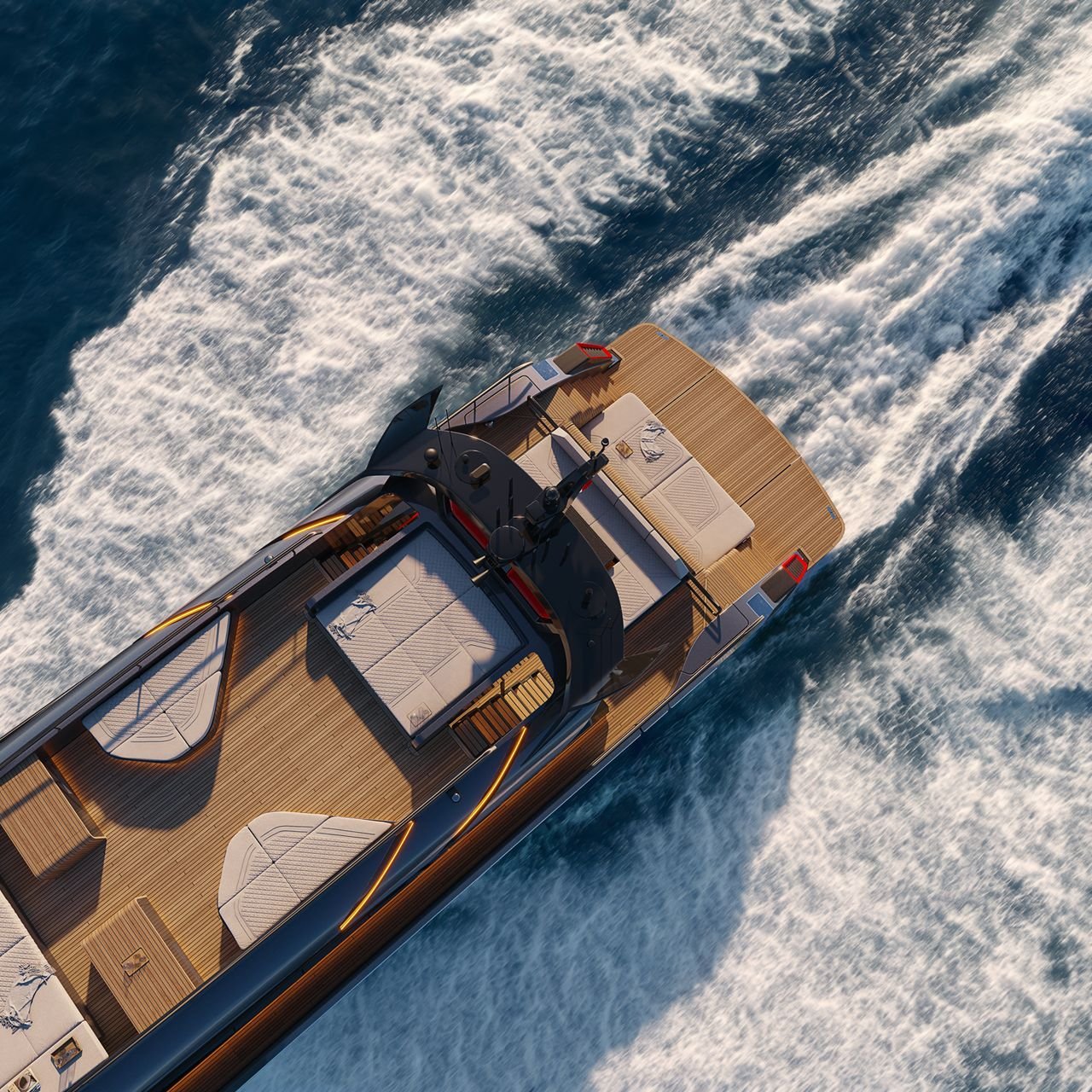
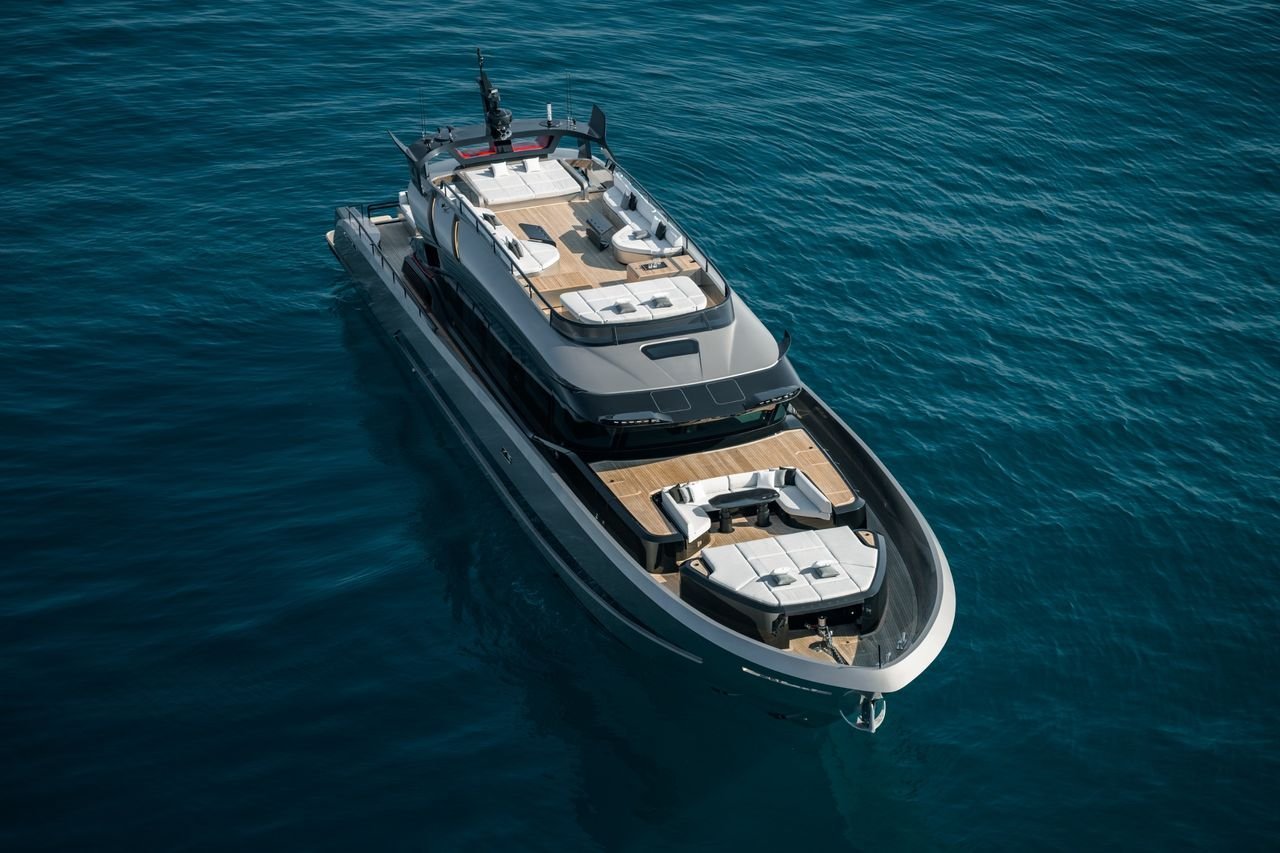
THE AB110, AND THE PRESENCE THE BRAND IS AFTER ON THE WATERFROM ABOVE, THE AUTOMOTIVE DRAWING IS PLAINCARBON AND MADE-TO-MEASURE FINISHES ON DECK
The method: partners instead of a shipyard of its own
As with earlier projects, each born from a partnership with a specialist in its field, working with AB allowed Brabus to enter a new market faster and at lower cost, and to test the public’s response to the designs early. “All of this would cost millions if we did it alone,” says Buschmann. “Now one opportunity seems to inspire three more, which is a good situation to be in, despite the moment the German car industry is going through.”
The house has worked this way on the water before, as the Brabus Shadow 38 shows on a smaller scale.
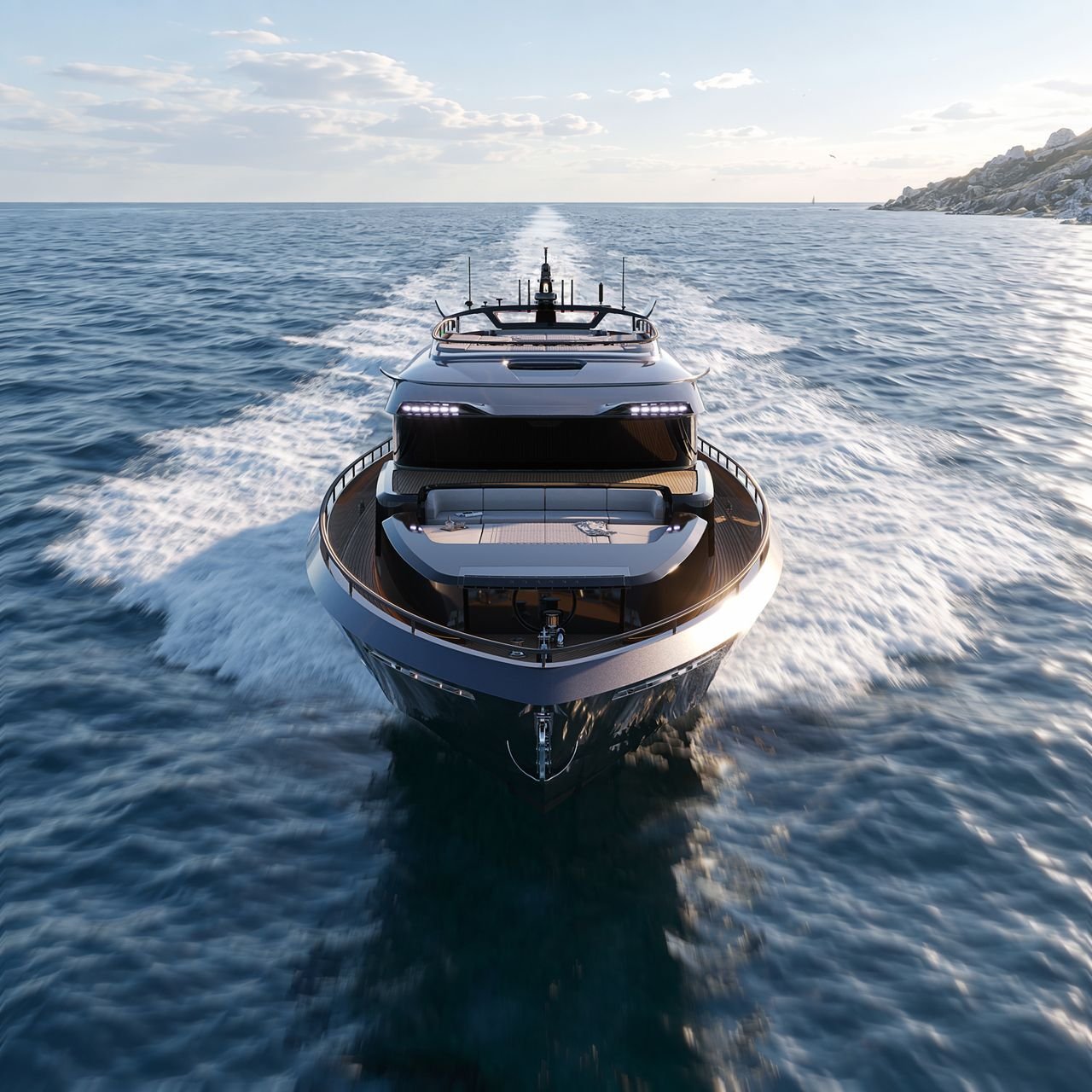
THE 45-METRE MODEL, LARGEST OF THE LINE, ARRIVES NEXT YEAR
Brabus never needed to change the subject to change category. At sea, as on the road, it sells the same thing: the feeling of arriving before being announced.
Brabus × AB Yachts Models: AB95 (about 29 metres) and AB110 (about 33 metres), available now; a 45-metre model expected next year Construction: composite hulls, steerable waterjet propulsion Top speed: up to 48 knots Capacity: 14 people, guests and crew combined
At the back of Los Angeles International Airport sits a terminal with no queue, no crowd and no gate. What PS costs, who uses it, and why travellers who do not fly private have decided to pay not to wait.
A 155-metre superyacht, 300 co-owners and four weeks a year at sea. With Beyond Horizons, Mercedes-Maybach is betting that the club of the future will have no address, only the right company.
Alberto Mancini’s exterior and Yachtique’s interior meet at a retractable terrace. The design question is how a room aboard a yacht relates to the water.