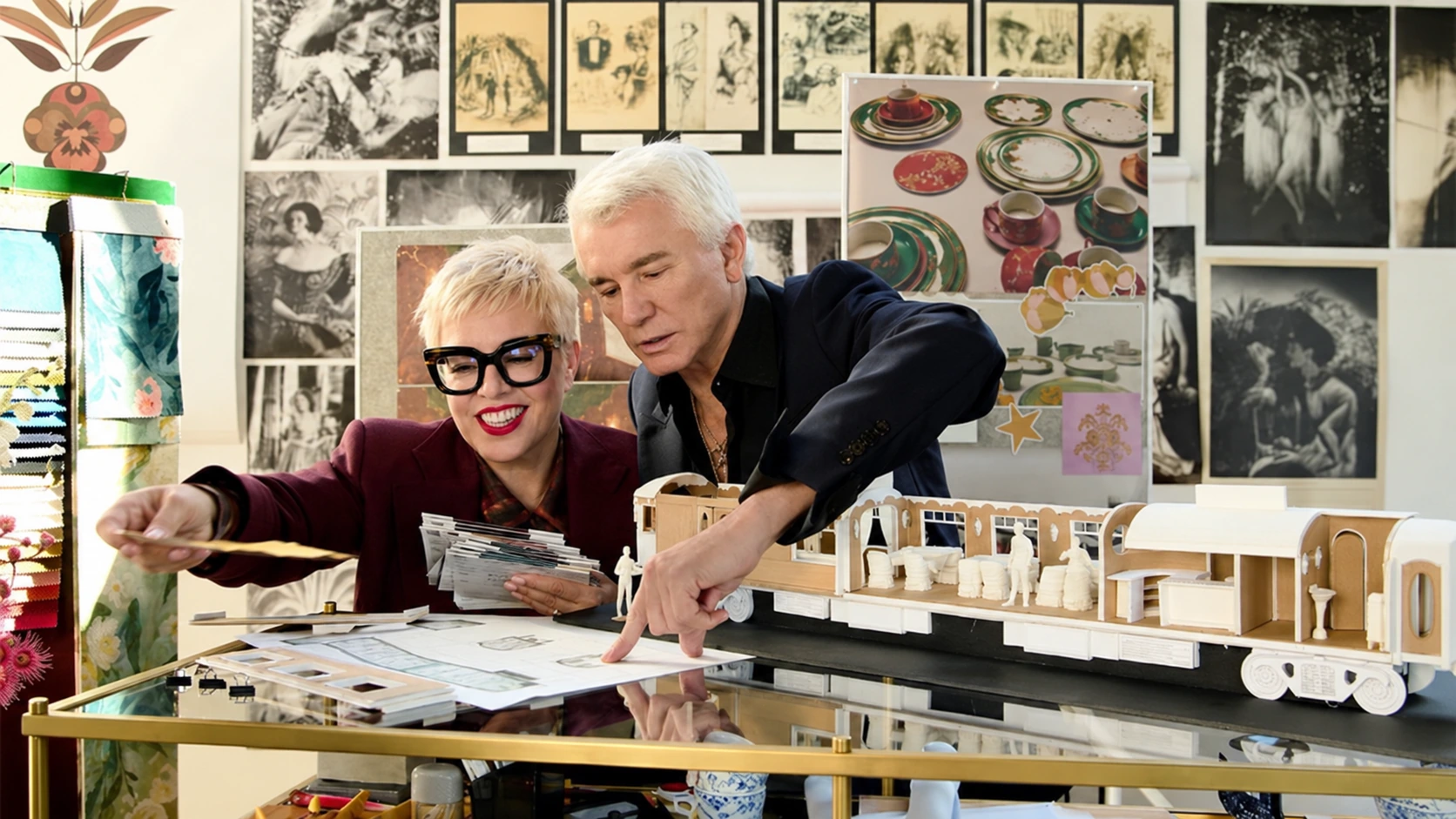
Celia begins with an invented woman. Baz Luhrmann and Catherine Martin imagined a performer whose story could give a private railway carriage its own world. She is a creative premise, not a historical passenger whose biography the interior documents.
The British Pullman carriage draws on a 1932 car and accommodates up to twelve guests for private dining and events. Belmond launched the new space in May 2026, with a gathering aboard on 9 May. It is no longer only a future summer announcement.
Jazz Age meets a woodland fantasy
A Midsummer Night’s Dream and the Jazz Age supply two different references. Floral and animal marquetry gives the interior an intricate natural vocabulary, while the bar, lounge and dining arrangement allow the space to change its social emphasis.
The toilet receives as much narrative attention as the main room. Its Art Deco treatment and foliage turn a practical compartment into another part of the imagined world, including a reference to Titania’s throne. The design does not stop at the area most likely to appear in a publicity photograph.
A room that can change its role
Lighting, the dining table and the entertainment arrangement support different uses within the same carriage. A panel can open the space towards a DJ-led occasion, while the chef’s service gives dinner another focal point. These are programmed possibilities, not a guarantee that every departure includes the same performance.
Luhrmann’s film work and Martin’s costume and production design explain the attention to how a guest moves through a scene. The carriage is not a film set to look at from outside. Its narrative has to work around a meal, conversation and the constraints of travel.
The landscape is not scenery on demand
The British Pullman’s routes provide the moving exterior to this highly authored interior. A private event still depends on the train’s operating programme and the journey selected. The fictional story gives the room coherence; the actual railway gives it conditions that no director can ignore.
Celia’s interest lies in that meeting. A theatrical interior is asked to remain a usable dining room, and a vintage carriage becomes a contemporary place to gather without losing the fact that it is a train.
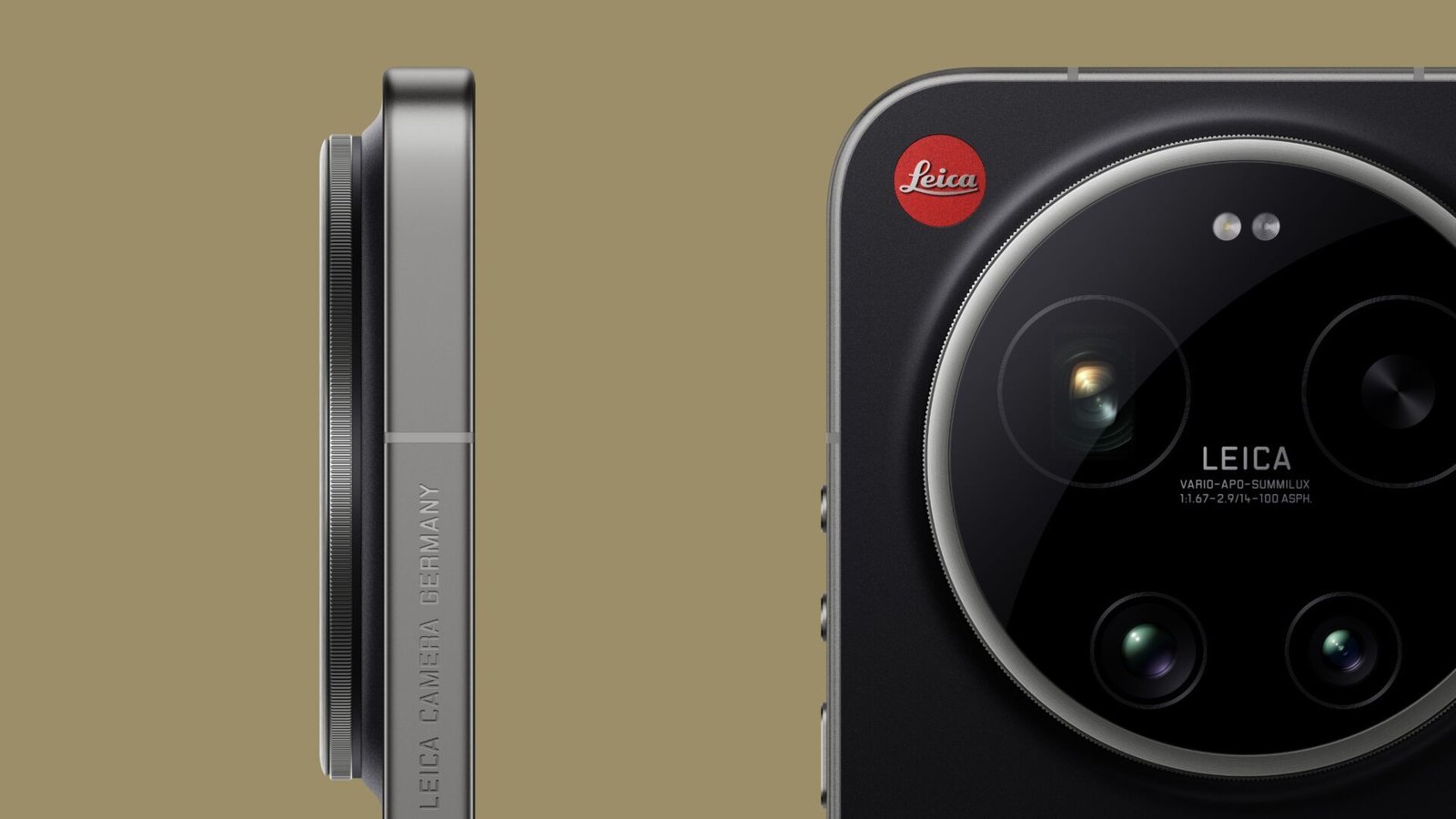
A rotating lens ring, a lens cap, film simulations with Leica names: Xiaomi has turned its partnership with the German house into product language, and Oppo and Sony are answering.
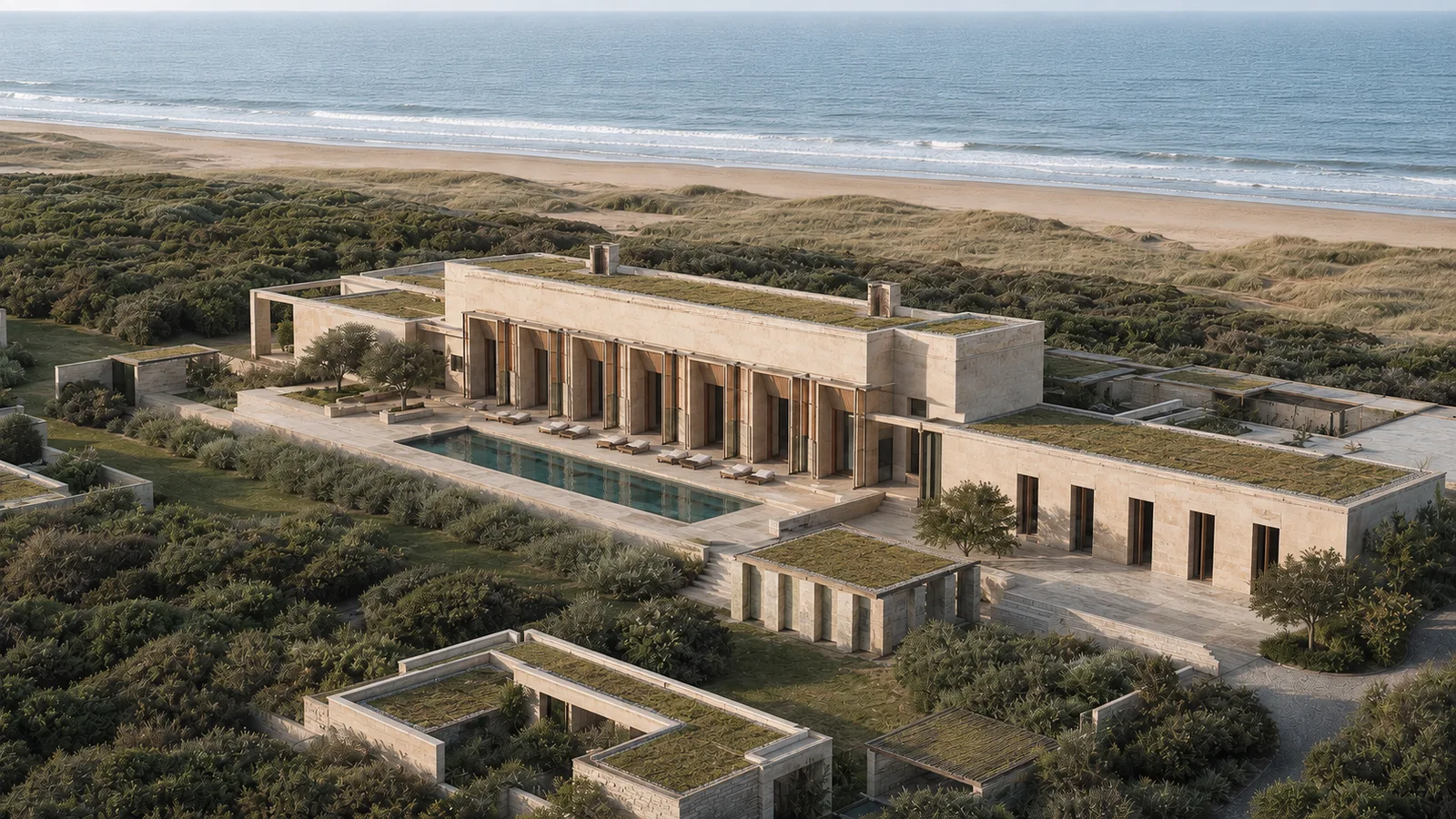
Praxis, the online community that calls itself the first digital nation, has chosen the coast beside Colonia del Sacramento for its first physical settlement. The town next door has a three-century head start.
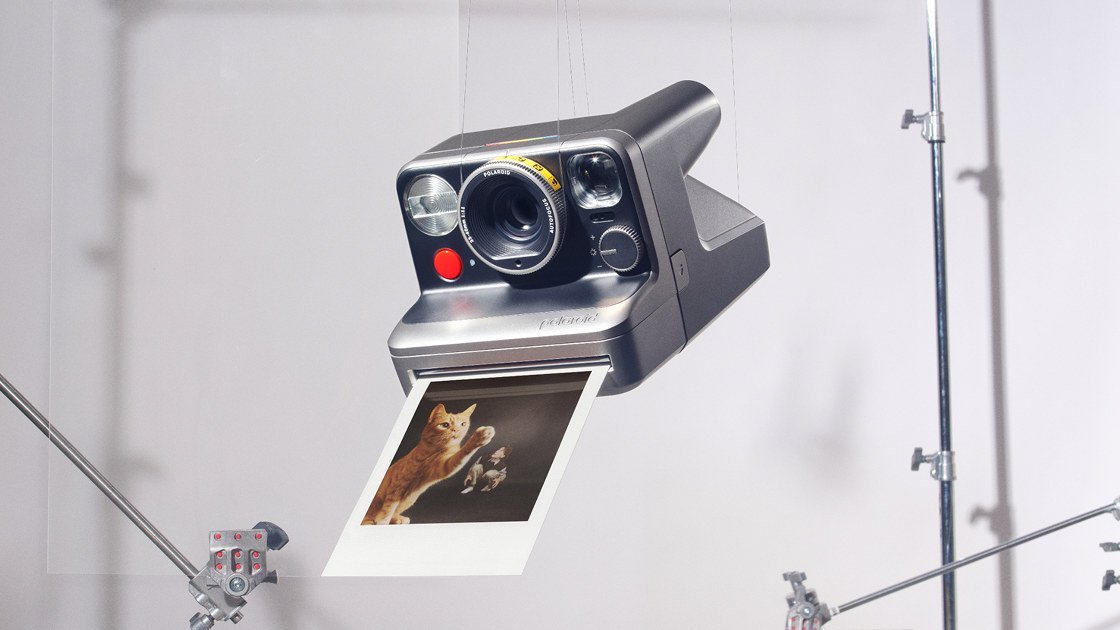
Four creative modes on a physical dial, no menus and no app: Polaroid's new instant camera returns creative control to the amateur, and makes the case for the imperfect frame.
A living material does not necessarily obey the design drawn around it. FUNGI: Anarchist Designers at Rotterdam’s Nieuwe Instituut made that resistance its subject, challenging the idea that fungi matter only when they can be turned into objects or building products.
THE CURATED GLOBE / FROM THE EDITORS
Good stories. Better company.
A considered selection of people, places and ideas from WAYFARER Edition, delivered to your inbox.
Welcome aboard. Your first letter is on its way.
We could not complete your subscription. Please check your email and try again.